Table of Contents >> Show >> Hide
- What the podcast is really saying: “You’re allowed to have an inner life.”
- Why physicians need freeing in the first place
- Fiction, narrative medicine, and journaling are cousinsnot twins
- The science-ish behind why writing helps (without overselling it)
- Fiction is also a compliance tool (yes, really): writing without breaking trust
- How to start writing fiction as a physician (even if you’re tired)
- How to listen to the podcast like a clinician (and not like background noise)
- Extra: of experiences that echo this topic (why it feels so freeing)
- 1) The resident who wrote the pager as a villain
- 2) The attending who couldn’t talk about griefuntil she moved it into a character
- 3) The medical student who felt “too watched” to be honest
- 4) The primary care physician who rediscovered curiosity
- 5) The group that turned a break room into a workshop
- Final thoughts
Medicine is full of storiesbut physicians don’t always get to tell them. In clinic, you’re expected to be precise, efficient, compassionate, and (somehow) emotionally waterproof. You’re also expected to click the right boxes, document the right way, and keep moving even when your brain is still back in Room 7 replaying that one conversation.
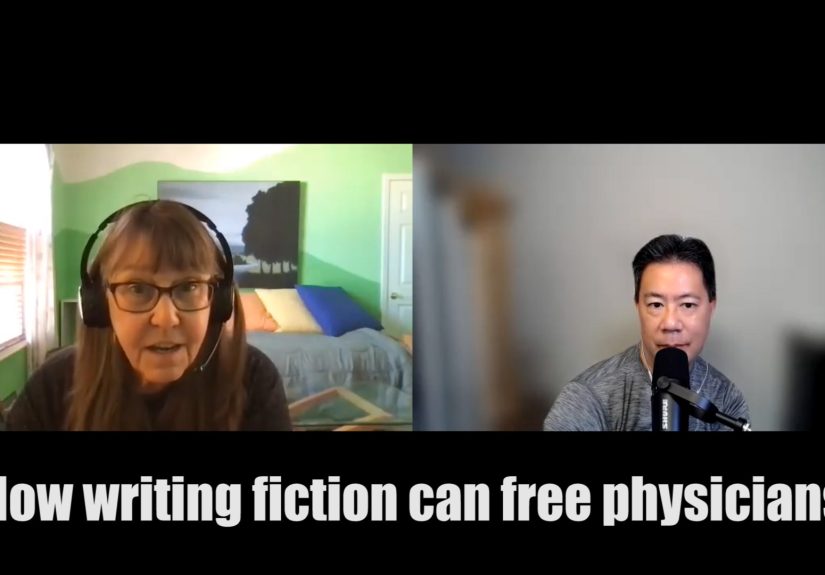
That’s why a podcast episode like “How writing fiction can free physicians” hits a nervein a good way. It’s not about turning every doctor into the next bestselling novelist. It’s about giving clinicians a pressure-release valve: a creative practice that lets them process stress, protect privacy, and reconnect with the human parts of the job that can get buried under workload and policy.
Let’s unpack what this idea means, why it works, and how you can try it without quitting medicine, breaking HIPAA, or buying a beret (unless you want the beretno judgment).
What the podcast is really saying: “You’re allowed to have an inner life.”
The KevinMD podcast episode (hosted by physician Kevin Pho, MD) features family physician Sandra Miller, MD, who argues that fiction can be a uniquely liberating outlet for clinicians. The core message is simple: physicians can create or join writing workshopsat conferences, in local groups, or onlineand use short forms (like flash fiction or haiku) to share, reflect, and feel creatively “switched on” again.
That last part matters. “Wellness” often gets reduced to advice that sounds like it was written by a yoga mat: hydrate, meditate, set boundaries. Helpful sometimes, surebut fiction does something different. It doesn’t just calm the mind; it gives the mind somewhere to go. A place where uncertainty, frustration, grief, and even dark humor can be held safely inside a made-up worldwithout pretending those emotions don’t exist.
Fiction gives distance without denial
Reflective writing can feel exposing, especially in training environments where learners worry about being evaluated for having feelings. Fiction creates a buffer. You can explore a hard situation through characters who aren’t you, in settings that aren’t your hospital, in scenes that are “true enough” emotionally without being traceable in real life.
In other words: fiction lets you tell the truth without creating a chart note about it.
Why physicians need freeing in the first place
Burnout isn’t a personality flaw. It’s what can happen when a caring profession is forced to run like a factory. Major medical organizations have reported that a substantial share of physicians, nurses, and trainees experience burnout symptomsoften described as exhaustion, cynicism, and reduced professional efficacy. And while individuals can build coping skills, burnout is also heavily shaped by organizational conditions: workload, staffing, administrative burden, EHR friction, and “extra” tasks that quietly become the whole job.
Here’s the trap: medicine rewards silence
Many clinicians learn to stay composed even when they’re overwhelmed, because composure is equated with competence. But unspoken stress doesn’t disappearit accumulates. Over time, that can flatten curiosity, blunt empathy, and make every day feel like an inbox you can’t empty.
Fiction writing offers a counter-move: it invites complexity instead of flattening it. You’re not required to “solve” the scene; you just have to write it. That shiftfrom fixing to witnessingcan be profoundly restorative for people trained to fix everything.
Fiction, narrative medicine, and journaling are cousinsnot twins
To understand why fiction feels so freeing, it helps to compare it with two related practices: journaling and narrative medicine.
Journaling: the mirror
Journaling is often private, direct, and emotionally honest. It can be powerful, but for clinicians it can also feel risky (“What if someone reads this?”) or raw (“I don’t want to relive today right now”).
Narrative medicine: the listening muscle
Narrative medicine, popularized by physician-scholar Rita Charon, emphasizes “narrative competence”the ability to recognize, absorb, interpret, and honor stories of illness. Formal programs (like Columbia’s narrative medicine offerings) use close reading, reflective writing, and discussion to deepen attention, empathy, and meaning-making in clinical work.
Many narrative medicine initiatives are designed to strengthen clinician-patient connection, improve reflection, and support professional identity. Some educational programs also report benefits related to burnout and engagementparticularly for students and trainees.
Fiction: the freedom of invention
Fiction overlaps with these approaches, but it adds something uniquely useful for physicians: permission to invent.
- Privacy protection: invented characters and settings make it easier to avoid identifiable details.
- Emotional range: fiction can hold humor, anger, tenderness, and ambiguity in the same scenelike real life.
- Moral exploration: you can test decisions, regrets, and dilemmas on the page without putting them on a performance review.
In short: journaling says, “Here’s what happened.” Narrative medicine says, “Here’s what it meant.” Fiction says, “Here’s what it felt likeand here’s what else could be true.”
The science-ish behind why writing helps (without overselling it)
Writing isn’t magic. It won’t fix staffing shortages or make prior authorizations disappear (if it did, every hospital would install a poetry kiosk). But a large body of psychological research suggests that structured writing about experiences can improve well-being for many people, with effects that vary by person, context, and how the writing is done.
1) Writing turns “wordless stress” into organized meaning
Stress often feels like a pile of unsorted files dumped on the floor of your brain. Writing forces sequencing: what happened first, what mattered, what you noticed, what you didn’t say. That act of organizing can reduce the mental “open loops” that keep replaying after your shift ends.
2) Expressive writing can reduce distress for some people
Research on expressive writing (often associated with psychologist James Pennebaker) suggests that writing about difficult experiences can be linked to improvements in some psychological and physical health outcomesthough effect sizes are usually modest, and the best results tend to come when people write in a way that builds insight rather than simply venting.
3) Fiction adds psychological distance (“It’s not me… but it kind of is.”)
This is where fiction shines for clinicians. You can offload a heavy situation into a character and still explore it honestly. That distance can make it easier to look at fear, guilt, frustration, or grief without feeling like you’re confessing or being graded.
4) Storytelling supports empathyand empathy can protect against burnout
Empathy and burnout are closely connected in physician research: when clinicians feel emotionally depleted, it’s harder to sustain empathic engagement; and when empathy is supported effectively, it may act as a protective factor. Narrative-focused interventions (including reflective writing and reading) have been studied in health care settings for their potential to support empathy and reduce burnout-related outcomes.
The key is balance. Fiction doesn’t demand constant emotional exposure. It allows controlled exposurewith craft. You decide when to go in, how close to get, and when to step back.
Fiction is also a compliance tool (yes, really): writing without breaking trust
Clinicians have legitimate concerns about confidentiality. Even reflective writing can raise questions: Is this patient identifiable? Did I include a unique detail? Would someone recognize this scene?
Fiction offers practical safeguardsespecially when you follow a few rules that experienced physician-writers repeat again and again:
A privacy-first checklist for physician fiction
- Change at least three anchors: setting, timeline, and role (e.g., make it urgent care instead of inpatient; two years ago instead of yesterday; a PA instead of an attending).
- Build composite characters: combine traits from multiple real people so no one person maps to one character.
- Remove “signature details”: rare diagnoses, unusual occupations, highly specific demographics, or distinctive quotes.
- Fictionalize the clinical problem: keep the emotional truth, but alter the medical specifics so the scene can’t be reverse-engineered.
- Write toward theme, not transcript: aim for what the moment reveals, not what it documents.
Bonus benefit: these techniques don’t just protect privacythey improve the story. Constraints force creativity. (It’s like clinic, but with fewer refill requests.)
How to start writing fiction as a physician (even if you’re tired)
If you’re thinking, “This sounds nice, but I can barely microwave dinner,” you’re exactly the audience. The point isn’t to write a 500-page epic between call shifts. The point is to make creative practice small enough to be real.
Try “micro-fiction” formats that fit in real life
- Flash fiction: 200–800 words. One scene. One turn. One image that sticks.
- Six-sentence stories: A complete arc in six sentences. No room for flufflike an H&P on hard mode.
- Haiku or tiny poems: Not because you’re trying to win a poetry contest, but because compression can be clarifying.
- Character sketches: Write a clinician character’s “secret fear” and “private hope.” Then put them in a mundane momentwaiting for an elevator, scrubbing in, staring at the EHR.
Use prompts that aim at meaning (not performance)
- Write a scene where a character hears a sound that changes how they feel about the day.
- Write a dialogue where no one says the most important sentence out loud.
- Write a moment of diagnostic uncertaintythen focus on what it does to the character’s body language.
Find or build a writing community
One of the podcast’s most practical suggestions is also the most powerful: create a workshop. Studies of creative writing communities in medicine describe themes like belonging, meaning-making, and renewed energyespecially when groups are psychologically safe, non-competitive, and grounded in respect.
Start small: three clinicians, one hour monthly, one rulekind feedback only. You can always add craft later. The first goal is permission.
How to listen to the podcast like a clinician (and not like background noise)
Podcasts are easy to treat like audio wallpaper. But if you want this episode to actually change something, listen like you’d approach a new clinical tool:
- Pick one experiment you can do this week (10 minutes, max).
- Write down one line that stuck with youthen rewrite it as fiction.
- Share safely with one trusted person (or keep it private).
- Notice the effect the next day: sleep, mood, patience, attentionanything.
Think of it as a tiny pilot study where the outcome measure is: “Do I feel a little more like myself?”
Extra: of experiences that echo this topic (why it feels so freeing)
These vignettes are compositesfictionalized experiences drawn from common patterns clinicians describe, not identifiable real cases.
1) The resident who wrote the pager as a villain
She didn’t have time for journaling, but she had time for a joke. After a brutal week, she wrote a 400-word scene where the pager was a slick, charming antagonist who interrupted every human moment with perfect timing. It was funnytoo funny. The next day, she realized she’d been living like every interruption was an emergency and every pause was a luxury. In her story, the hero learns to ignore the villain for ninety seconds and finishes a conversation. In real life, she tried it once: she took a breath, made eye contact, and completed a sentence before responding. Tiny change. Huge relief.
2) The attending who couldn’t talk about griefuntil she moved it into a character
He was “fine.” She was “professional.” That was the script. But the grief from a hard outcome kept showing up as irritability, insomnia, and a short fuse with the EHR. She wrote a story about an older physician who keeps a paper crane in a coat pocket and can’t remember who gave it to him. The crane appears in scenes like a quiet alarm. The attending never says, “I’m sad,” but the reader knows. Writing it didn’t erase the griefit gave it a shape, and that made it less likely to ambush her at 2 a.m.
3) The medical student who felt “too watched” to be honest
Mandatory reflection felt like surveillance. So he wrote fiction. His protagonist was a med student on a spaceship clinic (because why not), trying to act confident while learning a new language of symptoms. The story let him admit what he couldn’t say in an evaluation: he was scared of missing things, scared of looking incompetent, scared of becoming numb. In fiction, those fears weren’t “red flags”they were character development. And once they were on the page, they were easier to manage in real life.
4) The primary care physician who rediscovered curiosity
After years of volume and documentation, curiosity had become a casualty. He started writing a series of micro-stories where each patient encounter was reimagined as a mysteryonly the “clues” were emotions, context, and the unasked question. The more he wrote, the more he noticed the small details again: the way people paused before answering, the words they avoided, the stories they wanted permission to tell. He didn’t suddenly have more time, but he had more attention. That shift made the day feel less like a conveyor belt and more like human work.
5) The group that turned a break room into a workshop
They met once a month with bad coffee and worse fluorescent lighting. The rule was simple: read something short, then write for ten minutes, then share if you want. No forced vulnerability. No “trauma Olympics.” Just craft, humor, and honesty in small doses. Over time, something changed: they began to speak more kindly to themselves, and they stopped assuming everyone else was coping perfectly. The workshop didn’t fix systemic problems, but it built a pocket of communityone where clinicians could be skilled professionals and messy humans in the same hour.
That’s the quiet power of fiction for physicians: it doesn’t demand you become someone else. It helps you return to who you areunder the scrubs, under the protocols, under the endless tabs.
Final thoughts
Writing fiction won’t eliminate the pressures of modern medicine. But it can change your relationship to those pressures. It can give you agency when the system feels controlling, voice when you feel muted, and meaning when the day feels like pure output.
If the podcast leaves you with one takeaway, let it be this: you don’t have to wait until you’re “less busy” to write. You can start with one page. One paragraph. One scene. The work doesn’t have to be perfect; it just has to be yours.