Table of Contents >> Show >> Hide
- Why a Grandkid Footprint Tattoo Feels Different
- The Real Issue: Boundaries, Not Body Art
- Why New Moms May React So Strongly
- Is the Mom Overreacting?
- What Makes This Situation Especially Sticky
- How Families Can Handle Something Like This Without Starting World War Ink
- What the Internet Gets Right and Wrong About These Stories
- The Bigger Lesson Behind the Tattoo Debate
- Experiences Related to the Topic: Why So Many Parents See Themselves in This Story
- Conclusion
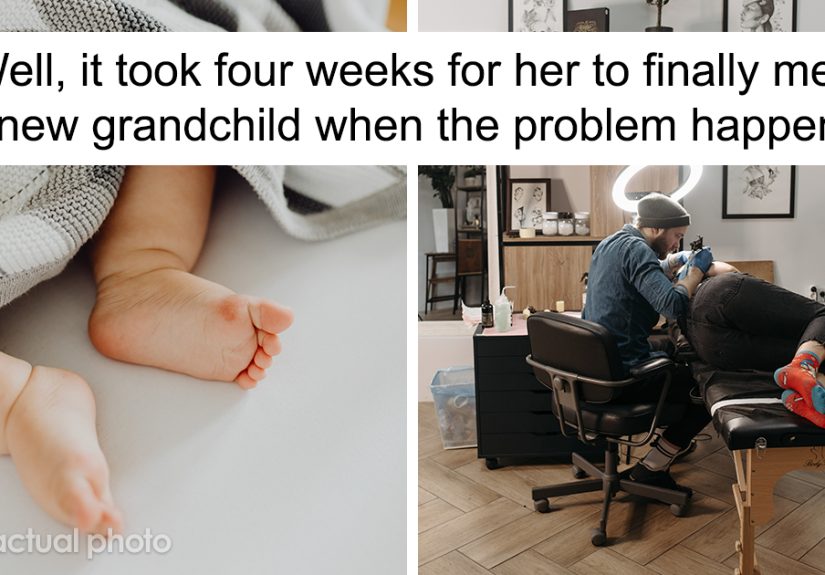
Some family debates arrive politely, knock once, and wait to be let in. This one kicked the door open wearing boots. A new mom recently stirred up a major online discussion after sharing that her mother-in-law wanted to get a tattoo of the baby’s footprint. Not the baby’s name. Not a sweet little heart. Not even a vague “grandma era” butterfly situation. The actual footprint.
And the mother’s reaction was immediate: absolutely not. Or, more specifically, I have a very big problem with this.
That strong response touched a nerve because the issue is bigger than ink. At first glance, a grandparent tattoo might sound like a sentimental gesture. Plenty of grandparents adore their grandkids and mark that love with jewelry, framed photos, custom blankets, or tattoos. But when the tattoo involves a newborn footprint, the conversation gets a lot more personal, a lot more symbolic, and a lot more complicated. Suddenly, people are not just debating body art. They are debating boundaries, consent, postpartum emotions, grandparent roles, and who gets to decide what is “loving” versus what feels strangely possessive.
In other words, this is not really about the tattoo gun. It is about the family dynamic underneath it.
Why a Grandkid Footprint Tattoo Feels Different
A baby footprint is not just a cute design pulled from a craft store stencil book. For many parents, especially new parents, those little inked hospital prints feel deeply intimate. They are tied to birth, recovery, vulnerability, and the first hours of meeting a child who has just changed the entire shape of life. That tiny footprint often goes into a baby book, a memory box, or a keepsake drawer that parents open when they want to cry in a tender way instead of a tax-season way.
That emotional weight matters. In many hospitals, footprints have historically served not only as keepsakes but also as part of newborn identification and safety records. So while a footprint may look like a darling little smudge to outsiders, many parents see it as something closer to a private family artifact. It is not surprising that some would feel uneasy watching that symbol move from the baby book to someone else’s skin.
That is exactly why the new mom’s discomfort resonated with so many readers. Her concern was not necessarily, “How dare grandma love my child?” It was more like, “Why does this specific marker of my baby’s identity suddenly feel like communal property?”
And honestly, that is not an absurd question. A footprint can feel more intimate than a name because it is physical. It is tied to the child’s body in a way a monogram never will be. A tattoo of a grandchild’s name says, “I love this child.” A tattoo of the child’s actual footprint can feel, to some parents, like a claim of closeness that has not been earned or agreed upon.
The Real Issue: Boundaries, Not Body Art
Family experts tend to agree on one thing: when a new baby arrives, boundaries matter more, not less. New parents are adjusting to sleep deprivation, healing, hormones, feeding schedules, fear, joy, overwhelm, and the bizarre sensation that everyone suddenly has opinions about their household. That is a fragile season. Even loving relatives can overstep if they mistake access for entitlement.
This is why so many parenting experts recommend that couples get on the same page privately before handling extended family issues publicly. If one parent sees the MIL’s tattoo idea as sweet and the other sees it as invasive, the first conversation should happen between the parents, not in front of the family group chat where every aunt suddenly becomes a constitutional scholar on grandma rights.
Clear boundaries are not cruelty. They are instructions. They tell other people where the emotional fences are so no one accidentally drives a golf cart into the flower bed.
That is what makes this debate so interesting. The tattoo itself is not necessarily malicious. A grandmother may honestly see it as a tribute. But intention and impact are not the same thing. Someone can mean well and still make a new mother feel bulldozed. That does not turn grandma into a villain, but it also does not make the mother “dramatic.” It just means the family needs a better conversation than, “Relax, she means well.”
Why New Moms May React So Strongly
Postpartum life is not exactly a spa retreat with soft flute music and a tidy emotional arc. In the days and weeks after birth, many mothers are physically recovering while also navigating major psychological and social changes. Some experience the baby blues. Some deal with postpartum depression or anxiety. Even without a diagnosable mental health condition, many feel more protective, more overwhelmed, and more sensitive to conflict than usual. That is not weakness. That is what happens when a human being has just been through a massive bodily and identity-level event.
So when a new mom bristles at a mother-in-law wanting a tattoo of the baby’s footprint, that reaction should be understood in context. She may be reading the situation through a lens of vulnerability: This is my child. I just gave birth. I am still figuring out motherhood. Why do I feel like the boundaries around my baby are already being negotiated by someone else?
That feeling gets even stronger if the mother-in-law has a history of pushiness, emotional theatrics, or over-involvement. In that case, the tattoo idea may not feel like an isolated gesture. It may feel like the latest installment in a long-running series called Guess Who Thinks This Baby Is Also Hers?
Is the Mom Overreacting?
Here is the most honest answer: no, but that does not automatically mean the grandmother is evil either.
The mother is allowed to feel that a grandkid footprint tattoo crosses a line. Feelings do not need a courtroom transcript to be valid. If something about the idea feels invasive, overly intimate, or emotionally off, that matters. A new parent does not lose the right to define what feels comfortable simply because someone else calls their discomfort unreasonable.
At the same time, the grandmother may genuinely believe she is making a loving tribute. Grandparents often form intense attachments to a first grandchild, and some can get carried away trying to express it. The problem is not always the love. The problem is the lack of pause before acting on it.
Healthy grandparenting usually begins with support, not possession. The best grandparents do not audition for co-parent status. They ask what helps. They respect the parents’ pace. They offer love without stepping on authority. They understand that closeness with a grandchild is built over time through trust, not declared through grand gestures and then defended like a constitutional amendment.
What Makes This Situation Especially Sticky
1. A footprint can feel like a private keepsake
Unlike a name or birth flower, a newborn footprint is linked to the birth itself. For many parents, it belongs in the category of cherished mementos, not public tribute material.
2. The parents may not feel equally close to the grandparent
If the relationship with the MIL is already strained, the tattoo can feel less like affection and more like emotional overreach wearing a sentimental disguise.
3. The husband-wife disconnect can make it worse
When one partner says, “It’s just love,” and the other says, “No, this feels invasive,” the real tension becomes the marriage’s response to outside pressure. Nothing spices up postpartum life quite like an argument that begins with, “You’re overthinking it,” and ends with nobody speaking near the bottle sterilizer.
4. The baby cannot consent
No, a grandmother does not need legal permission to get a tattoo referencing a grandchild. But family members still make moral and relational decisions around consent all the time. Parents may feel that using a baby’s physical marker without their blessing is simply not respectful.
How Families Can Handle Something Like This Without Starting World War Ink
The best move is usually calm, direct communication. Not a vague hint. Not a passive-aggressive sigh. Not a 2 a.m. rage text drafted with one hand while holding a baby monitor in the other. Just a clear statement.
The couple should first decide what they actually believe. Are they against all tattoos involving the child, or just the footprint? Would they feel okay with the baby’s initials? A birth date? A symbolic design? Specificity matters because “I don’t know, I just hate it” is emotionally understandable but harder to negotiate than “The footprint feels too personal, but another tribute would not bother us.”
Once the parents are aligned, one of them, ideally the adult child of the grandparent, can communicate the boundary kindly but firmly. Something like: We know this comes from love, and we appreciate that. But the footprint feels very personal to us, and we are not comfortable sharing it for a tattoo.
That wording does three useful things. It acknowledges the emotion behind the request. It states the limit clearly. And it does not invite a 45-minute debate club session on whether the mother is “too sensitive.”
If the grandparent reacts badly, that reaction is information. It tells the parents whether they are dealing with a misunderstanding or a deeper pattern of entitlement.
What the Internet Gets Right and Wrong About These Stories
Online discussions about in-laws and babies tend to split into two camps at record speed. One side says the mother is controlling. The other says the MIL is a boundary-crushing menace in orthopedic shoes. Reality is often messier.
What the internet gets right is that new parents deserve room to define their comfort. The early postpartum period is not a spectator sport. Parents are not required to swallow discomfort to keep everyone else feeling warm and included.
What the internet gets wrong is the temptation to turn every awkward family conflict into a villain origin story. Not every overenthusiastic grandma is manipulative. Not every anxious new mom is unreasonable. Sometimes a family just badly needs clearer expectations, better timing, and fewer emotionally loaded surprises.
Still, one truth keeps surfacing in stories like this: when a grandparent dismisses a parent’s discomfort instead of respecting it, the conflict stops being about love and starts being about power.
The Bigger Lesson Behind the Tattoo Debate
This discussion blew up because it hits a universal nerve. Once a baby arrives, everyone wants a role. Parents want space. Grandparents want closeness. Partners want peace. And somewhere in the middle is a newborn who has unknowingly launched a family referendum on access, identity, and tiny feet.
The healthiest families understand that love does not cancel boundaries. In fact, boundaries are often what keep love from turning into resentment. A grandmother can adore her grandchild deeply without using the child’s footprint as tattoo inspiration. A mother can reject the idea without rejecting the grandmother herself. Both things can be true.
That is why the most useful takeaway from this whole conversation is not “MIL bad” or “new mom dramatic.” It is this: when it comes to a new baby, the parents set the emotional tone. Everyone else, even well-meaning family, needs to respect that. Because once a parent says, “This feels too personal,” the kind response is not, “Well, I already booked the appointment.” The kind response is, “Got it. Let’s find another way to celebrate.”
Experiences Related to the Topic: Why So Many Parents See Themselves in This Story
Part of what made this debate catch fire is how familiar it feels. Even parents who have never had a mother-in-law ask for a tattoo of a grandkid’s footprint still recognized the emotional pattern immediately. It is the pattern where a new parent is trying to figure out their footing, and someone else barrels in with a huge symbolic gesture, a bold opinion, or a strangely confident assumption that they should have access to something deeply personal.
For some families, that moment shows up as a grandparent demanding to be in the delivery room. For others, it is pressure to post baby photos online, arguments over kissing the newborn, surprise visits, unwanted overnight stays, or the classic “my baby” comments that make a new mother’s left eye twitch. The details differ, but the core feeling is the same: Why do I suddenly need to defend basic boundaries around my own child?
Many first-time moms describe those early weeks as emotionally loud, even when the house itself is quiet. Every decision feels weighted. Every opinion lands harder. A comment that might have rolled off their back six months earlier now feels like a direct challenge. That does not mean they are irrational. It often means they are healing, exhausted, and fiercely alert to anything that feels like a threat to their role as the parent.
Grandparents, on the other hand, often have their own intense experience. They may feel joy, nostalgia, pride, and a surprising rush of emotion that catches them off guard. Sometimes they want to prove their love in large, visible ways. A tattoo, a social media post, a keepsake wall, a custom ornament collection before the baby is even home from the hospital, you name it. Their enthusiasm can be real and sincere. But enthusiasm without restraint can still feel like overstepping.
That is why stories like this never stay small. They are not really about one footprint. They are about the collision between one person’s expression of love and another person’s need for control over their child’s story. Families that navigate this well tend to do one simple thing: they treat the parents’ comfort as the starting point, not an obstacle to overcome. When that happens, everyone usually finds a better solution. Maybe grandma gets a tattoo of the baby’s birth flower instead. Maybe she chooses a meaningful date, a tiny heart, or a phrase that honors the relationship without using the actual footprint. The love stays. The panic leaves the room.
And that may be the most relatable part of all. Most people are not trying to destroy the family over one awkward request. They are trying to be seen, respected, and allowed to love the baby in a way that does not erase the parents in the process.
Conclusion
The uproar over a MIL wanting a tattoo of her grandkid’s footprint is not silly, shallow, or “just internet drama.” It touches real questions about postpartum boundaries, family roles, consent, and emotional timing. A grandmother may see the tattoo as devotion. A new mom may see it as intrusion. Neither reaction appears out of nowhere. Both are shaped by the intense emotional landscape that surrounds a new baby.
But when there is a clash, the deciding principle should be simple: parents get the final say on what feels personal, appropriate, and respectful around their child. Love is welcome. Grand gestures are optional. Boundaries are not.