Table of Contents >> Show >> Hide
- Why Cats Fit So Naturally Into Famous Paintings
- The Comedy of Adding Cats to Classical Art
- How Cats Change the Story Inside a Painting
- Why This Idea Works So Well Online
- The Art Behind the Joke
- Famous Painting Styles That Become Better With Cats
- Cats as Tiny Art Critics
- The Emotional Side of Cat Art
- What 52 Cat Paintings Can Teach Us About Creativity
- Experience: What It Feels Like to Imagine Famous Paintings With Cats
- Final Thoughts
Art history is full of mystery. Why is the Mona Lisa smiling? Why does everyone in old portraits look like they just received disappointing soup? And most importantly: why are there not more cats casually taking over these masterpieces?
That last question is the kind of tiny, fluffy thought that can turn into a full creative project. Imagine the subjects of famous paintings not sitting in perfect stillness, but trying to look elegant while a cat climbs into their lap, steals their snack, knocks over a vase, or stares directly at the viewer with the confidence of a tiny emperor. Suddenly, classic art feels less like a silent museum hallway and more like real lifeonly with better lighting and more velvet.
The idea behind famous paintings with cats is simple, funny, and strangely brilliant: add a feline companion to recognizable works of art and watch the whole mood change. A serious portrait becomes a family photo. A dramatic scene becomes a comedy. A still life becomes a crime scene, especially if there is fish involved. And a noble figure in silk instantly becomes a pet owner trying very hard to pretend the cat is not in charge.
Why Cats Fit So Naturally Into Famous Paintings
Cats have been part of human visual culture for thousands of years. Ancient Egyptian art treated cats as powerful, symbolic animals connected with protection, grace, and divinity. Later, European and American artists used cats in portraits, domestic scenes, prints, illustrations, still lifes, and decorative works. Sometimes the cat represented comfort. Sometimes it suggested independence. Sometimes it simply sat there looking superior, which, to be fair, is historically accurate.
That long relationship between cats and art is exactly why the mashup works so well. A cat placed inside a famous painting does not feel like a random sticker. It feels like a missing character who has finally arrived late, probably because it was ignoring everyone.
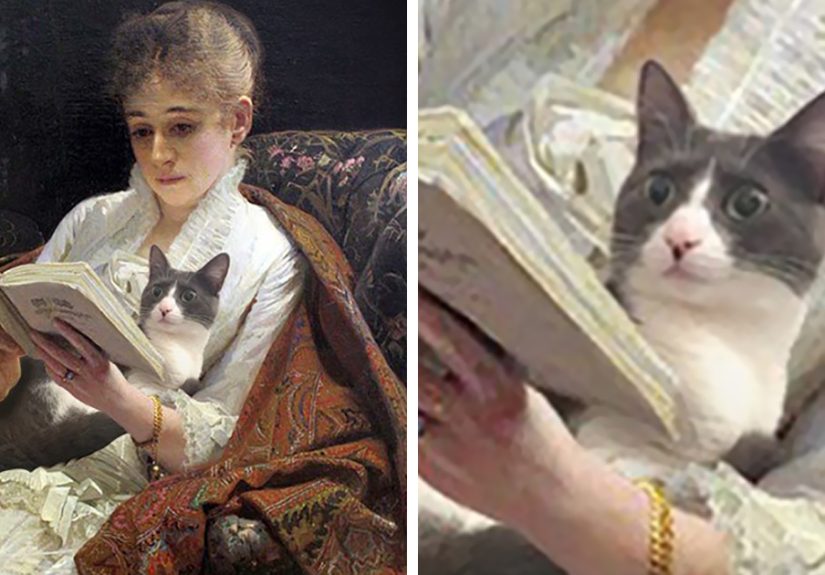
In classic portraiture, cats can make stiff subjects feel more human. A royal woman with a white kitten becomes softer and more approachable. A scholar reading by candlelight becomes instantly relatable when a cat paws at the page. A child in a formal outfit looks less like a museum artifact and more like a kid trying not to laugh because the family cat has decided the sitting is over.
The Comedy of Adding Cats to Classical Art
The humor comes from contrast. Famous paintings often carry a sense of grandeur, discipline, and careful composition. Cats carry the energy of “I live here now.” Put those two things together and the result is visual mischief.
Take a solemn Renaissance portrait. The sitter may have perfect posture, expensive fabric, and a gaze that says, “My family owns three castles and several opinions.” Add a cat lounging across their sleeve and suddenly the painting tells a new story: power is temporary, but cat hair is forever.
A dramatic historical painting becomes even better. Imagine a group of figures gathered around a major event while, in the corner, a tabby quietly pushes a goblet off the table. The original scene may be about destiny, tragedy, or faith, but the cat has introduced a secondary plot: gravity testing.
Still lifes are especially vulnerable. Artists have long painted fruit, flowers, fish, bread, and glassware with extraordinary patience. A cat changes the entire meaning. A bowl of grapes is no longer a symbol of abundance; it is a countdown. A platter of seafood becomes evidence. A vase of flowers becomes a future mess with petals, water, and one innocent-looking suspect.
How Cats Change the Story Inside a Painting
When a cat appears in a painting, the viewer immediately starts inventing a narrative. That is part of the charm. We stop asking only, “Who painted this?” and start asking, “What happened five seconds before this scene?”
Portraits Become Personal
Formal portraits can feel distant because they were often designed to communicate wealth, status, beauty, or family legacy. A cat breaks the glass wall between viewer and subject. It introduces domestic chaos, affection, and personality. The painted figure is no longer just a noblewoman, philosopher, musician, or merchant. They become someone whose cat may interrupt them at any moment, which is the most universal human experience besides losing one sock in the laundry.
Genre Scenes Become Funnier
Genre paintingsscenes of everyday lifeare perfect homes for cats. A sleeping knitter with a cat curled nearby feels believable. A young reader with a curious kitten on the book feels familiar. A person at a fountain with a cat investigating the water is not just cute; it is practically documentary.
Still Lifes Become Suspenseful
Still lifes are famous for their quiet beauty. Add a cat and suddenly there is suspense. Will the cat eat the fish? Will it sit in the fruit bowl? Will it ignore the expensive silver cup and become obsessed with a piece of string? The viewer knows disaster is possible, and that tiny tension makes the image feel alive.
Why This Idea Works So Well Online
The internet loves three things: clever visual jokes, recognizable references, and cats behaving like tiny managers with no training. A 52-picture series that reimagines famous paintings with cats sits directly in the center of that triangle.
People do not need an art history degree to enjoy it. If they recognize the painting, they laugh at the twist. If they do not recognize the painting, they still enjoy the cat. That makes the concept highly shareable across audiences: museum lovers, pet owners, meme fans, digital collage artists, teachers, students, and anyone who has ever tried to work while a cat sits on the keyboard like a furry paperweight.
It also lowers the intimidation factor of classical art. Many people feel that museums are quiet places where they must whisper, nod thoughtfully, and pretend to understand symbolism. Adding cats gives viewers permission to relax. The painting becomes an invitation, not an exam.
The Art Behind the Joke
Although the concept is funny, the execution requires more than pasting a cat onto an image. A good art parody respects the original composition. The cat has to match the direction of light, the mood of the scene, and the physical space inside the painting. If the original subject is lit from the left, the cat should not look like it wandered in from a smartphone flash. If the painting has soft brushwork, the cat should blend naturally enough to feel like it belongs.
That is where digital collage becomes its own creative skill. The artist must think like both a painter and a comedian. Where should the cat sit? What expression works best? Should the feline be regal, sleepy, shocked, judgmental, or deeply suspicious of fruit? A tiny change in placement can shift the whole joke.
The best examples feel as though the cats were always meant to be there. A cat draped over a lap echoes the curve of a dress. A black cat on a bed adds drama. A kitten peeking from behind a chair gives the painting a second focal point. A round cat beside a serious figure introduces comic balance, like a fluffy punctuation mark at the end of a very fancy sentence.
Famous Painting Styles That Become Better With Cats
Renaissance Portraits
Renaissance portraits already have rich colors, careful poses, and symbolic objects. Adding a cat makes them warmer and more playful. A noble sitter holding a kitten could suggest gentleness, status, or simply that the kitten refused to be placed anywhere else.
Baroque Drama
Baroque paintings are known for deep shadows, strong emotion, and theatrical light. A cat in a Baroque scene becomes wonderfully dramatic. Imagine a tabby half-lit by candlelight, staring at a lobster as though receiving a divine prophecy.
Impressionist Moments
Impressionist works often capture light, movement, and everyday life. Cats fit beautifully here because they are experts at ordinary magic: sleeping in sunbeams, watching gardens, and turning a windowsill into a kingdom.
Victorian and Academic Painting
These paintings often include polished interiors, elegant clothing, and sentimental scenes. A cat adds emotion without needing a speech bubble. A child with a kitten, a woman reading beside a pet, or a family scene with a cat under the chair feels cozy and instantly understandable.
Cats as Tiny Art Critics
One of the funniest parts of imagining cats in famous paintings is that cats always look like they are judging the room. A human sitter may look thoughtful, tragic, romantic, or wise. A cat looks like it knows the museum gift shop is overpriced.
This judgmental quality makes cats perfect art critics inside the artwork itself. They can stare at the viewer as if to say, “Yes, the brushwork is impressive, but have you considered feeding me?” They can ignore the grandeur of the scene and focus on a ribbon, a feather, a plate, or a sleeve. In doing so, they make the painting feel less frozen and more spontaneous.
Cats also introduce scale. A grand historical scene can feel enormous and distant, but place a cat near a chair or a person’s hand and suddenly the space feels physical. You can imagine the room. You can imagine the sound of paws on the floor. You can imagine the artist sighing because the model was finally still, but the cat was not.
The Emotional Side of Cat Art
The humor is obvious, but there is also something sweet about the idea. Pets make people feel seen. A famous painting can seem remote because it belongs to another century, another culture, or another social world. A cat creates a bridge. Human beings change their clothes, furniture, and hairstyles, but the feeling of loving a pet remains familiar.
That is why a cat can make even an old painting feel modern. We recognize the tenderness of holding an animal, the annoyance of being interrupted, the comfort of a warm creature nearby, and the absurdity of rearranging our lives around a pet that contributes zero rent and unlimited opinions.
What 52 Cat Paintings Can Teach Us About Creativity
A project like this proves that creativity does not always require inventing something from nothing. Sometimes it begins with a playful question: what if? What if this woman in a famous portrait had a cat? What if the child in this painting was not alone? What if the still life was moments away from becoming a snack?
That small question opens a door. It encourages viewers to look closely at the original paintings: the hands, the fabrics, the furniture, the food, the expressions, and the empty spaces where a cat might plausibly fit. In a funny way, adding cats can make people study art more carefully than a formal lecture ever could.
It also shows the value of remix culture when handled with care. Reimagining older artworks can introduce them to new audiences, especially when the new version is respectful, clever, and transformative. The cat becomes a guide, leading viewers back to art history with a wink and a tail flick.
Experience: What It Feels Like to Imagine Famous Paintings With Cats
Spending time with this idea feels a little like walking through a museum after hours with a pocket full of treats. At first, you look at each painting the usual way. You notice the composition, the colors, the posture of the figures, and the serious expressions that appear so often in old portraits. Then your imagination sneaks in wearing tiny paws.
You begin to see opportunities everywhere. A velvet chair is not just a chair; it is a cat throne. A folded blanket is not just a painted textile; it is a nap zone. A bowl of fish is not a still-life element; it is a security risk. A long dress becomes a climbing mountain. A scholar’s desk becomes a perfect place for a cat to sit directly on the most important document in the room.
The most enjoyable part is choosing the right cat personality for the right painting. Not every scene needs the same kind of feline. Some paintings call for a dignified cat with a royal posture, the kind that looks as if it owns the frame and merely allows the humans to remain in it. Other paintings need a goofy cat with wide eyes, because the original scene is so serious that a little chaos makes it shine. A romantic portrait may need a soft, affectionate cat. A dramatic mythological scene may need a black cat in the shadows, observing everything like it already knows the ending.
There is also a strange respect that grows during the process. To place a cat convincingly, you have to pay attention to the old masters. You notice how hands are positioned, how fabric folds, how light touches a face, and how objects guide the viewer’s eye. The joke only works when the details work. A poorly placed cat is just a pasted image. A well-placed cat becomes part of the story.
After imagining dozens of these combinations, the museum in your mind becomes livelier. The silent rooms fill with small sounds: paws on wood, a purr near a velvet sleeve, a soft thump as a cat jumps onto a table, the suspicious clink of something that should not be moving. The paintings stop feeling sealed behind glass. They become scenes that might continue after you look away.
And perhaps that is the real magic of the project. It reminds us that art does not have to be stiff to be meaningful. We can admire technique and still laugh. We can respect history and still play with it. We can look at a masterpiece and wonder, with complete seriousness, whether the composition would improve if a chubby orange cat were sitting in the corner. Often, the answer is yes.
Final Thoughts
I Imagined What Would Happen If The Subjects Of Famous Paintings Had Cats (52 Pics) is more than a cute art parody concept. It is a reminder that classic paintings are not dead objects; they are living invitations. When cats enter the frame, they bring humor, warmth, mischief, and a surprisingly useful way to reconnect with art history.
Whether the cat is stealing fish from a still life, interrupting a noble portrait, guarding a windowsill, or silently judging centuries of human ambition, it adds a fresh layer of personality. The result is funny, charming, and oddly educational. After all, if a cat can make someone pause long enough to look closely at a famous painting, that cat has done more for art appreciation than many museum brochures.
So the next time you see a serious old portrait, try imagining a cat in it. Maybe curled on the subject’s lap. Maybe hiding under the table. Maybe staring straight at you with that unmistakable expression: “Yes, human, this masterpiece is about me now.”