Table of Contents >> Show >> Hide
- Why Old Clothes Make the Best Doll Outfits
- The Best Old Clothes to Use for Doll Clothing
- Basic Supplies You Need
- How to Plan a Doll Outfit From Old Clothes
- 14 Picture-Worthy Doll Outfit Ideas From Old Clothes
- Pic 1: The T-Shirt Graphic Tee
- Pic 2: The Sock Sweater Dress
- Pic 3: Denim Mini Skirt
- Pic 4: Button-Up Shirt Blouse
- Pic 5: Plaid Schoolgirl Skirt
- Pic 6: Hoodie From a Sweatshirt Sleeve
- Pic 7: Lace-Trim Party Dress
- Pic 8: Mini Overalls From Jeans
- Pic 9: Pajama Set From Flannel
- Pic 10: Summer Dress From a Floral Blouse
- Pic 11: Beanie and Scarf Set
- Pic 12: Patchwork Jacket
- Pic 13: Tulle or Mesh Overskirt
- Pic 14: Tiny Tote Bag From a Pocket
- Step-by-Step: A Simple Doll Dress From an Old T-Shirt
- Design Tips for Better Doll Outfits
- Why This Craft Is Good for Beginners
- The Sustainability Side of Doll Fashion
- Common Mistakes to Avoid
- How to Display or Photograph the 14 Doll Outfits
- Personal Experience: What Making Doll Outfits From Old Clothes Taught Me
- Conclusion
Note: This article is written in standard American English and is designed for web publication, with SEO-friendly headings, natural keyword placement, and original phrasing.
Some people see an old T-shirt and think, “Cleaning rag.” Others see a faded sock and think, “Well, your time has come.” But doll-clothes makers? We see a tiny runway show waiting to happen. A frayed cuff becomes a miniature sweater hem. A button-up shirt becomes a doll-size blouse. A pair of jeans too tired for human legs suddenly has enough swagger to become the tiniest denim jacket in town.
Making outfits out of old clothes for dolls is more than a cute craft. It is a creative way to practice upcycling, reduce textile waste, save money on craft supplies, and turn forgotten fabric into something charming. The U.S. Environmental Protection Agency estimated that 17 million tons of textiles were generated in municipal solid waste in 2018, and only 14.7% of textiles were recycled that year. That means every small reuse project, even one involving a doll with better fashion instincts than most of us before coffee, belongs to a much bigger conversation about sustainability.
Below is a fun, practical, and deeply stitch-obsessed look at how old clothes can become adorable doll outfits, plus 14 picture-worthy ideas for turning scraps into tiny fashion moments.
Why Old Clothes Make the Best Doll Outfits
Buying new fabric is fun, but old clothes come with built-in personality. A child’s outgrown shirt may have a tiny floral print that is perfect for doll dresses. A worn hoodie can become a cozy miniature sweatshirt. A pair of jeans with a ripped knee can still provide enough usable denim for skirts, vests, bags, and doll-size overalls.
The beauty of using old clothes is that many details are already finished for you. Existing hems, cuffs, collars, buttons, lace trims, pockets, and elastic waistbands can be cut and reused at doll scale. This saves time and gives the finished outfit a polished look without requiring a professional sewing studio or a machine that sounds like it is preparing for takeoff.
Reusing clothes also supports a circular mindset. The Government Accountability Office notes that consumers and businesses can donate, repurpose, recycle, and repair used textiles, although most used textiles in the U.S. are still discarded into municipal waste streams. A doll outfit may be tiny, but the habit behind it is powerful: look again before you throw away.
The Best Old Clothes to Use for Doll Clothing
Not every old garment wants to become couture for a 12-inch fashion icon. Some fabrics behave beautifully at small scale, while others become bulky, slippery, or dramatic for no reason. Start with soft, thin, flexible fabrics that are easy to fold, stitch, and press.
1. T-Shirts
Old T-shirts are excellent for doll tops, dresses, leggings, pajama sets, and headbands. Knit fabric stretches, which helps tiny garments fit over doll arms and shoulders. Graphic tees are especially fun because a small part of the original design can become a statement print on a doll’s shirt.
2. Button-Up Shirts
Button-up shirts are a gold mine. The cuffs can turn into skirts. The placket can become the front of a tiny blouse. The collar can be trimmed down for a doll jacket. Even the buttons can be reused as closures or decorative details.
3. Jeans and Denim
Denim gives doll clothes structure. Use thinner, worn-in denim rather than stiff heavyweight jeans. Soft denim works well for mini skirts, jackets, tote bags, shorts, and patchwork looks.
4. Socks
Socks are beginner-friendly because they already have stretch and finished edges. A sock can become a sweater dress, beanie, skirt, or pair of doll leggings with very little cutting. It is the craft version of “work smarter, not harder.”
5. Scarves, Pajamas, and Baby Clothes
Scarves often have lightweight fabric and pretty prints. Pajamas are soft and easy to sew. Baby clothes are especially useful because the prints are already scaled down, making them look natural on dolls.
Basic Supplies You Need
You do not need a professional sewing room to begin. A simple kit is enough:
- Old clothes or fabric scraps
- Sharp fabric scissors
- Needle and thread
- Sewing pins or clips
- Measuring tape
- Small snaps, Velcro, hooks, or tiny buttons
- Fabric glue for no-sew details
- A pencil or washable fabric marker
- Paper for drafting simple patterns
A sewing machine can help, but hand sewing works perfectly well for many doll outfits. In fact, small garments often require slower, more controlled stitching. Martha Stewart’s sewing guidance reminds crafters that a needle and thread can solve simple fabric problems like missing buttons, fraying seams, and holes that need patching. Doll clothing is basically that idea with a tiny fashion show attached.
How to Plan a Doll Outfit From Old Clothes
Before cutting anything, study the garment. Look for sections that already have useful features. A sleeve hem can become a doll skirt hem. A shirt cuff can become a waistband. A printed pocket can become a tote bag. The goal is to preserve as much finished detail as possible.
Next, measure your doll. Important measurements include chest, waist, hips, shoulder width, arm length, leg length, and the distance from neck to waist. Doll clothes are less forgiving than human clothes because even a tiny error can look oversized. A quarter inch can be the difference between “adorable jacket” and “doll borrowed a tent.”
Many doll-clothing tutorials use small seam allowances because miniature garments need less bulk. Some doll sewing patterns use a 1/4-inch seam allowance instead of the larger allowances common in adult clothing. This keeps seams neater and prevents the outfit from looking puffy in the wrong places.
14 Picture-Worthy Doll Outfit Ideas From Old Clothes
Here are 14 creative outfit ideas inspired by the magic of turning old clothing into doll fashion. Each one can be adapted for Barbie-size dolls, 18-inch dolls, cloth dolls, fashion dolls, or handmade dolls.
Pic 1: The T-Shirt Graphic Tee
Cut a small design from an old graphic T-shirt and place it on the front of a doll-size top. A tiny cartoon, logo, flower, or slogan can look hilarious and stylish at miniature scale. Add snaps or Velcro in the back so the shirt is easy to put on.
Pic 2: The Sock Sweater Dress
Use the tube of a soft sock to create a sweater dress. Cut armholes, finish the edges with hand stitching, and use the ribbed cuff as the neckline or hem. This project is perfect for beginners because the sock does most of the shaping work.
Pic 3: Denim Mini Skirt
Take a worn pair of jeans and cut a small rectangle from the softest area. Add a back seam, waistband, and Velcro closure. Keep an original seam or faded patch visible for extra character.
Pic 4: Button-Up Shirt Blouse
Use the front placket from an old button-up shirt to create a doll blouse with real buttons. The buttons may not need to function; they can simply decorate the front while snaps close the back.
Pic 5: Plaid Schoolgirl Skirt
An old plaid shirt can become a pleated skirt. Use the shirt’s existing hem for the bottom edge and press small pleats into the fabric. Add a simple waistband and you have a classic doll outfit that looks ready for a tiny yearbook photo.
Pic 6: Hoodie From a Sweatshirt Sleeve
A sweatshirt sleeve provides soft knit fabric for a doll hoodie. Use the cuff as the bottom band and cut a small hood from another section. Add a fake drawstring using embroidery floss for a realistic finish.
Pic 7: Lace-Trim Party Dress
Old camisoles, nightgowns, or blouses often include lace trim. Carefully cut around the lace and reuse it as a doll dress hem, neckline, or sleeve detail. Suddenly, your doll looks like she has a gala at seven and a tea party at eight.
Pic 8: Mini Overalls From Jeans
Use soft denim scraps to make overalls with shoulder straps. Tiny metal buttons or beads can mimic hardware. This project takes patience, but the finished result is ridiculously cute.
Pic 9: Pajama Set From Flannel
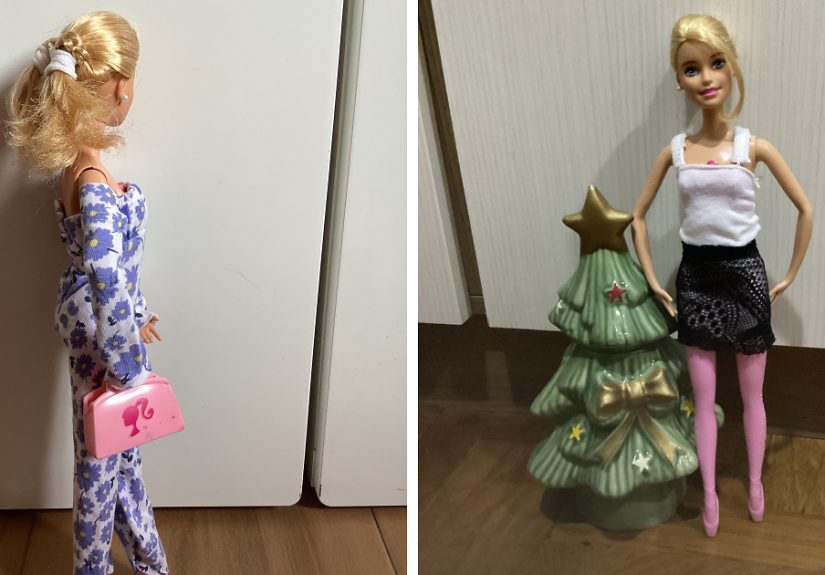
An old flannel shirt or pajama pants can become doll sleepwear. Use the softest fabric and keep the shape simple: elastic-waist pants and a loose top. Matching pajamas are especially adorable for doll photography.
Pic 10: Summer Dress From a Floral Blouse
Small floral prints look wonderful on dolls. Cut a gathered skirt from a blouse and pair it with a simple bodice. If the original blouse has tiny buttons, save them for the front of the dress.
Pic 11: Beanie and Scarf Set
Use sweater scraps, socks, or fleece to make cold-weather accessories. A small rectangle can become a scarf, and a sock toe can become a beanie. Add a pom-pom if your doll enjoys being aggressively cozy.
Pic 12: Patchwork Jacket
Combine scraps from several old garments to create a patchwork jacket. Use denim, cotton, and flannel pieces in a balanced color palette. This is a great way to use tiny leftovers that are too small for full garments.
Pic 13: Tulle or Mesh Overskirt
If an old dress has tulle, mesh, or sheer lining, reuse it as a dramatic overskirt. Layer it over a simple cotton dress for instant fairy-tale energy. Dolls do not pay rent, so they might as well dress extravagantly.
Pic 14: Tiny Tote Bag From a Pocket
Cut a small pocket from an old shirt or jeans and turn it into a doll tote bag. Add straps from ribbon, bias tape, or fabric strips. It is the perfect accessory for a doll who has errands, secrets, or one very tiny library book.
Step-by-Step: A Simple Doll Dress From an Old T-Shirt
If you are new to sewing doll clothes, start with a basic T-shirt dress. It is forgiving, stretchy, and easy to customize.
Step 1: Choose the Fabric
Select a soft T-shirt with a print or color you like. Avoid fabric that is too thin, stretched out, or full of holes unless you are planning a distressed look.
Step 2: Make a Simple Pattern
Place the doll on paper and trace a loose dress shape around the body. Add room for seams and movement. Keep the design simple: sleeveless or short-sleeved styles are easiest.
Step 3: Cut the Pieces
Cut one front piece and two back pieces. Two back pieces allow you to add a closure. Use the original T-shirt hem as the bottom of the dress if possible.
Step 4: Sew the Shoulder and Side Seams
Place the fabric right sides together and stitch the shoulders and sides. Use small, even stitches if sewing by hand.
Step 5: Finish the Edges
Fold and stitch the neckline and armholes, or use fabric glue for a beginner-friendly finish. Knit fabric may curl, so press gently if needed.
Step 6: Add a Back Closure
Use Velcro, snaps, or hooks. Snaps give a clean finish, while Velcro is easier for children to use.
Step 7: Decorate
Add lace, a bow, buttons, embroidery, or a belt made from scrap fabric. Small details make doll outfits feel intentional instead of “I attacked a shirt with scissors at midnight.”
Design Tips for Better Doll Outfits
Use Small Prints
Large prints can overwhelm tiny garments. A flower the size of a human palm may look like a whole jungle on a doll dress. Choose small florals, stripes, polka dots, checks, and subtle textures.
Avoid Bulky Seams
Trim seam allowances and press them flat. Thick seams make doll clothes stiff and awkward. If fabric is bulky, use it for accessories instead of fitted garments.
Reuse Existing Hems
Old clothes often have neat hems. Cut pattern pieces along existing hems to save time and create a professional look.
Choose Closures Carefully
For small dolls, Velcro can be bulky. Snaps and hooks look cleaner but take more patience. For children’s play dolls, durability matters more than perfect realism.
Think Like a Stylist
A tiny outfit looks better when the pieces coordinate. Choose a color story before cutting. Denim with floral cotton, gray knit with pink fleece, or plaid with solid black can create a polished mini wardrobe.
Why This Craft Is Good for Beginners
Doll clothing is small, affordable, and low-pressure. If a project fails, you have lost a scrap, not five yards of expensive fabric. That makes it ideal for practicing seams, hems, gathering, pattern drafting, and closures.
It is also a great way to teach kids basic sewing and sustainability. The EPA encourages people to reuse or repurpose items such as old clothing to prevent waste, save money, conserve energy, and reduce the amount of material sent to landfills and incinerators. Turning a worn shirt into doll fashion makes that lesson tangible and fun.
The Sustainability Side of Doll Fashion
Upcycling doll clothes will not solve textile waste by itself, but it changes how we see materials. Instead of treating old clothing as trash, we begin to see it as fabric, trim, buttons, elastic, and story.
NIST has reported that only about 15% of used clothes and other textiles in the U.S. get reused or recycled, while the rest goes to landfill or incineration. Creative reuse projects help extend the life of textiles and encourage people to repair, repurpose, and rethink before discarding.
Major design institutions have also recognized creative textile reuse as a serious sustainability practice. Cooper Hewitt, Smithsonian Design Museum’s “Scraps: Fashion, Textiles, and Creative Reuse” exhibition highlighted designers who put sustainability at the center of their process through innovative material reuse. Doll clothing may be smaller than museum fashion, but the design principle is the same: scraps can become something beautiful.
Common Mistakes to Avoid
Cutting Before Measuring
Always measure the doll first. Dolls vary widely in shape, even when they are similar heights. A pattern for one doll may not fit another.
Using Fabric That Is Too Thick
Heavy denim, thick sweaters, and bulky fleece can be difficult to sew at small scale. Use thick materials for coats, bags, and hats rather than fitted dresses.
Skipping Closures
A doll dress that looks cute but cannot fit over the doll’s head is not a dress. It is a fabric puzzle. Add a back opening, stretch neckline, or closure.
Forgetting Playability
If the outfits are for children, make sure they can be removed and put back on without frustration. Strong seams and simple closures are your friends.
How to Display or Photograph the 14 Doll Outfits
Since the title promises “14 pics,” presentation matters. Photograph each outfit in natural light near a window. Use a plain background so the clothing stands out. A sheet of white poster board, a wooden tabletop, or a simple fabric backdrop works well.
Take one full-body shot, one close-up of the fabric detail, and one behind-the-scenes image showing the original garment scrap. Readers love seeing the transformation from “old sleeve” to “tiny sweater dress.” It makes the project feel achievable and magical.
For a blog layout, arrange the photos as a numbered gallery. Add short captions that explain what old garment was used. For example: “Made from a faded striped T-shirt” or “Cut from the cuff of an old flannel shirt.” This helps readers imagine their own closet as a craft supply store.
Personal Experience: What Making Doll Outfits From Old Clothes Taught Me
Making outfits out of old clothes for dolls sounds simple until you are arguing with a sleeve at 11:47 p.m. because the sleeve refuses to become pants. That is when the craft becomes personal. It teaches patience, improvisation, and the fine art of pretending a mistake was actually a bold design choice.
The first thing I learned is that old clothes are full of surprises. A shirt that looks boring at human size can become adorable at doll size. Tiny stripes look chic. A faded floral print becomes vintage. A cuff suddenly looks like the perfect waistband. Even the worn areas can add character if you place them carefully. Instead of hiding every imperfection, I started using them. A faded patch on denim became the front of a skirt. A tiny hole became a reason to add embroidery. A stretched-out neckline became trim.
The second lesson is that doll clothes reward careful planning. At first, I wanted to cut fast and figure things out later. This worked exactly as well as you imagine, which is to say: not well. Doll clothes need precision because there is not much room for error. Measuring the doll before cutting saves fabric, time, and emotional damage. Making paper patterns also helps. Once I had a basic bodice, skirt, sleeve, and pants pattern, I could reuse them again and again with small changes.
I also discovered that the best part of upcycling is the challenge. New fabric is a blank canvas, but old clothing gives you a puzzle. How can I use this existing hem? Can this pocket become a bag? Is this sleeve wide enough for a dress? Can I turn this pajama print into something that looks intentional rather than like the doll got dressed during a power outage? These questions make the process more creative.
Another important experience is learning when to stop adding details. Because doll outfits are small, too many decorations can make them look messy. One bow is charming. Seven bows can make the doll look like she lost a fight with a gift-wrapping station. A clean silhouette with one thoughtful detail often looks better than a tiny garment covered in every trim from the craft drawer.
Hand sewing became surprisingly relaxing. There is something satisfying about making tiny stitches while turning discarded fabric into something new. It feels slow in the best way. Unlike fast fashion, which encourages constant buying and tossing, this craft encourages attention. You notice texture, stretch, grain, seams, and color. You begin to understand clothing as material instead of waste.
The biggest joy, though, is seeing the final outfit on the doll. A scrap that seemed useless suddenly has shape, style, and personality. It feels like a small rescue mission with buttons. Whether the outfit is a polished dress, a casual hoodie, a denim skirt, or a ridiculous sock sweater, it carries a story from its previous life.
Making doll outfits from old clothes also changed how I look at my closet. I no longer see worn-out garments as automatic trash. I see possibilities: linings, straps, tiny sleeves, miniature scarves, quilt pieces, doll pillows, and accessories. Not every piece can be saved, but many can be given one more chapter.
And honestly, there is something wonderfully funny about spending serious creative energy on clothes for someone who is twelve inches tall and never complains about laundry. Doll fashion is playful, but it is also meaningful. It combines sustainability, creativity, memory, and skill-building in one small project. Best of all, it proves that old clothes do not have to be the end of the story. Sometimes, they just need to be resized for a much smaller superstar.
Conclusion
Making outfits out of old clothes for dolls is a delightful mix of crafting, sustainability, and miniature fashion drama. It gives old garments a second life, helps reduce waste, and turns scraps into something personal and playful. From sock sweater dresses to denim skirts, flannel pajamas, graphic tees, and tiny tote bags, the possibilities are limited only by your fabric pile and your willingness to negotiate with a needle.
This craft is beginner-friendly, budget-conscious, and full of creative rewards. It teaches sewing skills, encourages reuse, and makes every old shirt feel like potential. So before tossing that faded tee or lonely sock, take one more look. Your doll’s next favorite outfit may already be hiding in the laundry basket.