Table of Contents >> Show >> Hide
- What Happened Between Nick Offerman and Michael Flynn Jr.?
- Why Ron Swanson Was the Worst Possible Mascot for an Anti-Pride Message
- Nick Offerman’s Reply Worked Because It Was Funny, Accurate, and Moral
- The Parks and Recreation Legacy at the Center of the Backlash
- Why This Moment Hit During Pride Month
- The Bigger Lesson About Fandom, Media Literacy, and Character Theft
- Experiences Related to This Moment: Why It Felt Personal for So Many People
- Conclusion
Note: Ready-to-publish body-only HTML.
Some celebrity clapbacks feel manufactured, like they were focus-grouped by three publicists and a ring light. This was not one of them. When Michael Flynn Jr. posted an anti-Pride message using a doctored clip of Ron Swanson from Parks and Recreation, Nick Offerman answered with the kind of reply that instantly travels across the internet because it is sharp, funny, correct, and devastating all at once.
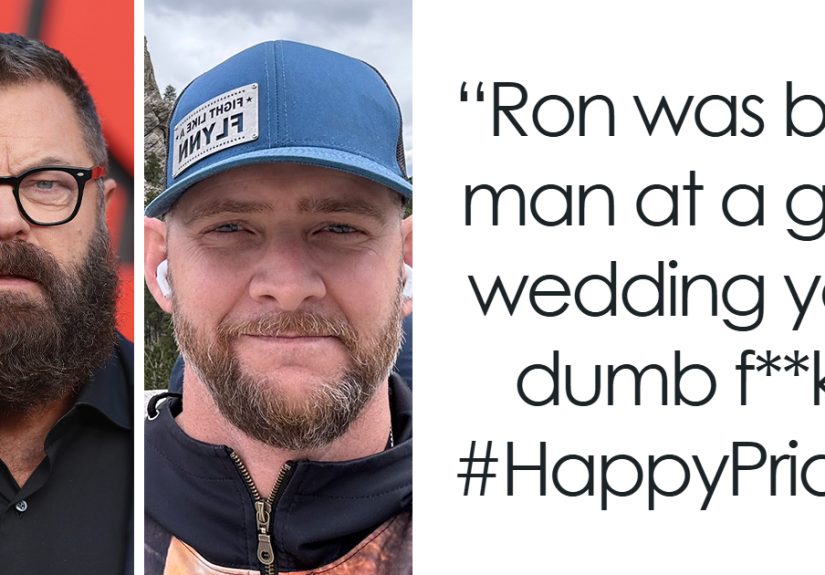
That is why people called it an incredible reply. Offerman did not write a long thread. He did not post a ten-slide lecture. He did not fire up the corporate apology generator and make everyone take a nap. He reached for one clean, canonical fact from the show itself and turned the whole stunt inside out. In one sentence, he reminded viewers that Ron Swanson was best man at a gay wedding. Translation: if you are trying to recruit Ron into your anti-Pride campaign, you have picked the wrong mustache, the wrong man, and very much the wrong sitcom.
The moment mattered because it was not just another celebrity social media fight. It touched on bigger issues: how pop culture characters get hijacked for political messaging, how audiences misread fictional figures they claim to love, and why Pride Month remains a flashpoint in American public life. It also landed because Offerman has spent years showing that his allyship is not decorative. He has defended queer storytelling before, and this time he did it with the blunt force of a man protecting both real people and fictional truth.
What Happened Between Nick Offerman and Michael Flynn Jr.?
The controversy began when Michael Flynn Jr., son of former national security adviser Michael Flynn, shared a manipulated Parks and Recreation clip at the beginning of Pride Month. The original scene shows Ron Swanson angrily tossing a computer into the trash after a privacy-related meltdown. In the edited version, the computer was replaced with a Pride flag. Flynn Jr. added a caption making clear that the post was intended as a shot at Pride Month.
That setup is important, because the whole thing relied on a familiar internet trick: take a beloved fictional character, strip away context, slap on a political message, and hope viewers remember the meme more than the source material. It is lazy, but it works often enough because culture moves fast and memory moves slowly. A lot of people know Ron Swanson as the steak-loving, government-hating king of masculine grumbling. Fewer remember that the show never presented him as a mascot for cruelty.
Offerman’s response landed so hard because he went straight to the record. His comeback, which quickly spread across entertainment and LGBTQ+ coverage, pointed out that Ron was best man at a gay wedding and ended with a cheerful Pride greeting. It was equal parts correction and roast. More important, it was rooted in the actual text of the series, not in online fan fiction disguised as politics.
In internet terms, that is what experts might call a clean hit. In regular-human terms, it meant the person who actually played the character stepped in and said, in effect, “Nope, not on my watch.”
Why Ron Swanson Was the Worst Possible Mascot for an Anti-Pride Message
Ron Swanson is one of those television characters who gets flattened by people who only remember the meme version. Yes, he loves woodworking, breakfast food, privacy, and a dramatic hatred of government bureaucracy. Yes, he radiates the energy of a man who would rather eat a porterhouse in silence than explain himself to strangers. But Parks and Recreation was never interested in making Ron a one-note culture-war action figure.
The genius of Ron was always that he was a contradiction with a code. He could be stubborn without being cruel, traditional without being hateful, rugged without needing to perform insecurity. The show built comedy from his worldview, but it also gave him decency. He respected competence. He loved people in practical, unsentimental ways. He was often baffled by emotional theatrics, yet surprisingly loyal when it counted.
That is why the wedding reference matters so much. In the series finale, Ron serves as best man when Typhoon marries Craig. It is not played as a political stunt, and that is exactly the point. The wedding exists inside the warm moral universe of the show, where queer characters are not treated as a punchline or a culture-war prop. Ron’s role in that moment says something basic but important: his character was never written as a man threatened by other people’s lives.
So when the edited anti-Pride post tried to turn Ron into a symbol of rejection, it did not just miss the mark. It fired the dart into a completely different carnival booth. Offerman’s reply was satisfying because it restored the character’s full shape. Ron Swanson was not anti-gay. He was anti-nonsense. Those are very different hobbies.
Nick Offerman’s Reply Worked Because It Was Funny, Accurate, and Moral
Plenty of public responses are technically correct and still forgettable. Offerman’s was memorable because it hit three targets at once.
First, it was funny. Comedy matters in moments like this because humor changes the power dynamic. A long defensive statement can make a hateful post feel bigger than it deserves. A brutal one-liner reduces it to what it is: a flimsy stunt. Offerman made the original post look small, silly, and misinformed.
Second, it was accurate. He did not invent an interpretation after the fact. He used a detail that actually happened in the series. In other words, the clapback was not just emotionally satisfying; it was canon. Online arguments hate to see canon coming.
Third, it was moral without sounding sanctimonious. That balance is hard. A lot of people are tired of being preached at, but they still want someone to say clearly when something is wrong. Offerman’s style solved that tension. He did not deliver a seminar on tolerance. He defended queer people, defended the show, and kept moving. That economy made the message stronger, not weaker.
There is also a reason the response resonated beyond the immediate dispute. Offerman has a track record here. After his acclaimed turn in The Last of Us, he pushed back against homophobic backlash by arguing that what some critics dismissed as a “gay story” was, plainly, a love story. That earlier stance gave this Pride Month reply extra credibility. It did not read like a random mood swing. It read like continuity.
The Parks and Recreation Legacy at the Center of the Backlash
Part of what made this story travel so fast is that Parks and Recreation still occupies a special place in American TV culture. People do not merely remember the show; they carry it around like comfort food with better dialogue. It is a series associated with civic optimism, strange local rituals, and the radical idea that community gets better when decent people keep showing up.
That legacy matters because it clashes so hard with the spirit of an anti-Pride meme. Parks and Recreation may have been full of absurd characters, but its worldview was generous. The show believed institutions could be annoying, people could be ridiculous, and yet kindness was still worth choosing. Even its cynics were not nihilists. Ron could grumble for hours, but the series still placed him inside a circle of care.
So the online misuse of a Ron Swanson clip felt especially off-key to longtime viewers. It was not just a disagreement over a celebrity opinion. It was an attempt to drag a fundamentally warm-hearted show into a performance of exclusion. For many fans, Offerman’s response felt like maintenance work on a beloved piece of culture. He was not merely defending himself. He was defending the DNA of the series.
That is why the reaction online was so immediate. Viewers recognized the gap between what the post wanted Ron to represent and what the character had actually represented for years. The joke had been reverse-engineered from a stereotype instead of built from the show. Offerman noticed, corrected it, and let the air out of the whole gimmick.
Why This Moment Hit During Pride Month
Pride Month is not just a rainbow merchandising season where brands suddenly discover they have feelings. It exists because of a real history of protest, memory, and visibility tied to the Stonewall Uprising and the modern LGBTQ+ rights movement. That history is one reason even small symbolic fights can feel larger in June than they might at other times of the year.
The anti-Pride post was designed to provoke, but the response became meaningful because it pushed back against a broader pattern. Pride-related messaging often becomes a proxy battle over who gets seen, who gets affirmed, and who is allowed to exist in public without apology. When Offerman answered, he was participating in that wider argument whether he wanted to or not.
And because Parks and Recreation is such a culturally recognizable show, the moment turned into something bigger than a celebrity feud. It became a reminder that pop culture can be part of the social climate. A fictional character cannot vote, march, or post, but people use characters all the time to signal what kind of world they want. That is exactly why misusing them matters.
Offerman’s reply also tapped into a simple emotional truth: people are tired of watching basic human dignity treated like a game. His line worked because it rejected that framing. It did not debate whether queer inclusion should be up for discussion. It treated the anti-Pride setup as beneath the dignity of the character, the show, and common sense itself.
The Bigger Lesson About Fandom, Media Literacy, and Character Theft
If there is one lesson here beyond the immediate viral thrill, it is that media literacy is still hanging on by its fingernails. Viewers regularly adopt fictional characters as political mascots while ignoring the stories those characters actually inhabit. This happens across genres, franchises, and fan communities. People do not always love characters as they are written; they love the version that confirms what they already want to believe.
Ron Swanson is especially vulnerable to that kind of flattening because he is visually iconic and endlessly memeable. He looks like certainty. He sounds like certainty. He can be screenshotted into almost any argument about masculinity, government, or social change. But the full character is more interesting than the stereotype. He is not a cardboard cutout of reactionary rage. He is a deeply specific comic creation with an internal ethic.
Offerman’s reply served as a tiny but useful corrective. It reminded audiences that fictional worlds have actual details, and those details matter. You cannot claim cultural ownership over a character while ignoring the episodes that disprove your point. Well, technically you can, because the internet is a lawless raccoon kingdom. But you should expect to get fact-checked by the man with the mustache.
There is also a practical lesson for celebrities and creators here. When a misreading is obvious, concise correction can be more powerful than elaborate rebuttal. Offerman did not feed the outrage machine more than necessary. He gave the public enough truth, enough bite, and enough confidence to understand exactly why the original post failed.
Experiences Related to This Moment: Why It Felt Personal for So Many People
One reason this story spread so quickly is that it matched experiences many people already know too well. For queer viewers, there is a familiar exhaustion in watching harmless joy or ordinary visibility turned into someone else’s daily target practice. A month meant to celebrate survival, community, and history gets reframed by critics as an unbearable inconvenience, as if a rainbow has personally damaged the drywall. Seeing Offerman answer that energy with speed and certainty felt reassuring because he did not ask queer fans to explain why the post was offensive. He already understood.
For longtime TV fans, the moment touched another nerve: the frustration of seeing a beloved character hijacked by people who seem to know the meme but not the material. Lots of viewers have had that experience. You love a show because it is humane, layered, and funny, then someone rips one image out of context and turns it into a blunt ideological hammer. It can feel weirdly personal, like watching somebody use your favorite family photo as a billboard for nonsense.
There is also the experience of public allyship, which often sounds abstract until a moment like this makes it concrete. Allyship is not only waving a flag at the right time or using the correct vocabulary in safe company. Sometimes it is stepping into a hostile exchange and saying, clearly, that a lie is a lie. Offerman did that in a way many people recognized instantly. He did not center himself as the wounded party. He redirected the attention to what was true and whom the attack was really aimed at.
Another layer is the exhaustion of internet culture itself. Social media encourages bad-faith posting because the reward system is built around reaction. People toss out bait, wait for outrage, and pretend that the outrage proves they are brave truth-tellers rather than attention hobbyists. Many users have experienced this dynamic at school, at work, in fandom spaces, or across family group chats that should have remained strictly about potato salad. Offerman’s reply felt satisfying because it cut through the performance and denied the original post the grand drama it wanted.
And then there is the emotional comfort people still get from Parks and Recreation. For many viewers, that series is not just a comedy; it is a place they revisit when the real world feels too sharp. The show believes that decency is not weakness, that communities can improve, and that even stubborn weirdos can learn how to love people well. When Offerman defended Ron Swanson from being repurposed into an anti-Pride symbol, it felt like he was protecting that emotional shelter too. He was saying the character still belongs to the better version of public life the show imagined.
That is why the reply was more than a viral joke. It reflected real experiences of misrepresentation, fatigue, relief, and recognition. It gave queer fans a visible defense. It gave viewers a satisfying correction. And it gave the internet, however briefly, a reminder that not every famous character can be conscripted into someone else’s grievance parade.
Conclusion
Nick Offerman’s response to Michael Flynn Jr.’s anti-Pride Parks and Recreation post worked because it was more than a celebrity burn. It was a defense of context over distortion, character over meme, and decency over performative hostility. By reminding the internet that Ron Swanson was best man at a gay wedding, Offerman did something surprisingly rare online: he made the truth funnier than the lie.
That is why the moment stuck. It was fast, factual, and emotionally clear. It honored the actual spirit of Parks and Recreation, affirmed queer fans during Pride Month, and exposed how flimsy culture-war symbolism becomes when it collides with the source material. In an age of constant outrage bait, Offerman’s incredible reply felt like a small master class in how to answer nonsense without becoming nonsense yourself.