Table of Contents >> Show >> Hide
- What Happened: The Painted-Mask “Hack” That Went Viral
- Why Bali Took It Seriously: Masks Weren’t a “Suggestion,” They Were the Deal
- How Deportation Actually Happens: Real-World Consequences, Not Internet Drama
- The Influencer Economy vs. Public Health: When “Content” Becomes Contagious
- Lessons for Travelers: How Not to Turn Your Vacation Into a Deportation Speedrun
- Lessons for Brands and Platforms: “Viral” Isn’t Always a Compliment
- Conclusion: Makeup Washes Off. Consequences Don’t.
- of Real-World “Been There” Lessons (Without the Deportation Part)
Bali is famous for sunrise smoothies, cliffside temples, and the kind of beaches that make your phone’s storage beg for mercy.
During the COVID era, though, it also became famous for something else: rules. Very real rules. The kind that don’t care how
cute your “content” is.
Which brings us to one of the strangest “I can’t believe they did that” moments of the pandemic travel timeline:
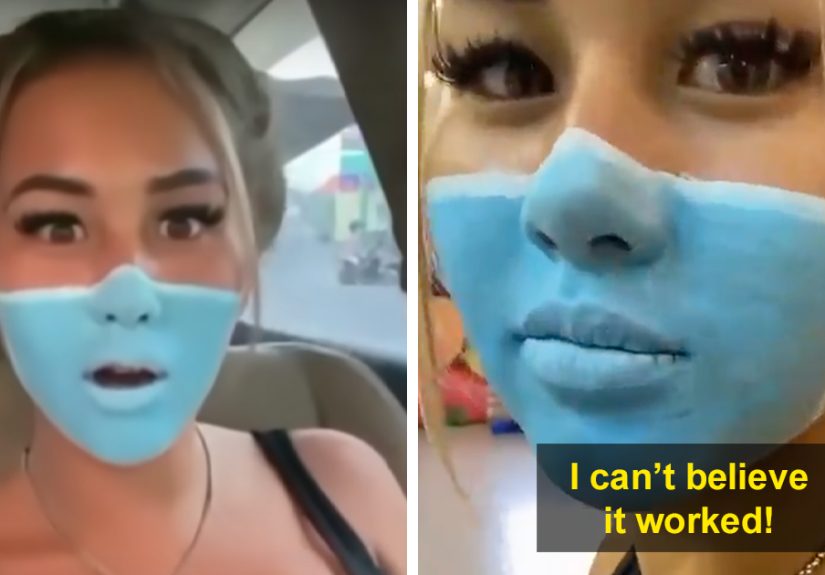
a viral video stunt in which an influencer bypassed Bali’s mask requirement by painting a surgical mask onto her face with makeup.
It wasn’t a special effects masterpiece. It was basically a blue rectangle plus confidence. And it ended with authorities stepping in,
passports getting taken, and a deportation order that made the joke land with the elegance of a coconut to the shin.
What Happened: The Painted-Mask “Hack” That Went Viral
In April 2021, a U.S.-based YouTuber, Josh Paler Lin, and a Russian influencer, Leia Se,
filmed themselves attempting to enter a supermarket in Bali. According to reporting at the time, Se was turned away because she
wasn’t wearing a mask. So the pair returned to their car and “solved” the problem by painting a blue surgical mask on her face,
complete with white edging and strap linesthen walked back in and shopped while laughing about how nobody noticed.
The clip spread fast. And because the internet has a strong immune response to “tourist breaks local public-health rules for laughs,”
backlash followed even faster. Local officials characterized the stunt as not only a violation but also a deliberate provocationan act
likely to encourage others to ignore health guidelines. Authorities ordered them off the island and moved toward deportation,
with reports noting their passports were seized and they were placed into immigration custody while awaiting removal.
Why Bali Took It Seriously: Masks Weren’t a “Suggestion,” They Were the Deal
If you’re wondering why this became such a big deal, the short answer is: context matters.
Bali’s economy depends heavily on tourism, but during the pandemic it also depended on keeping local transmission under control
and maintaining public confidence that health protocols were being enforced.
When someone broadcasts “Here’s how to bypass the rules,” it doesn’t read as harmless comedyit reads as sabotage.
Reporting around Bali’s enforcement at the time noted that foreigners could face a fine (often cited around 1 million rupiah)
for not wearing a mask, with deportation possible for repeat violations. But officials also made clear that the “content creator defense”
(“It’s a prank!”) doesn’t erase the public impactespecially when the prank is filmed in a public space where workers and shoppers
don’t get to opt out.
The part influencers forget: you’re not the only main character
A supermarket isn’t a movie set. It’s a place where employees have to show up, risk exposure, and enforce rules with strangers all day.
The staff member at the entrance can’t say, “Sure, go viralmy aunt’s just immunocompromised, but let’s see those engagement numbers.”
That’s why local anger was so intense: the prank didn’t just mock a rule, it mocked the people who had to live with the consequences.
How Deportation Actually Happens: Real-World Consequences, Not Internet Drama
Deportation is not a “time-out.” It’s an immigration enforcement action that can include detention, removal orders,
and restrictions on re-entry. In practical terms, it can mean you’re escorted out, you lose the rest of your trip,
and you may face future travel headaches ranging from visa scrutiny to outright bansdepending on the country and the case.
In this incident, authorities didn’t treat the viral stunt as a minor mistake. Coverage described officials ordering the pair off Bali,
with statements emphasizing that foreigners who don’t respect local laws and regulations can face deportation sanctions.
In other words: “But my followers liked it” is not a recognized visa category.
The Influencer Economy vs. Public Health: When “Content” Becomes Contagious
Influencer culture runs on novelty. The algorithm rewards the unexpected, the edgy, the “watch till the end” twist.
That incentive system can nudge creators to treat real places like props and real rules like optional obstacles.
When you’re chasing virality, the stakes feel abstractuntil they aren’t.
Public-health rules, on the other hand, are designed for the exact opposite of novelty. They’re boring on purpose.
Masks, distancing, entry checks: none of it is glamorous. It’s repetitive. It’s inconvenient. And it only works
when lots of people do the same thing consistently.
That clash“be unique” vs. “do what everyone must do”is why this story resonated. The painted mask wasn’t just a goofy shortcut.
It became a symbol of what happens when someone confuses attention with immunity.
Lessons for Travelers: How Not to Turn Your Vacation Into a Deportation Speedrun
1) Treat local rules like they’re realbecause they are
Before you go anywhere, check the latest entry requirements and on-the-ground rules. Even within the same country,
different regions can enforce things differently. And enforcement can change quickly during emergencies.
2) Pack for compliance, not for debate
Carry a couple of comfortable masks, especially if you’re moving between indoor spaces, transport, and crowded areas.
If a rule requires it, the best “hack” is having what you need before you reach the door.
3) Don’t make workers your unwilling co-stars
Security guards, shop employees, and service staff aren’t there to be tricked for entertainment. If your plan requires
someone else to look foolish so you can look clever, it’s not cleverit’s rude.
4) If you mess up, fix it fast (and sincerely)
In coverage of this incident, the creators later issued an apology. That’s the right direction, but it’s also a reminder:
the best time to respect the rule is before you break it. Apologies are not rewind buttons.
Lessons for Brands and Platforms: “Viral” Isn’t Always a Compliment
Brands love reachuntil reach comes with a side of international incident.
For marketers, this story is a cautionary tale: creator partnerships should include clear boundaries about local laws,
safety protocols, and respectful behavior. If “do not encourage illegal activity” isn’t written down somewhere, it should be.
Platforms also play a role. When outrageous stunts predictably outperform responsible content, we shouldn’t be shocked
that some creators will try anything to win the scroll. If the incentives reward rule-breaking, the feed becomes a training ground
for bad judgment.
Conclusion: Makeup Washes Off. Consequences Don’t.
The painted-mask stunt was a bizarre snapshot of pandemic-era influencer culture: a moment where someone chose a punchline over
a community’s realityand discovered that real life has moderators too.
If there’s one takeaway worth keeping, it’s this: when you travel, you’re a guest. Act like one.
of Real-World “Been There” Lessons (Without the Deportation Part)
Travelers who spent time in Bali during periods of strict health protocols often describe a very specific kind of friction:
the island still looks like paradise, but everyday logistics come with extra steps. You’re heading to a café, your scooter is humming,
and thenat the entrancethere’s a temperature check, a reminder sign, and a staff member whose entire job is politely saying,
“Mask, please.” It’s not dramatic. It’s routine. Which is exactly why trying to “outsmart” it is such a weird choice.
One common experience: realizing how quickly “I forgot my mask” turns into “I forgot my plan.” In a humid climate, masks can feel annoying,
and people sometimes underestimate how often they’ll need to put one on and offshopping, pharmacies, transportation, check-ins,
and any indoor stop that isn’t your villa. Seasoned travelers tend to adapt by stashing backups everywhere: a spare in the scooter,
one in a small pouch, one in the day bag. Not because they’re paranoidbecause they’re practical.
Another experience travelers talk about is the social tone around compliance. In many places, locals have already had the debate,
reached a consensus, and moved on to the boring part: doing it every day. When a visitor turns compliance into theater,
it can read as disrespectful, even if the visitor insists they “didn’t mean it like that.” The impact still lands.
And because Bali is built around hospitality, the contrast can feel extra sharp: locals working hard to welcome people back,
while a guest treats the rules like a joke.
Creators who film in public spaces often learn a separate lesson: your camera changes the situation.
A “funny bit” that might seem harmless in your own living room becomes a public act the moment it involves workers, guards,
or other shoppers. People didn’t consent to be in your story. They didn’t sign a release form for your punchline.
The safest rule of thumb creators share is simple: if the content requires someone else to be put at risk, embarrassed,
or forced into conflict, it’s not worth posting.
The best Bali travel stories from that era aren’t about bending rules. They’re about adapting gracefully:
choosing outdoor seating, planning errands at quieter times, keeping masks handy, and respecting the people who keep the island running.
It’s not only saferit also makes your trip smoother. Because nothing ruins a sunset like realizing you’ve turned a vacation into paperwork.