Table of Contents >> Show >> Hide
- Why Gouache Is Perfect For A Daily Painting Challenge
- The Final 50 Paintings: What Changed?
- What A Gouache Painting A Day Teaches An Artist
- Why Viewers Love “50 New Pics” Art Posts
- How To Start Your Own Gouache Painting-A-Day Challenge
- Common Gouache Mistakes And How To Handle Them
- The Emotional Side Of Finishing 100 Paintings
- Experience Section: What It Feels Like To Paint Gouache Every Day
- Conclusion
There are art challenges, and then there are art challenges that quietly turn into a full personality update. Painting one gouache piece every day sounds simple enough at first: sit down, open the paints, make something, repeat. Easy, right? In theory, yes. In reality, day three is already asking why the sky looks like soup, day twelve is questioning your brush choices, and by day fifty you are either deeply committed or negotiating with your sketchbook like it owes you rent.
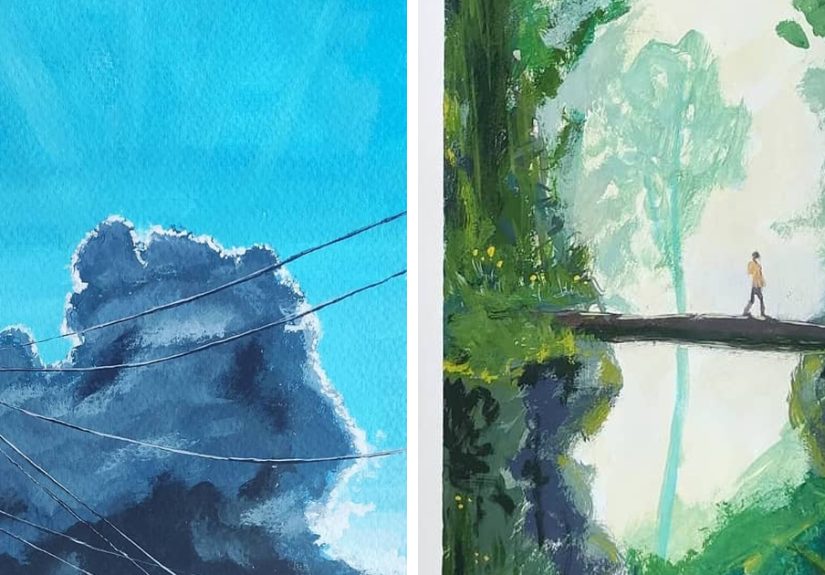
The project behind “I’ve Challenged Myself To Draw A Gouache Painting A Day, Here’s The Final Part (50 New Pics)” follows the satisfying final stretch of a 100-day gouache painting challenge. The artist, known as Thomethis, had already shared the first half of the journey and returned with the final 50 paintings after completing the challenge. What makes the series so appealing is not just the number of finished works. It is the visible evolution: more confidence with color, more personal reference material, more experimentation, and a clearer understanding of what kind of artist the process was shaping.
Daily painting challenges have a way of stripping art down to its most honest form. You cannot wait for perfect lighting, perfect motivation, or a mythical creature called “free time.” You make the painting anyway. That is where the magic lives: in the discipline, the tiny discoveries, the half-successful experiments, and the occasional painting that seems to arrive wearing a tiny crown.
Why Gouache Is Perfect For A Daily Painting Challenge
Gouache is often described as opaque watercolor, but that nickname only tells part of the story. It is water-based, usually dries with a soft matte finish, and can be diluted for transparent washes or built up for strong, flat color. Unlike traditional watercolor, which relies heavily on the white of the paper for brightness, gouache lets artists paint lighter values directly on top of darker areas. That one feature alone makes it feel like the paint equivalent of an undo button, though a slightly moody one.
For a painting-a-day project, gouache offers a practical sweet spot. It dries quickly, cleans up with water, works beautifully on watercolor paper or mixed-media paper, and does not require a huge studio setup. You can paint at a desk, a kitchen table, or the one square foot of space not currently occupied by coffee cups, receipts, and mysterious cables.
Its matte surface is another reason illustrators and designers love it. Gouache photographs and scans well because it does not throw shiny reflections back at the camera. For artists sharing work online, that matters. A painting may be gorgeous in person, but if it photographs like a haunted mirror, the internet will not be kind.
The Final 50 Paintings: What Changed?
The final part of the challenge stands out because it shows an artist moving beyond simple completion and into self-discovery. During the last 50 paintings, Thomethis experimented with using more personal photos and imagination-based ideas. That shift matters. Copying from random references can improve technical skill, but using personal material gives the work a stronger emotional fingerprint.
There was also an experiment with a more illustrative style. Interestingly, the artist realized that this approach was not the favorite direction and preferred realism after all. That is one of the most useful outcomes of a creative challenge: sometimes progress means discovering what you do not want to do. A “failed” style experiment is not a failure. It is research wearing paint-stained clothes.
By the end, the challenge had taught deeper lessons about color, observation, and painting itself. The next goal became another 100 paintings, but with a different rhythm: less pressure from a strict daily deadline and more focus on quality, nature, family photos, and scenes from the Netherlands. That transition feels natural. The first challenge built stamina; the next one could build depth.
What A Gouache Painting A Day Teaches An Artist
1. Color Stops Being A Guessing Game
Gouache teaches color quickly because it does not always behave exactly as expected. Some colors shift as they dry. Dark tones may dry lighter; light tones may appear a bit darker. After enough daily paintings, an artist learns to test mixes, simplify palettes, and stop assuming that “just add white” is a personality trait.
Daily repetition also improves color memory. You begin noticing how evening shadows lean blue, how grass is almost never one green, and how clouds have more personalities than a group chat. A daily gouache practice trains the eye to see relationships instead of isolated colors.
2. Brush Control Gets Less Dramatic
At first, gouache can feel bossy. Too much water, and it behaves like watercolor. Too much paint, and it can become chalky or heavy. Too many strokes over the same area, and the layer underneath wakes up and joins the party uninvited. Over time, brush control becomes more deliberate. Artists learn to place a stroke and leave it alone.
This is especially important when layering. Traditional gouache can reactivate with water, so patience becomes part of the technique. Thin early layers, thicker later layers, fewer nervous brushstrokes: that small formula can save a painting from turning into decorative oatmeal.
3. Composition Becomes Faster
When you paint daily, you cannot spend six hours deciding whether a tree should sit half an inch to the left. The challenge forces faster decisions. Artists begin to recognize strong compositions more instinctively: a path leading into a scene, a bright focal point against a muted background, a dramatic sky balanced by a quiet foreground.
This does not mean every painting becomes a masterpiece. It means every painting becomes a vote for better judgment. Over 50 or 100 pieces, those votes add up.
4. Style Appears When You Stop Chasing It
Many artists begin a challenge hoping to “find their style,” which sounds noble until you realize style is usually hiding behind 400 awkward attempts. The final half of this gouache project shows that style often comes from repeated choices: favorite subjects, preferred color temperatures, recurring textures, comfort with realism, interest in nature, and the balance between detail and simplicity.
The artist’s realization that realism felt more satisfying than a more illustrative direction is valuable. Style is not always something you invent in a single dramatic moment. Sometimes it is what remains after you try several roads and decide which one feels like home.
Why Viewers Love “50 New Pics” Art Posts
There is a reason collections of daily paintings perform well online. They give viewers more than a finished image; they offer a story. A single artwork says, “Here is something I made.” A 50-piece series says, “Here is what happened when I kept going.” That narrative pulls people in because progress is satisfying to witness.
Viewers can compare early and later decisions. They can notice confidence building, recurring themes emerging, and technique becoming more natural. It feels a little like watching a time-lapse of someone learning in public. That vulnerability is refreshing, especially in an online world where everyone seems to be posting only the polished, cropped, suspiciously perfect version of everything.
For artists, sharing a series can also build accountability. Knowing that people are following the project makes it harder to disappear quietly after day nine. Public creative challenges create a gentle form of pressure, like a supportive friend who says, “You said you were painting today,” while holding a cup of tea and judging your excuses.
How To Start Your Own Gouache Painting-A-Day Challenge
Choose A Realistic Format
Small paintings are your friend. A daily challenge is not the time to begin a mural-sized emotional journey unless you enjoy chaos as a lifestyle. A postcard-sized or sketchbook-sized format keeps the project manageable and lets you focus on learning rather than surviving.
Limit Your Palette
Using fewer colors can actually make the work stronger. A simple palette with warm and cool primaries, white, and perhaps an earth tone can teach more than a giant set of colors with names like “Moonlit Dragonberry.” Limited palettes encourage better mixing and more harmony across the series.
Create Theme Buckets
Instead of waking up every day to the terrifying kingdom of infinite options, prepare a list of subject categories: skies, trees, windows, food, pets, landscapes, childhood objects, tiny street scenes, or imaginary places. When inspiration is low, the list becomes a ladder.
Let Some Paintings Be Practice
The biggest mistake is expecting every daily painting to be portfolio-worthy. Some paintings are warm-ups. Some are experiments. Some are tiny disasters with educational value. That is fine. The point is not perfection; the point is mileage.
Common Gouache Mistakes And How To Handle Them
One common mistake is using too much water in later layers. Watery paint can disturb dried gouache underneath, especially if the brush is scrubbed back and forth. Use lighter, thinner washes early, then move toward thicker, more opaque paint as the image develops.
Another issue is muddy color. Gouache can become dull if every mixture contains too many pigments. Clean the brush often, refresh the water, and mix intentionally. Your palette should not look like a swamp unless you are painting an actual swamp, in which case, congratulations on the realism.
Artists also struggle with values. Because gouache is known for rich color, it is tempting to focus on hue and forget light and dark structure. A painting with strong values can survive a limited palette. A painting with weak values may collapse even if the colors are expensive enough to deserve their own security guard.
The Emotional Side Of Finishing 100 Paintings
Completing a 100-day art challenge is not just a technical achievement. It changes how an artist sees effort. Before the challenge, a painting may feel like an event. After the challenge, painting becomes a practice. That shift is powerful.
There is also a strange emotional mix at the finish line. Relief, pride, exhaustion, and a tiny whisper of “What now?” all show up together. Finishing the last 50 paintings does not close the door; it opens a new one. In this case, the next door led toward another 100 paintings with more personal references, a slower pace, and a clearer focus on nature and realism.
That may be the best lesson of the whole project. A challenge should not only produce finished work. It should produce better questions. What subjects matter most? What style feels honest? What process is sustainable? What would happen if quality became the focus after consistency built the foundation?
Experience Section: What It Feels Like To Paint Gouache Every Day
Painting gouache every day feels romantic for approximately the first few days. The paints are fresh, the paper is clean, and the artist is full of heroic energy. Then real life enters the room wearing muddy shoes. Some days are busy. Some days the reference photo is boring. Some days the hand and the brain appear to be working for rival companies. That is when the challenge becomes meaningful.
The first major experience is learning to begin before feeling ready. Many people wait for inspiration, but a daily challenge teaches that inspiration often arrives after the first brushstroke. You sit down tired, squeeze out paint, mix a color, and suddenly the blank page is no longer blank. Momentum does not need a dramatic entrance. Sometimes it sneaks in through a tiny painted shadow.
The second experience is developing a calmer relationship with mistakes. Gouache is forgiving, but not in a magical way. You can cover areas, repaint shapes, soften edges, or reactivate parts with water. However, you still have to make decisions. After enough daily paintings, mistakes become less personal. A bad cloud is no longer proof that you should move to a cave and never paint again. It is just a bad cloud. Paint another one tomorrow.
The third experience is noticing the world differently. A person doing a gouache painting a day begins collecting visual ideas everywhere. A tree becomes a value study. A coffee cup becomes a shape exercise. A rainy street becomes a limited palette challenge. Even boring corners become suspiciously paintable. The artist’s eye becomes a quiet scavenger, always looking for light, contrast, and mood.
The fourth experience is understanding the difference between speed and rushing. Daily painting encourages efficiency, but it also exposes impatience. Speed comes from knowing what matters: the big shapes, the main value pattern, the focal point, the color harmony. Rushing comes from panic-painting every leaf on a tree while ignoring the fact that the trunk is leaning like it just heard bad news.
The fifth experience is discovering preferences through repetition. After 50 or 100 gouache paintings, patterns become obvious. Maybe you love landscapes more than portraits. Maybe you enjoy dramatic skies, cozy interiors, quiet nature scenes, or realistic studies from personal photos. Maybe you thought you wanted a bold illustrative style but realized realism makes your heart do a tiny cartwheel. That knowledge is precious because it comes from work, not guessing.
The final experience is confidence. Not loud confidence, not “I am now the ruler of all pigments” confidence, but a steadier kind. The artist learns, “I can show up. I can solve problems. I can finish things.” That belief carries into future projects. It makes the next blank page less intimidating because the artist has already met 100 blank pages and survived every one of them.
Conclusion
“I’ve Challenged Myself To Draw A Gouache Painting A Day, Here’s The Final Part (50 New Pics)” is more than a showcase of finished paintings. It is a reminder that artistic growth often comes from repetition, curiosity, and the willingness to learn in public. Gouache is an ideal partner for that journey because it is portable, expressive, matte, colorful, and just unpredictable enough to keep artists humble.
The final 50 paintings reveal the real reward of a daily challenge: not perfection, but direction. The artist gained stronger color awareness, explored personal references, tested an illustrative style, confirmed a love for realism, and stepped into a new project with more intention. That is what a strong creative challenge does. It does not simply ask, “Can you make 100 paintings?” It eventually asks, “Now that you know yourself better, what will you make next?”
If you are considering your own gouache painting-a-day challenge, start small, keep your tools simple, forgive the awkward days, and let the series teach you. Fifty new pictures can entertain an audience. One hundred honest attempts can change an artist.