Table of Contents >> Show >> Hide
- What Scarification In Africa Really Means
- Not One Ceremony, Not One Africa
- Why Scarification Ceremonies Carried So Much Emotional Force
- Scarification In African Art And Historical Memory
- Why Some Scarification Traditions Are Fading
- Health, Risk, And The Modern Conversation
- How To Write About A Scarification Ceremony Without Being Exploitative
- A Witnessing Experience: What Standing Near The Ceremony Can Feel Like
- Conclusion
Say the phrase scarification in Africa out loud and it lands with weight. Not because it belongs to one simple story, but because it doesn’t. Scarification has never been one thing across one place. Africa is a continent, not a single village with a single drumbeat and a single meaning. In some communities, scarification has marked lineage. In others, it has signaled beauty, adulthood, courage, healing, protection, fertility, rank, or belonging. Sometimes it has done several of those jobs at once, which is admittedly a very ambitious amount of multitasking for human skin.
That is exactly why the subject deserves more than a quick, exoticized glance. A scarification ceremony can be deeply personal, socially important, visually striking, and emotionally complex. It can also be misunderstood by outsiders who arrive with cameras, assumptions, and the attention span of a fruit fly. To write about it well, you have to slow down. You have to separate documented cultural meaning from stereotype. You have to acknowledge history, art, ritual, health concerns, and the plain old fact that not every African community practiced scarification in the same way.
This article explores the meaning of ritual scarification, why it mattered in certain African societies, how it appeared in art and memory, why it has declined in some places, and what a respectful witness might actually learn from standing near such a ceremony. The goal is not to flatten diverse traditions into a single dramatic headline. The goal is to look closer, and to do it with respect.
What Scarification In Africa Really Means
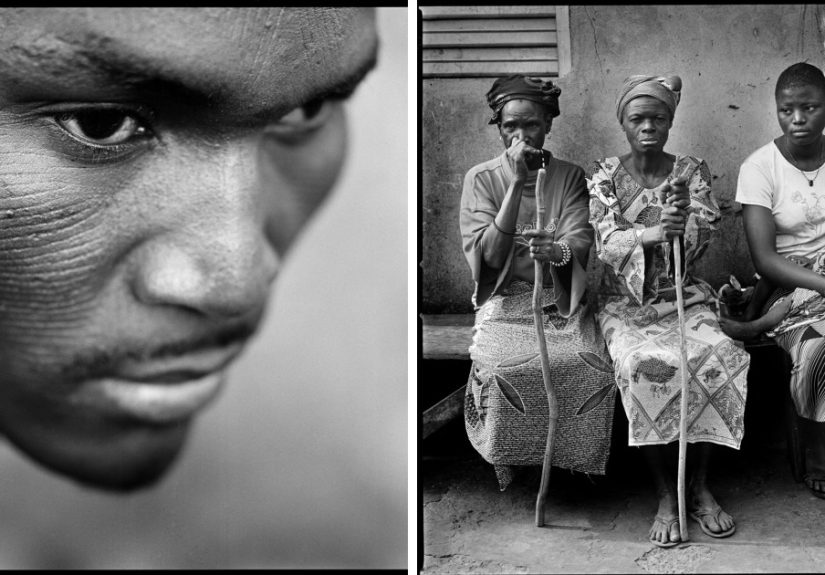
Scarification is the intentional cutting, etching, or shaping of skin so that permanent scars remain. In many documented African contexts, these marks were not random decoration. They functioned as visible language. They could communicate family identity, ethnic belonging, social maturity, or a person’s place in a moral and spiritual world.
That matters because modern readers often compare scarification to tattooing and stop there. The comparison is useful up to a point. Both can be forms of body modification and identity. But scarification often worked differently on darker skin tones, where raised patterns and textured designs could create a powerful visual effect that pigment alone might not. In some places, the raised quality of the scar was part of the point. The body became a living surface, carrying memory, discipline, beauty, and social meaning all at once.
Many historical descriptions also connect scarification to rites of passage. A child became an adolescent. An adolescent became an adult. A woman entered a new stage of fertility or motherhood. A man proved endurance and readiness for new responsibilities. Pain, in these settings, was not treated as meaningless suffering. It was interpreted as discipline, evidence, and transformation. That may feel unfamiliar to a modern Western audience trained to treat pain as a thing to eliminate immediately and complain about loudly online. But within ritual life, endurance could symbolize readiness for a new role.
Scarification As Identity
In some regions, facial and body markings helped identify where a person came from, which lineage they belonged to, or which community recognized them as one of its own. Before passports, profile pictures, and apps that ask for your full legal name plus a blood sample, the body itself could serve as a social document. Marks could say, “This is who I am,” before the person even spoke.
Scarification As Beauty
Western audiences sometimes miss this entirely, but in many African artistic and cultural traditions, scarification was closely linked to beauty. Museum collections, historical accounts, and photography have shown scar patterns presented alongside refined hairstyles, jewelry, posture, and textiles. In these contexts, the marks were not signs of damage. They were signs of enhancement. They refined the body, completed it, and aligned it with local ideals of attractiveness and maturity.
Scarification As Spiritual And Medicinal Practice
Some accounts also link scarification to healing and ritual medicine. Incisions could be associated with the application of herbs or protective substances, or with ceremonies intended to address spiritual imbalance and illness. That does not mean every scarification practice was medical, and it certainly does not mean outsiders should romanticize it as mystical wellness before brunch. It means that body marking could exist within a broader system of belief in which physical and spiritual care were connected.
Not One Ceremony, Not One Africa
One of the most important things to say about a scarification ceremony in Africa is this: there is no single template. The continent contains thousands of cultures, languages, and histories. Scarification traditions differed by region, people, age group, purpose, and era.
In parts of West Africa, scarification could be associated with adolescence, lineage, or beauty. Historical reporting from Nigeria, for example, describes facial scarification traditions that once carried broad social recognition but have faded in many urban and modern settings. In Central African art, scarification appears repeatedly in sculpture, where carved figures preserve the visual memory of status marks, ideals of beauty, and ceremonial identity. In some southern African healing contexts, incision and marking were linked with ritual diagnosis or spiritual practice.
That variety is exactly why broad statements like “Africans used scarification for…” are usually too blunt to be useful. Which Africans? In which century? In what social setting? For boys, girls, healers, initiates, brides, elders, or rulers? The answer changes depending on where you stand.
Good writing on the subject keeps that diversity visible. Lazy writing erases it. Lazy writing also tends to use the continent as a costume rack for outsider fascination. Better writing notices differences and admits limits.
Why Scarification Ceremonies Carried So Much Emotional Force
A ceremony is never just the moment of cutting. It is the build-up, the instruction, the public meaning, the people gathered nearby, the songs or prayers, the watching relatives, the silence before the first incision, the reaction afterward, and the way the community interprets the event. That wider frame is what turns a bodily act into ritual.
In initiation settings, scarification could dramatize a person’s movement from one social status to another. The ceremony might separate the initiate from ordinary life, place them under guidance, test endurance, and then return them to the community with a changed identity. Anthropologists have long recognized this structure in initiation rites more generally: separation, transition, recognition. Scarification could become the visible sign that the transformation had taken place.
That visible sign mattered. The scar did not disappear when the music stopped. It stayed. It carried memory into everyday life. Each glance in a mirror could recall a lesson, a lineage, or a threshold crossed. In that sense, the body became archive as much as ornament.
Scarification In African Art And Historical Memory
If you want proof that scarification once held social and aesthetic importance, African art offers it in abundance. Sculptures in major museum collections show scarification patterns carved into cheeks, necks, torsos, and foreheads. These are not decorative accidents. They are clues. Artists recorded on wood, ivory, and stone the features that mattered in lived society: hairstyle, posture, jewelry, and scar patterns among them.
That artistic record does something modern readers should appreciate. It preserves scarification even where the practice itself has faded. A carved figure can hold the memory of a beauty standard long after the standard changes. A museum object can show that markings were associated with rank, womanhood, strength, ancestry, or regional identity. Art, in this case, is not just art. It is visual anthropology with better cheekbones.
At the same time, museums raise difficult questions. Who collected these objects? Under what conditions? Who gets to explain them now? A respectful article cannot borrow cultural meaning without acknowledging that some African traditions were documented through colonial eyes, missionary reports, and outsider collecting systems that often distorted what they claimed to preserve.
Why Some Scarification Traditions Are Fading
Across parts of Africa, scarification has declined for many reasons. Urbanization changed community life. Formal schooling, migration, state identification systems, and new beauty standards altered how identity was displayed. Christianity and Islam influenced attitudes in many regions. Colonial administrations and postcolonial governments sometimes discouraged or stigmatized visible ethnic markers. Public health concerns also played a role, especially where cutting was performed without sterile tools.
There is also the simple pressure of modern social mobility. Marks that once signaled belonging in one setting could become a source of discrimination in another. A scar that meant pride in a village might be read differently in a city, at a school, or in a job market shaped by new values. Traditions do not disappear only because people stop caring. Sometimes they fade because the world around them changes the price of carrying them.
Yet fading does not equal forgetting. Scarification remains present in oral history, family memory, photography, museum collections, and scholarship. Even where the practice has diminished, the meanings attached to it still shape conversations about heritage, identity, and the African body.
Health, Risk, And The Modern Conversation
No responsible article about scarification should skip the health dimension. Any practice that cuts the skin carries risk if hygiene is poor or instruments are shared. Bloodborne infections can spread through contaminated sharp tools, and improper wound care can lead to infection, prolonged healing, or excessive scar formation. That is not cultural judgment. That is skin doing what skin does when cut under unsafe conditions: protesting in a very permanent manner.
There is also the question of keloids and hypertrophic scars. Some people, particularly those with darker skin tones, are more prone to raised scar formation after skin injury. For some scarification traditions, a raised scar may be desired aesthetically. In other cases, excessive scarring can become painful, itchy, or medically concerning. Modern medical literature is clear that darker skin is more susceptible to keloid formation after trauma, piercing, cutting, or inflammation.
This is where cultural respect and public health have to talk to each other instead of glaring from opposite sides of the room. It is possible to recognize the historical meaning of scarification while also recognizing the importance of sterile technique, informed consent, and wound care. Those ideas do not cancel tradition. They complicate it, which is what real life generally does.
How To Write About A Scarification Ceremony Without Being Exploitative
Writers and photographers are often tempted to treat scarification as visual shock. That approach may grab attention, but it usually strips the ritual of its context. A good article does the opposite. It asks what the marks mean to the people who carry them. It resists language that turns African communities into spectacle. It avoids pretending that one ceremony explains a continent.
A respectful approach also keeps power in view. Who is describing the ceremony? A participant, an elder, a healer, a relative, a scholar, a tourist, a journalist, a museum label, or a stranger with a telephoto lens and too much confidence? Each viewpoint reveals something and misses something else.
That is especially important with first-person titles like this one. To say “I’ve seen the ceremony of scarification in Africa” should not mean “I glanced once and now I understand everything.” A real witness leaves with more humility, not less. The closer you get to ritual meaning, the more you realize explanation has edges.
A Witnessing Experience: What Standing Near The Ceremony Can Feel Like
No single scene can represent every scarification ceremony in Africa. Still, many accounts of witnessing similar rites share an emotional rhythm, and that rhythm tells us something important. First there is atmosphere. Before anything happens to the skin, the room, courtyard, or gathering space already feels charged. People are not there for entertainment. They are there because the moment matters. Elders watch differently than children do. Relatives hold themselves differently than strangers do. The body about to be marked is never just one body. It carries the expectations of others.
Then comes preparation. Maybe there are words of instruction, maybe songs, maybe ritual actions, maybe a healer’s presence, maybe only a few practical gestures that outsiders would miss if they blinked. The initiate may look calm, scared, proud, or all three at once. That mixture feels profoundly human. Courage rarely arrives as a clean, polished emotion. More often it arrives with dry lips and a racing heart.
When the cutting begins, what a witness notices is not only pain. It is concentration. The stillness of the person being marked. The expertise or authority of the person performing the act. The way the surrounding group absorbs the moment rather than interrupting it. There may be sound, but often the most memorable quality is focus. The scene narrows. Time does that odd thing it does in significant moments, stretching and thickening at once.
Afterward, the emotional temperature changes. Tension loosens. The initiate is no longer approaching the threshold; they have crossed it. That transition is often what gives the ceremony its force. The marks are new, the skin is vulnerable, but the social meaning is already beginning to settle around them. People may examine the pattern, react with approval, give advice, or simply acknowledge what has happened with a look that says more than a speech could.
For an outsider, this is usually the point where easy assumptions fall apart. You may arrive expecting drama and leave thinking about discipline. You may expect violence and leave thinking about belonging. You may expect to feel distance and instead feel the uncomfortable recognition that humans everywhere mark change in some way. Diplomas, wedding rings, military insignia, baptismal garments, fraternity rituals, tattoos, scars from childbirth, surgical scars, even the wrinkle lines earned by age and grief: bodies and ceremonies have always been in conversation.
What stays with a careful witness is not just the visual pattern on skin. It is the social choreography around it. The dignity of the participants. The seriousness of collective recognition. The way identity can be made visible without ever becoming simple. If you stand near a scarification ritual and pay attention, the most lasting lesson may be this: the body is never only biological. It is cultural, historical, spiritual, political, and deeply personal at the same time. And once you understand that, the scars stop looking like curiosities. They begin to read like text.
Conclusion
Scarification in Africa cannot be reduced to a single meaning, a single people, or a single ceremony. In different places and periods, it has signaled adulthood, beauty, healing, protection, lineage, and status. It has lived on skin, in sculpture, in memory, and in debate. Some traditions have declined under pressure from modernization, religion, public health concerns, and changing social norms. Others survive in fragments, stories, and visual culture.
To write about the subject well is to resist spectacle and choose context. It is to remember that the most important part of a scarification ceremony is not that an outsider finds it striking. It is that the community giving it meaning does. Once that becomes clear, the practice stops looking like a mysterious relic and starts looking like what it has often been: a serious human language written on the body.