Table of Contents >> Show >> Hide
- What It Is (and Why People Keep Coming Back to Boos)
- Why 25 Inches Deep Is a Big Deal (Even Though It Sounds Boring)
- Blended Oak, Explained Like a Human (Not a Catalog)
- Edge Grain vs. End Grain (AKA: The Great “Which Way Are the Wood Fibers?” Debate)
- Common Specs You’ll See for John Boos Blended Oak 25-Inch-Deep Tops
- Oil Finish vs. Sealed Finish: Choose Your Personality
- How Oak Performs in a Real Kitchen
- Measuring and Planning: Avoid the “One Inch Short” Support Group
- Installation Basics (Wood MovesLet It)
- Cleaning and Maintenance That Won’t Take Over Your Life
- Design Pairings That Make Blended Oak Look Intentional
- Is It Worth It? A Practical Value Breakdown
- Conclusion: The Countertop That Feels Like Home
- Real-World Experiences (What It’s Like Living With a John Boos Blended Oak 25-Inch-Deep Top)
If your kitchen feels like it’s missing that “I bake bread sometimes” energy, a real wood countertop is one of the fastest ways to warm things upwithout having
to adopt sourdough starter as a dependent. The John Boos Blended Oak 25-inch-deep kitchen counter top is a butcher-block-style work surface
that’s built to be used, not just admired from across the room like a museum exhibit labeled “Do Not Set Hot Pans Here.”
This guide breaks down what “blended oak” really means, why the 25-inch depth matters in everyday kitchens, what you get with different finishes,
how to install it without regrets, and how to keep it looking gorgeous even when life (and spaghetti sauce) happens.
What It Is (and Why People Keep Coming Back to Boos)
John Boos countertops are well-known in the U.S. for their butcher-block heritage: sturdy hardwood tops designed for real kitchen work. The
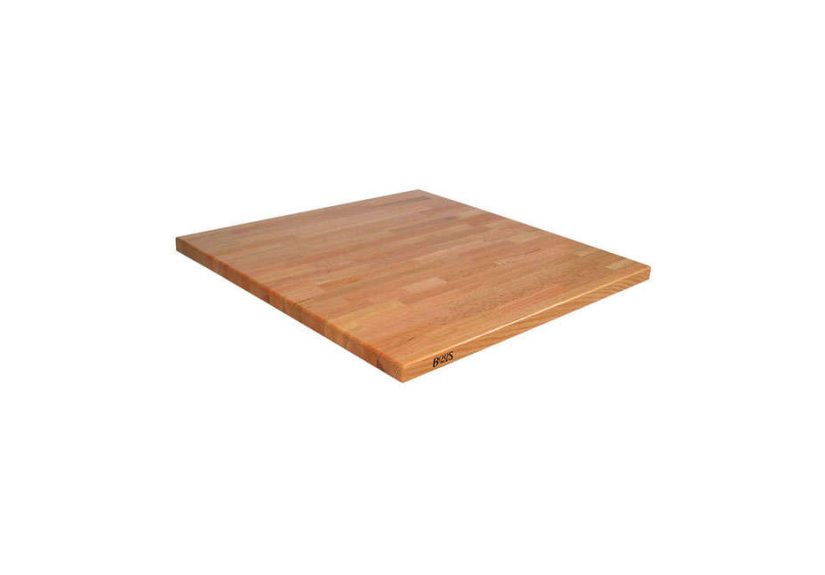
Blended Oak 25-inch-deep countertop is typically made from Appalachian red oak and built in an
edge-grain style (more on that in a second). The “blended” part refers to the look and the construction approachcreating a surface that’s
warm, varied, and forgiving in a way that stone and engineered materials simply aren’t.
Think of it like this: quartz is the perfectly pressed dress shirt. Blended oak is the favorite flannel that somehow looks better after a few adventures.
The vibe is natural, inviting, andimportantlyrepairable.
Why 25 Inches Deep Is a Big Deal (Even Though It Sounds Boring)
Depth is one of those countertop details you only notice when it’s wrong. A 25-inch-deep countertop lines up with common base cabinet depths
in many U.S. kitchens, giving you a comfortable working area and a familiar edge-to-backsplash distance. It’s deep enough to prep, stage, and servewithout
turning your kitchen into a runway.
Everyday ways the extra inch matters
- Small appliances behave: A toaster or espresso machine can sit back slightly while still leaving workspace in front.
- Prep feels less cramped: Cutting boards, mixing bowls, and sheet pans fit without playing countertop Tetris.
- Cleaner look at the wall line: There’s room for a backsplash, a small rear gap for movement, and less “stuff jammed into the corner.”
Blended Oak, Explained Like a Human (Not a Catalog)
“Blended oak” isn’t just a color. It’s a visual style created by joining oak pieces in ways that produce natural variation. Expect a mix of light tan,
honey tones, and warmer reddish-brown notes. The result is a countertop that doesn’t look like a single, uniform plankand that’s the point.
What “blended” usually means in construction
Many blended oak tops use finger-jointed segments of varying lengths to create long runs. That means the wood strips do not always run the full
length of the countertop. You’ll see seams and color shiftsand instead of looking “cheap,” it often reads as handcrafted and intentionally rustic.
If you love perfectly consistent grain, you might prefer a different style. But if you want a surface that feels alivelike it belongs in a home where people
cookblended oak is a great match.
Edge Grain vs. End Grain (AKA: The Great “Which Way Are the Wood Fibers?” Debate)
Wood countertops are commonly built in a few grain orientations. The Blended Oak series is often described as edge-grain construction.
Edge grain: practical, stable, and budget-friendlier
- Look: Long, linear grain patterns that read clean and classic.
- Feel: Smooth and solid under knives and cookware.
- Durability: Excellent for everyday use; holds up well with proper care.
- Value: Typically less expensive than thick end-grain “chopping block” style.
End grain: the “butcher shop” look
End grain is beautiful and very knife-friendly, but it’s usually thicker, heavier, and pricier. For many homeowners, edge grain hits the sweet spot:
premium feel, manageable cost, and plenty of performance.
Common Specs You’ll See for John Boos Blended Oak 25-Inch-Deep Tops
Exact options vary by retailer and configuration, but the Blended Oak 25-inch-deep countertop line is commonly described with specs like:
- Depth: 25 inches
- Thickness: about 1.5 inches
- Wood species: Appalachian red oak
- Construction: edge grain, blended/finger-jointed look
- Finish options: oil finish (often standard) and a sealed finish option (commonly marketed as “varnique”)
- Optional add-ons: backsplash/riser options on some configurations
One detail that surprises first-time buyers: the underside may look unfinished. That’s not necessarily a defectit’s often how wood tops are
shipped, especially when the “show surface” is the top and the underside is meant to face down.
Oil Finish vs. Sealed Finish: Choose Your Personality
Finishes are where wood countertops go from “dreamy” to “why does it look like that?”so choose based on your lifestyle, not your fantasy self.
Option 1: Oil finish (the classic, food-friendly approach)
An oil-finished butcher block is designed to be renewable: you maintain it by cleaning gently and re-oiling when it looks dry. This finish is popular for
people who want a natural feel and don’t mind simple upkeep.
- Pros: Warm, natural look; easy spot repairs; scratches can be sanded and re-oiled.
- Cons: Requires ongoing maintenance; can stain if spills sit; water is not your countertop’s best friend.
Option 2: Sealed finish (often called “varnique” by retailers)
A sealed finish forms more of a protective barrier on the surface. It can reduce the day-to-day worry about splashes and stains, especially around sinks.
- Pros: More resistant to moisture and staining; lower routine maintenance.
- Cons: When it gets damaged, repairs can be more involved than simply oiling.
A simple decision rule: If you want your countertop to behave like a living material you “care for,” choose oil. If you want it to behave more like a
traditional countertop you “wipe down,” consider sealed.
How Oak Performs in a Real Kitchen
Oak is a classic American hardwoodused for floors, furniture, and yes, hardworking kitchen surfaces. It’s not the hardest wood on the planet, but it’s
plenty durable for everyday life. More importantly, oak’s grain and color variation help it age gracefully. A small ding doesn’t scream “damage” the way it
might on a perfectly uniform surface.
What oak is great at
- Handling daily prep: Mixing, chopping (with a board), rolling dough, staging hot pads.
- Looking better with time: Patina can make it feel even warmer and more “home.”
- Being repairable: Light sanding can erase a lot of life’s little oops moments.
What oak needs from you
- Respect for water: Wipe standing water quickly, especially around seams and sink cutouts.
- Heat protection: Use trivetsbecause “but it was only a minute” is how rings happen.
- Routine conditioning: Keep the surface from drying out if you choose oil finish.
Measuring and Planning: Avoid the “One Inch Short” Support Group
Before you click “buy,” measure your cabinet run carefully. A 25-inch depth is friendly, but kitchens are full of surprises: out-of-square walls,
uneven cabinets, and that one corner that was clearly framed on a Friday afternoon.
Planning checklist
- Confirm cabinet depth and face frame: Make sure the top will cover what you expect and align at the front.
- Account for wall irregularities: Consider scribing or leaving a small rear gap (often covered by backsplash).
- Decide on overhang: Standard overhangs are modest, but seating overhangs may require added support.
- Plan seams smartly: If you need more than one piece, place seams away from sinks when possible.
- Think through sink and faucet: Cutouts should be sealed carefully; this is not the place to “wing it.”
Installation Basics (Wood MovesLet It)
Wood expands and contracts with humidity. That’s normal. The goal is to install the countertop so it can move slightly without cracking, splitting,
or creating unwanted gaps.
Best practices homeowners and pros rely on
- Use attachment methods that allow movement: Slotted holes or appropriate fasteners can help.
- Don’t over-fastened it: Too many rigid fasteners can fight natural expansion.
- Seal exposed end grain: Especially around sink cutouts and any field cuts.
- Pre-finish when possible: Finishing (or at least sealing) before install can help protect all sides.
If you’re hiring this out, ask your installer directly: “How are you allowing for wood movement?” If they answer, “Wood… what?”consider a second opinion.
Cleaning and Maintenance That Won’t Take Over Your Life
The secret to loving butcher block is simple: treat it like a wooden tool, not a stone slab. That means gentle cleaning, no soaking, and periodic conditioning.
Daily cleaning
- Wipe crumbs and spills promptly with a damp cloth and mild soap.
- Dry the surfaceespecially at seams and near water sources.
- Avoid dishwashers, harsh chemicals, and letting wet towels camp out on the surface like they pay rent.
Monthly (or as-needed) conditioning for oil finishes
Many owners use a food-safe oil regimen and refresh more often in dry seasons or high-use kitchens. If the wood looks dull, pale, or thirsty, it’s time.
A common routine is oil first, then a wax-and-oil cream to help lock in moisture and add a soft sheen.
Handling stains, smells, and scratches
- Light stains: Gentle cleaning, then re-oil if needed.
- Odors: A salt-and-lemon scrub can help, followed by conditioning.
- Scratches: Fine sanding (with the grain), clean thoroughly, then refinish.
Design Pairings That Make Blended Oak Look Intentional
The blended oak palette is flexiblewarm, varied, and not too precious. Here are combinations that consistently look great:
Modern farmhouse (without going full “barn door”)
- White or creamy cabinets
- Matte black hardware
- Simple white tile backsplash
Warm modern
- Flat-panel cabinets in greige, taupe, or natural wood
- Brushed brass or satin nickel hardware
- Soft, textured backsplash materials (zellige-style tile, for example)
Classic American kitchen
- Shaker cabinets
- Subway tile
- Traditional lighting with a little personality
Pro tip: because blended oak has natural variation, it plays well with subtle movement elsewhereveined tile, lightly speckled stone, or mixed metals.
Just keep one element calm so the room feels curated, not chaotic.
Is It Worth It? A Practical Value Breakdown
A John Boos blended oak top is rarely the cheapest butcher block option on the internetand it’s not trying to be. The value proposition is
made-in-the-USA craftsmanship, a well-known brand reputation, and a design that bridges “serious work surface” and “beautiful centerpiece.”
You’re paying for consistency in milling, a recognizable product line, and the kind of wood countertop that people tend to keeprepairing and refreshing
rather than replacing. If you like the idea of a countertop that can be renewed instead of trashed, that’s part of the long-term value.
Conclusion: The Countertop That Feels Like Home
The John Boos Blended Oak 25 in. Deep Kitchen Counter Top is a sweet spot for homeowners who want real wood character with a practical,
standard depth that works in most kitchens. The blended look hides life’s tiny imperfections better than uniform finishes, the oak tone plays nicely with
countless styles, and the repairability is a major win if you actually use your kitchen.
Choose your finish based on how you live, plan the install like you respect physics (wood moves!), and commit to simple maintenance. Do that, and this top
won’t just look good on day oneit’ll look better after a few years of breakfasts, holidays, science-fair projects, and “we’ll just eat over the sink”
moments.
Real-World Experiences (What It’s Like Living With a John Boos Blended Oak 25-Inch-Deep Top)
Let’s talk about the part nobody puts in the product title: real life. People don’t buy a blended oak butcher block because they want a countertop that never
changes. They buy it because they want a surface that feels like a kitchenwarm under your hands, easy on the eyes, and forgiving when you’re moving
fast and dinner is already late.
One of the first things many homeowners notice is how the 25-inch depth quietly makes the kitchen feel more functional. It’s not “bigger” in
a dramatic way, but it’s enough that a cutting board can sit comfortably while a bowl or sheet pan waits nearby. If you’re the kind of person who preps in
little stageschop onions, slide them aside, chop garlic, slide that asidewood gives you that “workbench” vibe that makes the flow feel natural.
The blended oak look also has a funny psychological effect: it makes you less afraid to use the countertop like a countertop. With ultra-uniform surfaces,
the first scratch or stain can feel like a tragedy. With blended oak, you expect variation. A small mark doesn’t ruin the aestheticit joins the
“this kitchen is loved” storyline. Many owners say the surface actually gets more attractive once it develops a gentle patina, especially if they keep up a
simple oil routine. It starts to glow in a way that looks expensive without trying too hard.
That said, there’s a learning curvemostly around water and heat. The most common “oops” moment is leaving a wet glass, a damp sponge, or a dish towel sitting
in one place for too long. Wood will remind you it’s wood. The good news is that most of those moments are fixable: dry it out, lightly sand if needed, and
refresh the finish. People who love wood counters tend to treat maintenance like brushing your teeth: not thrilling, but quickand the results are worth it.
Another common experience is the satisfaction of easy repair. Dropped a cast-iron pan? Scraped a heavy mixer base? The surface can usually be
restored with a little patience. That repairability becomes a kind of freedom: you stop babying your kitchen and start enjoying it. For families, that can be
huge. Kids do homework on the island. Friends lean on the counter with coffee. Someone always insists on slicing limes directly on the wood (please don’t),
and you gently redirect them like the kind host you are.
Finally, there’s the “design payoff” experience: blended oak plays well with nearly everything. Homeowners often mention that it makes painted cabinets feel
richer, balances cool tiles and metals, and adds warmth to modern layouts that might otherwise feel a bit sterile. In other words, it’s not just a surface
it’s a mood. And it’s a mood that says: “Yes, we cook here. And yes, you can set your drink down… on a coaster.”