Table of Contents >> Show >> Hide
Some kitchens are polished to the point of looking like they’ve never met a frying pan. This is not one of them. The kitchen associated with Mandy Lee, the voice behind Lady and Pups, feels more interesting than pristine, more layered than showroom-perfect, and far more alive than the average all-white cooking box trying to pass itself off as personality. In other words, it is exactly the kind of kitchen you would hope an opinionated, visually sharp, food-obsessed writer would build for herself.
Set in Hong Kong, where square footage is often treated like luxury jewelry, this space proves that a compact kitchen does not need to behave like an apology. It can be moody, confident, practical, and full of attitude. It can hold copper pans, open shelving, dark green paint, warm wood, and enough visual soul to make a standard builder-grade kitchen look like it forgot to develop a point of view.
That is what makes this “Kitchen of the Week” story so compelling. It is not only about good design. It is about identity. Lee, whose blog earned attention for its bold voice and emotionally charged recipes, created a kitchen that feels like an extension of her creative world. Instead of chasing sterile perfection, she embraced atmosphere. Instead of flattening everything into a trend board, she leaned into story, patina, and a little productive tension between elegance and grit.
For readers planning their own renovation, especially in a smaller urban home, this kitchen offers a smart lesson: style works best when it is built around real habits. If you cook often, photograph food, collect beautiful tools, and want a room that feels deeply lived in, then the goal is not to copy someone else’s kitchen line for line. The goal is to understand why this one works so well.
Why This Hong Kong Kitchen Feels So Different
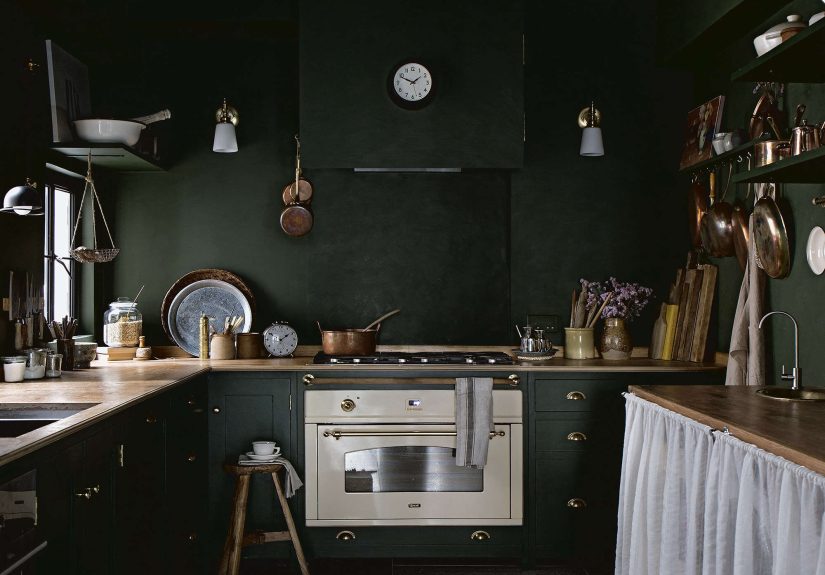
At first glance, the standout feature is the mood. The green is deep, slightly old-world, and refreshingly unconcerned with the “brighten everything until it loses all drama” school of design. That choice alone changes the room’s energy. Instead of screaming for attention, the kitchen draws you in slowly. It has the kind of quiet magnetism that says, “Yes, dinner will be excellent, and yes, someone here probably owns a very sharp knife.”
But color is only part of the story. What makes the room memorable is its balance of beauty and function. Open shelves keep everyday items accessible. Hanging copper pans add warmth while doubling as storage. The kitchen avoids visual deadness by mixing surfaces and finishes that look as though they’ve earned their place over time. It is vintage-inspired without turning costume-y, and practical without becoming dull.
That balance matters even more in a dense city like Hong Kong. In a compact home, every item has to justify itself. A bulky decorative flourish that contributes nothing quickly becomes annoying. A storage solution that is technically clever but awkward in daily life becomes even worse. This kitchen succeeds because it respects the realities of limited space while refusing to surrender character.
A Palette With Backbone
Many small kitchens default to safe neutrals because homeowners worry darker tones will shrink the room. That can happen, sure. But it is not a universal rule. When darker colors are paired with thoughtful lighting, reflective metal accents, and a coherent material story, they can make a compact kitchen feel intimate and rich instead of cramped.
In this case, the moody green cabinetry and walls create depth. Brass and copper notes brighten the composition without making it flashy. Wood tones help soften the space so the room never tips into coldness. The result is a kitchen that feels edited, not accidental. Every color looks like it was invited on purpose.
That is a useful takeaway for anyone renovating a small kitchen: you do not need to fear color. You need to control it. One strong hue, repeated thoughtfully and supported by texture, often feels more sophisticated than a dozen timid decisions pretending to be “timeless.”
Materials That Tell a Story
One of the most appealing details in Lee’s kitchen is the sense of age built into the room. The surfaces do not try to look factory-fresh. They look touched, handled, and personal. That is especially true of the countertop approach, which leans into an aged look rather than a glossy showroom finish. It gives the room character that expensive stone alone cannot buy.
This is where the kitchen separates itself from a lot of internet-friendly remodels. It understands that charm often lives in imperfection. A slightly weathered finish, a shelf with visible objects, and cookware that looks used instead of staged all help the room feel believable. The kitchen is photogenic, yes, but not because it is empty. It is photogenic because it is full of atmosphere.
For food lovers, that matters. Kitchens tied to cooking culture should not feel too precious to splash, sear, simmer, and plate in. Durable surfaces, honest materials, and finish choices that age gracefully make more sense than anything that demands constant babysitting.
Why It Works So Well for a Food Blogger
A food blogger does not use a kitchen the same way an occasional weeknight cook does. The room has to multitask. It must support recipe testing, ingredient prep, pot juggling, plating, cleanup, and, often, photography. That means the best food blogger kitchens are not only attractive. They are operational. They make creative work easier.
Lee’s kitchen seems built around that principle. The open access to pans and tools reduces friction. The layout keeps the room visually expressive without choking off the work surfaces. The kitchen has enough soul to appear in photos, yet enough practicality to function as a serious cooking zone. That is a harder trick than it looks.
Storage That Does Not Smother the Room
Small kitchens live or die by storage. Too little, and the counters become a battlefield of cutting boards, olive oil, bowls, and rogue appliances. Too much bulky cabinetry, and the room starts feeling like it is leaning over your shoulder while you try to chop an onion.
This kitchen avoids both extremes. Open shelving above the sink area keeps the upper portion of the room lighter. Hanging cookware uses vertical space instead of wasting it. The visible storage also becomes part of the styling, which is especially smart in a kitchen regularly photographed for editorial or social use. In other words, the things you actually use can become the things that make the room beautiful.
That approach works especially well in smaller homes because it encourages disciplined curation. If an object is going to be visible, it should earn visibility. Everyday bowls, frequently used pans, attractive jars, and well-made utensils pass the test. A random plastic gadget from a forgotten smoothie phase probably does not.
Lighting Matters More Than People Think
Good kitchen lighting is not just a design detail. It is a survival skill. In a compact room, layered lighting can make the difference between cozy and cave-like. For cooks, it improves prep work. For photographers and content creators, it shapes color, texture, and mood.
A kitchen like this benefits from multiple roles of light: ambient light to establish warmth, task light to make chopping and stovetop work safer, and accent light to give shelves, hardware, and finishes a little drama. That layered effect helps darker tones feel intentional rather than heavy. It also gives the room a day-to-night flexibility that all hardworking kitchens need.
If you are borrowing ideas from this kitchen, do not stop at paint color. Study the lighting logic. A dramatic palette without enough light can feel gloomy. A dramatic palette with thoughtful lighting feels cinematic. Huge difference. Same kitchen, very different mood.
The Workflow Is Quietly Smart
Not every great kitchen announces its practicality with visible gadgets. Sometimes functionality shows up in the ease of movement. You can sense it in how tools are placed, how surfaces are freed up, and how appliances fit into the room without hijacking it. That is the kind of practicality that matters most in everyday use.
Lee’s kitchen appears to understand this rhythm. The cooktop and oven choices point to a space meant for serious cooking, not decorative posing. The accessible tools suggest repetition and habit. The room seems optimized for a person who cooks often enough to resent inefficiency. That is perhaps the highest compliment a kitchen can get.
Design Lessons You Can Steal Without Moving to Hong Kong
You do not need the same apartment, the same city, or the same cookware budget to learn from this kitchen. What you do need is clarity about how you live. Once that becomes the priority, the design decisions get sharper.
1. Pick a Mood Before You Pick a Finish
If your kitchen should feel calm, moody, bright, rustic, vintage, or modern, decide that first. Hardware, paint, counters, shelving, and lighting should all support that emotional goal. This kitchen works because it knows its personality from the beginning.
2. Let Everyday Tools Do Double Duty
Cookware, cutting boards, ceramic bowls, and jars can become part of the visual composition. In a small kitchen, useful things should be allowed to be beautiful.
3. Use Open Storage Carefully
Open shelves are not permission to display chaos. They are a commitment to editing. Keep what is used often, attractive enough to be seen, and easy to put back. The reward is a kitchen that feels lighter and more personal.
4. Respect the Countertop
Counter space is prime real estate. In a kitchen where recipes are tested and plated, every inch matters. Store upward, hide what you rarely use, and keep prep zones clear enough for real work.
5. Make the Room Look Better With Age
Choose finishes and materials that can handle actual life. A kitchen that develops patina gracefully will feel more welcoming over time than one that panics at every splash of sauce.
The Emotional Appeal of an “Angry Food Blogger” Kitchen
Part of the reason this kitchen lands so well is the contrast embedded in the title alone. “Angry food blogger” is not a phrase that suggests delicate prettiness. It suggests heat, intensity, wit, hunger, judgment, and maybe the occasional rant launched from a stovetop-adjacent emotional support position. Yet the room is beautiful. Not dainty-beautiful. Strong-beautiful.
That contrast gives the kitchen its staying power. It is soft enough to welcome you in, yet opinionated enough to be unmistakable. It does not flatten the owner into a trend. It reflects a specific creative life. You can imagine writing in this kitchen, arguing in this kitchen, photographing noodles in this kitchen, overbuying herbs at the market and pretending that was always part of the plan in this kitchen.
And that may be the real achievement here. The room feels authored. In a sea of kitchens designed to satisfy algorithms, this one feels like it belongs to a human being with tastes, habits, preferences, and a healthy disregard for blandness.
Extended Reflections: What a Kitchen Like This Feels Like in Real Life
Imagine walking into this Hong Kong kitchen early in the morning, before the city fully accelerates into its usual rhythm. The light is softer then, and the darker green tones feel almost velvety. Nothing about the room shouts. Instead, it hums. A kettle starts warming. A cutting board lands on the counter with that familiar wooden thud. Copper pans catch the first hints of daylight and suddenly the room feels awake before you are.
That is the pleasure of a kitchen built around atmosphere instead of emptiness. It gives something back to you even when you are doing boring things. Washing herbs feels a little more romantic. Making coffee feels slightly cinematic. Standing at the sink while mentally negotiating the rest of the day somehow feels less like admin and more like ritual.
By afternoon, the room likely changes character. The practical side takes over. You can imagine recipe testing happening in waves: ingredients lined up, sauces adjusted, notes scribbled, one pan on the stove and another waiting nearby. In a compact kitchen, every movement becomes more obvious, so workflow matters. A badly designed room makes you feel clumsy. A well-designed one makes you feel more capable than you actually are, which, frankly, is one of the nicest gifts a kitchen can offer.
There is also something deeply satisfying about a kitchen that does not hide the work of cooking. Visible pans, open shelves, and lived-in materials create a quiet sense of readiness. The room is not pretending to be a museum. It is ready for garlic, steam, splatters, second helpings, and the kind of spontaneous meal that starts as “I’m just throwing something together” and somehow ends with three side dishes.
And then there is the emotional layer. In a city apartment, especially one where space is precious, the kitchen often carries more meaning than its footprint suggests. It becomes not just the place where meals happen, but a place where identity settles in. Your preferred mug lives there. Your favorite pan lives there. The ingredients you buy without thinking live there. Over time, the room becomes a record of your habits and appetites.
That is why Lee’s kitchen resonates beyond aesthetics. It feels personal in a way many modern renovations do not. You can sense choices made from conviction rather than obligation. The green is not there because someone said it was trending. The vintage note is not there because a mood board demanded “character.” The whole kitchen feels assembled by someone who knows what she likes and is willing to live with those choices long enough for them to become a world.
For readers, that may be the most useful inspiration of all. A great kitchen is not one that photographs perfectly once. It is one that supports your life repeatedly, beautifully, and with enough personality that coming home to it still feels good on an ordinary Tuesday. This kitchen seems to understand that. It is stylish, yes. It is practical, yes. But more importantly, it feels inhabited. And that, more than any trend, is what makes a kitchen unforgettable.