Table of Contents >> Show >> Hide
Note: Source links intentionally omitted by request; content cleaned for web publication.
Some clothes are purely decorative. Some are purely practical. And then there is the studio-inspired smock: the rare wardrobe hero that says, “Yes, I am making something interesting,” while also protecting your shirt from paint, clay, charcoal, coffee, and whatever mystery substance just landed on your sleeve. In other words, it is fashion with a job description.
The best artist smocks do not feel costume-y or precious. They feel lived in. They soften with wear, collect stories in their creases, and make even a quick trip to the grocery store look a little more intentional. That is part of their charm. A good smock suggests creativity without screaming for attention. It is the clothing equivalent of a perfectly worn paintbrush: useful, beautiful, and a little cooler than it has any right to be.
Today’s studio-inspired smocks borrow from artist uniforms, pottery aprons, cross-back workwear, pinafore silhouettes, and classic utility garments. Some are airy and relaxed in linen. Some are structured in canvas or denim. Some are minimalist enough to pass as a dress. Others have enough pockets to make you feel like you could build a cabinet, glaze a vase, and answer three texts without ever leaving your worktable.
If you love that blend of function and style, these seven studio-inspired smocks are the smartest places to start. Think of this as your field guide to looking creative, staying comfortable, and keeping your actual outfit from becoming an accidental abstract painting.
Why the Artist Smock Still Works
The smock has staying power because it solves a real problem. Historically, smocks evolved as protective garments worn over clothing, and that practical DNA never really disappeared. What changed is the styling. What was once simply useful now reads as thoughtful, artistic, and a little romantic in the best way. It is no accident that the look still appears in museums, studio culture, and modern workwear-inspired fashion.
That long life also explains why the smock feels so adaptable. It can be rustic or refined. It can lean farmhouse, minimalist, French-inspired, utilitarian, or quietly avant-garde. A loose linen smock feels poetic and breezy. A structured denim version feels grounded and graphic. A split-leg pottery apron looks built for action because, frankly, it is.
The other reason the style endures is psychological. A smock creates a tiny ritual. You put it on, and your brain gets the message: it is time to make something. That might sound dramatic, but every creative person understands the power of a uniform. Some people light a candle. Some people sharpen pencils. Some people throw on a smock and suddenly become the sort of person who has opinions about brush care.
What Makes a Great Studio-Inspired Smock?
Fabric That Matches the Mess
Fabric is where the whole game begins. Linen is beloved for a reason. It is breathable, airy, absorbent, and it softens beautifully over time. It also wrinkles, but in this context that is not a flaw; it is part of the appeal. A linen smock looks relaxed, textured, and effortless, which is a very convenient aesthetic when you are trying to appear casually brilliant.
Cotton is the other studio staple. Lighter cotton poplin or twill works well for everyday wear and easy layering, while cotton canvas and heavy cotton duck bring more structure and durability. These sturdier fabrics are especially good for painting, printmaking, woodworking, and other activities where you want better coverage and a little more protection from splashes and friction. Denim sits somewhere in the middle: rugged, wearable, and blessed with the magical ability to make almost anything look cooler.
Blends can also be a sweet spot. Linen-cotton smocks often combine breathability with better shape retention and a softer feel against the body. They are especially appealing if you want an easy, roomy silhouette that does not feel too floppy or too stiff.
Fit That Lets You Actually Move
A studio-inspired smock should never feel fussy. You want room through the shoulders, ease at the waist, and enough coverage to bend, reach, sit, and lean over a table without constantly readjusting yourself. Cross-back designs are especially popular because they distribute weight more comfortably than a simple neck loop. Translation: less neck strain, more time pretending your paint splatters were intentional.
Length matters too. A shorter smock works for drawing, crafting, and everyday styling. A longer one provides more coverage for messy work. If you spend time at a pottery wheel or seated workbench, split-leg construction is worth a serious look. It covers both legs without bunching awkwardly at the center, which is one of those details you do not think about until you really, really need it.
Pockets, Please
Pockets are not optional in the world of artist style. They are the whole subplot. Deep front pockets hold brushes, pencils, rags, tools, gloves, your phone, and that one mystery clip you are certain you will need later. Chest pockets add organization. Towel loops and utility details are bonus points. Just avoid overloaded pockets on very soft smock styles unless you enjoy the sensation of your outfit slowly surrendering to gravity.
7 Studio-Inspired Smocks Worth Stealing Style Notes From
1. The Classic Linen Pinafore Smock
If there were an official uniform for the person who keeps a sketchbook in one pocket and a grocery list in the other, this would be it. The classic linen pinafore smock is relaxed, sleeveless or lightly sleeved, and easy to layer over a tee, button-down, or slim knit. It has that soft, lived-in look that makes you seem both organized and artistically unbothered, which is frankly a powerful combination.
This style works especially well for painters, floral designers, textile artists, and anyone who wants a smock that moves seamlessly between work and everyday life. It is breathable enough for warm studios, comfortable enough for long sessions, and flattering in a low-key, unforced way. Choose one in oatmeal, charcoal, olive, rust, or washed black, and it will look better with age.
2. The Cross-Back Utility Smock
The cross-back utility smock is for the person who loves comfort but also wants the garment to feel engineered. Cross-back straps help distribute weight across the shoulders and back instead of hanging everything from the neck. That is a small design shift with a big payoff, especially if you spend hours standing, moving, and reaching.
These smocks often come in cotton canvas, denim, or linen blends and usually include generous front pockets and tool-friendly details. They are ideal for mixed-media artists, printmakers, crafters, and makers who want a modern workwear look without veering into full mechanic cosplay. The vibe is crisp but approachable, practical but polished.
3. The Split-Leg Pottery Smock
For ceramicists, seated artists, and anyone who works low to the ground, the split-leg pottery smock is a thing of beauty. Its overlapping or separated front panels cover the legs more effectively when sitting, which means less tugging, twisting, and damp clay misery. It is the kind of solution that feels almost suspiciously smart.
Functionally, this style is excellent for wheel throwing, hand-building, glazing, and messy craft work. Stylistically, it brings a sculptural, slightly dramatic shape that feels distinct from the standard apron. In heavy denim, cotton canvas, or sturdy linen, it looks grounded and serious without losing charm. If your idea of a good afternoon includes wet clay and total concentration, this smock is basically your coworker.
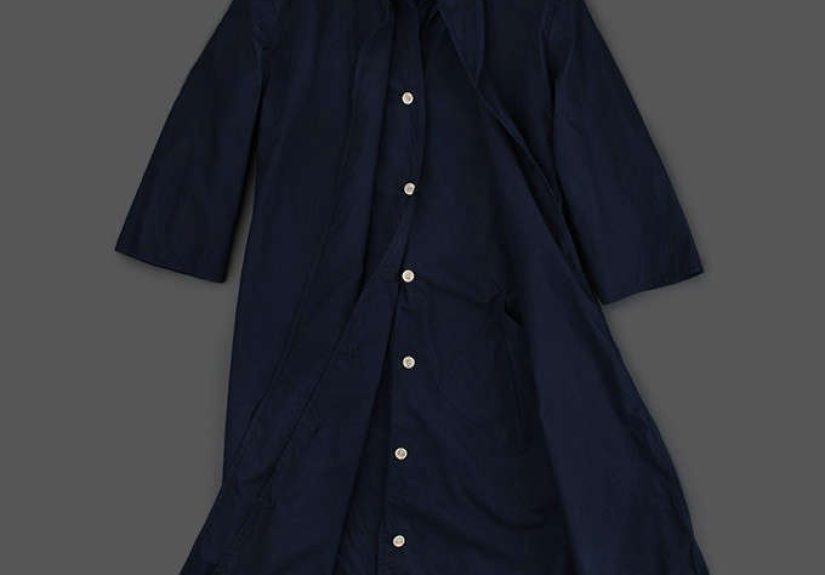
4. The Painter’s Button-Front Work Smock
This is the one that feels most directly borrowed from the old-school studio fantasy: roomy, lightly oversized, and easy to throw over whatever you are already wearing. A button-front work smock can lean shirt-jacket, lab coat, or atelier uniform depending on the cut, but the spirit is the same. It says you are here to work, but you may also have excellent taste in ceramics and obscure jazz records.
The beauty of this silhouette is versatility. Wear it closed as a dressy smock, open as a layer, or belted if you want more structure. It works well in cotton twill, canvas, chambray, or washed linen. Bigger patch pockets make it feel more studio-ready, while a cleaner front keeps it stylish enough for regular daywear.
5. The Denim Studio Smock
Denim makes everything feel a little more confident. A denim studio smock has enough heft to feel protective and durable, but it also has the familiar ease of your favorite jeans. That balance makes it a great option for people who want a smock that looks less delicate and more ready for real work.
Dark indigo denim feels clean and classic. Washed denim feels casual and broken in. Pair it with white sneakers, clogs, boots, or absolutely paint-covered canvas shoes that should probably have been retired two years ago. Denim smocks are particularly good for woodworking, sketching, gardening, casual studio days, and anyone who loves utility style but does not want to look like they are auditioning for a period drama.
6. The Lightweight Cotton Popover Smock
Not every studio situation requires heavy-duty fabric. Sometimes you just want something light, breathable, and easy to slip on for drawing, crafting, teaching, or wandering around your home looking artistically productive. Enter the lightweight cotton popover smock.
This version usually has a looser body, simple neckline, and a softer drape than more rugged styles. It is great for layering over everyday basics and especially nice in warmer weather. If linen feels too wrinkly for your taste and canvas feels too stiff, this style offers the middle path. Clean, breezy, and low maintenance, it is the smock equivalent of a good summer playlist.
7. The Tailored French-Inspired Smock
For anyone who wants the artist look with a slightly more refined silhouette, the tailored French-inspired smock is the answer. Think long lines, elegant proportions, subtle shaping, and just enough structure to feel intentional without losing comfort. This is the style that looks equally convincing in a studio, a market, a café, or an Instagram post that absolutely did not take 27 tries.
Choose one with a narrower bib, cleaner seams, or a sleeker front and it instantly feels more elevated. Neutral tones work beautifully here, but muted blue, dusty rose, moss, and deep burgundy can also look rich without feeling fussy. This is the best option for people who want a smock that functions as real clothing first and studio gear second.
How to Choose the Right Smock for Your Creative Life
If you paint with acrylics or oils, prioritize coverage, washable fabric, and pockets. Cotton canvas, denim, or a sturdy blend is usually a smart move. If you work with clay, go for a split-leg or longer smock with enough room to sit comfortably and enough durability to survive repeated cleaning. If your work is lighter and drier, such as sketching, collaging, or embroidery, linen and lightweight cotton styles can be more than enough.
Also think honestly about how you live in your clothes. Do you want a true work garment that gets gloriously messy, or do you want a smock that can move from studio to street without missing a beat? There is no wrong answer, but the fabric, silhouette, and details should reflect the reality of your routine, not just the fantasy version where you spend every afternoon painting still lifes by a north-facing window.
Why the Style Feels So Good to Wear
Part of the appeal is visual, of course. Studio-inspired smocks have texture, softness, and a relaxed shape that photographs beautifully and feels modern without being trendy in an exhausting way. But the deeper appeal is emotional. They remove friction. They tell you what to do with your hands. They give your tools a place to live. They protect your clothes. They let you get on with the making.
That is why artist style never really disappears. It is not just about looking creative. It is about dressing in a way that supports creativity. And honestly, that is a lot more appealing than wearing something gorgeous that cannot survive a graphite smudge.
Experiences That Make Studio-Inspired Smocks So Easy to Love
Anyone who has worn a good studio-inspired smock for a full day knows the experience is bigger than the garment itself. The first surprise is always how quickly it changes your mindset. You tie it on, button it up, or slip it over your head, and suddenly your day feels more purposeful. Even if your original plan was simply to tidy your desk or test a few paint colors, the smock makes the moment feel official. It says, “We are doing this now.” And somehow, that works.
There is also a very specific pleasure in not worrying about your clothes. That freedom matters more than people think. When you are not flinching every time a brush flicks, a lump of clay splashes, or charcoal dust drifts onto your lap, you work differently. You move faster. You experiment more. You lean in. A smock creates a little bubble of permission. Things can get messy in here. In fact, they probably should.
Then there is the comfort factor. A well-cut smock does not pinch, ride up, or demand constant adjustment. It hangs where it should. It gives you room to reach for a jar on the top shelf, crouch beside a low table, or sit at a wheel for an hour longer than you planned. Cross-back styles are especially satisfying because they feel secure without digging into your neck. Deep pockets make you irrationally happy. Put a pencil in one, a rag in the other, and suddenly you feel like a person who has their life together. Maybe not emotionally. But logistically? Absolutely.
The best part is how these smocks age with you. Linen softens. Denim relaxes. Canvas molds itself to your habits. The garment becomes more yours with every wash and every work session. Tiny marks and faint stains stop feeling like damage and start feeling like proof of use. They become part of the character. That splash of ultramarine near the hem? A memory. That crease in the pocket where your favorite pencil always sits? A habit made visible.
Studio-inspired smocks also have a funny way of changing how other people respond to you. Wear one at home and someone will assume you are baking something impressive, potting herbs, or about to create a masterpiece. Wear one out and people read it as stylish, thoughtful, and a little artsy. It gives off competence with a side of mystery. Which is not bad for a piece of fabric originally designed to save your shirt.
Most of all, these smocks support the rituals that creative people tend to cherish. Hanging one by the studio door. Folding one over a chair. Pulling one on before a Saturday pottery class. Leaving one draped on a hook after a long day because tomorrow you will need it again. Over time, it becomes less like an accessory and more like part of the practice itself. And that is probably why people become so attached to them. A studio-inspired smock is not just something you wear while making things. It becomes part of how you make them in the first place.
Conclusion
The right studio-inspired smock does more than protect your clothes. It supports your rhythm, fits your medium, and quietly sharpens your personal style. Whether you gravitate toward breezy linen, durable denim, cross-back utility, or a pottery-ready split-leg design, the best choice is the one that makes you want to step into your workspace and begin. That is the secret: a great smock is not just practical. It makes creativity easier to enter and a lot more enjoyable to wear.