Table of Contents >> Show >> Hide
- How Demi Moore and Bruce Willis Got Together
- A Marriage That Became a Major Hollywood Story
- Why Demi Moore and Bruce Willis Split
- What Made Their Divorce Different
- How Emma Heming Willis Fits Into the Story
- Bruce Willis’ Health and Why Public Interest Grew Again
- Why People Still Care About Demi Moore and Bruce Willis
- The Biggest Lessons From Their Relationship
- Experiences This Story Reflects in Real Life
- Conclusion
- SEO Tags
Some celebrity relationships burn bright, flame out fast, and then disappear into the dusty attic of pop culture history next to frosted lip gloss and giant shoulder pads. Demi Moore and Bruce Willis did not get that memo. Their romance was impulsive, glamorous, messy, famous, and, somehow, unexpectedly durable. Not durable in the “they lived happily ever after as husband and wife” sense, because that part ended years ago. Durable in the much rarer way: they built a family bond that outlasted the marriage itself.
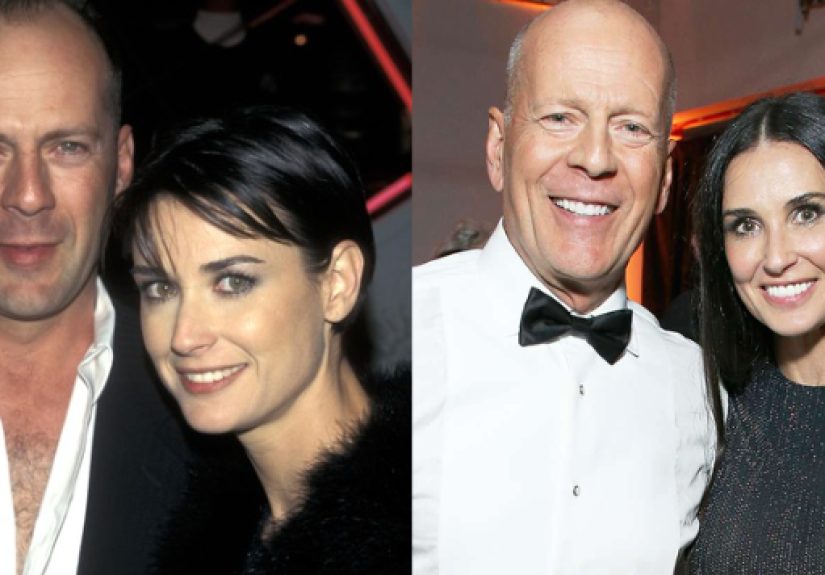
That is why people are still fascinated by Demi Moore and Bruce Willis’ relationship. Yes, they were one of Hollywood’s biggest power couples in the late 1980s and 1990s. Yes, their whirlwind wedding felt like a tabloid dream. But what keeps their story relevant is what happened after the red carpets faded. They divorced, raised three daughters, blended a modern family, and stayed close enough that their relationship became less about old headlines and more about loyalty, co-parenting, and showing up.
In recent years, public interest has grown again as Moore has remained visibly supportive of Willis while his family navigates his health challenges. Their story now reads less like a classic celebrity romance and more like a case study in how love can change shape without completely disappearing.
How Demi Moore and Bruce Willis Got Together
Demi Moore and Bruce Willis met in 1987, and the pace of their relationship could politely be described as “not exactly slow.” They connected at a screening of Stakeout, and what followed was the sort of whirlwind that makes cautious friends clutch their coffee mugs. Within a matter of months, they were married in Las Vegas.
At the time, both were becoming major stars. Moore was already rising as one of Hollywood’s most talked-about actresses, while Willis was gaining momentum from Moonlighting and was on the edge of becoming a blockbuster action icon. Put those two things together and you get a relationship that was instantly fascinating to the press: glamorous, fast-moving, and impossible to ignore.
But the speed of the romance was not just tabloid fuel. It also became part of the mythology of Demi Moore and Bruce Willis’ relationship. Their bond always carried that all-in energy. They were not a couple who eased into things. They cannonballed.
A Marriage That Became a Major Hollywood Story
Once they married in November 1987, Demi and Bruce quickly became one of the most recognizable celebrity couples of the era. This was peak big-star Hollywood: glossy magazine covers, paparazzi fascination, high-grossing films, and endless public curiosity about who was making more money, who had the bigger career, and whether two very famous people could actually build a grounded life together.
For a while, they did. Over the course of their marriage, they welcomed three daughters: Rumer, Scout, and Tallulah. Their family life became central to how the public saw them. They were not only famous actors; they were also famous parents, raising children while managing demanding careers and intense media attention.
That matters because one of the recurring themes in Demi Moore and Bruce Willis’ relationship is that family was never treated like a side project. Even when both careers were roaring, parenthood was a huge part of their shared identity. The couple lived in Idaho for stretches of time to get away from some of the Hollywood frenzy, a choice often cited as part of their attempt to create a more normal environment for their children.
Why Their Marriage Drew So Much Attention
Part of the appeal was obvious: two attractive, high-profile movie stars with very different public personas. Moore often projected intensity, intelligence, and emotional openness. Willis had the sly, sardonic cool of a man who always looked like he had just heard a better joke than everyone else in the room. Together, they had chemistry that felt both glamorous and oddly down-to-earth.
There was also the timing. This was the era when celebrity coverage loved a grand romance but was not especially skilled at discussing what makes relationships actually work. So the public often focused on the flashiest parts of their life: the quick wedding, the growing family, the dual superstardom, the money, the fame. The quieter part of the story would not become fully visible until much later.
Why Demi Moore and Bruce Willis Split
Like many long marriages, theirs eventually ran into real-world pressures that no amount of star power could magically erase. The couple separated in 1998, and their divorce was finalized in 2000. The split was big news at the time, partly because of their status and partly because they had seemed, from the outside at least, like one of those pairs built to last.
Over the years, Moore has spoken candidly about relationships, family, and the emotional patterns people bring into marriage. In discussing her life more broadly, she has reflected on how her own childhood shaped the way she approached family. That context helps explain why the end of the marriage did not turn into a scorched-earth public war. She seemed deeply committed to avoiding the kind of divorce dynamic that forces children to become emotional ping-pong balls.
And Bruce Willis, for his part, was also open about the fact that the relationship changed without the affection completely disappearing. That may sound almost suspiciously mature for Hollywood, but it became one of the defining truths of their post-divorce relationship: the marriage ended, the connection did not.
What Made Their Divorce Different
This is the section where many celebrity relationship stories become a parade of recriminations, strategic leaks, and awkward award-show seating charts. Not here. What makes Demi Moore and Bruce Willis’ relationship so unusual is that they turned into a surprisingly functional example of post-divorce family life.
They did not behave like two people trying to erase each other. They behaved like two people who had decided that being good parents mattered more than being dramatic exes. That approach paid off. By all public appearances, they co-parented with a level of consistency and affection that was rare enough to attract attention.
Even more surprisingly, they stayed involved in each other’s lives long after the divorce papers were signed. Willis attended Moore’s 2005 wedding to Ashton Kutcher. Kutcher reportedly developed a friendly relationship with Willis as well, which sounds like the sort of thing that would be impossible in lesser hands and oddly normal in theirs.
The result was not a perfect fairy tale. It was something more practical and arguably more impressive: a blended family structure built on mutual respect.
Co-Parenting Before It Became a Celebrity Buzzword
Today, people throw around phrases like “conscious uncoupling” and “healthy co-parenting” as if everyone has a therapist, a scheduling app, and the emotional regulation of a Zen monk. Demi and Bruce were doing their own version of that before it became a polished lifestyle concept.
They seemed to understand a simple truth: divorce ends a marriage, but it does not end parenthood. Their daughters grew up seeing that both parents could remain present, affectionate, and connected without pretending the marriage still existed. That may be one of the biggest reasons their family appears close decades later.
How Emma Heming Willis Fits Into the Story
No honest discussion of Demi Moore and Bruce Willis’ relationship is complete without mentioning Emma Heming Willis. Bruce married Emma in 2009, and together they had two daughters, Mabel and Evelyn. In many celebrity families, this would be the point where everyone starts communicating through lawyers and passive-aggressive Instagram captions. Instead, the Willis-Moore-Heming family gradually became an example of an unusually warm blended family.
Publicly, Moore and Emma have often presented a united front, especially in recent years. That unity matters because it reveals something bigger than celebrity etiquette. It shows that the family structure around Bruce Willis has been built on cooperation rather than competition.
For fans, that is one of the most moving parts of the story. Demi Moore is not treated like a ghost from Bruce’s past, and Emma Heming Willis is not framed as an outsider competing with old history. The public picture is far more generous than that. They appear to understand that family can expand without cancelling what came before.
Bruce Willis’ Health and Why Public Interest Grew Again
In 2022, Bruce Willis’ family announced that he would be stepping away from acting after being diagnosed with aphasia, a condition that affects communication. In 2023, the family shared that his diagnosis had progressed to frontotemporal dementia, or FTD. That update shifted public conversation around him in a major way.
It also brought renewed attention to Demi Moore and Bruce Willis’ relationship, because Moore remained visibly present and supportive. She was not hovering for publicity or attempting a sentimental rewrite of the past. She simply seemed to be doing what she has repeatedly suggested family members should do: show up.
That support has been especially visible in birthday tributes, family gatherings, and public reflections on Bruce’s condition. Moore has spoken about the difficulty of seeing someone so vibrant change over time, while also emphasizing compassion, acceptance, and the importance of meeting a person where they are. That perspective has resonated with many people caring for loved ones with serious illnesses.
It is one thing to stay on friendly terms with an ex. It is another thing entirely to remain a caring, steady presence during a life-altering health crisis. That is a big reason the public now talks about Demi Moore and Bruce Willis’ relationship with more respect than gossip.
The Family’s United Front
One of the strongest public messages from Bruce Willis’ family has been unity. Statements about his health have been shared collectively, with Moore, Emma, and the children presenting themselves not as separate camps, but as one family system. In a media environment that loves feuds and factions, that has been striking.
And in March 2026, Moore again publicly celebrated Bruce’s birthday with affectionate family photos, underscoring that their bond remains active, not merely historical. At this point, their relationship is not just a nostalgic story from old Hollywood. It is an evolving family connection still visible in the present.
Why People Still Care About Demi Moore and Bruce Willis
The easy answer is nostalgia. They were huge stars, and people love a legendary Hollywood pairing. But that is only part of it. The deeper reason is that their story offers something people do not see often enough, on or off screen: proof that relationships can transform instead of simply explode.
They were married. Then they were divorced. Then they became something that is harder to label but arguably more meaningful: trusted family to one another. That makes their story relatable in a way many celebrity romances are not. Plenty of people know what it means to love someone, lose the marriage, keep the family, and discover that emotional commitment does not always follow legal categories.
Demi Moore and Bruce Willis’ relationship also stands out because it did not stay trapped in one chapter. The public story kept changing. First it was romance. Then it was marriage. Then it was divorce. Then it became co-parenting. Then it became blended family life. Now it also includes caregiving, compassion, and a very public demonstration of how families can rally around someone facing illness.
The Biggest Lessons From Their Relationship
If you strip away the celebrity sparkle, the story offers a few surprisingly practical takeaways.
First, a marriage ending does not automatically mean the relationship was a failure. Some relationships succeed in one season and change form in another. Second, children benefit when parents refuse to turn old pain into ongoing warfare. Third, blended families tend to work better when the adults care more about stability than ego. And finally, love is not always romantic by the time it becomes most meaningful.
That last point may be the key to understanding why Demi Moore and Bruce Willis’ relationship still gets so much attention. People are not just looking back at a glamorous couple from the 1990s. They are looking at a family that kept choosing connection, again and again, through success, divorce, remarriage, aging, and illness.
Experiences This Story Reflects in Real Life
One reason this relationship continues to resonate is that it mirrors experiences many families know intimately, even if their version does not involve movie premieres and magazine covers. For divorced parents, Demi Moore and Bruce Willis represent a familiar challenge: how do you end a marriage without forcing the children to live inside the wreckage? Their story suggests that the answer is not perfection. It is repetition. You keep choosing civility. You keep showing up at birthdays, graduations, and family milestones. You resist the urge to turn every disagreement into a permanent identity. Over time, the children stop feeling like they have to pick a side and start feeling like they still have a family.
It also reflects the experience of blended families, which can be loving and awkward at the same time. Anyone who has ever navigated ex-spouses, new partners, step-siblings, holiday schedules, and emotional landmines knows this is not a casual little puzzle. It takes patience, boundaries, generosity, and sometimes the ability to smile through a seating arrangement that feels like a sociology experiment. What makes the Moore-Willis family notable is not that they avoided complexity. It is that they seemed willing to manage it with maturity.
Caregiving is another major experience threaded through this story. When a loved one faces a serious diagnosis, old labels begin to matter less. Ex-wife, current wife, adult daughter, young child, friend, parentthose roles may still exist, but illness tends to reorder priorities quickly. Families often discover that the strongest support systems are the ones flexible enough to include everyone who truly cares. Demi Moore’s ongoing presence around Bruce Willis has resonated with many people because it reflects a truth families learn in hard seasons: sometimes love becomes less about romance and more about witness, memory, and steadiness.
There is also a quieter experience here that many people recognize: grieving someone while they are still alive. Publicly, Moore and the family have spoken about acceptance, compassion, and finding beauty alongside loss. That language feels meaningful because it matches what many caregivers describe. Illness can change a person, but connection does not necessarily vanish. Families often learn to treasure smaller moments, gentler routines, familiar expressions, a hand squeeze, a smile, a birthday gathering that might once have seemed ordinary. The emotional work becomes learning to appreciate what remains without pretending nothing has changed.
Finally, their story reflects the experience of rewriting what family looks like. Many people grow up with a rigid script: you marry, stay married forever, and that is the whole story. Real life is usually less tidy. Families bend, expand, fracture, heal, and reorganize. Some former spouses become strangers. Others become trusted allies. Some step-parents feel peripheral. Others become essential. The enduring public fascination with Demi Moore and Bruce Willis comes from watching a family choose a broader definition of loyalty. Their relationship may have started as a fast Hollywood romance, but the reason it still matters is much more human. It became a long lesson in how people can remain connected with dignity, humor, and care even after the original love story changes shape.
Conclusion
So, what should people know about Demi Moore and Bruce Willis’ relationship? The short version is that it was never just a celebrity marriage. It was a fast-starting romance, a high-profile union, a family-centered partnership, a respectful divorce, and eventually a modern example of enduring connection. They were married from 1987 to 2000, share three daughters, and have remained deeply linked as co-parents and family members long after the romance ended.
The longer version is what makes the story memorable. Their relationship evolved without collapsing into bitterness. It made room for remarriage, blended family life, and, later, collective caregiving during Bruce Willis’ health journey. In a culture obsessed with clean endings, Demi Moore and Bruce Willis offer something more honest: sometimes the most important relationship chapter is the one that comes after the breakup.

![18 Best Types of Charts and Graphs for Data Visualization [+ How to Choose]](https://corkopencoffee.org/wp-content/uploads/2026/05/18-best-types-of-charts-and-graphs-for-data-visualization-how-to-choose-qKM1PBYG-thumb.jpg)