Table of Contents >> Show >> Hide
- Why Homemade Dumplings Are Worth the Effort
- The Master Plan: One Dough, Four Dumpling Styles
- Before You Fold: Three Rules That Make Everything Easier
- Way #1: Boiled Pork and Chive Jiaozi
- Way #2: Crispy Pan-Fried Pork and Cabbage Potstickers
- Way #3: Steamed Mushroom, Tofu, and Vermicelli Dumplings
- Way #4: Japanese-Style Chicken Gyoza
- How to Freeze Homemade Dumplings
- Common Dumpling Mistakes and How to Avoid Them
- What Making Dumplings Actually Feels Like at Home
- Final Thoughts
- SEO Tags
If you have ever eaten a great dumpling and immediately thought, “Well, that ruined all frozen appetizers for me,” welcome. This is your sign to stop admiring dumplings from a distance and start making them at home. Yes, from scratch. Yes, with flour on your shirt. And yes, with that oddly satisfying moment when a lumpy little dough circle becomes a plump, pleated beauty that looks way more impressive than the effort it took.
This guide breaks down how to make homemade Asian dumplings from scratch four ways: boiled pork and chive jiaozi, crispy pan-fried potstickers, steamed vegetable dumplings, and Japanese-style chicken gyoza. Along the way, you will learn how to make dumpling dough, roll wrappers, mix fillings that are juicy instead of soggy, and cook dumplings without turning your skillet into a crime scene. In other words, this is the kind of dumpling tutorial that saves dinner and your dignity.
Why Homemade Dumplings Are Worth the Effort
Store-bought dumplings are convenient, and there is no shame in keeping a bag in the freezer. But homemade dumplings have a different personality. The wrappers taste fresher, the filling is more flavorful, and you get to control everything from the meat-to-vegetable ratio to the level of ginger, garlic, chili, and crunch. Homemade wrappers also let you add a little more filling than many packaged skins can comfortably handle, which is excellent news for people who believe the best dumpling is the one that feels almost suspiciously generous.
Making dumplings at home is also one of the best kitchen projects for sharing. One person rolls. One person fills. One person folds badly but enthusiastically. Another person “taste-tests” the dipping sauce six times. Suddenly, dinner is an event instead of a chore.
The Master Plan: One Dough, Four Dumpling Styles
The easiest way to learn how to make dumplings from scratch is to use one reliable dough and adapt the filling and cooking method. A medium-thickness wrapper works beautifully for most home cooks because it is sturdy enough for boiling but still tender enough for steaming and pan-frying.
Basic Dumpling Dough
- 4 cups all-purpose flour
- 1 cup very warm water, plus 2 to 4 tablespoons as needed
- 1/2 teaspoon salt
Mix the flour and salt in a large bowl. Stir in the warm water until shaggy. Knead for 8 to 10 minutes until smooth and elastic. Cover and rest for 30 to 45 minutes. This resting step matters because it relaxes the dough, making it dramatically easier to roll. Skip it and the dough will fight back like it pays rent.
How to Roll the Wrappers
Divide the dough into 2 logs, then cut each log into 16 to 18 small pieces. Roll each piece into a ball, flatten it, and roll it into a circle about 3 1/2 inches wide. Keep the center slightly thicker and the edges a little thinner. That structure helps the dumpling hold its filling while still giving you tender, delicate pleats around the edges.
Universal Dipping Sauce
- 3 tablespoons soy sauce
- 2 tablespoons rice vinegar or Chinese black vinegar
- 1 teaspoon chili crisp or chili oil
- 1/2 teaspoon sesame oil
- 1 teaspoon finely sliced scallions
Whisk and serve. If you like brighter flavors, add a little grated ginger. If you like heat, add more chili oil. If you like drama, bring two sauces to the table and pretend you run a dumpling bar.
Before You Fold: Three Rules That Make Everything Easier
1. Keep the Filling Fairly Dry
Watery filling is one of the fastest ways to create torn wrappers and leaky dumplings. If you use napa cabbage, salt it lightly, let it sit for 10 minutes, then squeeze out the excess moisture. Mushrooms should be cooked down. Tofu should be pressed. Wet filling is chaos in a bowl.
2. Do Not Overfill
About 1 tablespoon of filling is right for most round wrappers. Gyoza can use a little less. Wontons usually use even less. If the dumpling looks like it is wearing skinny jeans after Thanksgiving dinner, you went too far.
3. Press Out Air Pockets
Air pockets can cause dumplings to burst while cooking. Once the filling is inside, press the wrapper snugly around it before sealing. Think secure, not suffocating.
Way #1: Boiled Pork and Chive Jiaozi
Boiled jiaozi are the classic comfort dumpling: soft, juicy, and deeply satisfying. They are the dumplings many people picture around Lunar New Year, but they are also excellent on any random Tuesday when takeout sounds tempting and your freezer needs a purpose.
Filling
- 12 ounces ground pork
- 2 cups finely chopped Chinese chives, or a mix of chives and scallions
- 1 teaspoon grated ginger
- 1 tablespoon soy sauce
- 1 teaspoon sesame oil
- 1 teaspoon Shaoxing wine or dry sherry
- 1/2 teaspoon sugar
- 1/4 teaspoon white pepper
Mix until the filling looks cohesive and slightly sticky. That stickiness helps the filling stay tender and hold together while cooking.
How to Fold
Place 1 tablespoon of filling in the center of a wrapper. Dab the edge with water. Fold into a half-moon and pleat one side as you seal, or just press and seal if you want the beginner-friendly version. Beautiful dumplings are nice. Sealed dumplings are nicer.
How to Cook
Bring a pot of water to a gentle boil. Add dumplings in batches and stir once so they do not stick. Cook until they float, then continue cooking for 1 to 2 more minutes, depending on size. Remove with a slotted spoon and serve with dipping sauce.
Best for: people who love tender wrappers and juicy fillings without any crispy distractions.
Way #2: Crispy Pan-Fried Pork and Cabbage Potstickers
Potstickers are the overachievers of the dumpling world. They are crisp on the bottom, tender on top, and deliciously dramatic when they hit the plate. This method uses a classic fry-steam-fry rhythm that gives you golden bottoms and fully cooked filling.
Filling
- 12 ounces ground pork
- 2 cups finely chopped napa cabbage, salted and squeezed dry
- 2 scallions, finely chopped
- 1 teaspoon grated ginger
- 1 tablespoon soy sauce
- 1 teaspoon sesame oil
- 1/4 teaspoon white pepper
How to Fold
Use the same half-moon shape, but flatten the bottom very slightly so the dumpling can sit upright. This helps it brown evenly and gives it that classic potsticker silhouette.
How to Cook
Heat 1 to 2 tablespoons oil in a nonstick skillet over medium-high heat. Arrange dumplings flat-side down in one layer. Let them fry for 1 to 2 minutes until the bottoms begin to color. Add 1/3 to 1/2 cup water, cover immediately, and cook for 5 to 8 minutes. Uncover and let the remaining water evaporate. Cook 1 to 2 minutes more until the bottoms are crisp and golden.
Best for: anyone who believes texture is not a side detail but the whole point.
Way #3: Steamed Mushroom, Tofu, and Vermicelli Dumplings
These steamed vegetable dumplings are proof that meatless dumplings can be hearty, savory, and absolutely worth fighting over. The combination of mushrooms, cabbage, tofu, and noodles creates a filling that is rich, structured, and satisfying.
Filling
- 1 cup finely chopped mushrooms
- 1 1/2 cups finely chopped napa cabbage, salted and squeezed dry
- 1/2 cup shredded carrot
- 1/2 cup pressed firm tofu, crumbled
- 1/2 cup soaked vermicelli noodles, chopped
- 2 teaspoons soy sauce
- 1 teaspoon sesame oil
- 2 scallions, finely chopped
- 1/4 teaspoon white pepper
Sauté the mushrooms briefly before mixing if they seem very wet. That tiny extra step makes the filling better and your wrapper less likely to give up halfway through sealing.
How to Fold
Use a half-moon or two-pleat fold. Vegetable fillings are often a bit lighter, so a neat seal matters. Keep the wrapper edges clean and avoid smearing filling near the rim.
How to Cook
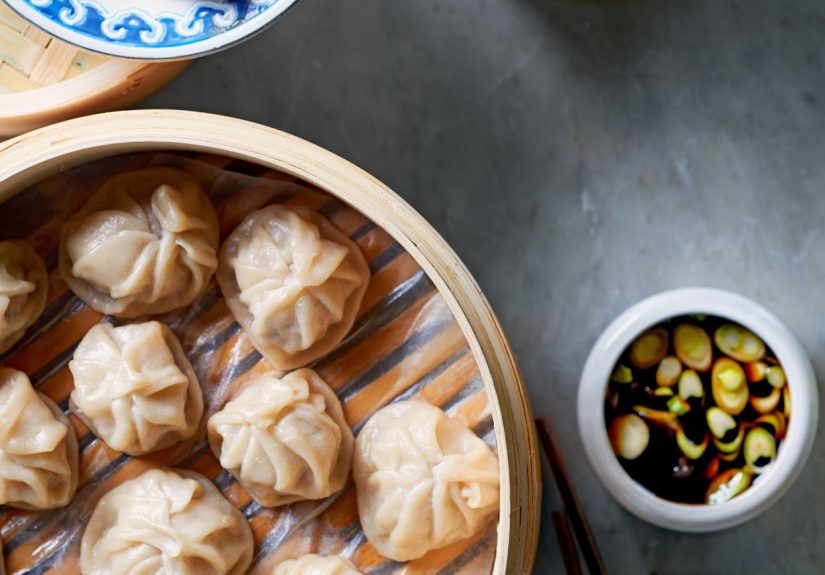
Line a bamboo steamer or steaming basket with parchment, cabbage leaves, or lettuce leaves. Arrange dumplings with a little space between them. Steam over simmering water for 7 to 9 minutes, or until the wrappers look slightly translucent and the filling is hot throughout.
Best for: lighter dinners, vegetarian spreads, and people who want their dumplings to feel both cozy and vaguely virtuous.
Way #4: Japanese-Style Chicken Gyoza
Gyoza are thinner, finer, and often a little more delicate than many Chinese-style dumplings. The filling is usually more finely chopped, the wrappers are rolled thinner, and the final result is especially crisp and snackable.
Filling
- 12 ounces ground chicken
- 1 cup finely chopped napa cabbage, salted and squeezed dry
- 2 scallions, finely chopped
- 1 teaspoon grated ginger
- 1 small garlic clove, grated
- 1 teaspoon soy sauce or tamari
- 1 teaspoon mirin
- 1 teaspoon sesame oil
- Pinch of white pepper
How to Fold
Roll these wrappers slightly thinner than the others if possible. Add a smaller mound of filling, then pleat only one side while sealing against the flat back side of the wrapper. That creates the classic crescent shape with a flat base and a lovely pleated top.
How to Cook
Heat oil in a skillet and add the gyoza in a single layer. Fry until lightly golden on the bottom, about 2 minutes. Add 1/4 cup water, cover, and steam until cooked through, about 3 to 4 minutes. Remove the lid and let the bottoms re-crisp for 1 more minute.
Best for: appetizer platters, weeknight cravings, and anyone who wants dumplings with extra crunch and elegant edges.
How to Freeze Homemade Dumplings
One of the smartest dumpling moves is making extra. Place uncooked dumplings on a parchment-lined tray so they do not touch. Freeze until firm, then transfer to a freezer bag. Cook straight from frozen by adding a minute or two to the cooking time. This is how future-you becomes annoyingly efficient.
Common Dumpling Mistakes and How to Avoid Them
Wrappers keep shrinking
The dough needs more rest. Cover it and walk away for 10 to 15 minutes.
Dumplings burst while cooking
The filling was too wet, the dumplings were overfilled, or air got trapped inside.
Potstickers burn before they steam
Lower the heat slightly and make sure you add enough water before covering.
Steamed dumplings stick to the basket
Always line the steamer with parchment, cabbage leaves, or lettuce leaves.
They taste flat
Season the filling confidently and cook a tiny test portion before filling the wrappers. This one trick can save an entire batch from blandness.
What Making Dumplings Actually Feels Like at Home
Making dumplings from scratch is one of those kitchen experiences that starts out looking suspiciously ambitious and then becomes surprisingly comforting. The first few minutes are usually all business. You measure flour, pour in warm water, knead the dough, and wonder whether you have accidentally volunteered for a three-hour culinary side quest. Then the dough softens, your hands find a rhythm, and the whole thing turns into a process that feels more relaxing than complicated. It is repetitive in the best possible way. Roll, fill, fold, seal. Repeat. Suddenly you are not rushing dinner anymore. You are making something with a little ceremony.
The first batch rarely looks perfect, and honestly, that is part of the charm. Some dumplings come out plump and neatly pleated. Others look like they were sealed during a mild earthquake. One may resemble a tiny sleeping bag. Another may look like a purse someone sat on. None of that matters very much once they are cooked. Homemade dumplings teach a useful kitchen lesson: good food does not have to be pretty on the first try. It just has to be well-seasoned, properly sealed, and treated with a little patience. The confidence comes quickly. By dumpling number eight or nine, your fingers start doing things your brain was still worried about five minutes earlier.
There is also something deeply social about making dumplings. Even people who claim they “cannot cook” somehow become very invested once a stack of wrappers and a bowl of filling appear on the table. One person is suddenly in charge of pleats. Another becomes the sealing inspector. Someone insists on making a giant experimental dumpling that is clearly impractical but spiritually important. If you grew up watching family members cook together, dumplings can feel wonderfully familiar. If you did not, they still create that atmosphere fast. A tray of uncooked dumplings has a way of turning a normal evening into an occasion. Music goes on. Flour gets everywhere. People linger in the kitchen longer than usual.
The best part may be what happens after the meal. If you make a large batch, you end up with extra dumplings in the freezer, and that feels like a tiny domestic superpower. On a tired weeknight, future dinner is already sitting there waiting to be boiled, steamed, or pan-fried. Homemade dumplings become more than a one-time project; they become backup comfort food. And every time you cook the frozen extras, you get a small reminder that the effort was worth it. That is why learning how to make Asian-style dumplings from scratch is so satisfying. You are not just making dinner. You are building a skill, a ritual, and a delicious excuse to gather people around the table again.
Final Thoughts
If you want to learn how to make dumplings Asian-style from scratch four ways, start simple and keep going. A half-moon fold is enough. A basic pork filling is enough. One successful pan of crisp-bottomed potstickers is enough to get hooked. Once you understand the dough, the filling balance, and the cooking methods, dumplings stop feeling difficult and start feeling wildly practical. They can be boiled for comfort, steamed for something lighter, or pan-fried when you want a little crunch and a lot of applause.
So make the dough. Roll the wrappers. Fold the wonky ones with confidence. Then put a dipping sauce on the table and act like this kind of dumpling magic happens in your kitchen every day.