Table of Contents >> Show >> Hide
- Quick Recipe Snapshot
- What Is Orzotto (and Why Is It So Good)?
- Why This Lemony Fish + Orzotto Combo Works
- Ingredients
- Step-by-Step Instructions
- How to Keep Fish From Sticking (and Save Your Confidence)
- Orzotto Troubleshooting: Fixes for the Most Common “Oops”
- Easy Variations (Same Method, New Personality)
- Storage, Reheating, and Make-Ahead Tips
- Frequently Asked Questions
- Kitchen Notes: Experiences You Can Expect When Making Lemony Fish with Orzotto (About )
- Conclusion
If “weeknight dinner” usually means “whatever I can eat while staring into the fridge like it owes me money,”
this one’s for you. We’re making tender, pan-seared fish with a creamy, lemony orzottowhich is basically
risotto’s fast, charming cousin who shows up on time and doesn’t demand constant attention.
The vibe: bright citrus, savory Parmesan, sweet pops of peas, and fish that tastes like you tried (even if you
absolutely did not). Bonus: it’s ready in about 30 minutes, which is roughly the time it takes most people to
decide what to cook in the first place.
Quick Recipe Snapshot
- Servings: 4
- Total time: about 30 minutes
- Skill level: “I can stir things and I own a pan.”
- Main keywords: lemony fish, orzotto, creamy orzo, quick seafood dinner
What Is Orzotto (and Why Is It So Good)?
Orzotto is the risotto methodcreamy, cozy, spoonable comfortmade with orzo, the rice-shaped pasta
that cooks faster than traditional risotto rice. Because orzo is pasta, it releases starch quickly and turns silky
in a short amount of time. Translation: you get that “restaurant-y” creaminess without babysitting a pot for half
an hour.
You’ll toast the orzo briefly, simmer it in broth, and finish with Parmesan, cream, and lemon. The result is rich
but not heavy, and it’s the perfect landing pad for flaky white fish.
Why This Lemony Fish + Orzotto Combo Works
-
Lemon does the heavy lifting: Zest brings aroma; juice brings brightness. Together, they wake up
creamy ingredients so the dish tastes balanced, not bland. -
Orzo cooks fast: It’s a weeknight-friendly base that still feels speciallike sweatpants that
somehow look like an outfit. -
Pan-seared fish adds contrast: Creamy orzotto + a browned, flavorful fish crust = texture
happiness. - Peas are the plot twist: A little sweetness and color make the whole bowl feel alive.
Ingredients
For the fish:
- 4 white fish fillets (about 6–7 ounces each), such as mahi-mahi, cod, halibut, haddock, pollock, or tilapia
- 2 teaspoons ground coriander
- 1 teaspoon kosher salt, divided
- 1 tablespoon olive oil (for searing)
- Freshly ground black pepper (optional, but encouraged)
For the orzotto:
- 3 scallions, divided (white/light green for cooking; dark green for topping)
- 2 tablespoons olive oil (for the pot), plus a drizzle for serving
- 1 1/2 cups dry orzo
- 3 cups low-sodium chicken broth or vegetable broth
- 1/2 cup shredded Parmesan (about 2 ounces), plus more to taste
- 1/2 cup frozen peas
- 1/4 cup heavy cream
- 2 teaspoons lemon zest
- 2 tablespoons fresh lemon juice (from about 2 lemons)
Optional upgrades (pick your favorites):
- 1 small garlic clove, finely grated or minced (add with the scallions)
- A handful of baby spinach (stir in at the end until wilted)
- Red pepper flakes (for a gentle “hello, flavor” heat)
- Capers or chopped herbs (parsley, dill, or basil) for a briny/herby finish
Step-by-Step Instructions
1) Prep the fish and scallions
- Pat the fish dry with paper towels. (Dry fish = better browning. Wet fish = sad steaming.)
- Season both sides with ground coriander, a pinch of pepper, and 1/2 teaspoon of the salt.
-
Thinly slice the scallions. Separate the white/light green parts from the dark green
tops. Set the dark greens aside for garnish.
2) Start the orzotto
- In a medium saucepan (with a lid), heat 2 tablespoons olive oil over medium-high heat.
- Add the white/light green scallions and cook for 1–2 minutes, just until softened.
- Add the orzo and stir for 1–2 minutes to lightly toast it. This adds a subtle nutty flavor.
- Pour in the broth and add the remaining 1/2 teaspoon salt.
- Bring to a gentle boil, then reduce heat to low, cover, and cook 8–10 minutes, until the orzo is tender and most liquid is absorbed.
3) Sear the fish (no panic flipping required)
- While the orzo simmers, heat 1 tablespoon olive oil in a large nonstick skillet over medium-high heat.
- When the oil looks shimmering, add the fish. Cook without moving it for 4–5 minutes, until deeply browned underneath.
-
Flip and cook another 3–4 minutes, depending on thickness, until the fish is opaque and flakes easily.
If you use a thermometer, aim for 145°F in the thickest part. - Transfer fish to a plate and let it rest while you finish the orzotto.
4) Finish the orzotto: creamy, lemony, irresistible
- Uncover the orzo. Stir in Parmesan, peas, and heavy cream.
- Add lemon zest and lemon juice.
- Cook 1–2 minutes, stirring often, until peas are warmed through and everything looks creamy and cohesive.
- Taste and adjust seasoning. Add a pinch more salt, extra Parmesan, or another squeeze of lemon if you want it brighter.
5) Serve
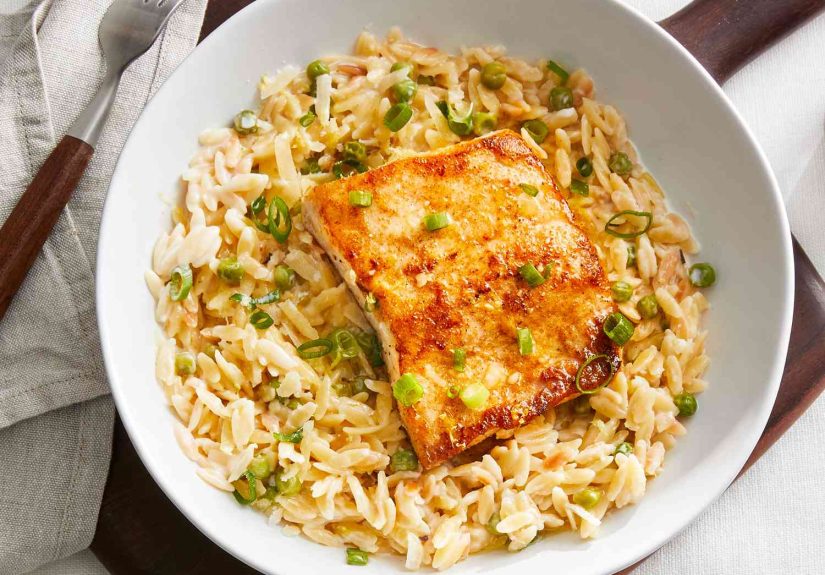
- Spoon orzotto into bowls.
- Top with fish.
- Finish with the reserved dark green scallions and a small drizzle of olive oil.
- Optional (but delightful): extra lemon wedges for squeezing at the table.
How to Keep Fish From Sticking (and Save Your Confidence)
Fish can be dramatic. Not “throw a chair” dramaticmore like “I will fuse to this pan and ruin your evening”
dramatic. Here’s how to win:
- Dry the fish well. Moisture is the enemy of browning.
- Use the right pan. A nonstick skillet is the easiest route for stress-free flipping.
- Wait for the release. When a good crust forms, fish naturally lets go. If it’s sticking, it’s not readygive it another 30–60 seconds.
- Don’t overcrowd. If the pan is packed, the fish steams instead of sears.
- Watch thickness, not the clock. Thin fillets cook fast; thick ones need a little longer.
Orzotto Troubleshooting: Fixes for the Most Common “Oops”
My orzotto is too thick
Stir in a splash of warm broth (or even hot water) a tablespoon or two at a time until it loosens and looks glossy.
Orzotto thickens as it sitsthis is normal, not a personal attack.
My orzotto is too loose
Simmer uncovered for 1–2 minutes and stir. The starch will help it tighten up quickly. If it’s still very soupy,
you can add a little extra Parmesan to help it come together.
My lemon flavor tastes bitter
Too much pith (the white part under the peel) can be bitter. Zest only the bright yellow skin. If it’s already done,
mellow it with a touch more cream or Parmesan.
My fish is dry
Fish overcooks quickly. Next time, pull it a minute earlier and let carryover heat finish the job. Also, choose thicker fillets when possiblemore forgiveness.
Easy Variations (Same Method, New Personality)
1) Lemon-Garlic Green Orzotto
Add minced garlic with the scallions, then stir in a big handful of spinach at the end. Finish with extra lemon zest.
It tastes like “I drink green juice” energy, but in a good way.
2) Mediterranean-ish Orzotto
Stir in chopped tomatoes and capers with the peas. Add herbs like parsley or dill. This version is bright, briny,
and excellent with cod or halibut.
3) Cozy “Cacio e Pepe-ish” Orzotto
Go heavier on black pepper and Parmesan. Keep the lemon, but make it subtle. It’s creamy comfort with a citrus wink.
Storage, Reheating, and Make-Ahead Tips
- Store: Keep fish and orzotto in separate containers if you can. Refrigerate up to 2 days.
- Reheat orzotto: Warm gently on the stove or in the microwave with a splash of broth/water to bring back the creaminess.
- Reheat fish: Low and slow is best. A quick warm-up in a skillet over low heat helps prevent drying out.
- Make-ahead move: Prep scallions and zest/juice the lemons ahead of time. The actual cooking then feels lightning-fast.
Frequently Asked Questions
Can I use salmon instead of white fish?
Absolutely. Salmon is richer, so the lemon is especially welcome. Use the same pan-sear approach and cook to doneness you enjoy (for safety guidance, 145°F is a solid benchmark).
Can I make it dairy-free?
You can, but it won’t be quite as lush. Try swapping Parmesan for a dairy-free alternative and use full-fat coconut milk or an unsweetened oat-based “cooking cream.”
Keep the lemon bright to balance the richness.
Do I have to use coriander?
Nope. It’s fragrant and citrus-friendly, but you can use paprika, Italian seasoning, garlic powder, or a simple salt-and-pepper approach.
Can I add more vegetables?
Yespeas are just the beginning. Spinach, asparagus tips, zucchini, or sautéed mushrooms all work. Keep add-ins quick-cooking so the 30-minute promise stays true.
How do I know the fish is done without a thermometer?
The fish should look opaque and flake easily with a fork. If it still looks translucent in the center, give it another minute.
Kitchen Notes: Experiences You Can Expect When Making Lemony Fish with Orzotto (About )
The first thing most people notice when they make lemony fish with orzotto is how “fancy” it feels for something
that’s basically broth + pasta + a few finishing ingredients. Orzo has that magical ability to act like it took a
cooking class, even if it learned everything from the back of a box.
A common experience: the moment you stir Parmesan and cream into the orzo, it transforms from “simmered pasta” into
“creamy bowl of comfort.” That change happens fast, and it’s a great reminder that finishing steps matter. It’s
also why this dish is so forgivingif the orzo looks a little plain at first, the final stir is where the flavor
shows up wearing its good shoes.
Another very real moment: fish anxiety. Many home cooks worry about sticking, breaking, or overcooking the fillets.
What usually helps is picking a nonstick skillet on purpose (no bonus points for suffering) and committing to the
“leave it alone” rule. If you try to flip too early, the fish will cling. If you wait until a crust forms, it
releases more easily. That’s when people realize pan-searing is less about force and more about timinglike trying
to open a stubborn jar, except the jar is delicious and doesn’t judge you.
Lemon is another part of the experience that surprises people. Zest and juice behave differently: zest perfumes,
juice brightens. Using both makes the dish taste layered instead of simply “sour.” Many cooks find they like to
add the measured amount first, then finish with an extra squeeze at the table. That last squeeze tastes brighter
because it’s not simmered; it hits your tongue like a spotlight.
The peas are often the “I didn’t know I needed this” ingredient. They add sweetness and color, and they make the
orzotto feel less like a beige comfort puddle and more like an actual dinner you’d serve to people you’re trying
to impress. (Or to yourself. Impressing yourself is valid and recommended.)
Leftovers tend to teach a final lesson: orzotto thickens as it cools. The next day it can look like it’s decided
to become casserole. A splash of warm broth (or water) fixes this instantly, bringing the creamy texture back.
Many people end up loving the leftovers because the flavors deepen overnight, especially the lemon zest and the
savory Parmesan.
Overall, the most consistent experience with this recipe is that it becomes a repeatbecause it’s flexible. You
can switch the fish, swap in spinach, add garlic, or adjust the lemon depending on mood. It’s the kind of dinner
that meets you where you are: tired, hungry, and hoping the stove doesn’t ask too many questions.
Conclusion
Lemony fish with orzotto is the sweet spot between “fast” and “feels like I have my life together.” You get crisp,
flavorful fish plus a creamy, lemon-bright orzo base that’s cozy without being heavy. Keep your pan hot, your fish
patient, and your lemon generousand dinner basically handles itself.