Table of Contents >> Show >> Hide
- First, a reality check: 50,000 is a number, not a lifestyle
- Collecting vs. clutter: when “treasures” start causing trouble
- The Treasure Audit: how to tame 50,000 items without losing your mind
- Storage that works for tiny stuff (aka: preventing “micro-chaos”)
- Turn your room into a mini museum (not a chaotic gift shop)
- The secret weapon: a simple inventory (yes, even if you hate spreadsheets)
- Habits that keep treasures from multiplying overnight
- Budget-friendly organizing (because bins can’t cost more than your treasures)
- When your treasures are emotional (and letting go feels weirdly hard)
- Conclusion: keep the joy, lose the chaos
- My 50,000-Treasure Diary: the messy-to-museum experiment (Experience Section)
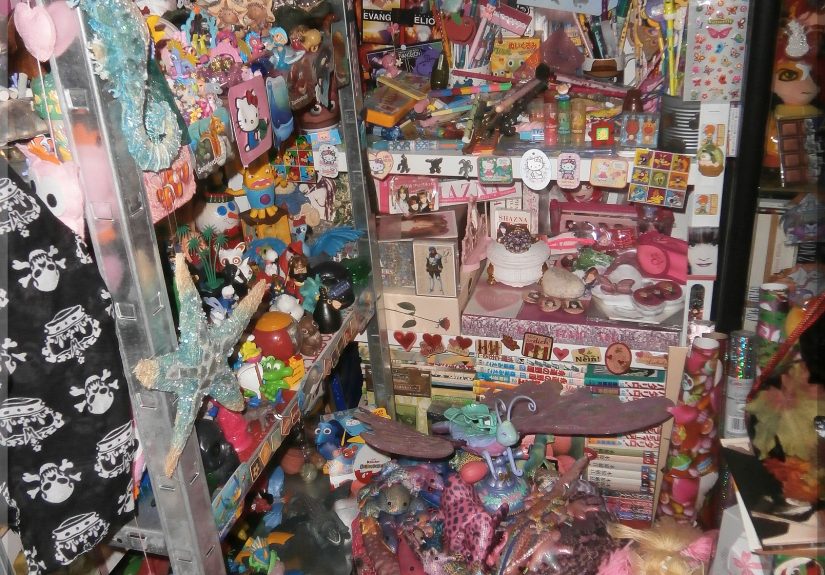
Let’s be honest: having 50,000 little treasures sounds magical until you realize you can’t find your hairbrush because it’s buried under a tiny mountain of stickers, beads, ticket stubs, keychains, and “important” rocks you adopted in 2019.
(Yes, I said rocks. Don’t judge. They chose me.)
If your room currently looks like a craft store and a souvenir shop had a baby—and that baby learned to teleport tiny objects to every flat surface—this guide is for you. We’re going to keep the joy, ditch the chaos, and build a system that lets you actually enjoy your collection instead of living inside it.
First, a reality check: 50,000 is a number, not a lifestyle
A big count doesn’t automatically mean a big mess. Fifty thousand paper clips fit in a shoebox. Fifty thousand mixed “mystery items” (buttons, charms, receipts, mini toys, random cords) can swallow a bedroom whole. The difference is category + containment + routine.
The “Treasure Equation”
- Category = What is this (exactly)?
- Containment = Where does it live (specifically)?
- Routine = How does it get back home (consistently)?
When any one of those is missing, treasures turn into clutter. When all three exist, your room becomes a mini-museum (the kind with labels, not the kind with piles).
Collecting vs. clutter: when “treasures” start causing trouble
Plenty of people collect things. A collection usually has a theme, a home, and some kind of order (even if it’s your own weird-but-logical order). Clutter is what happens when objects lose their “homes” and start living wherever they land.
There’s also a serious end of the spectrum: if it becomes extremely hard to discard items, rooms can’t be used normally, or you feel intense distress at the idea of letting anything go, that can signal a bigger problem that deserves support from a trusted adult or a mental health professional.
The goal here isn’t to slap labels on anyone—it’s to stay safe and feel in control.
Quick self-check (no judgment, just data)
- Can you use your bed, desk, and floor without moving piles first?
- Do you regularly lose important things (keys, homework, chargers) in your stuff?
- Does clutter make you anxious, embarrassed, or stuck?
- Are there safety issues (blocked walkways, things near heat sources, tripping hazards)?
If you answered “yes” to a bunch of those, don’t panic. It just means your room needs a better system—and maybe a little support while you build it.
The Treasure Audit: how to tame 50,000 items without losing your mind
The biggest mistake people make is trying to organize while they declutter. That’s like trying to fold laundry while it’s still in the washing machine. We’re going to do this in clean stages.
Step 1: Pick your room’s “main job”
Is your room mainly for sleeping? Studying? Creating art? Gaming? Relaxing? If your room has to do everything, your system has to support everything. Decide the top 2 jobs your room must do well. Those jobs get priority space.
Step 2: Do a fast category sweep (not a deep sort yet)
Grab laundry baskets, boxes, or bags. Label them with broad categories, like:
- Paper treasures (notes, cards, tickets, stickers)
- Tiny plastic/metal treasures (keychains, charms, pins, mini figures)
- Craft supplies (beads, thread, washi tape, paint pens)
- Memories (souvenirs, event wristbands, photos)
- Electronics bits (cords, adapters, earbuds, batteries)
- Daily essentials (school items, skincare, hair stuff)
Don’t get distracted. This is not the moment to whisper, “Oh wow, I forgot I owned this tiny frog.” The frog will still be there in 12 minutes. Keep moving.
Step 3: Create a “purgatory box” for decision fatigue
Some items are easy: trash is trash, obvious favorites are keepers. But a lot of stuff sits in the gray zone. For those, make a clear bin labeled:
NOT SURE — CHECK LATER.
If you don’t miss it after a set time window (like 30 days), you have a much easier decision.
Step 4: Declutter duplicates like a pro (because duplicates are sneaky)
Duplicates are the silent room-fillers: 14 nearly identical keychains, 8 lip balms, 27 tiny notebooks, 12 “backup” pens that don’t actually work.
Pick a realistic number to keep and let the rest go. A good rule: keep the best, donate the rest, recycle what you can.
Step 5: Only buy containers after you know what you’re keeping
Storage should fit your stuff—not the other way around. Once you know your real categories and volumes, you can choose the right containers and avoid buying random bins that become (surprise!) more clutter.
Storage that works for tiny stuff (aka: preventing “micro-chaos”)
Tiny items are special. They can fit anywhere, which means they will end up everywhere. Your system needs small compartments and clear labels.
Go clear when possible
Clear containers help you see what you have. When you can see it, you stop buying accidental duplicates and you actually use what you own.
If clear bins aren’t your style, use opaque bins with big, specific labels.
Use compartments like you’re running a candy shop
For beads, charms, pins, mini toys, and tiny accessories, use:
- Compartment organizers (think: tackle box energy)
- Drawer dividers
- Small boxes inside a bigger box (“box-in-box” method)
- Jars or bowls for daily-grab items (on a tray so they don’t roam)
Exploit vertical space (your walls are unemployed)
If you’re low on floor space, go up:
- Wall shelves for display items
- Pegboards for tools, supplies, or hanging accessories
- Over-the-door hooks or organizers
- A shelf above the door for rarely used bins
Under-bed storage is the ultimate secret level
Under the bed is prime real estate for overflow categories and seasonal items. If your bed is low, risers can create space. Keep under-bed storage labeled and grouped so you’re not crawling around like an archaeologist every time you need something.
Hidden storage = calmer room
If visual clutter stresses you out, choose furniture that hides stuff: storage ottomans, lift-top benches, beds with drawers, or a cabinet that closes. You can still keep treasures—you just don’t have to stare at all 50,000 of them at once.
Turn your room into a mini museum (not a chaotic gift shop)
Here’s the truth: if you display everything, you display nothing. The magic is in curating.
Create a “Top 100” display
Choose your absolute favorites—items that make you smile instantly. Put those on display:
a shelf, a shadow box, a corkboard, or a small cabinet. This keeps the joy visible without letting the room become a clutter carnival.
Rotate displays instead of hoarding surfaces
Store the rest safely and rotate what you display monthly or seasonally. It feels new, you rediscover forgotten favorites, and you don’t need extra space to feel refreshed.
Protect delicate treasures
- Paper items: keep flat, dry, and away from direct sunlight; sleeves or envelopes help.
- Metal items: keep dry to prevent tarnish; small silica packs can help in humid climates.
- Stickers: store in a binder with sleeves, or on release paper so they stay usable.
- Photos: keep in a box or album; avoid heat and moisture.
The secret weapon: a simple inventory (yes, even if you hate spreadsheets)
You don’t need a museum database. You just need enough structure to stop re-buying and re-losing.
The easy inventory method
- Pick 6–10 categories (no more, or your brain will revolt).
- Assign each category a home: Bin A, Drawer 2, Shelf 3, etc.
- Take one quick photo per category (optional but powerful).
- Write one note: what’s inside + where it lives.
That’s it. The inventory doesn’t have to be perfect. It has to be usable.
Habits that keep treasures from multiplying overnight
Organization isn’t a one-time event. It’s a relationship. (And like all relationships, it thrives on small consistent actions, not dramatic speeches.)
The daily 5-minute reset
Set a timer for five minutes. Put obvious things back in their homes. Stop when the timer ends. Daily resets prevent weekend disaster marathons.
Quarterly “season swap”
Every few months, do a quick scan: what you still love stays accessible; what you don’t use gets moved to deeper storage or donated.
This keeps your system current instead of turning your room into a time capsule.
One in, one out (especially for tiny collectibles)
New charm comes in? Another charm leaves or gets traded. This rule protects your space from slow-motion overflow.
Budget-friendly organizing (because bins can’t cost more than your treasures)
You don’t need fancy products. You need smart zones.
Try:
- Thrifted jars, trays, and small drawers
- Reused boxes (shoe boxes are undefeated)
- Old mint containers for tiny items
- Small bowls on a tray for daily-carry items
- Labels made with tape + marker (professional enough)
The goal is function first. Cute comes second. (But yes, you can absolutely have both.)
When your treasures are emotional (and letting go feels weirdly hard)
Sentimental items hit different. You might keep something because it represents a person, a moment, or a version of you.
That’s normal. What helps is separating memory from object.
Try a “memory label” instead of keeping ten versions of the same thing
Keep one item that best represents the memory and add a short note:
“Concert ticket from the night I screamed every lyric and lost my voice.”
Suddenly, one ticket does the job of twenty.
If you feel stuck, ask for support
If organizing brings up anxiety, shame, or panic, it helps to work with someone supportive—a parent, sibling, friend, or counselor.
You don’t have to do it alone, and you don’t have to be “good at organizing” to deserve a calm space.
Conclusion: keep the joy, lose the chaos
Having 50,000 little treasures isn’t the problem. The problem is when those treasures don’t have categories, containers, or a routine.
Start with broad sorting, remove duplicates, use compartments for tiny items, store overflow out of sight, and display only your absolute favorites like a curator.
Build a five-minute daily reset, and your room will stop feeling like it’s constantly “getting messy” for no reason.
Your treasures should feel like a collection you enjoy—not a pile you apologize for.
And if anyone asks why you own 47 tiny frogs? You look them straight in the eye and say: “Because I am a person of culture.”
My 50,000-Treasure Diary: the messy-to-museum experiment (Experience Section)
The first time I tried to “organize my treasures,” I made a classic mistake: I bought containers first. I came home with cute bins, a label maker fantasy, and the confidence of someone who had watched exactly two organizing videos and considered themselves a professional. Then I realized I had purchased three bins for a category that barely existed (apparently I do not own enough “winter accessories” to justify an entire bin) and zero bins for the category that was basically running my room like a tiny-object dictatorship: keychains, charms, and mini collectibles.
So I restarted. This time I did the category sweep with laundry baskets. That was the moment the truth arrived. I found duplicates I didn’t know I had. I discovered a whole pile of “I will definitely use this someday” craft supplies that I hadn’t touched in a year. I also found items that made me genuinely happy—little souvenirs from trips, notes from friends, and a few objects so ridiculous that keeping them felt like a public service (like a tiny plastic sandwich I once won from a vending machine).
The biggest win was the “purgatory box.” At first it felt dramatic, like I was sending items to a tiny-object courtroom. But it helped me stop overthinking. If I wasn’t sure, it went into the box. After a few weeks, I opened it and realized I didn’t even remember half the items. That was my answer. I kept the truly meaningful pieces and let the rest go without feeling like I was deleting my personality.
Next came compartments. I used a tackle-box-style organizer for the smallest stuff, and suddenly everything made sense. Beads by color. Charms by theme. Pins by type. It wasn’t just organized—it was findable. I stopped buying duplicates because I could actually see what I owned. I also did something unexpectedly fun: I curated a “Top 100” shelf. That shelf became my favorite part of the room. It looked intentional, like a tiny gallery, and it reminded me why I loved collecting in the first place.
The final surprise was how much calmer I felt with a five-minute reset. Five minutes sounded too small to matter, but it worked because it prevented the big slide into chaos. I’d set a timer, put things back where they lived, and stop. No drama. No midnight cleaning spree fueled by guilt. Just a small daily habit that kept my treasures from taking over my floor (again).
Now, when I bring something new into my room, I ask one simple question: “Where will this live?” If it doesn’t have a home, it doesn’t come in—or something else has to leave. I still have a ton of treasures. But now they feel like mine, not like they’re squatting in my room and charging rent.