Table of Contents >> Show >> Hide
- What Is a Bamboo Flute?
- Choosing the Best Bamboo Flute for Beginners
- Parts of a Bamboo Flute
- How to Hold a Bamboo Flute Correctly
- How to Make Your First Sound
- Beginner Bamboo Flute Fingering Basics
- Breath Control for Bamboo Flute Beginners
- How to Practice Your First Scale
- Simple Songs for Bamboo Flute Beginners
- Common Bamboo Flute Mistakes and How to Fix Them
- A 20-Minute Daily Practice Routine
- How to Care for a Bamboo Flute
- Beginner Tips for Better Bamboo Flute Tone
- Experience-Based Advice: What Beginners Really Learn While Playing Bamboo Flute
- Conclusion
Learning how to play a bamboo flute for beginners can feel a little mysterious at first. You pick up a simple-looking tube of bamboo, take a proud breath, blow with confidence, and hear… absolutely nothing. Maybe a tiny windy squeak. Maybe the sound of your dignity leaving the room. Relax. That is normal.
The bamboo flute is one of the oldest and most soulful wind instruments in the world. From the Indian bansuri to the Chinese dizi, Japanese shakuhachi, and Native American-style flute, bamboo flutes have carried folk songs, meditation music, classical melodies, and quiet porch-at-sunset moments for generations. The good news? You do not need to be a musical wizard to begin. You need patience, steady breath, relaxed fingers, and a willingness to sound like a confused tea kettle for a few days.
This beginner-friendly guide explains how to choose a bamboo flute, hold it correctly, produce your first clear note, practice finger placement, improve breath control, avoid common mistakes, and build a simple daily routine. By the end, you will understand the basics of bamboo flute playing and have a practical path from “why is this silent stick judging me?” to “hey, that actually sounds like music.”
What Is a Bamboo Flute?
A bamboo flute is a wind instrument made from a hollow bamboo tube with finger holes and a blowing edge or mouthpiece. The player creates sound by sending air into or across an opening, causing the air column inside the flute to vibrate. Different bamboo flute traditions use different designs, but the basic idea is beautifully simple: breath becomes tone.
For beginners, the most common bamboo flutes include the side-blown bamboo flute, such as the bansuri or dizi, and the end-blown flute, such as the shakuhachi. Some Native American-style flutes are also made from bamboo or wood and are often easier for complete beginners because the mouthpiece guides the air more directly. However, this article focuses mainly on the side-blown bamboo flute, because that is what many people imagine when they search for how to play a bamboo flute.
Choosing the Best Bamboo Flute for Beginners
Your first bamboo flute should make learning easier, not turn practice into a dramatic survival documentary. A well-made beginner flute responds with moderate breath, has comfortable finger spacing, and plays reasonably in tune.
Pick a Comfortable Key
Many beginners do well with a medium-sized bamboo flute, often in the key of C, D, or G depending on the flute tradition. Very large flutes can require wider finger stretches and more breath. Very small flutes can feel easier to hold but may sound brighter and require precise air control. A middle-range flute gives you the best chance of learning tone, fingering, and breath without wrestling the instrument like it owes you money.
Check the Finger Holes
Before buying, look at the spacing of the finger holes. Your fingers should be able to cover them without pain or awkward stretching. If your hands are smaller, choose a flute with closer hole spacing. Comfort matters because leaky fingers are one of the biggest reasons beginners get weak or squeaky notes.
Avoid Decorative-Only Flutes
Some bamboo flutes sold online are beautiful wall decorations but unreliable musical instruments. A beginner flute should be tuned, playable, smooth around the holes, and free of cracks. Pretty carvings are nice, but accurate tuning is nicer. Your ears will thank you later.
Parts of a Bamboo Flute
Before playing, learn the basic parts of your flute. Knowing what each part does makes instructions much easier to follow.
- Blow hole or embouchure hole: The hole where you direct your air to create sound.
- Finger holes: The holes you cover and uncover to change notes.
- Bamboo body: The hollow tube that resonates when you blow.
- End opening: The open end where sound projects outward.
- Membrane hole: On some Chinese dizi flutes, a special hole is covered with a thin membrane to create a bright buzzing tone.
If your flute has six finger holes, you will usually cover three with one hand and three with the other. Some flutes have five, seven, or more holes, so always check a fingering chart made for your exact instrument.
How to Hold a Bamboo Flute Correctly
Good posture makes playing easier. Bad posture makes the flute feel like a bamboo puzzle invented by someone with too many elbows.
Step 1: Sit or Stand Tall
Keep your back comfortably straight, shoulders relaxed, and chest open. Do not puff up like a superhero poster, but do not collapse forward either. Your breath needs room to move.
Step 2: Hold the Flute Level
For a side-blown bamboo flute, hold the flute horizontally, usually extending to your right side. The blow hole should line up with your lower lip. Keep your wrists relaxed and your fingers curved naturally over the holes.
Step 3: Balance, Do Not Squeeze
The flute should rest lightly between your lips, fingers, and thumbs. Beginners often grip too hard because they are afraid the flute will fall. This creates tension, slows finger movement, and makes playing uncomfortable. Hold the flute securely but gently, like a sandwich you respect.
How to Make Your First Sound
Producing the first clear note is the hardest beginner milestone. Once you get it, everything becomes more encouraging.
Find the Right Lip Position
Place the blow hole just under your lower lip. Your lower lip should cover a small part of the hole, but not the entire opening. Think of blowing across the hole rather than straight into it. The air should split on the far edge of the blow hole.
Shape Your Embouchure
Embouchure means the shape of your lips when playing. For beginners, the goal is a small, relaxed opening in the lips. Say “too” or “poo” softly, then keep that small opening. Avoid smiling widely because it stretches the lips and can make the tone thin. Also avoid puffing your cheeks. Your cheeks are not balloons; they have other career options.
Use Gentle, Focused Air
Do not blast the flute. A bamboo flute usually responds better to steady, focused air than to raw force. Imagine cooling a spoonful of hot soup. The air is directed, smooth, and controlled. Blow across the hole and slightly downward until you hear a tone.
Adjust Slowly
If no sound comes out, do not panic. Rotate the flute slightly inward or outward. Move it a tiny bit higher or lower on your lip. Change the air angle. Small adjustments make a huge difference. Most beginners find the sound by experimenting, not by getting it perfect on the first heroic attempt.
Beginner Bamboo Flute Fingering Basics
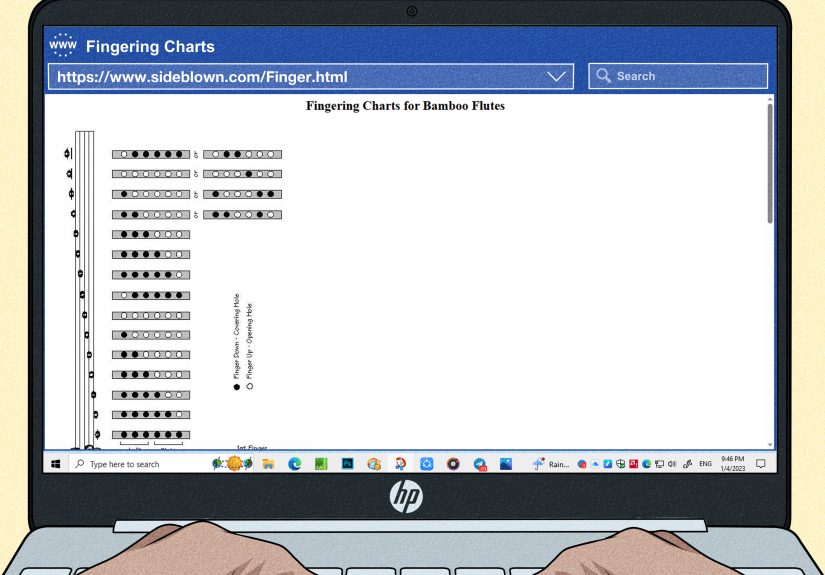
Once you can make a tone, begin adding fingerings. On many six-hole bamboo flutes, covering all holes gives the lowest basic note. Opening holes one at a time from the bottom upward creates a rising scale. However, fingering systems vary by flute type, key, and tradition, so use your flute’s own chart whenever possible.
Basic Six-Hole Fingering Concept
The following example shows a common beginner idea for a six-hole transverse bamboo flute. “Closed” means the finger covers the hole completely. “Open” means the finger lifts off the hole.
| Beginner Note Step | General Fingering Idea | Practice Tip |
|---|---|---|
| Lowest note | All holes closed | Use steady air and cover every hole fully. |
| Second note | Bottom hole open | Lift only one finger without moving the others. |
| Third note | Two bottom holes open | Keep the tone even as the pitch rises. |
| Fourth note | Three bottom holes open | Check that upper holes remain sealed. |
| Higher notes | Continue opening holes gradually | Do not rush; clean notes matter more than speed. |
When covering holes, use the soft pads of your fingers, not the fingertips. A tiny air leak can ruin the note. If a note sounds airy or unstable, check your fingers before blaming your flute, the weather, or your ancestors.
Breath Control for Bamboo Flute Beginners
Breath is the engine of bamboo flute playing. Your fingers choose notes, but your breath gives those notes life.
Practice Belly Breathing
Place one hand on your stomach. Inhale slowly and feel your belly expand slightly. Exhale with control. This does not mean forcing your stomach outward like a cartoon frog; it means allowing the diaphragm and lower ribs to support a relaxed, full breath.
Play Long Tones
Long tones are simple but powerful. Choose one easy note and hold it for five to ten seconds. Keep the sound steady from beginning to end. Listen for wobbling, fading, or sudden squeaks. Long tones train your air, lips, ears, and patience all at once.
Use Less Air Than You Think
Many beginners waste air by blowing too wide or too hard. A focused stream is more effective. If you run out of breath instantly, narrow the lip opening slightly and aim the air more precisely across the blow hole.
How to Practice Your First Scale
After learning a few notes, practice them slowly as a scale. A scale is simply notes arranged in order from low to high or high to low.
Start with three notes. Play low note, second note, third note, then return: third note, second note, low note. Use a slow tempo. The goal is not speed. The goal is clean transitions and consistent tone.
Try this simple pattern:
- Play note 1 for four counts.
- Play note 2 for four counts.
- Play note 3 for four counts.
- Return to note 2 for four counts.
- Return to note 1 for four counts.
When that feels comfortable, add more notes. If your sound falls apart, slow down. Fast mistakes are still mistakes; they just wear sneakers.
Simple Songs for Bamboo Flute Beginners
Beginner songs should use a small number of notes and simple rhythms. Folk tunes, children’s songs, and slow melodies are excellent practice material. Songs like “Mary Had a Little Lamb,” “Hot Cross Buns,” or simple pentatonic melodies can help you connect finger patterns with recognizable music.
If your bamboo flute uses Indian sargam, practice Sa Re Ga slowly before trying full melodies. If your flute uses Western notation, learn the note names from your fingering chart. If your flute is a Native American-style flute, tablature may be easier than standard sheet music. The best system is the one that matches your instrument and keeps you practicing.
Common Bamboo Flute Mistakes and How to Fix Them
No Sound Comes Out
Check your air angle first. You may be blowing too directly into the hole instead of across it. Rotate the flute slightly and use a smaller lip opening. Also check that the blow hole is not covered too much by your lower lip.
The Sound Is Airy
An airy sound usually means the air stream is too wide, the angle is slightly off, or your lips are tense. Relax your jaw, focus the air, and practice long tones. A little airiness is normal at first.
Notes Squeak
Squeaks often come from overblowing, leaking finger holes, or sudden changes in air pressure. Slow down and make sure each finger seals its hole before playing the note.
Your Fingers Feel Awkward
This is normal. Keep your fingers close to the holes and lift them only as much as needed. Big finger movements make fast playing harder later. Think small, relaxed, and efficient.
You Get Dizzy
Stop and rest. Beginners sometimes use too much air or practice too long without breaks. Short sessions are better than heroic marathons. Your flute will still be there after water and oxygen have re-entered the chat.
A 20-Minute Daily Practice Routine
Consistent short practice beats random long practice. Try this beginner bamboo flute routine five or six days per week.
Minutes 1–3: Breathing Warm-Up
Take slow breaths. Inhale for four counts, exhale for six counts. Keep your shoulders relaxed.
Minutes 4–8: Tone Practice
Play long tones on one or two easy notes. Focus on a clear beginning, steady middle, and controlled ending.
Minutes 9–13: Finger Practice
Move between two or three notes slowly. Watch for finger leaks and unnecessary hand tension.
Minutes 14–17: Scale Practice
Play your beginner scale up and down. Use a metronome if available, but keep the tempo slow.
Minutes 18–20: Song Time
Play a short melody you enjoy. This keeps practice musical and prevents your routine from becoming bamboo homework with extra breathing.
How to Care for a Bamboo Flute
Bamboo is natural, which means it reacts to moisture, temperature, and handling. Good care helps prevent cracks, mold, and tuning problems.
Dry the Flute After Playing
Moisture from breath can collect inside the flute. After playing, let the flute air out and gently wipe it if your instrument maker recommends it. Avoid soaking bamboo or using harsh cleaners.
Avoid Extreme Temperature Changes
Do not leave your bamboo flute in a hot car, direct sunlight, or very dry air for long periods. Sudden temperature and humidity changes can stress the bamboo and lead to cracks.
Store It Safely
Use a flute case or soft cloth bag. Store the flute where it will not roll off a desk, get stepped on, or become a chew toy for a curious pet with artistic ambitions.
Do Not Share Without Cleaning
Because flutes touch the mouth and collect breath moisture, sharing instruments is not ideal. If sharing is necessary, clean the mouth area properly according to safe instrument hygiene practices.
Beginner Tips for Better Bamboo Flute Tone
Once you can make notes, your next goal is beauty. A good bamboo flute tone is clear, warm, and stable. Here are practical ways to improve.
- Record yourself: Your phone can reveal tone issues you do not notice while playing.
- Practice in front of a mirror: Watch your lips, cheeks, and posture.
- Use a tuner: Learn how breath pressure affects pitch.
- Listen to skilled players: Your ears need examples of good sound.
- Stay relaxed: Tension in the jaw, shoulders, and fingers usually hurts tone.
Experience-Based Advice: What Beginners Really Learn While Playing Bamboo Flute
The first real lesson of learning bamboo flute is humility. The instrument looks simple, but it has a funny way of revealing everything: your breath, your patience, your posture, and whether you secretly believe louder means better. Many beginners start by blowing harder when the flute does not respond. Then they discover that the flute was not asking for more force. It was asking for better aim.
One of the most useful beginner experiences is spending an entire practice session on just one note. That may sound boring, but it is where the magic begins. When you hold one note and listen closely, you notice whether the sound is centered or fuzzy, whether your breath shakes, whether your fingers are pressing too hard, and whether your shoulders are creeping toward your ears like nervous turtles. A single note can teach more than a rushed song.
Another common experience is the “yesterday I had it, today I lost it” phase. One day you produce a beautiful clear tone and feel ready to headline a peaceful mountain concert. The next day the same flute gives you nothing but wind. This does not mean you are going backward. It means your body is still learning consistency. Flute playing depends on tiny physical details: lip angle, air speed, jaw position, and how much of the blow hole is covered. Beginners should expect some variation. The solution is not frustration; it is repetition.
Finger coordination also teaches patience. At first, your fingers may fly too high, miss holes, or move like they are voting on whether to participate. Slow practice fixes this. Keep fingers close to the flute. Move only the finger required. When changing notes, imagine the motion before doing it. This builds muscle memory, and muscle memory is what eventually lets you play melodies without thinking about every single hole.
Breathing is another surprise. Many beginners assume they need huge lungs. In reality, bamboo flute playing is more about controlled airflow than lung size. A smaller, focused stream of air often works better than a dramatic blast. Rest often, especially during the first weeks. If you feel dizzy, your body is giving you a very clear review: “Nice enthusiasm, please breathe normally now.”
Playing in a quiet room helps, but playing outdoors can be inspiring too. Bamboo flutes have an earthy sound that feels natural in open air. However, wind can interfere with tone, and dry or humid weather can affect the instrument. Beginners should practice mostly indoors at first, then enjoy outdoor playing once tone production becomes more reliable.
The best experience of all is the first recognizable melody. It may be slow. It may squeak. It may cause nearby family members to say, “Is that a song?” with cautious optimism. But that moment matters. It proves that breath, bamboo, and practice can become music. From there, improvement becomes addictive in the best way.
Conclusion
Learning how to play a bamboo flute for beginners is a journey of breath, listening, and small adjustments. Start with a comfortable flute, learn proper posture, practice a relaxed embouchure, and focus on clear tone before speed. Cover finger holes completely, use gentle air, and build a daily routine with long tones, scales, and simple songs.
The bamboo flute rewards patience. It does not need batteries, apps, or dramatic equipment. It needs your attention. Give it twenty focused minutes a day, and the silent bamboo tube that once ignored you will slowly become a warm, expressive musical voice. And yes, the first clean note is absolutely worth celebrating.
Note: This HTML body is written for web publishing and contains only clean article content without source-link clutter or citation placeholders.