Table of Contents >> Show >> Hide
- Meet the Work Light: a garage icon, dressed for dinner
- What makes it feel Scandinavian (without feeling chilly)
- Materials and details that matter
- Where the Work Light looks best (and actually works best)
- Choosing the right bulb and dimming without drama
- How to style the Work Light: five looks that don’t feel like a catalog
- Care, longevity, and safety basics
- Is the Work Light “worth it”? Here’s what you’re actually buying
- Quick FAQ
- Real-world experiences: what it’s like living with the Work Light (extra )
- Conclusion
Some lighting is born fancy. It arrives draped in crystal, speaking in an elegant whisper, and asking you not to touch it unless you’re wearing museum gloves.
The Work Light from Design House Stockholm is the opposite. It shows up like it’s ready to help you move a couch, paint a wall, and still look
good hanging over your dining table afterwardbecause that’s basically the whole point.
Often referred to as the Work Lamp, this design takes the humble, caged utility light you’ve seen in garages and workshops and gives it a
clever Scandinavian makeover: cleaner lines, tougher construction, a dimmer for mood control, and finishes that add just enough shine to make it feel “designer”
without losing its blue-collar swagger. It’s a lamp that understands two truths: you want your home to look cool, and you also want to see what you’re doing.
Meet the Work Light: a garage icon, dressed for dinner
The Work Light was created by the Swedish design trio Form Us With Love for Design House Stockholm. The concept is delightfully
straightforward: take an anonymous workshop lightone that’s always within reach, meant to be bumped, dropped, and generally treated with the emotional care of a
toolboxand refine it so it belongs in a living room. In other words, the designers didn’t invent a new form from scratch. They recognized a form that already
worked and gave it smarter proportions, stronger construction, and a better “wear it out” personality.
Design House Stockholm is known for treating design like a “publishing” processcollaborating with designers who bring a strong idea and helping turn it into
a product that feels distinctive rather than trend-chasing. The Work Light fits that vibe perfectly: it’s practical, minimal, and just cheeky enough to make
you smile when you realize the light over your kitchen island is basically a glamorized construction lamp. (Don’t worry. It won’t start asking for overtime pay.)
What makes it feel Scandinavian (without feeling chilly)
Scandinavian lighting has a reputation: clean lines, honest materials, and a focus on how light affects everyday life. The Work Light checks those boxes,
but it avoids the common “Scandi = sterile” trap by leaning into warmth and character. The cage structure creates a visual rhythm. The shine from plated metal
adds contrast. And the dimmer turns it from “task mode” to “soft glow” in a second.
The magic is that it looks intentional in almost any setting. In a minimalist room, it reads like a sculptural object. In a more eclectic space, it plays well
with vintage pieces, industrial accents, or even traditional furniture because the silhouette is familiar. You’ve seen this shape beforejust not this polished.
Materials and details that matter
A steel cage that’s more than decoration
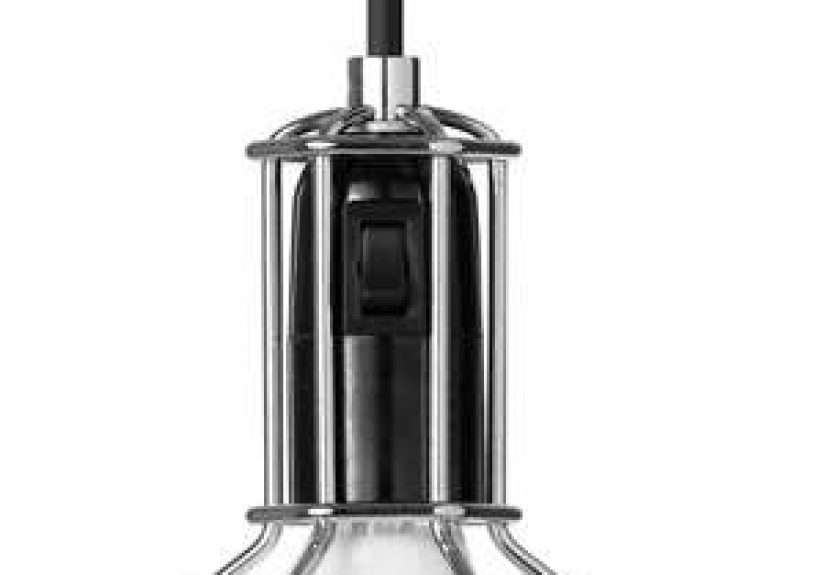
The signature feature is the metal cage that wraps around the bulb. In a real workshop light, that cage is there for protection. Here, it’s still
functionalhelping shield the bulb from bumpswhile also serving as the design’s “outline.” It’s minimal material doing maximum work, which is one of those very
Scandinavian flexes that looks simple until you try to design it yourself.
Gold or chrome: two personalities, same attitude
Most people talk about the Work Light in two classic finishes: gold-toned plating and chrome/silver-toned plating. The finish
doesn’t just change the color; it changes the vibe. Gold reads warmer, slightly more playful, and surprisingly cozy when paired with wood, linen, and creamy walls.
Chrome reads crisp and moderngreat with concrete, black accents, and cooler color palettes.
The cord and dimmer: small detail, huge difference
A dimmer on the cord turns the Work Light from a one-note fixture into something you can actually live with. Bright for cooking, softer for dinner, dim for the
“I’m pretending I’m not checking email” hour. That “built-in flexibility” is why it works beyond the kitchenespecially in home offices, reading corners, and
studios where you want control without rewiring your life.
Size and scale: compact, but visually strong
The lamp’s proportions are intentionally modestthink compact shade, defined cage, and enough presence to be noticed without hogging the room. That makes it a strong
candidate for using multiples: two over a small island, three over a longer one, or a pair over a dining table if you want symmetry without going full chandelier.
Bulb base and brightness: the practical part you can’t skip
The Work Light is often specified with an E27-style socket (common internationally). In the U.S., you’ll typically see E26 bulbs.
They’re very close in size and, in many cases, compatiblebut always follow the fixture’s labeling and the retailer/manufacturer guidance for your region.
Practically speaking, you’ll want to choose a bulb based on lumens (brightness), not watts.
Where the Work Light looks best (and actually works best)
A good fixture isn’t just photogenicit’s useful. The Work Light’s utility roots make it naturally strong in “do stuff here” zones.
Here are the rooms where it shines (yes, that pun is working overtime today).
Kitchen islands and peninsulas
This is the Work Light’s natural habitat: the place where you chop, prep, and occasionally stare into the fridge like it might reveal the meaning of life.
Use multiple pendants for longer surfaces to reduce shadows and spread light evenly. A common guideline for dining tables (and often islands)
is hanging pendants roughly 30–36 inches above the surface, adjusting for ceiling height and fixture size.
Dining tables
If you want a dining pendant that feels modern but not precious, this is a strong choice. The cage design keeps it visually lightweight even when the finish is bold.
Pair it with a warm bulb and dim it down at night for a softer, more flattering glow.
Home offices and studios
The Work Light is a great “focus zone” fixture. If your workspace has good ambient light, the pendant can act like a visual anchordefining the work area without
needing a huge, complicated setup. Choose a brighter lumen bulb for productivity and let the dimmer handle transitions to non-work life. (Because your brain deserves
a closing time.)
Reading nooks and bedside corners
In a reading corner, a pendant like this can work especially well if you want to free up table space. Aim the overall lighting plan so you avoid glare on pages and
screens, and keep the bulb warm enough that it doesn’t feel clinical at night.
Choosing the right bulb and dimming without drama
The Work Light may look like a tough little icon, but your bulb choice determines whether it feels cozy, harsh, or “why do I suddenly look like a vampire in a
bathroom mirror?” Start with these practical rules.
1) Buy brightness by lumens, not watts
If you want the Work Light to function as true task lighting, you’ll likely want a bulb in the neighborhood of 600–1100 lumens depending on the room,
ceiling height, and how many fixtures you’re using. For softer ambiance, go lower and rely on the dimmer to fine-tune.
2) Pick a color temperature that matches the room’s job
For kitchens and work zones, many people prefer a “clean” white light that still feels welcoming (often somewhere around the warm-to-neutral range). For dining and
living spaces, warmer light tends to look better on food, wood, and human faces. If you’re using one fixture for multiple moods, a dimmable bulb gives you more range.
3) Dimmable means “designed to dim”
Not every LED loves being dimmed. Choose a bulb that explicitly says dimmable, and consider compatibility guidance if you’re pairing it with specific
dimming hardware. When dimming goes wrong, the symptoms are memorable: flicker, limited dim range, or a weird “jump” at the low end that makes your room feel like a
haunted house set. (Spooky is fun; flicker is not.)
4) Efficiency mattersespecially when the light gets used daily
If this pendant is over an island or dining table, it’s probably on a lot. Efficient bulbs help cut energy use and reduce heat output. That’s great for comfort,
especially in small spaces or warmer climates. Look for quality markers (like reputable certification programs) and decent warranties so you’re not replacing bulbs
constantly.
How to style the Work Light: five looks that don’t feel like a catalog
1) Warm Scandinavian
Gold finish + oak or walnut + creamy walls + textured textiles (linen, wool, boucle). Add a simple ceramic bowl on the table. Suddenly your “work light” is living
its best hygge life.
2) Modern industrial (but not “I live in a boiler room”)
Chrome finish + black accents + concrete or stone surfaces + matte cabinetry. Keep the palette tight and let the lamp’s reflective surface do the visual lifting.
3) Soft minimalism
Use one Work Light as a deliberate focal point in a simple room. Pair with a neutral bulb and keep surrounding décor quiet. The cage becomes a graphic line drawing
in 3D.
4) Vintage-meets-new
The Work Light looks great alongside vintage dining chairs, a reclaimed wood table, or an antique rug because the silhouette feels familiar. The finish makes it
feel “updated,” like you discovered it in the best corner of a design storeby accident, of course.
5) Gallery spotlight energy
Hang it where it highlights something you love: a console with art above it, a shelf wall, or a reading chair. Use the dimmer to create a pool of light that makes
the corner feel curated.
Care, longevity, and safety basics
A plated finish stays nicer when you treat it gently. Dust with a soft cloth. Skip abrasive cleaners that can dull shine or scratch plating. If you’re installing
pendants hardwired, make sure the setup matches local electrical requirements and consider using a qualified installerespecially if you’re adding multiple fixtures,
relocating a junction box, or integrating dimming controls.
Also: respect the fixture’s bulb guidance. Brighter isn’t always better if it creates glare. And higher wattage (or a bulb that runs hot) isn’t a flexit’s a
shortcut to discomfort and shortened component life. Choose a quality bulb, keep heat low, and let the dimmer do the finesse work.
Is the Work Light “worth it”? Here’s what you’re actually buying
With design lighting, you’re never just paying for light output. You’re paying for the idea, the materials, the finish quality, the proportion work, and
the fact that it can make a basic room look intentional. The Work Light earns its keep by being both a conversation piece and a genuinely useful source of light.
- Design credibility: A recognized Scandinavian brand and an established design studio behind it.
- Form + function: Looks sculptural, acts practical, especially with a dimmer.
- Versatility: Works in kitchens, dining rooms, studios, and smaller “zone lighting” moments.
- Finish impact: Gold and chrome transform a humble form into something elevated.
Quick FAQ
Is it only for industrial interiors?
Not at all. The silhouette is industrial, but the finish and proportion make it adaptable. It can look just as at home in soft Scandinavian spaces as it does in
loft-style interiors.
Is it bright enough for a kitchen?
It can beif you choose an appropriate lumen bulb and, for larger surfaces, use more than one pendant. For true task lighting, prioritize brightness and even
coverage over a single dramatic fixture.
What bulb should I use?
Choose based on socket type for your region, and prioritize a dimmable, high-quality bulb with the lumen output you need. For daily-use areas, efficient bulbs are
typically the smart move.
Gold or chromewhich is easier to live with?
Gold tends to feel warmer and hides some everyday smudges better in certain rooms. Chrome feels crisp but can highlight fingerprints more. Both are easy to maintain
with gentle cleaning.
Real-world experiences: what it’s like living with the Work Light (extra )
People often buy the Work Light for the same reason they buy a great leather jacket: it’s functional, it looks better with confidence, and it quietly upgrades
everything around it. In day-to-day life, the first “oh, this is good” moment usually happens in the kitchen. The cage form throws light in a way that feels focused
without being tunnel-vision harsh, especially when you pick a bulb with a balanced glow. Owners frequently notice that the lamp looks bold in photosbut in real life,
it reads surprisingly light because the cage is airy. There’s visual structure, but you don’t get a heavy, blocky shade swallowing the ceiling.
The dimmer becomes the hero fast. In the afternoon, the Work Light can act like honest task lighting: bright enough to prep food, read a recipe, or power through a
laptop session at the island. Later, the same fixture shifts into a softer roledimmed down for dinner, calmer conversation, or that late-night “just one more snack”
vibe. That flexibility is the difference between a pendant you love in theory and a pendant you love at 9:47 p.m. when you’re tired and your eyes want mercy.
Another common experience: the Work Light is a surprisingly good “style bridge.” In mixed homeswhere one person loves clean modern design and the other has a soft
spot for vintage furniturethe Work Light often lands as the compromise that feels intentional rather than neutral. The shape is familiar (a utility lamp), but the
finish gives it design credibility. It doesn’t fight with a farmhouse table or mid-century chairs. It just… shows up and does its job like a friendly, stylish
coworker who doesn’t take your desk snacks.
On the practical side, people learn quickly that bulb choice matters more than they expected. With the wrong bulb, any caged fixture can create uncomfortable glare,
especially if the bulb is too cool in color temperature or too intense for a small space. With the right bulbbright enough, dimmable, and pleasantly tonedthe lamp
feels “expensive” in the way good lighting always does: it makes the room look better, and it makes you feel better in the room. That’s why owners often describe
the Work Light as a fixture they don’t just notice when it’s on; they notice it when it’s off, too, because the silhouette becomes part of the room’s identity.
Finally, there’s the long-term effect: the Work Light doesn’t get tired of itself. Trendy fixtures sometimes feel dated once the internet moves on to the next big
thing. A refined utility form is different. It’s been around forever for a reason. The Work Light simply upgrades that formso it continues to feel relevant even
when your paint color, stools, or backsplash evolve. It’s the rare piece that can survive a room refresh without needing to be “replaced for the algorithm.”
Conclusion
The Design House Stockholm Work Light is a reminder that great design doesn’t always start with a dramatic new shape. Sometimes it starts with a
form that already worksthen gets refined until it belongs everywhere. With its cage silhouette, plated finishes, and practical dimming control, the Work Light
manages to be both a statement and a workhorse. If you want lighting that looks sharp, feels useful, and ages well as your home changes, this one earns its place.