Table of Contents >> Show >> Hide
- What’s Going On Here: Emotional Support Pig Walks, Stranger Melts Down
- Emotional Support Pig vs. Service Animal: The Most Important Difference
- Why Someone Might Have an Emotional Support Pig
- The Real Problem Is Usually Not the Pig
- Okay, But Can You Walk a Pet Pig in Public?
- How to Handle a “Karen” Moment Without Escalating
- For Bystanders: How to Not Be the Sidewalk Prosecutor
- Businesses and Public Places: What Actually Matters
- So, Was the Emotional Support Pig “Wrong” to Be Outside?
- Conclusion: Let the Pig Live (Responsibly)
- Real-World Experiences and Lessons From Emotional Support Pig Life (Extra)
It starts like most neighborhood dramas do: a perfectly normal sidewalk, a perfectly normal Tuesday, and a perfectly
normal person who has decided it’s their civic duty to audit everyone else’s existence.
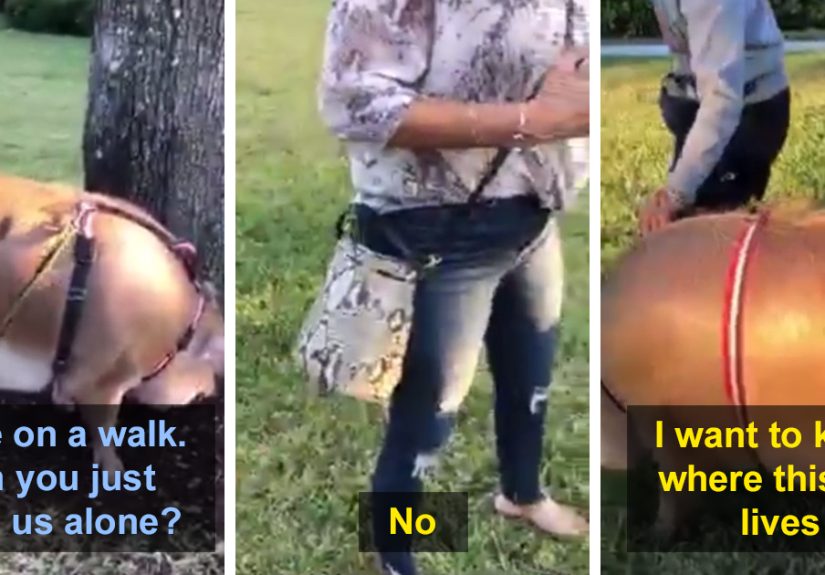
Then comes the plot twist: a woman strolls by with a pig on a leash. Not a cartoon pig. Not a “that’s definitely a
dog in a trench coat” pig. A real, snout-forward, hoof-having, leisurely strutting pigwearing a harness like it has
places to be and feelings to process.
And right on cue, Local Karen™ spots the emotional support pig and absolutely, spectacularly loses it.
The tone shifts. Pearl-clutching intensifies. Someone threatens to “call the city.” Someone else threatens to “call
the manager,” even though the manager is, confusingly, the sun.
If you’ve ever wondered what the rules actually are for an emotional support pig in public,
why people even have support animals that aren’t dogs, and how to survive a sidewalk confrontation without becoming
the main character of a group chatpull up a chair. Preferably one that a pig can’t flip over with its adorable,
unstoppable strength.
What’s Going On Here: Emotional Support Pig Walks, Stranger Melts Down
The headline is funny because it feels believable. The internet has trained us to expect public meltdowns the way
sitcoms trained us to expect laugh tracks. But beneath the comedy is a real collision of three things:
- Unusual pets (yes, pigs can be pets, and they’re smart enough to prove it).
- Confusion about emotional support animals (and what rights they door don’thave).
- Public entitlement (the belief that a stranger’s job is to explain themselves on demand).
And if you’re the person holding the leash, you’re suddenly forced to defend your mental health, your pig’s
presence, and your right to exist in publicall while your pig is quietly judging everyone and searching for snacks.
The “Karen” Thing, Briefly (And Carefully)
“Karen” has become slang for a person who acts entitled, intrusive, and aggressively complaints-forward in public.
It’s also a loaded term that can slide into sexism depending on context. So for the purpose of this article, think
of “Local Karen” as shorthand for the behavior: the “I demand an explanation from a stranger right now” energynot a
specific gender, age, or haircut.
Emotional Support Pig vs. Service Animal: The Most Important Difference
Here’s the part many sidewalk prosecutors don’t know: an emotional support animal (ESA) is not the
same as a service animal under U.S. federal disability access rules for public places.
Under the Americans with Disabilities Act (ADA), a service animal is generally a dog trained to perform
specific tasks for a person with a disability. Comfort alone“this animal helps me feel better”does not
qualify as a trained task in that ADA public-access definition.
Translation: the ADA doesn’t automatically grant public access rights to emotional support pigs in places like
grocery stores, restaurants, and most businesses with “no pets” rules.
So Where Do ESAs Actually Have Legal Weight?
Emotional support animals show up most clearly in housing contexts. Federal housing guidance
recognizes “assistance animals” as animals that either perform tasks or provide emotional support that
alleviates one or more effects of a person’s disability. In housing, that can mean a landlord must consider
reasonable accommodation requests even when there’s a “no pets” policy.
In air travel, the landscape changed in recent years. Federal transportation rules now define service animals in a
way that no longer treats emotional support animals as service animals for flights, and airlines can treat ESAs as
pets under their pet policies.
In plain English: in public spaces, an ESA pig is usually treated like a pet pig. In housing, an assistance animal
request may be protected. In airplanes, it’s generally “pet policy territory,” not a guaranteed ESA free pass.
Why Someone Might Have an Emotional Support Pig
Before we get to the meltdown, let’s talk about the pig. Because pigs aren’t a joke. They’re intelligent, social,
and often deeply bonded to their humans. People who keep pot-bellied pigs as pets describe them as affectionate and
trainablesometimes even housebrokenwhile also acknowledging that pigs can be stubborn, curious, and extremely
committed to rooting around like tiny bulldozers with feelings.
For some people, that steady companionship can be grounding. A support animalwhether dog, cat, rabbit, or pigcan
help provide routine, reduce isolation, and ease symptoms related to certain mental health conditions. The animal
doesn’t have to “do a job” the way a trained service dog does to still be emotionally beneficial.
Also: Let’s Not Pretend Dogs Own the Monopoly on Calm
Some people can’t have a dog because of allergies, housing restrictions, fear of dogs, or past trauma. Some people
respond better to animals that are quieter, less jumpy, or simply different. A pig can be a surprisingly good fit
for someone whose comfort comes from predictable routines and a companion that’s more “slow, steady, snack-focused.”
The Real Problem Is Usually Not the Pig
Most “support animal in public” blowups aren’t about safety. They’re about uncertainty.
People see an animal they don’t expect, and they fill the knowledge gap with assumptions:
- “That can’t be allowed.”
- “They’re faking it.”
- “If I don’t approve, it’s illegal.”
- “This is my moment to enforce order.”
Meanwhile, the pig is just… existing. Possibly sniffing a mailbox like it’s reading local news.
Common Myths That Fuel a Sidewalk Freakout
- Myth: “If it’s emotional support, it can go anywhere.”
Reality: Public access rules are generally about trained service animals (typically dogs), not ESAs. - Myth: “Businesses have to accept any animal if someone says ‘support.’”
Reality: Businesses can usually follow their pet policies unless the animal is a trained service animal. - Myth: “If I’m uncomfortable, the animal has to leave.”
Reality: Discomfort isn’t automatically a legal reason to remove a properly controlled animal in a public outdoor space.
Okay, But Can You Walk a Pet Pig in Public?
In many neighborhoods, yesif local ordinances allow pigs as pets and you follow rules similar to what you’d
do with any animal: leash control, cleanup, safety, and respecting spaces where animals aren’t allowed.
Pigs are fast, strong, and motivated by food and curiosity. If you’re going to do this responsibly, a harness and
leash aren’t optional accessories. They’re the difference between “pleasant stroll” and “pig chooses chaos.”
Practical Pig-Walking Basics (That Also Reduce Complaints)
- Use a pig-safe harness designed to prevent slipping out.
- Train at home first with treats and short sessions; pigs learn quickly when the reward is
convincing. - Choose calm routes (wide sidewalks, fewer dogs, less traffic noise).
- Bring cleanup supplies because the fastest way to end an argument is to be visibly responsible.
- Keep the pig under controlnot just “not attacking,” but not lunging, startling, or blocking
people’s path.
Health and Hygiene: Pigs Are Cute, But They’re Still Livestock
Public perception improves when people see good hygiene. Health agencies note that farm animals can carry germs that
can make people sick, and good habits matter: wash hands after contact, keep animals healthy, and avoid letting
“farm stuff” casually mingle with “kitchen counter stuff.” A neighborhood walk is not a biohazard event, but it is a
reminder: clean animal care is respectful animal care.
How to Handle a “Karen” Moment Without Escalating
Let’s replay the scene. Your pig is walking politely. A stranger approaches with the intensity of someone who has
never met a boundary they couldn’t climb.
The goal is not to “win.” The goal is to leave with your dignity, your pig, and your afternoon intact.
Step 1: Keep Your Voice Boring
Your calm is your superpower. Entitled confrontations feed on emotional reaction. If you stay neutral, the other
person either runs out of steam or looks like they’re arguing with a gentle weather forecast.
Step 2: Offer One Sentence, Not a TED Talk
Try something simple:
“She’s under control and we’re just out for a walk. Have a good day.”
If they demand paperwork, remember: you don’t owe strangers personal medical details on a sidewalk.
Also, in many public contexts, even businesses have limited questions they may ask about trained service animals.
Random passersby have exactly zero official questions they’re entitled to.
Step 3: Physically Disengage
Keep walking. Don’t match their pace. Don’t debate. Debates turn into performances, and performances attract an
audience, and audiences attract phones.
Step 4: Prioritize Safety
If someone crowds you, tries to touch the pig, or blocks your path, that’s not a “difference of opinion,” it’s a
safety concern. Move to a more public area, call someone, or contact local authorities if you feel threatened.
For Bystanders: How to Not Be the Sidewalk Prosecutor
If you’re reading this as a curious neighbor (or a reformed busybody), here’s the golden rule:
It’s okay to be surprised. It’s not okay to interrogate.
Want to do the right thing? Try these instead:
- Give space. People don’t owe you a conversation.
- Ask politely only if the person seems open: “She’s adorablewhat’s her name?”
- Don’t touch. Even friendly animals can startle.
- Mind your dog. If you have a dog, keep it controlled; pigs can be vulnerable to dog attacks.
Businesses and Public Places: What Actually Matters
If your concern is “Can a pig come inside this coffee shop?”, the practical answer is usually:
businesses may enforce their pet rules unless a trained service animal applies under relevant law.
If your concern is “Is an ESA automatically allowed everywhere?”, the answer is generally no.
Emotional support animals are most clearly recognized in housing as assistance animals, where reasonable
accommodations may apply.
And for flights, rules and airline policies are stricter than they used to be. If someone says they’re flying with a
support pig, that’s typically going to fall under a pet policyfees, carriers, and limitations includedrather than
guaranteed access as a service animal.
So, Was the Emotional Support Pig “Wrong” to Be Outside?
If the pig is leashed, controlled, and the walk is happening in a normal public outdoor space where animals are
allowed, the pig is probably not the problem. The problem is the assumption that “unfamiliar” equals “illegal.”
A responsible emotional support pig walk looks like this:
a well-fitted harness, calm handling, a respectful route, cleanup supplies, and a human who understands their pig’s
limits.
And a responsible neighbor reaction looks like this:
a smile, a little curiosity, and the radical act of continuing to mind your own business.
Conclusion: Let the Pig Live (Responsibly)
The internet loves a spectacle, but real life goes better when we lower the volume.
Emotional support animals exist because mental health is real, companionship is powerful, and support can take
nonstandard formseven forms with hooves.
If you’re the person with the pig, your best defense is responsibility: control, training, cleanliness, and knowing
the difference between housing rights, public access rules, and airline policies. If you’re the person watching,
your best move is humility: you don’t know someone’s life from one sidewalk snapshot.
And if you’re the person about to lose it over a pig in a harness?
Consider taking a deep breath. The pig is already doing emotional support. You can, too.
Real-World Experiences and Lessons From Emotional Support Pig Life (Extra)
People who live with pet pigsand especially those who describe their pig as an emotional support animaltend to
share the same surprising truth: the pig doesn’t just “comfort” them. The pig structures their day.
That matters. A morning routine becomes less optional when a pig is waiting, watching, and communicating in the
universal language of “feed me or face my dramatic sighing.”
One common experience pig owners mention is how quickly pigs learn patterns. If you put on shoes, the pig starts
pacing near the door. If you grab a treat pouch, the pig becomes a tiny detective. That predictability can be
calming for someone who struggles with anxiety spirals. The pig is not offering therapy in the clinical senseit’s
offering rhythm. It’s hard to catastrophize for three straight hours when you have to negotiate with a creature
whose main concern is whether the neighbor’s lawn contains forbidden crumbs.
Another real-world lesson: public reactions are wildly inconsistent. Some people light up and ask
polite questions. Others immediately jump to suspicion: “Is that allowed?” Pig owners often learn to “pre-write”
their responsesshort, calm phrases they can repeat without getting dragged into a debate. It’s not about hiding.
It’s about protecting energy. When you’re already managing a disability or mental health condition, you don’t need a
surprise courtroom scene next to a mailbox.
Pig walking also teaches practical patience. Pigs can freeze, refuse, or suddenly decide the sidewalk is a
conspiracy. Owners talk about learning to read body language: ear position, tension, the “I’m about to yank toward
that interesting smell” posture. The best outings are short and successful, not long and chaotic. A pig that feels
safe becomes easier to handle; a pig that feels cornered becomes a strong, determined animal with opinions. This is
why experienced handlers emphasize harness training early, positive reinforcement, and choosing quieter routes.
Hygiene is another repeated theme. Responsible pig owners often over-prepare in public: extra wipes, bags, hand
sanitizer, and a “we clean up better than most humans” attitude. Not because they’re ashamed, but because they know
perception matters. If you want strangers to relax around a nontraditional support animal, you make “responsible”
extremely visible. It’s the same logic as returning your shopping cartsmall actions that signal you’re not here to
make the world everyone else’s problem.
Finally, there’s an emotional reality that doesn’t show up in punchy headlines: many people with support animals
are tired of being treated like they’re running a scam. Owners describe feeling judged before they’ve done anything
wrong. That’s where the “Local Karen” moment becomes more than a jokeit becomes a reminder that curiosity and
kindness are easier than suspicion. The pig doesn’t need everyone’s approval. The person walking the pig doesn’t
need to audition for basic respect. And most days, the best community-building move is simple: share the sidewalk,
keep your distance, and let the emotional support pig continue its very serious work of being a comforting little
weirdo on a leash.