Table of Contents >> Show >> Hide
- What makes GPP pain feel so intense?
- When GPP pain is an emergency (don’t tough it out)
- The GPP pain toolkit: treat the flare, calm the skin, support the body
- Preventing pain: building a flare plan before you need it
- Mental health, because pain is never “just physical”
- Common mistakes that make GPP pain worse (and what to do instead)
- Conclusion
- Experiences: what living with GPP pain can feel like (and what people learn)
Generalized pustular psoriasis (GPP) pain isn’t “just itchy skin.” It can feel like your skin is on fire, your body is running a feverish marathon,
and your immune system has accidentally hit “Reply All” on an email labeled Emergency. If you’re dealing with GPP, you deserve practical, realistic
ways to get relieffastwhile also building a plan that reduces future flares.
Important: This article is for educational purposes and can’t replace care from a clinician. GPP flares can be serious and sometimes require urgent
medical attention. If you think you’re having a flare with systemic symptoms (fever, chills, dehydration, rapid pulse, confusion), seek medical care right away.
What makes GPP pain feel so intense?
GPP is a rare, severe inflammatory form of psoriasis where the immune system triggers waves of sterile (non-infectious) pustules over large areas of skin.
“Sterile” is a key word: the pus is driven by inflammation, not contagion. Unfortunately, “not contagious” does not mean “not miserable.”
Pain in GPP often comes from a combination of factors:
- Inflammation overload: the immune response revs up and irritates nerves in the skin.
- Barrier breakdown: inflamed, peeling skin loses moisture, cracks more easily, and stings with water, sweat, or friction.
- Swelling and tightness: when skin is inflamed, it can feel like it’s shrinking around you.
- Systemic symptoms: fever, chills, fatigue, nausea, and body aches can amplify pain.
The most useful “pain management mindset” for GPP is this: the best pain relief is often inflammation control. Comfort measures matter,
but getting the flare under control is usually what turns the volume down.
When GPP pain is an emergency (don’t tough it out)
A sudden GPP flare can become life-threatening without treatment. Call for urgent help or go to the ER if you have widespread pustules/redness plus:
- Fever, chills, or feeling faint
- Rapid pulse, shortness of breath, chest pain
- Signs of dehydration (very dry mouth, dizziness, minimal urination)
- Confusion, severe weakness, or trouble staying awake
- Severe pain with spreading warmth, swelling, or foul drainage (possible infection on top of inflammation)
In the hospital, clinicians can manage fluids, temperature, electrolytes, and complicationsand start therapies aimed at stopping the flare.
Needing urgent care is not a personal failure; it’s your body’s alarm system working.
The GPP pain toolkit: treat the flare, calm the skin, support the body
1) Treat the inflammation: the “root-cause” lane of pain control
Because GPP pain is heavily driven by inflammation, clinicians often focus on systemic treatments (medications that work throughout the body) to control a flare
and reduce recurrence. Which option makes sense depends on your age, health history, pregnancy status, infection risk, prior treatments, and how severe the flare is.
Commonly discussed medical options (under clinician guidance) may include:
- Targeted biologic therapy for GPP flares: Some treatments are designed specifically for generalized pustular psoriasis flares.
- Other biologics used in psoriasis: Certain biologics may be used based on clinician judgment and your overall psoriasis history.
- Oral/systemic medications: Options such as oral retinoids, cyclosporine, methotrexate, and others may be considered in certain cases.
- Combination approaches: Sometimes two therapies are used together to gain control more effectively.
Practical takeaway: If pain is escalating, the conversation isn’t only “What can I take for pain?” It’s also “How do we stop this flare
quickly and safely?” Ask your dermatologist what the plan is for acute flare control and maintenance prevention.
2) Short-term pain relief: what to ask about and what to watch for
Pain relief can be layered, but it must be safe for your body. People with GPP may already be dealing with dehydration, systemic inflammation, or kidney stress,
so “standard” over-the-counter choices aren’t automatically ideal.
- Acetaminophen (Tylenol): Often used for pain/fever, but dose limits matterespecially if you have liver disease or use alcohol regularly.
-
NSAIDs (ibuprofen/naproxen): Can help pain and inflammation for some people, but may not be appropriate if you have kidney issues,
stomach ulcers, certain cardiovascular risks, or dehydration. Some sources also list NSAIDs among potential triggers for some patientsso discuss with your clinician. -
Prescription pain options: For severe pain, clinicians may consider short-term prescription strategies. The goal is relief without creating
new risks (sedation, constipation, dependence, interactions). -
Itch-pain overlap: Itch can feel painful when it’s intense. Your clinician may recommend approaches that reduce itch signaling
so you’re not stuck in a scratch-sting-scratch loop.
Pro tip: Track what you took, when, and the effect (0–10 pain scale) in your phone notes. In a flare, your brain is busy surviving.
Your notes do the remembering for you.
3) Skin-soothing strategies that actually feel good in a flare
Think of your skin as a stressed-out security guard: it needs a break, a drink of water, and a warm blanket (but not an itchy one). The goal is to
reduce sting, protect the barrier, and decrease friction.
Cool-down care (fast relief)
- Cool compresses: Use cool (not ice-cold) damp cloths for 10–15 minutes to reduce burning.
- Airflow: A fan at a gentle setting can decrease heat and itchjust moisturize to avoid drying out.
- Loose, soft clothing: Choose cotton or bamboo, inside-out if seams irritate. Cut tags like they owe you money.
Moisture and barrier repair (the “sting less tomorrow” plan)
-
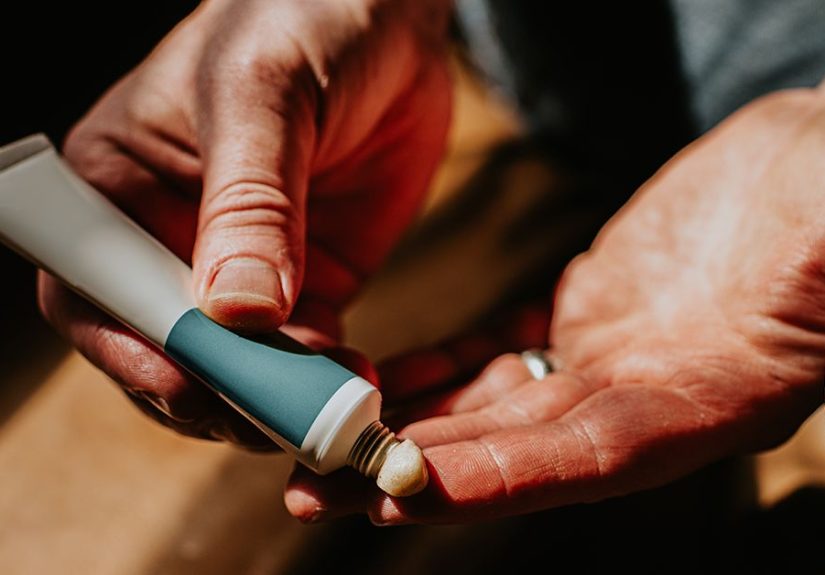
Thick, fragrance-free moisturizers: Ointments and creams usually protect better than lotions.
Apply within a few minutes after bathing (the “soak and seal” method). - Gentle cleansing: Use mild, fragrance-free cleansers; skip harsh scrubs and hot water.
- Mind the hands: If washing stings, use lukewarm water, pat dry, then reapply moisturizer.
Wet wrap therapy (big comfort, surprisingly simple)
Wet wraps can reduce itch and pain, help moisturizers work better, and protect skin from friction. This is often used in eczema, but many people with inflammatory
skin flares find it helpful for soothing and sleepask your clinician if it’s appropriate for your situation.
- After a short lukewarm bath or shower, pat skin gently (don’t rub).
- Apply prescribed topical medication exactly as directed (if you have one), then apply a thick moisturizer.
- Put on a damp layer (clean cotton clothing or gauze) that’s wet with lukewarm water and wrung out well.
- Add a dry layer on top (pajamas, sweatshirt, or dry wraps).
- Keep on for 30 minutes to a few hours (or overnight if advised), then re-moisturize.
Safety note: If you’re using topical steroids, wet wraps can increase absorption. Do this only with clinician guidance so you don’t
accidentally turn “helpful” into “whoops.”
Bath options that don’t feel like punishment
- Lukewarm baths: Hot water can feel good for 30 seconds, then betray you with more dryness and sting.
- Colloidal oatmeal: Often used to soothe itch and irritation in inflammatory skin conditions.
- Gentle pat-dry: Then moisturize immediatelythis is non-negotiable.
4) Reduce friction and “pain multipliers” in daily life
During a flare, tiny irritations can feel huge. Reducing friction is like turning down background noise so your body can focus on healing.
- Sleep setup: Smooth sheets, breathable blankets, and a cool room can reduce burning sensations.
- Hands-off rule: Picking or scratching can increase rawness and raise infection risk. If you scratch in your sleep, consider soft cotton gloves.
- Humidity: A humidifier can help if indoor air is dry (especially in winter heating season).
- Stress: Stress is a known trigger for many people. You don’t need to “eliminate stress” (lol), but you can build stress speed-bumps:
breathing exercises, short walks, guided meditation, or a quick call with someone who won’t tell you to “just relax.”
Preventing pain: building a flare plan before you need it
The time to make a plan is when you’re not actively on fire. A flare plan reduces panic, speeds treatment, and can shorten the pain cycle.
Here’s what a solid “GPP flare plan” usually includes:
Know your personal triggers (and your “usual flare pattern”)
GPP flares can occur without a clear cause, but common triggers reported in medical literature include infections, stress, pregnancy-related hormonal changes,
and rapid withdrawal of systemic corticosteroids. Certain medications have also been reported as potential triggers in some cases.
Keep a simple log of:
- Recent infections (even “just” a sore throat)
- Medication changes (starting/stopping steroids or other immune-active meds)
- Major stressors or sleep deprivation
- Menstrual cycle changes or pregnancy-related timing
- What helped last time (and what made things worse)
Create a “two-speed” action plan: early flare vs. full flare
Many people wait too long because they’re hoping it’s “not that bad.” Your plan should have two gears:
Gear 1: early warning signs
- Contact your dermatologist’s office early (have the phone number saved).
- Start your comfort routine: cool compresses, lukewarm bathing, moisturize, loose clothing.
- Hydrate and resttreat it like the beginning of the flu, because systemic symptoms can follow.
Gear 2: escalation criteria (when to go in)
- Fever/chills, rapid pulse, worsening weakness
- Spreading pustules or widespread redness
- Severe pain not responding to basic measures
- Dehydration, dizziness, confusion
Questions to ask your dermatologist (so you leave with clarity)
- “What should I do the same day new pustules appear?”
- “At what point do I go to urgent care or the ER?”
- “What treatments are for flare control vs. long-term prevention?”
- “If a medication change is needed, what’s the safest way to taper or transition?”
- “How do we monitor infection risk and side effects?”
- “What topical routine do you recommend during a flare?”
Mental health, because pain is never “just physical”
Severe skin pain changes how you sleep, move, socialize, and think. It can create a feedback loop: pain raises stress hormones, stress increases inflammation,
inflammation increases pain. Breaking the loop matters.
- Micro-coping: 60-second breathing resets, short stretches, and “one small task” goals can reduce overwhelm.
- Support: Peer support groups (online or local) can help you feel less alone and swap practical tips.
- Professional care: If anxiety or depression spikes during flares, it’s valid to treat that too. Pain and mood share the same nervous system highways.
Common mistakes that make GPP pain worse (and what to do instead)
-
Mistake: Taking very hot showers for relief.
Instead: Lukewarm water, short duration, moisturize immediately. -
Mistake: Scrubbing off flakes like you’re sanding a deck.
Instead: Soften with moisture; let skin shed gently. -
Mistake: Using fragranced products “because they feel clean.”
Instead: Fragrance-free, gentle cleansers and moisturizers. -
Mistake: Waiting until you’re in crisis to call your clinician.
Instead: Early contact can mean faster flare control and less pain.
Conclusion
Managing generalized pustular psoriasis pain takes a layered approach: treat the inflammation driving the flare, protect and soothe the skin barrier,
reduce friction and “pain multipliers,” and have a clear escalation plan for urgent symptoms. The goal isn’t to be toughit’s to be prepared.
With the right medical partnership and a practical comfort routine, many people can reduce flare intensity, sleep better, and feel more in control.
Experiences: what living with GPP pain can feel like (and what people learn)
The experiences below are compositesblended from commonly reported themesmeant to help you feel seen and pick up practical strategies. If you’ve ever thought,
“Nobody gets how weird and relentless this is,” welcome to the club nobody applied for.
Experience 1: “It started as a sting… then my skin felt sunburned from the inside.”
Many people describe the early stage of a flare as a tight, prickly sting that spreads quicklylike your skin is suddenly allergic to itself.
One common lesson: early action beats perfect action. People who reach out to their dermatologist at the “something’s off” stage often
report feeling less panicked than those who wait for the pustules to fully bloom.
Practical habits that show up again and again:
- Keeping a “flare kit” ready: fragrance-free ointment, soft cotton clothing, gauze or wraps, a thermometer, and electrolyte drinks.
- Switching to lukewarm showers and pat-drying (yes, it feels too gentleuntil you realize gentle is the whole point).
- Using cool compresses for the burning sensation, especially before sleep.
Experience 2: “Sleep was impossibleeverything touching me hurt.”
Pain doesn’t just hurt; it also steals rest, and lack of sleep can crank inflammation higher. People often discover that “sleep hygiene” becomes
“skin hygiene.” Small changes can make nights less brutal:
- Cooling the room a few degrees and using breathable bedding.
- Wearing soft, loose layers (sometimes inside-out to avoid seams) and changing into a fresh set if sweat triggers stinging.
- Applying moisturizer right before bed, and reapplying to hotspot areas if you wake up.
- Trying wet wraps (with clinician guidance), especially when itch and pain tag-team your nervous system.
A surprisingly common emotional moment happens at 2:17 a.m.: “I can’t do this.” The most effective counter isn’t motivational postersit’s a plan.
People who write down a nighttime routine (cool compress, moisturize, meds as directed, hydration, short relaxation audio) report feeling less helpless,
even if the pain doesn’t vanish instantly.
Experience 3: “I was afraid it was contagiousand I was embarrassed.”
Because pustules are dramatic, many people worry they’ll scare family, coworkers, or even strangers. Learning that GPP pustules are generally
driven by inflammationnot infectioncan ease shame, but it doesn’t solve social anxiety overnight.
Helpful communication scripts people use:
- “It looks intense, but it’s not contagious. It’s an inflammatory flare I’m treating with my doctor.”
- “I’m in pain today, so I’m going to keep things low-key.”
- “I appreciate your concernwhat helps most is patience and a little space.”
Many people also learn to advocate harder in medical settings. GPP is rare and sometimes misdiagnosed. A useful mindset is:
bring receiptsphotos of early symptoms, a written timeline, medication changes, and a list of what has or hasn’t worked.
Not because you should have to prove your pain, but because clear documentation speeds accurate care.
Experience 4: “Once I had a flare plan, the pain felt less ‘infinite.’”
Pain is worse when it feels endless. People often describe a shift when they build a flare plan with their clinician: they still get symptoms sometimes,
but the fear decreases because there’s a next step. They also stop experimenting randomly during flares and stick to what’s proven safe for their body.
The takeaway from many lived experiences is simple and powerful: you don’t have to win the dayjust reduce the suffering, one layer at a time.
Cooling and moisturizing may not “cure” anything, but they can make the difference between pacing the house all night and getting two hours of sleep.
And sometimes two hours is exactly what your immune system needs to calm down.
![18 Best Types of Charts and Graphs for Data Visualization [+ How to Choose]](https://corkopencoffee.org/wp-content/uploads/2026/05/18-best-types-of-charts-and-graphs-for-data-visualization-how-to-choose-qKM1PBYG-thumb.jpg)