Table of Contents >> Show >> Hide
- A Restoration That Starts by Removing the Noise
- Why the Kitchen Feels Minimalist Without Feeling Sterile
- The Best Details in the Mandeville Canyon Kitchen
- How the Kitchen Honors the Spirit of a Restored 1960s Ranch
- Design Lessons Homeowners Can Steal From This Kitchen
- Why This Kitchen Matters in Today’s Design Conversation
- Experience and Atmosphere: What It Feels Like to Live With a Kitchen Like This
Some kitchens try very hard to impress you. They arrive dressed like they are headed to a gala, covered in shiny finishes, statement lighting, and enough visual drama to make a houseplant nervous. The Mandeville Canyon Kitchen by Patrick Bernatz takes the opposite route. It does not shout. It does not twirl. It simply stands there looking calm, confident, and annoyingly good from every angle.
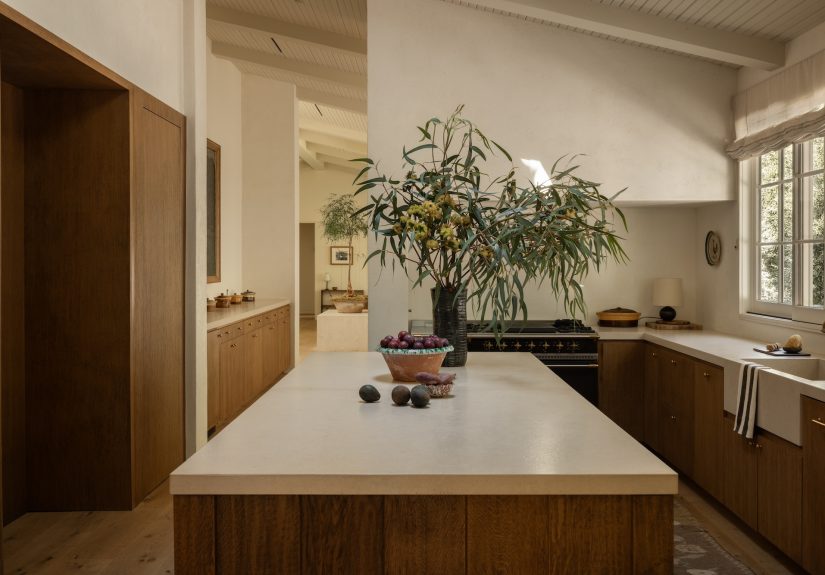
That restraint is exactly what makes this restored 1960s ranch kitchen so compelling. Set inside a 1961 ranch-style home in Mandeville Canyon, Los Angeles, the project turns a previously overworked space into something quieter, warmer, and far more connected to the architecture around it. Instead of chasing trendy “look at me” kitchen design, Bernatz leaned into something rarer: a minimalist kitchen design that feels grounded in place, history, and actual human life.
In an era when many remodels confuse luxury with excess, this kitchen makes a better case for simplicity. White oak cabinetry, leathered limestone counters, plaster surfaces, carefully edited lines, and a tighter relationship to the dining and living spaces all work together to create a room that feels both elevated and deeply livable. It is modern, yes, but not cold. It is nostalgic, but not stuck in amber. It is the design equivalent of someone who owns one perfect jacket instead of fourteen regrettable ones.
A Restoration That Starts by Removing the Noise
One of the smartest things about the Mandeville Canyon renovation is that it did not begin by adding more. It began by subtracting the wrong things. That matters. A lot.
The house had been renovated in the 1990s, and like many remodels from that era, the updates had less to do with honoring the original architecture and more to do with proving that someone had recently discovered beige ambition. Bernatz’s response was refreshingly straightforward: strip away the clutter, restore what was meaningful, and rebuild the kitchen around the bones that already deserved attention.
That approach is the heart of good minimalist design. Minimalism is not emptiness for emptiness’s sake. It is editing with purpose. In this case, the goal was to bring back the home’s Cliff May-influenced character, including the post-and-beam ceiling and the two-sided fireplace, while making the kitchen feel appropriate for how a family actually lives now.
That balance is harder than Pinterest makes it look. Too much restoration, and a house can feel like a museum exhibit with a nice stove. Too much modernization, and the original spirit disappears under a glossy avalanche of flat slabs and overlit islands. Bernatz lands in the sweet spot between those extremes.
Why the Kitchen Feels Minimalist Without Feeling Sterile
A restrained material palette does the heavy lifting
The most memorable thing about this kitchen may be what it does not do. It does not rely on busy finishes. It does not introduce ten competing materials. It does not throw decorative tricks at the room and hope one of them sticks. Instead, it works with a small, disciplined palette of white oak, limestone, plaster, and soft neutral tones.
That choice gives the space its warmth. Minimalist kitchens often go wrong when they lean so heavily on slick surfaces and icy tones that they start to resemble a very expensive operating room. Here, natural materials bring softness and texture. The white oak cabinetry adds depth without visual noise. The leathered limestone countertops feel organic rather than glossy. The plastered elements give the room weight and quiet character.
It is a great reminder that minimalist kitchen design works best when the materials have soul. When the palette is restrained, texture becomes the star. Grain, matte stone, patina, and light take over where ornament once lived.
Architecture becomes the decoration
Another reason this restored 1960s ranch kitchen feels so composed is that the architecture itself is allowed to lead. The post-and-beam ceiling is not treated as background. It is part of the room’s identity. So is the relationship to the fireplace, the dining room, and the surrounding public spaces.
Instead of overfurnishing or overstyling the kitchen, the design lets the structure do the talking. That is a classic move in both minimalist interiors and strong midcentury-inspired renovations: when the bones are good, step aside and let them work.
The result is a kitchen that feels visually quiet but never boring. Clean lines guide the eye, but subtle variation in material and proportion keeps the space from flattening into blandness. In other words, the room has personality without needing to wear a costume.
The layout is open, but not recklessly open
One of the most interesting design decisions in the project is the way Bernatz handled the connection between the kitchen and dining room. He did not fully close the kitchen off, but he also did not leave it as a giant, undefined opening. Instead, he tightened the transition so the kitchen remains connected while still feeling like a distinct room.
That move is subtle, but it changes everything. It makes the two-sided fireplace a focal point. It gives the kitchen a sense of enclosure and purpose. It creates better visual rhythm between spaces. Most importantly, it avoids the all-too-common problem of open-plan kitchens that feel more like runaway countertops than thoughtful rooms.
Good open design is not about erasing every boundary. It is about deciding which boundaries deserve to stay. This kitchen understands that beautifully.
The Best Details in the Mandeville Canyon Kitchen
White oak cabinetry that feels integrated, not flashy
The custom white oak cabinets are a major reason the kitchen reads as calm and architectural. Their presence is warm but disciplined. They do not beg for attention with ornate profiles or fussy detailing. They sit comfortably within the larger language of the house, almost as if they grew there over time.
That integrated feeling matters in a ranch home. In the best ranch and midcentury spaces, cabinetry is often less about furniture-like display and more about continuity. It supports the architecture rather than competing with it. Here, the cabinetry behaves like part of the wall system, which helps the room feel settled and timeless.
Leathered limestone counters that trade shine for substance
Using leathered limestone instead of a more polished, high-gloss stone is one of those choices that quietly signals design confidence. It softens the room. It reduces glare. It complements the oak instead of fighting it. And it adds a subtle tactile quality that makes the kitchen feel more grounded and less staged.
Minimalist kitchens need tactile contrast. Otherwise, they can drift into flatness. Here, the stone provides that contrast while still staying within the room’s hushed, earthy vocabulary.
A dramatic range moment, minus the usual theatrics
The range area delivers one of the kitchen’s strongest visual moments, but it does so with unusual restraint. Rather than turning the hood into a giant stainless-steel billboard, the exhaust is concealed within a heavy plaster surround. That choice keeps the focus on volume, surface, and silhouette rather than appliance showmanship.
It is a clever lesson for anyone planning a kitchen remodel: drama does not have to come from glitter. Sometimes it comes from mass, proportion, and material honesty.
A built-in banquette that makes the room more human
Minimalism can occasionally forget that people are supposed to sit down, eat, spill coffee, and talk about their day. The banquette in this kitchen brings the humanity back. It anchors the far end of the room, supports everyday meals, and makes entertaining feel natural rather than ceremonial.
Because it is built in, it also reinforces the project’s larger idea of integration. Items do not float around looking temporary. They belong. That sense of belonging is a huge part of why the space feels so serene.
How the Kitchen Honors the Spirit of a Restored 1960s Ranch
Calling this kitchen “minimalist” is accurate, but it is only half the story. It is also deeply regional. It reflects a particular Southern California design lineage where indoor-outdoor living, natural light, thick walls, and simple materials are not trends but fundamentals.
That is what makes the project more than a pretty kitchen. It is a case study in how to restore a ranch house without flattening its identity. The home’s Cliff May influence matters here, not because the kitchen imitates a historical set piece, but because it understands the broader values behind that tradition: connection to landscape, humane scale, material warmth, and casual living that still feels elegant.
Features like the post-and-beam ceiling, plaster walls, natural oak millwork, and the stronger relationship between interior rooms and exterior light all help the house recover its original sense of place. Even the decision to avoid a fully exposed, endlessly open kitchen feels rooted in that philosophy. The room participates in the social life of the house, but it still preserves intimacy.
That nuance is often missing in contemporary remodels. Many projects want the ranch-house vibe, but what they really mean is “wood plus a few low-slung chairs.” Bernatz goes deeper. He restores the logic, not just the look.
Design Lessons Homeowners Can Steal From This Kitchen
1. Fewer materials usually look more expensive
A disciplined palette creates clarity. Rather than mixing every attractive finish in the showroom, choose two or three strong materials and let them repeat throughout the room.
2. Warm minimalism beats cold minimalism
If you want a minimalist kitchen that people actually enjoy using, bring in wood, matte stone, plaster, or other tactile surfaces. Calm does not have to mean clinical.
3. Not every open kitchen should be fully open
Sometimes narrowing an opening or redefining the threshold between rooms creates a better layout than blowing everything apart. Connection is good. Total spatial chaos is less good.
4. Built-ins make a room feel intentional
From banquettes to concealed storage, integrated elements reduce clutter and help minimalist spaces stay calm over time.
5. Restore the architecture before decorating it
If a house already has great bones, spend your budget revealing them. A good ceiling, strong fireplace, or smarter opening between rooms will outlast almost any trend-driven finish.
Why This Kitchen Matters in Today’s Design Conversation
The Mandeville Canyon Kitchen by Patrick Bernatz arrives at a moment when many homeowners are tired of extremes. They do not want the hyper-styled all-white kitchen that looks nervous about fingerprints. They also do not want maximalism so aggressive it feels like the cabinetry might start monologuing.
What they want is warmth, calm, function, and permanence. This kitchen delivers all four.
It shows why minimalist kitchen design continues to resonate when it is tied to material richness and architectural integrity. It shows why restored ranch homes remain so beloved in California and beyond. And it proves that a kitchen can feel contemporary without severing ties to the era and place that shaped it.
Most of all, it demonstrates that thoughtful restraint is not boring. It is brave. Anyone can add more. Far fewer people know what to leave out.
Experience and Atmosphere: What It Feels Like to Live With a Kitchen Like This
Now for the part design photos cannot fully capture: the experience. Because the real success of the Mandeville Canyon Kitchen is not just visual. It is emotional, tactile, and strangely comforting in the best possible way.
Imagine walking into the kitchen early in the morning before the house fully wakes up. The oak cabinetry catches soft light instead of bouncing it back at you like an interrogation lamp. The limestone feels cool and grounded under your hand. The room is quiet, but not empty. It has presence. It feels as though it is waiting for use rather than performing for approval.
That is the gift of a well-designed minimalist kitchen. It lowers the temperature of everyday life. Coffee making feels less chaotic. Breakfast feels less like a speed run. Even the act of setting down a bowl of fruit or opening a cabinet door becomes more pleasing because the space is not visually fighting with you every second.
There is also something deeply satisfying about cooking in a room where everything feels integrated. You are not navigating around random decorative objects, oversized stools, or an island large enough to require its own ZIP code. The layout encourages movement. The surfaces invite use. The connection to the dining area makes conversation easy, but the kitchen still retains enough definition to feel like a room with its own atmosphere.
That matters when real life shows up, which it always does. Kids come in asking for snacks. Friends lean on the edge of the counter with a glass of wine. Someone is stirring a pot while another person is setting the table. In a lesser kitchen, that scene can feel crowded fast. In a kitchen like this, it feels choreographed without feeling controlled. There is room for activity, but also room for breath.
The banquette adds another layer to the experience. It creates a place where people naturally land. Morning emails can happen there. Homework can happen there. Long weekend breakfasts can happen there. A minimalist room can sometimes feel too formal if it lacks a place to soften. The banquette softens this one.
Then there is the bigger emotional effect of living in a restored 1960s ranch that has not been stripped of its character. You feel the age of the house, but in a good way. The ceiling, the proportions, the fireplace relationship, and the material choices all remind you that the home has a story. Yet nothing feels frozen. The kitchen is not pretending to be 1961. It is simply speaking respectfully to 1961 while still handling the needs of right now.
That makes daily life feel richer. You are not just using a nice kitchen. You are using a kitchen that belongs to its house. That sounds subtle, but it changes the mood of everything. Dinner prep feels more grounded. Hosting feels more effortless. Cleaning up even feels slightly less offensive, which may be the highest compliment any kitchen can earn.
There is also a psychological clarity that comes from this kind of design. Because the counters are not overloaded and the storage is integrated, the room encourages better habits without lecturing you about them. You put things away because the room makes it easy. You keep surfaces clearer because they are worth preserving. The design supports behavior, which is much more effective than buying twelve bins and hoping for personal transformation.
In the end, the experience of this kitchen is not flashy. It is better than flashy. It is steady. It makes ordinary routines feel slightly more graceful. It allows light, material, and proportion to do what trends often cannot: improve the way a home feels on a Tuesday morning, a Friday evening, and every messy, beautiful in-between moment.
And really, that is the dream. Not a kitchen that wins the internet for a week, but one that makes daily life feel calmer for years. The Mandeville Canyon Kitchen by Patrick Bernatz understands that perfectly.