Table of Contents >> Show >> Hide
- Surface Duo 2: The Big Idea (Still) Isn’t a Foldable Screen
- What’s New in Surface Duo 2 (Besides the Cameras)
- The Headline Upgrade: Surface Duo 2’s Better Cameras
- Performance and Connectivity: Flagship Internals for a Flagship Price
- What Duo 2 Is Best At: Two-Screen Workflows
- The Honest Trade-Offs (Because Every “Lovable Weirdo” Has Quirks)
- Who Should Consider the Surface Duo 2 (Then or Now)?
- Conclusion
- Bonus: Real-World Experiences With Surface Duo 2’s Better Cameras (Approx. )
Microsoft’s Surface Duo has always been the kid in class with the most interesting science projectand the most
confusing presentation poster. Two screens! A 360-degree hinge! Multitasking dreams! Also: “Wait… is this a phone
or a tiny laptop that forgot its keyboard?”
With the Surface Duo 2, Microsoft tried to answer the biggest, most reasonable complaint from the first
Duo: “I love this weird dual-screen thing, but please let me take a normal photo without feeling like I’m solving a
Rubik’s Cube.” The headline upgrade is simple and genuinely important: a real rear camera systemnot a
“technically yes, it has a camera” situation.
Surface Duo 2: The Big Idea (Still) Isn’t a Foldable Screen
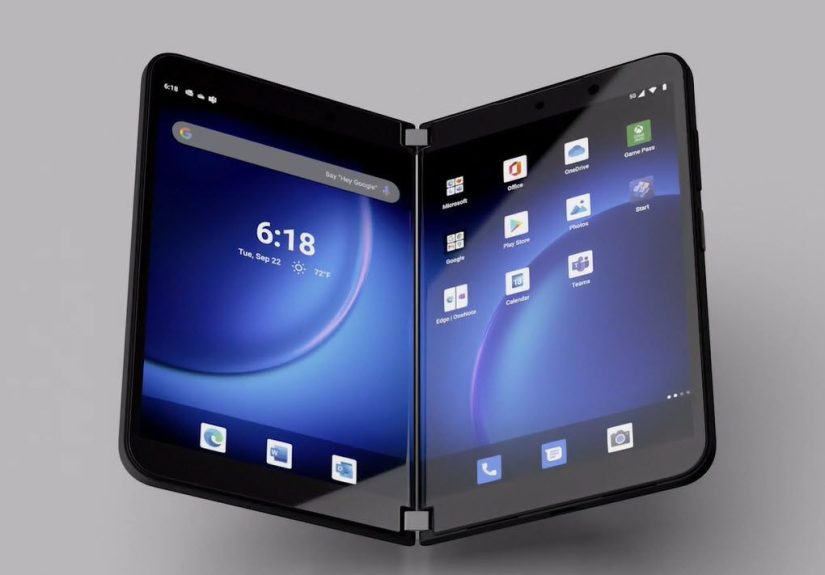
The Surface Duo 2 isn’t the “one big bendy display” style of foldable. Instead, it’s still two separate screens joined
by a hingelike a pocket-size book that happens to run Android. That means you get a natural split for multitasking:
email on one screen, calendar on the other; a Teams call on the left, notes on the right; a recipe on one side, your
grocery list on the other (and suddenly you feel like a responsible adult).
Microsoft’s pitch: two screens let you stop constantly switching apps. Whether you agree depends on your
patience, your workflow, and whether you’ve ever yelled “WHY DID MY MAP DISAPPEAR?!” while toggling between messaging
and navigation.
What’s New in Surface Duo 2 (Besides the Cameras)
Bigger, Smoother Displays That Feel More “2021 Flagship”
Duo 2 keeps the two-screen concept but upgrades the experience with dual 5.8-inch AMOLED displays that
can open into an 8.3-inch view. The screens support a 90Hz adaptive refresh rate for smoother
scrolling and animation, and can hit up to around 800 nits peak brightnesshelpful when the sun is doing
its best impression of a spotlight pointed at your eyeballs.
Glance Bar: Notifications Without Fully Opening the “Book”
One of Duo 2’s signature design additions is the Glance Bar along the spine area. When the device is
closed, it lights up for things like notifications, charging status, and volume indicators. It’s not a full external
display, but it’s a clever compromise: you get quick awareness without constantly flipping the device open like you’re
checking a pocket watch in 1890.
More “Phone Stuff” That Should’ve Been There Before
Duo 2 adds modern essentials like 5G connectivity and NFC for contactless payments, pushing
it closer to being a believable everyday phonerather than a productivity gadget that occasionally pretends it can make
calls.
The Headline Upgrade: Surface Duo 2’s Better Cameras
Let’s be honest: the original Surface Duo’s camera experience was the tech equivalent of bringing a butter knife to a
cooking competition. It technically works, but you’re going to have a bad time. Microsoft knew it, reviewers knew it,
and your friend who bought one definitely knew it.
Surface Duo 2 fixes that the obvious way: by putting a triple-lens camera system on the back. That means
you can take photos like a normal human, without unfolding the device and hoping the right screen is facing the correct
direction. Revolutionary!
Triple-Lens Setup: Wide, Ultra-Wide, Telephoto
The Duo 2’s rear camera system includes:
- 12MP wide (with optical image stabilization for steadier shots)
- 16MP ultra-wide (for landscapes, groups, and “how is my living room still this messy?” photos)
- 12MP telephoto (with OIS and 2x optical zoom)
Up front, there’s also a 12MP selfie camera for video calls and the occasional “I survived Monday”
documentation.
Camera Features That Actually Matter in Real Life
Specs are great, but what you feel day-to-day is the combination of capture speed, low-light
reliability, and how quickly you can share/edit. Microsoft leaned into the Duo’s two-screen
advantage here: take a photo and use the second screen for editing, messaging, or drag-and-drop sharing.
The camera system supports common modern features like:
- Night mode for darker scenes
- Portrait mode with adjustable depth control
- Smoother zoom between lenses, plus digital zoom up to around 10x
- 4K video recording (with HDR video supported)
But “Better Cameras” Also Changed the Hardware… A Lot
Here’s the trade-off: a serious camera system needs space. The Duo 2’s camera bump is noticeably large, and that affects
how the device folds and rests on surfaces. In other words, Microsoft made the camera better, but the Duo became a bit
less sleek in “closed-book minimalism” mode.
That’s the constant balancing act with dual-screen hardware: every improvement has to fit the hinge life.
Performance and Connectivity: Flagship Internals for a Flagship Price
Snapdragon 888 Power
Surface Duo 2 runs on the Qualcomm Snapdragon 888 platform with 8GB of RAM, with storage
options ranging from 128GB up to 512GB. Translation: Microsoft didn’t treat this like an experiment you
only run on weekends. It’s positioned as a premium device, and the performance package reflects that.
5G and NFC (Yes, Finally)
Duo 2 supports 5G and includes NFC for tap-to-payan upgrade that matters more than it
sounds. Contactless payments aren’t a “nice-to-have” anymore; they’re a “why are you making me swipe like it’s 2012?”
expectation.
Battery and Charging (The One Everyone Asks About)
The Duo 2 has a 4449mAh dual-battery setup and supports fast charging via USB-C with a 23W power supply.
The device is premium-priced, but it still skips a feature some people expect at this level: wireless charging.
If wireless charging is part of your daily routine, that omission is hard to ignoreespecially when competitors treat it
like basic manners.
What Duo 2 Is Best At: Two-Screen Workflows
The Duo 2 experience shines when you use it like a two-screen tool, not a normal phone with an identity crisis. Microsoft
leaned into features like:
- App Groups (launch two apps together as a pair)
- Drag-and-drop between apps and screens
- Spanning apps across both screens when it makes sense
- Multitasking-friendly Microsoft 365 experiences (Outlook + Teams + OneNote workflows)
For example: on a travel day, you can keep your boarding pass open on one screen while you message your ride-share driver
on the other. Or you can reference a spreadsheet while you answer email. Or you can watch a video while taking noteslike
a student, except your note-taking app is not a crumpled receipt.
The Honest Trade-Offs (Because Every “Lovable Weirdo” Has Quirks)
Surface Duo 2 is not trying to be “the safest phone choice.” It’s trying to be the most interesting. That comes
with trade-offs you should know before you fall in love with the idea:
- Camera bump vs. folding elegance: Better photos, chunkier hardware feel.
- No wireless charging: A surprising miss at this price level.
- Two screens = learning curve: Some apps behave beautifully; others behave like they’ve never met a hinge before.
- Price: Starting around $1,499, it’s a premium device with a niche personality.
Who Should Consider the Surface Duo 2 (Then or Now)?
Surface Duo 2 makes the most sense for people who:
- Live in email, chat, calendars, documents, and multitasking
- Actually enjoy working on a phone (no judgment… okay, a tiny bit of judgment)
- Want dual screens for reading, research, and side-by-side comparison
- Need a camera that’s significantly more capable than the original Duo’s setup
It makes less sense for people who want the best “classic flagship” phone experienceespecially for point-and-shoot camera
results, effortless one-handed use, and all the typical premium conveniences. Duo 2 is a productivity-first device that
learned it also has to be a phone.
Conclusion
When Microsoft announced the Surface Duo 2, the message was clear: the dual-screen idea was worth savingbut the original
execution needed real upgrades. The biggest improvement was also the most obvious one: better cameras.
By adding a triple-lens rear system, Microsoft moved Duo 2 closer to being a device you can actually carry every day
without apologizing for it.
Duo 2 is still a “choose your adventure” device. If you want something differenttwo screens, flexible postures, serious
multitasking, and a camera system that finally belongs on a premium phonethis is Microsoft’s strongest Duo pitch. Just
go in with eyes open… preferably on both screens.
Bonus: Real-World Experiences With Surface Duo 2’s Better Cameras (Approx. )
Reading spec sheets is fun (said no one who has ever tried to take a group photo at night). What matters is how the
Surface Duo 2’s upgraded cameras change the day-to-day rhythm of using a dual-screen device. And yesthis is where the
Duo 2 feels dramatically more “normal” than the first Duo, even if it still refuses to be boring.
Imagine a Saturday city walk. With the original Duo, snapping a quick street shot could turn into a tiny performance:
open the device, find the camera, make sure you’re holding it the right way, and hope you don’t look like you’re filming
a documentary called “Hinge Anxiety: A Love Story.” With Duo 2’s rear camera module, you can treat it like a
modern phoneraise it, shoot, move on. That seemingly small change matters because photos are often spontaneous. The Duo
2’s triple-lens setup lets you react: wide for street scenes, ultra-wide for architecture, telephoto for details on signs,
textures, and “what is that bird doing?” moments.
The Duo 2 experience gets more interesting right after the shot. The dual screens make photo handling feel like a tiny
editing workstation. You can keep your gallery or editing tools open on one screen while a messaging app sits on the other,
ready for sharing. In practical terms, that means less app-juggling: adjust a photo, drag details into a note, send it to a
friend, and keep your placewithout constantly hopping between screens like you’re playing mobile app hopscotch.
For work scenarios, the camera upgrade isn’t just about “prettier pictures.” It can be about speed and clarity. Picture a
quick field visit: you capture a whiteboard, a product display, a damaged part, or a receipt. Then you open OneNote on the
second screen to label it immediately, or drop it into an email thread while the conversation is still fresh. The Duo format
makes that “capture + organize” loop feel naturallike the device is quietly nudging you toward being the kind of person
who files documents instead of letting them rot in a camera roll forever.
Video calls also benefit from the overall “more phone-like” direction. The front camera supports everyday conferencing, but
the broader value is how you can run the call on one screen while using the other screen for notes, a calendar, or the doc
you’re discussing. It’s the closest a phone gets to the “meeting + notebook” setup people use on laptopswithout balancing a
computer on your knees like you’re auditioning for a circus.
Of course, better cameras don’t magically erase every compromise. The larger camera bump changes the sleek folding feel,
and photography enthusiasts may still compare results to other premium phones and wish Microsoft pushed further. But the key
experience shift remains: with Duo 2, taking photos stops being the device’s awkward party trick and becomes something you
can do confidentlythen immediately use productively across two screens. That’s the Duo story, finally told with fewer
apologies and more actual pictures.