Table of Contents >> Show >> Hide
- What “Double CombiSet” Means (and Why Miele Fans Love It)
- Quick Specs Snapshot (What You’re Really Buying)
- Design: Why This Cooktop Looks Like It Belongs in a Fancy Kitchen (Because It Does)
- Cooking Performance: Where Two Burners Can Actually Be Enough
- Ignition, Safety, and “Smart Gas” Features (Without the App)
- Cleaning and Maintenance: How to Keep It Looking Expensive
- Installation and Planning: Measure Twice, Order Once
- Gas Cooking and Indoor Air Quality: Practical, Not Panic-y
- Who This Cooktop Is Perfect For (and Who Should Skip It)
- Pros and Cons: The Honest Version
- Shopping Checklist: What to Confirm Before You Commit
- FAQ
- Conclusion: Small Footprint, Big “Kitchen Intentions”
- Real-World Experiences: Living With a Miele Double CombiSet Gas Cooktop (Extra)
- Day-to-day cooking feels calmer (because it has to)
- Simmer control is where you start appreciating the knobs
- The high-speed burner is “fast enough” for most real kitchens
- Cleanup is easier than you expect (if you follow one rule)
- Ventilation becomes part of your cooking habit
- The “modular mindset” sneaks up on you
A full-size cooktop is like buying a whole pizza when all you really wanted was two slices and a side of “please don’t remodel my entire kitchen.”
Enter the Miele Double CombiSet gas cooktop: a modular, two-burner gas unit designed to snap into a larger, mix-and-match cooking lineup
(or stand on its own in smaller spaces). It’s compact, premium, and refreshingly focusedtwo burners, done right, with Miele’s signature
engineering polish.
In this guide, we’ll break down what “double CombiSet” actually means, what you get for the money, what to measure before you buy,
and how the real-world experience differs from the dreamy showroom lighting where nothing ever boils over.
What “Double CombiSet” Means (and Why Miele Fans Love It)
“CombiSet” is Miele’s term for modular cooktop elementsindividual cooking modules (gas burners, induction zones, wok burners,
grill plates, teppan-style surfaces, etc.) that can be installed side-by-side to build a custom cooking station. The “double” part here simply means
two gas burners in one narrow module rather than a single burner or a wide, traditional cooktop.
Think of it as kitchen “LEGO,” but for adults who get excited about stainless steel tolerances and perfectly aligned cutouts.
You can pair the double gas module with induction (for fast boiling and easy cleanup), a wok burner (for serious stir-fry heat),
or specialty modules if you cook like a food show host on a deadline.
Miele’s two-burner CombiSet/ProLine gas modules are commonly seen in the CS 1012 family (model names vary by generation and market).
The current U.S. ProLine two-burner spec most commonly references the CS 1012-2 G configuration.
Quick Specs Snapshot (What You’re Really Buying)
Specs vary slightly by generation, but the current U.S. ProLine two-burner gas module (CS 1012-2 G) is built around a simple promise:
one medium burner for everyday cooking and one larger “high-speed” burner for faster boils and higher-heat tasks.
Core performance (CS 1012-2 G reference)
- Burners: 2 (standard + high-speed)
- Medium burner output: 6,300 BTU/h (1.85 kW)
- Large burner output: 10,200 BTU/h (3.0 kW)
- Width: 11 3/8 in (288 mm)
- Depth: 20 1/2 in (520 mm)
- Cutout (W x D): 10 3/4 in x 19 3/4 in (272 mm x 500 mm)
- Power: 120V / 60Hz (for ignition/controls)
Design and usability highlights
- Pro-style stainless trough look that plays nicely with other modules
- Knob control for immediate flame adjustment
- Safety features including automatic re-ignition and gas shut-off behavior (details below)
- Dishwasher-friendly grate concept (often marketed as “ComfortClean” on newer spec sheets)
Translation: it’s intentionally narrow, built to be part of a custom lineup, and focused on dependable flame control rather than
“look at my Wi-Fi burner graph” gimmicks.
Design: Why This Cooktop Looks Like It Belongs in a Fancy Kitchen (Because It Does)
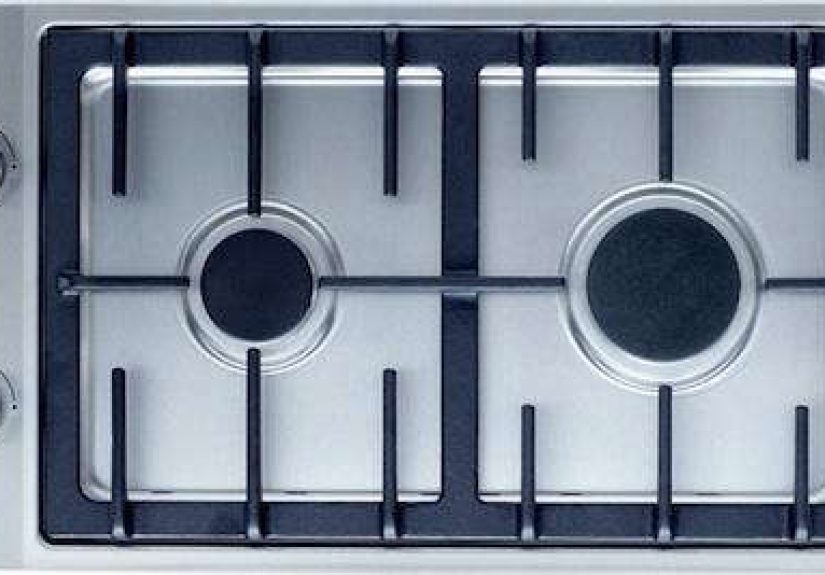
The first thing you notice is the stainless steel trough. Unlike glass-top gas cooktops that try to look like induction while still being
gas (an identity crisis nobody asked for), the Miele module leans into a professional aesthetic: metal surface, sturdy grates, and controls that
feel like they were designed by people who actually cook.
The narrow footprintabout 11 3/8 inches widemakes it ideal for:
prep-and-cook islands, compact kitchens, secondary “chef stations,” or any layout where you want gas flame control
without giving up counter space to a full-size unit.
Grates and cookware stability
Miele typically pairs these modules with cast-iron pot rests. Cast iron matters because it adds stability and heat tolerance,
and it doesn’t feel “tinny” when you slide a pan across it. If you’ve ever moved a skillet on lightweight grates and heard a noise that
sounded like your kitchen was filing a complaint, you’ll appreciate the difference.
Cooking Performance: Where Two Burners Can Actually Be Enough
Two burners sounds limitinguntil you remember that most weekday cooking is “boil something + cook something.” Pasta and sauce.
Rice and stir-fry. Eggs and coffee. The Miele double CombiSet gas cooktop is built for that rhythm.
The large burner (10,200 BTU/h): your “get it done” zone
At 10,200 BTU/h, the high-speed burner is strong enough for fast boils, skillet searing, and wok-ish tasks (though a dedicated wok module
will still outperform it for true high-heat stir-fry). Here’s a quick, back-of-the-envelope example:
If you heat about 2 liters of water from room temp to boiling, you might land in the neighborhood of 8–12 minutes depending on pan
material, lid use, room temperature, and how much heat actually reaches the water (gas efficiency varies a lot).
The medium burner (6,300 BTU/h): the everyday workhorse
The medium burner is ideal for sautéing aromatics without scorching, simmering soups, and keeping sauces in that perfect “tiny bubbles at the edge”
zone. It’s also the burner you’ll appreciate when you’re cooking with smaller pans and don’t want flame licking the sides like it’s auditioning
for a dragon movie.
Flame behavior and heat distribution
Some CombiSet listings describe design choices meant to promote more even heat across the pan base (for example, specific flame patterns and grate
layouts). In practice, your biggest wins come from the basics: match pan size to burner size, keep flames under the pan, and use a lid when
boiling or simmering.
Ignition, Safety, and “Smart Gas” Features (Without the App)
This is where Miele tends to justify the premium price. Two burners are easy. Two burners that behave safely in real homesdrafts, spills,
and distracted cooks includedare harder.
Automatic re-ignition and gas shut-off behavior
Miele’s gas modules commonly include behavior where the burner can re-ignite automatically if a flame goes out due to a draft
or momentary disturbance. If re-ignition fails, the system is designed to interrupt the gas supply rather than keep feeding gas
into the room. This is a big deal for safety and peace of mind.
Ignition safety control (thermocouple logic)
Many Miele gas units use an ignition safety control that cuts gas if the flame goes out and cannot be successfully re-established.
Practically, this reduces the risk of unburned gas accumulation if something interrupts the flame.
Safety cut-off for unusually long operation
Some configurations also include an automatic shut-off behavior after extended, unusual operation (often referenced around about four hours).
It’s not a substitute for attentive cooking, but it’s a smart safety backstopespecially in households where someone will absolutely
start simmering broth and then wander off to “quickly do one thing” that turns into 90 minutes.
Residual heat and operational indicators
A residual heat indicator can feel surprising on gas, but it’s useful because the surface and components can stay hot after the flame is off.
If you’ve ever placed a “heat-sensitive object” (like a plastic utensil or the corner of a dish towel) near a recently used burner and immediately
regretted your life choices, you’ll understand why these indicators exist.
Cleaning and Maintenance: How to Keep It Looking Expensive
Stainless steel is gorgeous, but it does have one natural predator: fingerprints. The good news is the CombiSet format is often easier to keep tidy
than a wide, five-burner cooktop because there’s simply less surface area to attack. The key is consistencyclean a little, often.
Daily cleanup (5 minutes, tops)
- Let everything cool fully (seriouslyburner parts and grates hold heat).
- Wipe the stainless surface with a soft cloth and mild dish soap solution.
- Dry immediately to reduce streaking and water spots.
Weekly or “after something dramatic happens” cleanup
- Remove grates and any removable burner parts.
- Wash removable parts in warm, soapy water; dry thoroughly before reassembly.
- Gently clean around the ignitor and safety control areaavoid flooding the area with water.
- Reassemble carefully so parts align correctly (misalignment can cause ignition issues or uneven flames).
Pro tip: the fastest way to make a premium cooktop feel annoying is letting a spill bake on for days. Clean sooner, and your future self
will feel like you hired a tiny, responsible housekeeper (except it’s just you, wearing sweatpants, doing the right thing).
Installation and Planning: Measure Twice, Order Once
A modular cooktop is not a “maybe it’ll fit” situation. It’s a “cut a hole in your countertop” situation. So yes: measurements matter.
The CS 1012-2 G reference cutout is about 10 3/4 inches wide by 19 3/4 inches deep, with the appliance itself about
11 3/8 inches wide. Always follow the model-specific installation guide for your exact unit.
Countertop and spacing considerations
Miele installation instructions typically call for specific clearances to walls and cabinetry, plus guidance on how to plan multi-module
installations. If you’re installing multiple modules, the cutout width becomes a calculation based on module widths and spacing bars.
In plain English: a modular lineup is easy to design when you plan it up frontand a pain when you try to “just squeeze one more module in.”
Gas and electrical requirements
Even though it’s a gas cooktop, it still needs power (commonly 120V) for ignition and control systems. Installation should be done by qualified
professionals, with an accessible shut-off valve and appropriate pressure regulation per local code and manufacturer instructions.
Ventilation: your cooktop’s best friend
Regardless of which gas cooktop you buy, good ventilation improves comfort (less lingering smell) and helps remove cooking byproducts.
The best setup is typically a ducted range hood vented outdoors. If ducting isn’t possible, recirculating hoods can help with grease
and odors, but they’re not equivalent for removing combustion pollutants.
Gas Cooking and Indoor Air Quality: Practical, Not Panic-y
Gas cooking is beloved for flame control, but it also produces combustion byproducts like nitrogen dioxide and carbon monoxideespecially if ventilation
is poor. The practical takeaway is not “never cook.” It’s “cook smart.” If you have a hood that vents outdoors, use it. If you don’t, open a window
and use a portable fan to move air out when you’re doing higher-heat or longer cooking sessions.
Smart habits that make a real difference
- Turn on ventilation early (start the hood before ignition so it’s already pulling air).
- Use back burners when possible if your hood captures better toward the back (common in many kitchens).
- Keep burners well-adjusted and maintain the appliance per manufacturer guidance.
- Never use a gas stove/oven to heat your homeit’s unsafe and raises pollution risk.
- Install CO alarms and check them regularly.
If you’re building a new kitchen or doing a major remodel, consider ventilation as part of the “appliance package,” not an afterthought.
A great cooktop without good ventilation is like buying a sports car and refusing to use windshield wipers.
Who This Cooktop Is Perfect For (and Who Should Skip It)
Perfect for:
- Minimalist or small kitchens where two burners cover most daily cooking needs.
- Custom islands where you want gas plus another surface (like induction) without a single massive cooktop.
- Serious cooks who like modular flexibility and clean, purposeful design.
- Entertainers who want a “secondary” cooking station for sauces, sides, or finishing work.
Consider skipping if:
- You routinely need four burners at the same time (batch cooking, big family meals, holiday chaos).
- You want maximum high heat for wok cooking (a dedicated wok module or powerful burner may be better).
- You want the best cleanup experience possible (induction modules usually win there).
- You don’t want to deal with modular planning and cutouts.
Pros and Cons: The Honest Version
Pros
- Premium build and design that looks at home in high-end kitchens.
- Two highly usable burners (one medium, one high-speed) for everyday cooking.
- Modular flexibilitypair it with induction, wok, grill, or specialty modules.
- Safety-forward engineering with re-ignition and gas interruption logic.
- Smaller footprint than a full-size cooktop, freeing counter space.
Cons
- Cost can be high for “just two burners” (you’re paying for engineering and modularity).
- Planning complexitycutouts and multi-module layouts require precision.
- Ventilation mattersgas needs good airflow management for comfort and air quality.
- Not a one-stop solution if you frequently cook multiple dishes simultaneously.
Shopping Checklist: What to Confirm Before You Commit
- Your cooking style: Are two burners enough most days?
- Countertop measurements: Confirm appliance and cutout dimensions for your exact model.
- Gas type: Natural gas vs. LP/propane setupconfirm compatibility and conversion requirements.
- Electrical: Ensure appropriate outlet/power supply for ignition.
- Ventilation plan: Ideally ducted to the outdoors; if not, plan mitigation steps.
- Module layout: If building a suite, sketch the full lineup now (gas + induction + specialty, etc.).
- Service access: Make sure shut-off valves/regulators are accessible after installation.
FAQ
Is a two-burner CombiSet enough for a primary kitchen?
For many people, yesespecially if you cook simpler meals or live in a smaller space. If you often cook multiple components at once
(protein + veg + starch + sauce), two burners can feel tight unless you add another module (like induction) or have a wall oven and other helpers
(microwave, toaster oven, etc.).
Does the “high-speed” burner replace a wok burner?
Not really. A dedicated wok module is designed for high heat concentration and wok stability. The high-speed burner on a double module is great
for fast boiling and searing, but it won’t fully replicate a specialized wok setup.
Do I need a powerful hood for a small cooktop?
“Powerful” is less important than “effective.” A ducted hood that captures cooking fumes well (especially at the front burners) is ideal.
If your hood is undersized or poorly positioned, you may still smell lingering cooking byproducts even with a smaller cooktop.
What’s the big advantage over a standard 30-inch gas cooktop?
Customization and space efficiency. The CombiSet approach lets you build the exact lineup you wantgas for flame control, induction for speed and cleanup,
maybe a specialty surfacewithout committing to one giant, fixed cooktop format.
Conclusion: Small Footprint, Big “Kitchen Intentions”
The Miele Double CombiSet gas cooktop is a premium solution for people who want gas cooking in a modular, design-forward format.
It’s not trying to be everything. It’s trying to be excellent at what it is: two burners with strong performance, thoughtful safety behavior,
and a compact footprint that fits into modern kitchen plans.
If you love the idea of building a custom cooktop lineupgas plus induction, or gas plus a specialty modulethis is one of the cleanest,
most refined ways to do it. Just plan your measurements carefully, prioritize ventilation, and get the installation done professionally.
Your kitchen (and your future self) will thank you.
Real-World Experiences: Living With a Miele Double CombiSet Gas Cooktop (Extra)
Let’s talk about what it’s like once the showroom glow fades and you’re just trying to feed yourself on a Tuesday. A two-burner modular cooktop
changes your cooking flow in a surprisingly positive waymostly because it encourages you to cook with intention instead of defaulting to
“turn on all four burners and hope the chaos sorts itself out.”
Day-to-day cooking feels calmer (because it has to)
With two burners, you naturally sequence tasks. You’ll boil water on the high-speed burner while you sauté onions or brown protein on the medium burner.
When the pasta goes in, the sauté pan might pause for a minuteor you’ll move the sauce to a gentle simmer and use the high-speed burner for the
next step. It sounds like a limitation, but it often feels like a smoother rhythm, especially if you’re a “clean as you go” person.
Simmer control is where you start appreciating the knobs
People who cook with gas often say the real joy is control, not raw power. In practical use, that means fine-tuning a tomato sauce so it thickens
without spitting, or keeping a soup at a lazy bubble without boiling the broth into sadness. A medium burner around 6,300 BTU/h gives you enough
headroom to sauté and enough restraint to simmerespecially with a lid slightly ajar and a heavy-bottom pot. It’s not magic; it’s physics and good
hardware. But it feels a little like magic when you stop scorching garlic.
The high-speed burner is “fast enough” for most real kitchens
If you’re expecting restaurant-level blast heat, remember: residential kitchens and ventilation have limits. Still, 10,200 BTU/h is plenty for
everyday powerbringing water to a boil, reducing a pan sauce, or giving a skillet the heat it needs for browning. You’ll notice the difference most
when you’re doing “time-sensitive” cooking: boiling potatoes, blanching vegetables, or jumping from sauté to deglaze without waiting forever for the
pan to recover.
Cleanup is easier than you expect (if you follow one rule)
The rule is: wipe it while it’s fresh. The stainless trough style tends to make spills and splatters more obvious, but it also makes them more
accessibleno weird corners under a giant glass sheet. In real life, most mess comes from boil-overs and splatters. If you wait a day, it bakes on.
If you wipe after dinner, it’s a quick win. You’ll also learn quickly that burner parts need to be reassembled correctlyif something feels “off”
during ignition, it’s often a sign a cap isn’t seated properly or moisture is lingering after cleaning.
Ventilation becomes part of your cooking habit
Owners often report that the best “upgrade” they made wasn’t a new pan; it was using the hood consistently. With gas, you can usually smell and feel
the difference when the hood is onless lingering odor, less haze after searing, and a generally more comfortable kitchen. If your hood vents outdoors,
you’ll likely use it as automatically as turning on the burner. If you have a recirculating hood, you might compensate by cracking a window during
high-heat cooking or running an air purifier nearby. The cooktop works great either way, but your comfort level is higher when airflow is handled well.
The “modular mindset” sneaks up on you
The most interesting real-world experience is how often people end up loving the modular format more than they expected. Maybe you start with the
double gas module because you want flame for sautéing and sauces. Later, you add an induction module for fast boiling and ultra-easy cleanup. Or you
realize your cooking style is half “gas flavor control” and half “induction speed and simplicity,” and suddenly the modular approach feels like the
smartest compromise you’ve ever made in a kitchen.
Bottom line: living with a Miele double CombiSet gas cooktop feels premium not because it’s flashy, but because it’s purposeful. It encourages better
sequencing, rewards good habits (ventilation and quick cleanup), and gives you the kind of control that makes everyday cooking feel more confident.
And yes, it also looks fantasticwhich is a perfectly valid reason to smile every time you walk into your kitchen.

![18 Best Types of Charts and Graphs for Data Visualization [+ How to Choose]](https://corkopencoffee.org/wp-content/uploads/2026/05/18-best-types-of-charts-and-graphs-for-data-visualization-how-to-choose-qKM1PBYG-thumb.jpg)