Table of Contents >> Show >> Hide
- A Routine Pregnancy Scan That Changed Everything
- What Is Sacrococcygeal Teratoma?
- The Tylers’ Journey to Specialized Care
- Why Doctors Chose a C-Section Delivery
- Two Days Old and Already Fighting Like a Champion
- A Mother’s Honesty Makes the Story More Powerful
- The Role of Specialized Fetal Centers
- Why Stories Like Adalida’s Give Other Families Hope
- What Parents Can Learn From This Miracle Angel Story
- Experiences and Reflections: Walking Through a Rare Newborn Tumor Diagnosis
- Conclusion
- SEO Tags
Some birth stories begin with a packed hospital bag, a nervous dad trying to install a car seat correctly, and a mom wondering whether she remembered the tiny socks. Kristin Tyler’s story began with joy, then fear, then a diagnosis so rare that most parents would have to Google the pronunciation before they could even begin to process it: sacrococcygeal teratoma.
Her daughter, Adalida Tyler, was born with a tumor at the base of her tailbone that weighed about four pounds. For a newborn, that is not just large. That is the kind of medical curveball that makes an entire team of specialists lean forward, double-check every monitor, and plan each step with the precision of a moon landing. Yet Adalida survived. The tumor was removed successfully when she was just two days old, and her mother now describes her as a healthy, happy, healed baby — a true “miracle angel.”
This is not merely a story about a frightening ultrasound or a dramatic surgery. It is a story about modern fetal medicine, parental courage, long-distance care, community support, and the strange way love can become strongest when life feels most fragile.
A Routine Pregnancy Scan That Changed Everything
Kristin and Jacob Tyler, from Alexandria, Louisiana, were excited to welcome another child into their family. They already had a young son and were preparing for the joyful chaos of life with two little ones — more diapers, less sleep, and probably a toy dinosaur hiding in every room.
Then came Kristin’s 20-week anatomy scan. Instead of the usual comforting checklist — heart, spine, limbs, growth — doctors saw something concerning. At first, the family was told their baby might have spina bifida. That possibility alone was terrifying for Kristin, who admitted she did not fully understand the condition at the time and immediately feared the worst.
A specialist later clarified that the baby did not have spina bifida. The diagnosis was sacrococcygeal teratoma, often shortened to SCT. It is a rare fetal tumor that grows from the coccyx, or tailbone. In many cases, SCTs are benign, meaning they are not cancerous at birth. But “benign” does not always mean harmless. When these tumors grow large, they can steal blood flow from the baby and force the fetal heart to work dangerously hard.
What Is Sacrococcygeal Teratoma?
Sacrococcygeal teratoma is considered one of the most common tumors found in newborns, but that phrase can be misleading. It is still rare overall. Medical centers estimate its frequency differently, with figures ranging from about 1 in 20,000 to 1 in 40,000 births or pregnancies. The tumor develops before birth at the base of the spine and may grow outside the body, inside the pelvis, or both.
SCTs are often categorized by where they grow. Some are mostly external, meaning visible outside the baby’s body. Others extend inward into the pelvis or abdomen, which can make surgery more complex. The tumor may be cystic, solid, or mixed. Solid tumors with heavy blood flow can be especially dangerous because they behave almost like an extra organ demanding circulation. The baby’s heart must pump blood not only through the developing body but also through the tumor. That is a lot to ask of a tiny heart still months away from its first official birthday candle.
Why Large SCTs Can Become Life-Threatening
The biggest danger is not simply the size of the tumor. It is what the tumor does to the baby’s circulation. If the mass grows large and develops many blood vessels, the fetal heart can become strained. Doctors monitor for signs of heart failure, hydrops, excess amniotic fluid, bleeding, and premature delivery. In severe cases, the mother’s health can also be affected, especially if complications such as mirror syndrome develop.
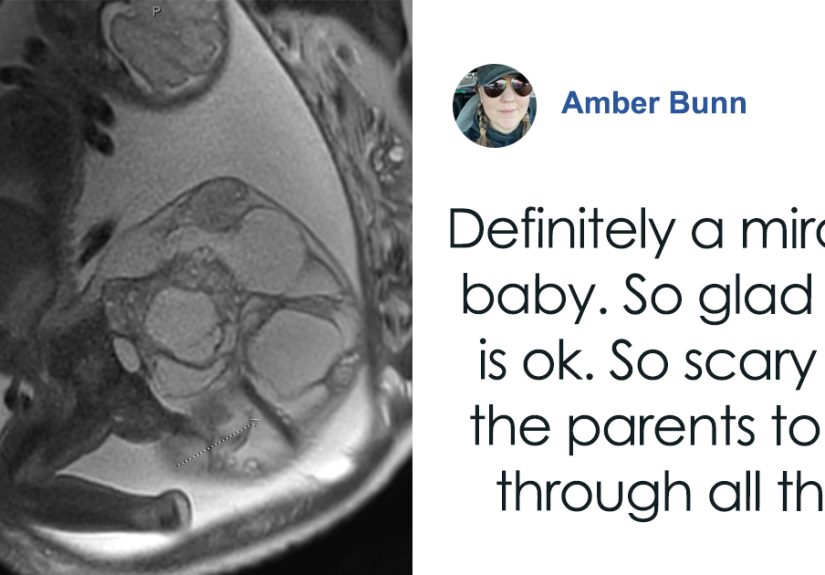
That is why families with a suspected SCT are often referred to specialized fetal centers. These centers can perform detailed ultrasounds, Doppler studies to measure blood flow, fetal echocardiograms to check heart function, and MRI imaging when needed. In plain English: doctors do not just look at the tumor; they watch how the baby, heart, placenta, and pregnancy are responding to it.
The Tylers’ Journey to Specialized Care
After the diagnosis, Kristin and Jacob were referred to Texas Children’s Pavilion for Women in Houston. The trip from their home in Louisiana was long, but the situation demanded a team familiar with rare fetal tumors. They met specialists, including maternal-fetal medicine experts and fetal surgeons, who explained the condition and monitored Adalida closely.
Kristin eventually relocated to Houston with her son and her mother so the pregnancy could be watched more carefully. Jacob, a mechanic, stayed behind in Louisiana during the week to work and drove to Houston on weekends. That kind of arrangement sounds simple on paper. In real life, it means long drives, emotional exhaustion, split family routines, missed normal moments, and the quiet loneliness of being the only person in your circle who has ever had to say, “My unborn baby has a rare tailbone tumor.”
Kristin has been open about how frightening it felt. Seeing the tumor on ultrasound again and again was scary. Not having friends or family who had experienced the same diagnosis made the situation feel even more isolating. Many parents facing rare prenatal conditions describe this same emotional fog: you are surrounded by doctors, machines, and information, yet you still feel alone because no one in your everyday life truly understands the medical vocabulary suddenly taking over your pregnancy.
Why Doctors Chose a C-Section Delivery
Adalida was delivered by C-section at 34 weeks. That decision was not made for drama; it was made for safety. With a tumor as large as Adalida’s, doctors had to avoid trauma or rupture during delivery. If a large SCT ruptures, bleeding can become dangerous very quickly. A carefully planned cesarean allowed the medical team to control the delivery environment and protect the baby as much as possible.
When Adalida was born, the tumor measured about 16 centimeters and weighed roughly four pounds. Combined, the baby and tumor weighed more than ten pounds. In human terms, that is astonishing. In medical terms, it was a high-risk situation requiring immediate neonatal care and a surgical plan.
Kristin saw her daughter only briefly on a camera in the delivery room before Adalida was taken to the NICU. For many parents, the first moments after birth are filled with skin-to-skin contact, happy tears, and blurry phone photos. For Kristin, those first moments were mixed with fear, prayer, and the knowledge that her newborn needed major surgery almost immediately.
Two Days Old and Already Fighting Like a Champion
Two days after birth, a pediatric surgical team removed Adalida’s tumor. In SCT cases, surgeons commonly remove the coccyx along with the tumor to lower the risk of recurrence. The tissue is then examined to determine whether it is benign or malignant. Most SCTs diagnosed in newborns are benign, but follow-up remains important because even benign tumors can recur.
Adalida’s surgery was successful. She eventually went home from the hospital on her due date, June 29, a detail that feels almost poetic. The day that had once been circled as her expected arrival became the day she went home after surviving a medical ordeal most adults would find overwhelming.
Today, according to her mother, Adalida is thriving. She has met developmental milestones and is described as a happy, healthy baby. The family expects to return to Texas Children’s when she is around two or three years old for cosmetic surgery related to the area where the tumor was removed. Importantly, Kristin said the major medical concern had been handled; the future procedure is expected to be cosmetic.
A Mother’s Honesty Makes the Story More Powerful
Part of what makes Kristin’s story resonate is that she does not present herself as a perfectly calm superhero floating through crisis with a glowing smile and a color-coded binder. She was scared. She cried. She felt in the dark. She prayed. She leaned on family, friends, faith, and the medical team.
That honesty matters. Parents facing a rare prenatal diagnosis often feel pressure to be brave all the time, as if fear is a sign of weakness. It is not. Fear is a normal response when your baby’s health is uncertain. Courage is not the absence of fear; it is showing up to the next appointment, asking the next question, signing the next consent form, and loving your child fiercely through every unknown.
The Role of Specialized Fetal Centers
Adalida’s outcome also highlights why specialized fetal care can be so important. A diagnosis like SCT may involve obstetricians, maternal-fetal medicine specialists, fetal imaging experts, pediatric surgeons, neonatologists, anesthesiologists, cardiologists, and NICU nurses. That is a lot of people, but in complex cases, the team approach is not overkill. It is the safety net.
Specialists monitor tumor size, blood flow, fetal heart function, amniotic fluid levels, and signs of distress. Most SCT cases do not require surgery before birth, but high-risk cases may need advanced planning or, rarely, fetal intervention. Delivery must also be planned carefully. If the tumor is large, C-section may be recommended. After birth, the baby may need stabilization in the NICU before surgery.
In other words, this is not a “wait and see” situation in the casual sense. It is more like “watch everything, measure everything, prepare for everything, and hope the plan never has to use its scariest pages.”
Why Stories Like Adalida’s Give Other Families Hope
Rare medical stories can be frightening, but they can also be deeply hopeful when told responsibly. Adalida’s case does not guarantee the same outcome for every baby with SCT. Outcomes depend on tumor size, blood flow, internal involvement, gestational age, heart function, surgical complexity, and whether complications develop before birth. Still, her story shows that even a dramatic diagnosis can lead to survival, healing, and normal milestones when care is coordinated early.
For parents currently searching the internet at 2 a.m. after hearing the words “sacrococcygeal teratoma,” Adalida’s story offers something more useful than vague reassurance. It shows a real pathway: diagnosis, referral, monitoring, delivery planning, NICU care, surgery, recovery, follow-up, and family support.
What Parents Can Learn From This Miracle Angel Story
1. A Second Opinion Can Bring Clarity
Kristin’s first scan raised concern for spina bifida, but further evaluation led to the correct diagnosis of SCT. That does not mean the first team did anything wrong; prenatal imaging can be complex. It does mean that specialized evaluation matters when something unusual appears on ultrasound.
2. Ask Questions Until the Plan Makes Sense
Parents do not need to become fetal surgeons overnight. But they deserve to understand the basics: What type of tumor is it? How big is it? Is there heavy blood flow? How is the baby’s heart doing? What would make the plan change? Where should delivery happen? What happens immediately after birth?
3. Emotional Support Is Medical Support’s Quiet Partner
Kristin’s experience shows that family support, faith, and community encouragement can help parents endure the waiting. The emotional side of a rare diagnosis is not a footnote. It is part of the journey.
4. Follow-Up Matters Even After Good News
After an SCT is removed, children may need ongoing monitoring for recurrence, healing, cosmetic needs, and possible bowel, bladder, or nerve-related issues depending on the tumor’s location and surgery. A successful operation is a huge victory, but it is not always the last appointment on the calendar.
Experiences and Reflections: Walking Through a Rare Newborn Tumor Diagnosis
For families facing a diagnosis like Adalida’s, the experience often begins with shock. One moment, pregnancy is measured in nursery colors and baby names. The next, it is measured in tumor dimensions, blood flow, fetal echocardiograms, and appointment schedules. Parents may feel as if they have been dropped into a medical language class they never signed up for. The terms are unfamiliar, the stakes are enormous, and everyone else seems to be speaking calmly while your heart is doing cartwheels in a parking lot.
One helpful experience many parents describe is creating a simple medical notebook. It does not need to be fancy. A regular folder or notes app can hold appointment dates, doctor names, ultrasound findings, medication lists, insurance contacts, and questions for the next visit. When stress is high, memory becomes unreliable. A notebook becomes the family’s second brain, and unlike a tired parent at midnight, it does not forget where it put the information.
Another important lesson is to choose a communication circle. When a baby has a rare condition, everyone who loves the family naturally wants updates. But answering twenty texts after every appointment can be draining. Some families choose one relative or friend to share updates with others. Others use a private group chat. This protects the parents from having to relive scary news repeatedly while still allowing loved ones to offer help.
Practical help matters more than perfect words. Friends often worry about saying the wrong thing. The truth is, “I’m bringing dinner Tuesday” may be more useful than a paragraph trying to explain fate, strength, or reasons bad things happen. Gas cards, childcare, freezer meals, laundry help, rides to appointments, and sitting quietly in a waiting room can become acts of love. Nobody needs a motivational poster when they are trying to understand NICU visiting hours.
Parents should also give themselves permission to feel conflicting emotions. You can be grateful for excellent doctors and still be angry that your baby needs surgery. You can believe in a good outcome and still cry in the shower. You can celebrate a stable ultrasound and dread the next one. Emotional whiplash is common in high-risk pregnancies. It does not mean a parent is failing; it means the situation is heavy.
Finally, Adalida’s story reminds families that hope is not foolish. Hope is not pretending everything is easy. Hope is packing for the hospital while scared. Hope is driving hundreds of miles for specialized care. Hope is trusting a surgical team while your newborn is only days old. Hope is bringing the baby home, watching her grow, and realizing that the hardest chapter did not get to write the whole book.
Conclusion
Adalida Tyler’s survival after a life-threatening four-pound sacrococcygeal teratoma is a powerful example of what can happen when early diagnosis, specialized fetal care, careful delivery planning, skilled newborn surgery, and family support come together. Her mother’s candid words make the story even more meaningful because they show the reality behind the miracle: fear, uncertainty, prayer, long drives, hard decisions, and deep gratitude.
For readers, the takeaway is not just that a newborn survived something rare and dangerous. It is that families facing frightening diagnoses deserve accurate information, compassionate care, and real hope. Adalida’s story is tender, dramatic, and unforgettable — but above all, it is a reminder that tiny babies can be mighty fighters, and sometimes the smallest people carry the biggest miracles.