Table of Contents >> Show >> Hide
- Who Is Carin van Vuuren – and What Is Greenhouse?
- Inside Carin’s Core App Stack
- The Newcomer and the Hidden Gem
- What Carin’s App Stack Tells Us About Modern B2B Marketing
- How to Apply These Lessons to Your Own App Stack
- Conclusion: A Calm, Opinionated Stack in a Noisy World
- of Real-World Experience: What It’s Like to Run a Stack Like This
If you’ve ever opened your browser and realized you’re running more SaaS tabs than a YC demo day, you already know: your app stack can either be your secret growth engine or the reason your team spends half the day asking, “Wait, where does that report live again?”
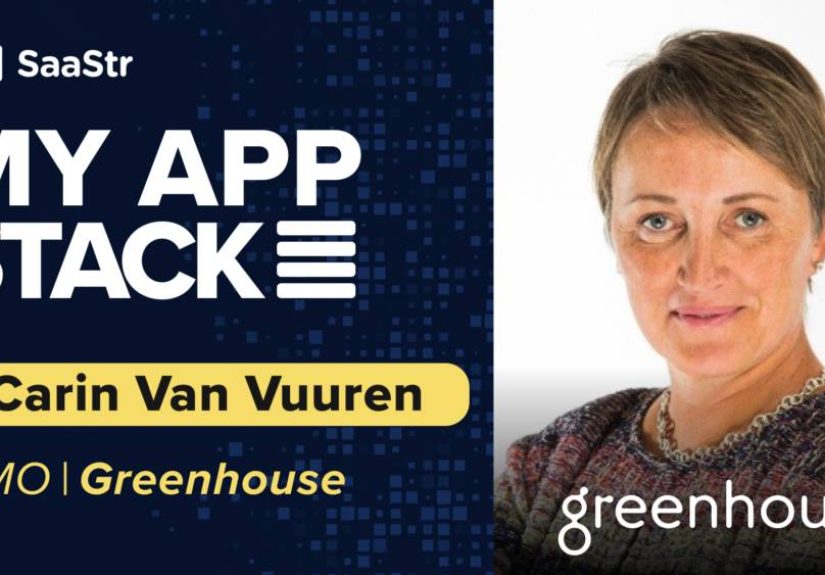
That’s exactly why SaaStr’s “My App Stack” series is so addictive. It peeks behind the curtain at what world-class leaders are actually using to run modern go-to-market machines. One of the most insightful entries features Carin van Vuuren, Chief Marketing Officer of Greenhouse, a leading hiring platform built for structured, people-first recruiting.
In this deep dive, we’ll unpack Carin’s stack app by app, explore how it supports Greenhouse’s growth, and pull out practical lessons you can use to clean up (or glow up) your own marketing app stack.
Who Is Carin van Vuuren – and What Is Greenhouse?
Before we geek out on tools, it’s worth knowing who’s behind the stack. Carin van Vuuren is the CMO at Greenhouse, responsible for driving business growth through go-to-market strategy, brand management, and corporate communications. Her background includes leadership roles at Capgemini Consulting and innovation firm Fahrenheit 212, plus advising startup tech founders.
Greenhouse itself is more than “just” an ATS (Applicant Tracking System). It’s positioned as a full hiring platform, with structured workflows, strong analytics, and hundreds of integrations that help companies design fairer, more consistent, and more data-driven hiring processes.
In other words: Carin isn’t running a simple lead-gen engine. She’s marketing a mission-critical platform that touches an organization’s most sensitive processhiringat a time when candidate volume is exploding and recruiters are overwhelmed. Her marketing tech stack has to be sharp.
Inside Carin’s Core App Stack
In the SaaStr interview, Carin outlines a tight, clearly defined core stack:
- Marketing automation: Marketo
- ABM and intent: 6sense
- A/B testing & CRO: Intellimize
- Conversational marketing: Drift
- Webinars: BigMarker
Notice what’s missing: there’s no random “cool” point solution tossed in because it trended on LinkedIn last week. Each tool plays a clear role in a broader revenue system that runs from discovery to conversion.
Marketo: The Non-Negotiable Foundation
Asked which app she’d never let anyone take away, Carin doesn’t hesitate: Marketo. She calls it the foundation of everything they do, powering lead scoring, funnel analytics, email marketing, campaign operations, and sales alerts.
That tracks with how modern B2B CMOs work. A robust marketing automation platform like Marketo gives you:
- Consistent lead capture & routing from events, content, paid campaigns, and partners.
- Lifecycle definitions and funnel stages everyone agrees onfrom MQL to closed-won.
- Behavior-based nurturing that reacts to what prospects do (not just who they are).
- Trigger-based alerts that let sales act when buyers are actually warm.
In practical terms, Marketo is the “brains” of the stack, orchestrating data and workflows that everything else plugs into. If your own stack doesn’t have one clear orchestration layer, you usually feel it in inconsistent metrics and a lot of “can someone export that from… somewhere?”
6sense: Seeing Who’s Actually in Market
Next up is 6sense for account-based marketing and intent. 6sense is an AI-powered ABM and revenue platform that combines intent data and predictive analytics to identify which accounts are in market and where they are in the buying journey.
For a company like Greenhouse, this matters because:
- There are thousands of possible employers they could sell to.
- Only a fraction are actively thinking about fixing their hiring process right now.
- Sales and marketing resources are finite.
With 6sense, Carin’s team can prioritize accounts showing strong intent signalsresearching ATS platforms, structured hiring, diversity initiatives, or candidate experienceand line up messaging, ads, and outreach accordingly. It’s how you stop “spray and pray” and move to “show up when they’re finally ready to listen.”
Intellimize: Continuous Website Experiments Without Drama
Once you’ve got accounts on your site, the next question is simple: are they converting? That’s where Intellimize comes in. Intellimize is an AI-driven website optimization platform that runs automated A/B tests and personalizes site experiences for both known and anonymous visitors, focusing on conversion rate optimization (CRO).
Instead of arguing endlessly about button colors in a meeting, Carin’s team can:
- Test different landing page headlines for various segments.
- Personalize CTAs based on industry or buying stage.
- Let the platform allocate traffic to high-performing variations automatically.
This fits the broader shift in B2B SaaS: the best teams don’t just drive traffic, they earn ROI from that traffic through disciplined experiments.
Drift: Conversations Instead of Forms
For conversational marketing, Carin relies on Drift. Drift enables real-time conversations with website visitors via chatbots and live chat, routing qualified prospects to sales or booking meetings automatically.
In practice, that means:
- High-intent visitors don’t get stuck in generic forms and slow follow-up.
- Prospects can book demos in their own time zone, even if it’s 11:30 p.m. on a Sunday.
- Sales teams get richer context about what the visitor asked before the call ever starts.
Combined with 6sense data and Marketo scoring, Drift helps convert “we’re just browsing” visitors into “we have a call on the calendar” opportunities.
BigMarker: Webinars That Actually Drive Pipeline
Finally, Greenhouse’s webinar engine of choice is BigMarker. BigMarker is a modern webinar and virtual events platform with deep integrations and robust marketing features tailored to B2B teams. It’s often described as an end-to-end webinar solution with strong engagement tools and analytics.
For a thought-leadership-driven brand like Greenhouse, webinars aren’t just “nice to have.” They’re core to:
- Educating customers on structured hiring, DEI, and best practices.
- Showcasing real-world case studies with talent leaders.
- Creating evergreen content that can be clipped, repurposed, and nurtured.
BigMarker’s flexible event types, integration with marketing automation, and strong analytics help Carin’s team tie webinar engagement directly back to pipeline instead of just counting registrations and hoping for the best.
The Newcomer and the Hidden Gem
Klue: Competitive Intelligence You’ll Actually Use
When SaaStr asked Carin about the top new app they’d added in the last year, she pointed to Kluea competitive intelligence platform. Klue helps teams collect, organize, and distribute competitive intel so that sales reps aren’t relying on random Google Docs and tribal knowledge when buyers ask, “So how do you compare to…?”
For a fast-moving category like recruiting and hiring software, competitors constantly launch new features, new pricing, and new positioning. A CI platform:
- Keeps battlecards up to date inside the tools reps already live in.
- Turns customer feedback and win/loss data into useful intel instead of forgotten notes.
- Aligns marketing, product, and sales around how the company is actually perceived in the market.
The bigger your deal sizes (and the more intense your bake-offs), the more this kind of app moves from “nice to have” to “why didn’t we do this earlier?”
UserGems: Turning Job Changes into Warm Pipeline
Carin’s pick for “undiscovered gem” is UserGems, which she describes as a Salesforce app that alerts you when past users move into new roles at different companies so you can reconnect and sell into their new organization.
This reflects a broader, smart pattern: revenue teams are leaning harder into buyer job-change data. When a champion who loved your product becomes a VP at a new company, that’s a much warmer opportunity than a totally cold account with no context. Tools like UserGems systematize what used to be pure luck (“Oh hey, didn’t our old admin now work at Acme?”).
For a hiring platform like Greenhouse, where users build deep familiarity with workflows and integrations, those champions carry strong influence when they join a new HR or talent team. UserGems helps Carin’s team capitalize on that momentum.
What Carin’s App Stack Tells Us About Modern B2B Marketing
Look at this stack as a whole and you start to see a pattern that’s very different from a random bucket of SaaS subscriptions:
- There’s a clear spine. Marketo is the orchestration layer. Everything else connects into it.
- Signal beats noise. 6sense and UserGems make sure SDRs and marketers focus on accounts that are actually likely to buy.
- Experiments never stop. Intellimize ensures the website is always learning, not frozen in the last redesign.
- Conversations are prioritized. Drift and BigMarker make it easier for buyers to talk, ask questions, and see the product in action.
- Competition isn’t ignored. Klue keeps the whole organization sharper in crowded market cycles.
That’s the bigger lesson: a great CMO app stack isn’t about having the most tools; it’s about having the smallest possible number of tools that clearly support your go-to-market strategy.
How to Apply These Lessons to Your Own App Stack
1. Start with Strategy, Then Tools
Carin’s stack lines up neatly with Greenhouse’s strategic priorities: targeted account-based motion, structured experimentation, and high-touch education of talent leaders. Before you chase Marketo-sized platforms, ask:
- Do we primarily sell via high-velocity inside sales or large enterprise deals?
- Do we need ABM right now, or would better basic automation give a bigger win?
- Where in our funnel are we actually dropping the ballawareness, activation, or close?
Only then should you mirror parts of this stack. For some teams, a leaner combination (like HubSpot plus a lightweight intent tool and a simpler webinar platform) may be plenty to start.
2. Prioritize Integration Over Shiny Objects
Notice how many tools in Carin’s stack are known for strong integrations: 6sense plugging into CRM and MAP, Drift chatting directly with your CRM and calendars, BigMarker syncing attendance and engagement data back into automation flows. Without clean integration, your data turns into a patchwork of CSVs and screenshots.
When evaluating your own stack, make “does this integrate with our source of truth?” a hard requirement. Otherwise, your CMO will spend their leadership meetings arguing about whose dashboard is “more correct.”
3. Invest in Signal: Intent, Champions, and Behavior
6sense, UserGems, and Intellimize all point to a single philosophy: better signals beat bigger lists. You don’t win in 2025 by blasting a million contacts with generic messaging; you win by:
- Seeing which accounts are researching your space right now.
- Identifying champions who already trust your product.
- Responding in real time to how visitors behave on your site.
If you can’t overhaul your whole stack overnight, start by adding one new “signal” layermaybe intent data or champion trackingand pipe that into your existing automation and outreach.
4. Treat Webinars and Conversations as First-Class Channels
There was a time when webinars were just glorified slide shows. Platforms like BigMarker plus conversational tools like Drift have changed that. When your webinar stack is integrated and your chat is smart, you can:
- Promote events to accounts already surging in 6sense.
- Use chat to route high-intent attendees to live sales reps.
- Push engagement data right back into scoring models.
For GTM teams, that means events stop being vanity metrics and become predictable pipeline drivers.
Conclusion: A Calm, Opinionated Stack in a Noisy World
Carin van Vuuren’s Greenhouse stack is surprisingly calm for someone running marketing at a high-growth SaaS company. There’s no bloated catalog of overlapping tools, no sense that a random Chrome extension is secretly running the funnel. Instead, we see a crisp philosophy:
- One orchestration brain (Marketo).
- One source of intent visibility (6sense).
- One engine for experimentation (Intellimize).
- One system for conversations (Drift + BigMarker).
- One set of tools for competitive and champion advantage (Klue + UserGems).
If you’re a founder, CMO, or growth leader staring at a cluttered SaaS spend report, use Carin’s stack as a sanity check. Ask yourself: “If I had to defend every app in a board meeting, could I explain exactly what it owns in the customer journey?” If the answer is no, your next project might not be a new toolit might be turning some off.
of Real-World Experience: What It’s Like to Run a Stack Like This
So what does it actually feel like to operate a stack similar to Carin’s day to day? Picture a growth-stage B2B SaaS company somewhere between Series C and “we should probably buy more hoodies for the new hires.” The marketing org has a few core motions: targeted enterprise ABM, a steady cadence of content and webinars, and a sales team that wants qualified pipelinenot just “leads.”
In the early days, everything runs through a single marketing automation platform. It’s fine… until it’s not. Lists get bigger, campaigns get more complex, and suddenly you’re trying to run modern ABM from a patched-together mix of manual segmentation and guesswork. That’s usually when someone on the team says, “We keep hearing about intent datais it time?”
The first time you plug in something like 6sense, there’s a weird mix of relief and mild panic. Relief, because you finally see which accounts are quietly researching your category and reading your content without ever filling out a form. Panic, because you realize you’ve spent months nurturing accounts that were never really in market while ignoring others that practically had “please call us” written across their digital body language.
Then come the experiments. With Intellimize or a similar CRO tool, your landing pages stop being sacred PDFs turned into HTML and start becoming living, breathing experiments. Instead of HiPPOs (Highest Paid Person’s Opinions) controlling the hero copy, you get to run structured tests: “What happens if we speak to ‘structured hiring’ versus ‘faster recruiting’ on this page for enterprise traffic?” Over time, you watch conversion rates tick upwardnot because of one magic headline, but because the system keeps learning.
On the front lines, Drift changes how sales and marketing perceive the website. It’s no longer a static brochure. Reps start slacking each other notes like, “Just had a Drift chat from a Director of Talent at a Fortune 100 accountdemo booked for tomorrow.” SDRs learn to watch the chat inbox the way they used to watch inbox zero. There’s a cultural shift from “we’ll respond when we can” to “if they’re here now, we talk now.”
Webinars on BigMarker become a centerpiece of the editorial calendar. At first, you run them like standard webinars: topic, slide deck, Q&A. But once you connect everything, you notice something interesting in the data: accounts that attend two or more webinars move through the funnel faster and close at higher rates. Suddenly, your team starts designing “webinar series” and using intent data to invite accounts at the right moment, not just spamming your entire database every month.
And then there’s the quiet magic of tools like UserGems and Klue. They don’t produce flashy graphs, but they change the way sales behaves. Reps get alerts that a champion they worked with two years ago is now VP of People at a promising new account. Or they walk into a competitive deal with a fresh, well-organized battlecard instead of a six-month-old slide from someone’s desktop. Pipeline starts to feel less random and more like the logical outcome of systems working together.
The real experience of running a stack like Carin’s isn’t about the logos on a slide. It’s about the subtle reduction of friction: fewer “where is that data?” moments, more “we knew this account was warming up weeks ago.” Over time, that calm, opinionated stack becomes an unfair advantagenot because the tools are secret, but because the team has the discipline to use them in a focused, integrated way.