Table of Contents >> Show >> Hide
- Why Creating Fantasy Creatures Is So Addictive
- How We Build Creatures That Feel Believable
- Our Creative Process as a Couple
- Three Creature Concepts From Our “Another World” Studio
- What Makes Handmade Fantasy Creatures So Appealing
- What This Hobby Teaches Us About Creativity
- Experiences From Life Inside Our Creature-Making World
- Conclusion
Some couples do crossword puzzles. Some restore old furniture. My wife and I apparently looked at those perfectly respectable hobbies and said, “What if we spent our evenings inventing moon-eyed swamp beasts, velvet antler dragons, and polite little monsters that look like they pay rent in shiny pebbles?” That is how our strange and wonderful habit of creating fantasy creatures began.
At first, it felt like a joke with art supplies. One of us would sketch an odd little face. The other would ask dangerous questions like, “What if it had moth wings?” or “What if it lived in volcanic fog and sneezed sparks when nervous?” Before long, the sketch became a creature design. The creature design needed a habitat. The habitat demanded a history. And suddenly we were not just making cute monsters. We were building an entire otherworld.
That is the real magic of fantasy creature design: the best creatures are not random. They feel as though they belong somewhere. They have bodies shaped by environment, behaviors shaped by survival, colors shaped by communication, and details that suggest a story before they do a single dramatic pose. In other words, the weirdest creatures work best when they make a little too much sense.
So this article is part love letter, part studio diary, and part practical guide. If you have ever wondered how artists dream up original fantasy creatures that feel charming, eerie, believable, and just a tiny bit unhinged, pull up a chair. The portal is open.
Why Creating Fantasy Creatures Is So Addictive
There is something deliciously freeing about fantasy art. When you create a creature from another world, you are not limited by realism in the usual sense. You can combine the grace of a deer, the caution of a fox, the color-shifting tricks of a cuttlefish, the camouflage of a stick insect, and the attitude of a cat that absolutely knows it is better than you. Fantasy lets you remix nature, myth, folklore, and emotion into something new.
But here is the twist: total freedom is actually easier to handle when it has structure. That is why strong creature design almost always starts with real-world inspiration. The most memorable beasts borrow from anatomy, ecology, silhouette, and behavior. You can give a creature six eyes, glowing fur, and cloud-breathing lungs, but if its movement, body proportions, and habitat all point in the same direction, readers and viewers will believe it. Or at least they will happily suspend disbelief, which is the next best thing.
For us, that balance between imagination and logic is the fun part. We are not trying to make “random cool stuff.” We are trying to make original monsters and fantasy animals that feel like they evolved somewhere beyond the map, on a continent where the weather is dramatic and the local wildlife would absolutely steal your lunch.
How We Build Creatures That Feel Believable
1. We start with anatomy, then break the rules on purpose
Nothing helps a fantasy creature feel more convincing than a solid anatomical foundation. Even the weirdest being benefits from recognizable structure: joints that bend logically, weight that appears supported, and features that suggest a real way of moving through the world. A creature can look alien and still feel physically possible.
This is where a lot of beginner fantasy art goes sideways. People jump straight to horns, spikes, wings, and glowing eyeballs. Those details are fun, but they are toppings, not dinner. First, we ask basic questions: Is this creature built for sprinting, climbing, burrowing, hovering, stalking, or posing dramatically on a rock at sunset? Does it carry its weight like a cat, a bird, a lizard, or something in between? Once the body works, then we add the glorious nonsense.
2. We design the silhouette before the details
If the silhouette is strong, the creature is halfway alive already. A good silhouette tells you whether the design is shy, predatory, regal, clumsy, ancient, playful, or deeply suspicious of visitors. You should be able to fill the creature in black and still recognize its personality from the outline alone.
That is why we thumbnail first. Big shapes. Fast sketches. No fussing over eyelashes on a beast that may not survive the next round. We test proportions, posture, tails, ears, crests, and limb lengths until the creature reads clearly from a distance. A fantasy creature with a muddy silhouette is like a movie villain with no lines. Technically present, emotionally unemployed.
3. Habitat decides more than aesthetics
Every original creature needs an address. A marsh creature should not be built like a mountain goat unless it has a very specific life story and a licensed therapist. Habitat affects everything: body covering, limb structure, eye placement, coloration, social behavior, diet, and defensive features.
If a creature lives in foggy forests, maybe it has pale markings that help it communicate through low visibility. If it spends its life in desert ruins, maybe it stores heat poorly on purpose and has wide feet for sand and stone. If it hunts by ambush, perhaps it relies on stillness, camouflage, or deceptive shape. Suddenly your creature is not just decorative. It is adapted.
4. Behavior makes the design memorable
A creature becomes unforgettable when it has a habit. Not just a look. A habit. Maybe it collects bones because its species uses sound to attract mates. Maybe it rolls up when frightened and becomes indistinguishable from a mossy stump. Maybe it flares its glowing throat pouches when it is offended, which, frankly, is relatable.
Behavior adds story. It also helps visual design. Once you know how a creature eats, warns, migrates, sleeps, or shows affection, the physical features begin to make sense. Frills, claws, whiskers, tails, fins, antennae, and markings all feel more purposeful when they connect to action.
5. Color is never just decoration
We love rich color palettes, but color works hardest when it serves function. In nature, color can hide, threaten, attract, warn, confuse, or charm. The same idea applies to fantasy creatures. Bright spots may be mating displays. Mottled fur may mimic bark or stone. Metallic scales may reflect harsh light. Bioluminescence may help creatures communicate in caves, or trick prey into coming closer. Which, from a branding perspective, is pretty effective.
When we paint a creature, we try to ask: what job is this color doing? The answer almost always improves the design.
Our Creative Process as a Couple
Working together changes everything. Collaboration in fantasy creature design is not just one artist handing a sketch to another. It is a conversation. One person may lead with concept, the other with structure. One sees the personality first, the other sees materials, balance, texture, and finish. Together, the creature becomes more layered than either of us would have made alone.
Usually our process looks something like this: one rough idea, fifteen ridiculous variations, two miniature arguments about tail length, one moment of silence while we both realize version number nine is secretly the winner, and then a very intense phase of refining details. We sketch, revise, test proportions, adjust color notes, and decide what parts of the creature should feel soft, armored, ancient, playful, or unsettling.
That back-and-forth matters because creature design thrives on contrast. One artist may push for elegance while the other pushes for oddness. One wants myth, the other wants biology. One wants antlers; the other wants restraint. The final design lives in the tension between those instincts. It becomes both beautiful and believable, both strange and coherent.
Three Creature Concepts From Our “Another World” Studio
The Mossback Lantern Pup
This little forest dweller began as a question: what if a wolf cub and a luna moth shared a haunted cottage and learned excellent manners? Its body is compact and foxlike, but its shoulder tufts bloom into soft, leaf-shaped fins that glow faintly in twilight. It uses bioluminescent markings to stay connected to its pack in dense fog. The design works because its features all support one environment: damp woods, low light, silent movement, and social communication.
The Brine Chapel Grazer
This creature came from our obsession with coastal ruins. We imagined a herd animal from a salt-ridden shoreline where stone towers lean into the sea. It has long legs like a wading bird, a ribbed shell-like spine, and velvety whiskers that detect changes in tide pressure. Its pale body is streaked with mineral stains, making it look half statue, half living animal. It is gentle, skittish, and bizarrely elegant, which is basically the ideal fantasy creature recipe.
The Ember-Eared Tunnel Drake
Every fantasy artist eventually makes a dragon. We just decided ours needed to be less “apocalypse manager” and more “underground menace with very specific lifestyle requirements.” This drake has folded ears that vent heat, forelimbs built for digging, and scales that darken with temperature. It hunts in volcanic tunnels and flashes ember-bright membranes to warn rivals away. It is not enormous, but it feels dangerous because every feature points to survival in a hot, cramped, hostile place.
What Makes Handmade Fantasy Creatures So Appealing
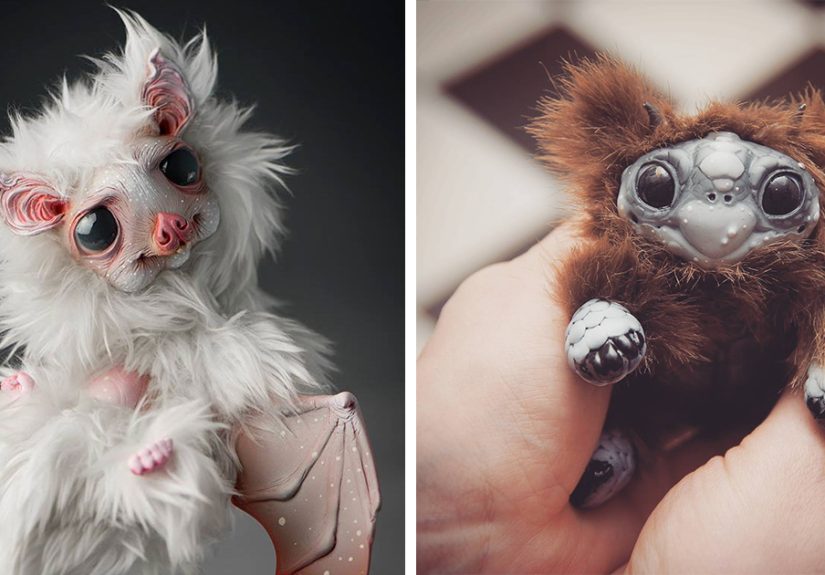
There is a reason people love fantasy creatures that look handmade, sculpted, or carefully illustrated rather than mass-produced from a generic template. Handmade work carries evidence of decisions. You can feel the thought in it. The asymmetry. The texture. The tiny imperfections that make a creature feel less like a product and more like a discovered being.
That is especially true when fantasy art is rooted in worldbuilding. A creature is more compelling when it seems to belong to a larger culture, ecosystem, or myth. Viewers want to know what it eats, what it fears, whether it migrates, whether it is sacred, whether it steals lanterns, and whether petting it is brave or medically unwise. A successful design opens those questions on purpose.
In that sense, creature design is really storytelling in disguise. The claws are plot. The fur pattern is lore. The posture is personality. The little chipped horn is backstory. Nothing needs a full encyclopedia entry, but every strong design hints that one could exist.
What This Hobby Teaches Us About Creativity
Creating fantasy creatures has made us better artists, but it has also made us better observers. We notice how real animals move. We pay attention to camouflage, body language, feather structure, horns, paws, scales, and the odd design solutions nature invents without asking anyone’s permission. The natural world is already full of alien-looking brilliance. Fantasy creature design simply rearranges those truths into new forms.
It has also taught us to trust iteration. The first idea is rarely the best idea. The second is often smug but underdeveloped. The seventh has potential. The twelfth arrives at 11:40 p.m. when somebody says, “Wait, what if the eyes are not eyes?” and suddenly the whole thing clicks. Good fantasy design is not a lightning strike every time. Often it is curiosity with snacks.
Experiences From Life Inside Our Creature-Making World
The experience of creating fantasy creatures as a couple is hard to explain to people who have never turned a kitchen table into a tiny interdimensional research lab. On normal nights, our studio feels peaceful. There is music in the background, reference photos open on a screen, sketchbooks spread out, and a quiet sense that something interesting is about to happen. Then one of us draws a head shape that looks promising, and suddenly the room changes. We are no longer just making art. We are trying to meet a creature that does not exist yet but somehow already has opinions.
Some of the best moments happen in the earliest stage, when the design is still fragile and a little ridiculous. That is when we laugh the most. We have looked at lumpy sketches and said things like, “He looks like a librarian who bites,” or “This one definitely knows forbidden swamp poetry.” Weirdly enough, those jokes help. Humor unlocks personality. Personality improves design. A fantasy creature becomes stronger the moment it stops being a pile of features and starts feeling like someone with a secret life.
There are also moments when the work gets surprisingly emotional. A creature may begin as a technical exercise in anatomy, silhouette, and worldbuilding, but somewhere along the way it develops a mood. Maybe it looks lonely. Maybe it seems ancient and gentle. Maybe it has the alert, uncertain posture of a wild animal deciding whether to trust you. Those are the designs that stay with us. They remind us that fantasy art is not only about spectacle. It is about empathy. The more carefully we think about how a creature lives, the more alive it feels.
Working together brings its own kind of adventure. Collaboration sounds graceful from a distance, but up close it includes revision, disagreement, compromise, and occasional stubborn attachment to a tail shape that objectively needs help. Still, that process is part of the joy. One of us may see elegance where the other sees weakness. One may want more realism, the other more myth. When we keep talking and refining, the final creature often ends up richer than either version would have been alone. It feels layered, like it came from two imaginations that challenged each other instead of playing it safe.
And then there is the moment a creature finally lands. Every artist knows that feeling. You adjust the posture, fix the proportions, mute one color, sharpen another, and suddenly the design clicks into place. It looks back at you from the page or sculpting table as if it has always existed somewhere beyond reach, waiting to be found. Those moments are rare enough to stay magical. They are why we keep going back to the sketchbook, back to the clay, back to the strange little portal we have opened in our everyday life.
More than anything, these experiences have made our home feel bigger than its walls. A rainy evening can turn into an expedition through fungus-lit woods. A cup of coffee can accompany a debate about whether cave grazers should have reflective fur or translucent ears. A quiet Sunday can become the birth of an entire species. That is the gift of making fantasy creatures from another world: you do not need to travel far to find wonder. Sometimes wonder shows up in slippers, carrying a pencil, asking whether your newest monster should have wings.
Conclusion
My wife and I may create fantasy creatures from another world, but the truth is that our process begins right here in this one. We borrow from anatomy, behavior, habitat, color, and storytelling. We sketch, revise, laugh, disagree, and refine until the strange thing in front of us starts to feel inevitable. That is when creature design becomes more than decoration. It becomes worldbuilding with a heartbeat.
If you are dreaming up your own fantasy creatures, remember this: the goal is not to be random. The goal is to be wondrous and coherent at the same time. Build a strong silhouette. Let the environment shape the body. Give the creature habits, logic, and just enough mystery. Then let your imagination do the part it does best: making the impossible feel oddly familiar.