Table of Contents >> Show >> Hide
- What Makes It “New England” Clam Chowder?
- Ingredients That Matter (and Why)
- New England Clam Chowder Recipe (Creamy Boston-Style)
- How to Thicken Clam Chowder (Without Turning It Into Wallpaper Paste)
- Fresh Clams: Quick Prep (If You’re Going the Extra Mile)
- Flavor Upgrades That Still Taste Like New England
- Serving Ideas
- Storage and Reheating
- FAQ: New England Clam Chowder Troubleshooting
- Conclusion
- Chowder Experiences & Real-World Lessons (The 500-Word, Very-Real-Life Add-On)
If New England had a perfume, it would smell like salt air, butter, and a faint whiff of “somebody’s wearing a fleece in July.”
And if New England had a love language, it would be a steaming bowl of New England clam chowder: creamy (but not gluey),
briny (but not “why does my soup taste like the ocean filed my taxes”), and packed with tender clams and potatoes that actually deserve to be there.
This guide gives you a classic New England clam chowder recipe you can make on a weeknight, plus the little chef-y choices
that separate “nice soup” from “wow, this tastes like a Cape Cod vacation I can afford.”
We’ll cover fresh vs. canned clams, the best thickening methods, and the top mistakes that turn chowder into salty milk sadness.
What Makes It “New England” Clam Chowder?
New England chowder is the white, cream-based clam chowderthe one with dairy, potatoes, and usually bacon or salt pork.
It’s richer and paler than Manhattan clam chowder (tomato-based and red), and it’s meant to taste like clams first, not like a spice rack doing karaoke.
Think: gentle aromatics, a bay leaf, black pepper, and enough smoky pork to make the clams feel supported emotionally.
Ingredients That Matter (and Why)
Clams: Fresh, Canned, or a Team Effort
Fresh clams (littlenecks, cherrystones, or top-necks) give you the best clam broth and that sweet, clean shellfish flavor.
But canned clams + bottled clam juice can still make a fantastic, weeknight-friendly chowderespecially if you’re not in the mood
to play “find the last grain of sand” at 9 p.m.
Pro move: if you use canned clams, save the clam juice from the can and use it in the pot. It’s free flavor.
(Also: it’s literally clam juice. Let it live its purpose.)
Pork: Bacon vs. Salt Pork
Traditionalists often reach for salt pork because it renders clean fat and a mellow porky sweetness.
Bacon is easier to find and adds a smoky backbone. Either works; just remember bacon brings salt, so season laterlike a mature adult.
Potatoes: Your Built-In Thickener
If you want chowder that’s creamy without becoming “award-winning sludge,” potatoes do a lot of heavy lifting.
Russets break down more and naturally thicken the broth. Yukon Gold stays a bit firmer and buttery.
Use russets if you like a thicker, more classic spoon-coating chowder; use Yukon Gold if you want chunkier potatoes.
Dairy: Keep It Creamy, Not Curdled
Half-and-half is the cozy middle ground. Heavy cream makes it richer. Whole milk can work but is less forgiving.
The rule that saves chowder everywhere: once dairy is in, do not boil. Keep it at a gentle simmer so your soup doesn’t separate
like it just saw your browser history.
Aromatics & Seasoning
Onion is non-negotiable. Celery is common and adds a subtle savory note.
Bay leaf and thyme are classic supporting characters. And black pepper?
Pepper is basically the official state bird of chowder.
New England Clam Chowder Recipe (Creamy Boston-Style)
Makes 6–8 servings • About 45–60 minutes • One pot + one small pan
Ingredients
- 4–6 slices bacon (or 4 oz salt pork), diced
- 1 medium yellow onion, finely chopped
- 2 celery stalks, finely chopped (optional but recommended)
- 2 cloves garlic, minced (optional; keep it subtle)
- 2 tablespoons butter
- 3 tablespoons all-purpose flour (optional; see thickening options below)
- 1½ pounds russet potatoes, peeled and cut into ½-inch cubes
- 3–4 cups clam juice (bottled) OR reserved clam broth from steaming fresh clams
- 1 bay leaf
- ½–1 teaspoon thyme (fresh or dried)
- 2 cups half-and-half (or 1 cup heavy cream + 1 cup whole milk)
- 2 cans clams (10 oz each) with juice reserved OR about 2 cups chopped fresh clam meat
- Freshly ground black pepper
- Salt (only after tasting)
- Oyster crackers, chopped chives or parsley, and hot sauce (for serving)
Step-by-Step Instructions
-
Render the bacon (or salt pork).
In a large heavy pot or Dutch oven, cook bacon over medium heat until it’s crisp and the fat is rendered.
Scoop the bacon bits out and set aside, leaving the fat in the pot. -
Build the flavor base.
Add onion (and celery if using) to the pot. Cook 5–8 minutes, stirring, until softened.
Add garlic for the last 30 seconds if you’re using it. -
Choose your thickener path.
If using flour: add butter if the pot looks dry, then sprinkle in flour and stir constantly for 1–2 minutes to cook out the raw taste.
(You’re aiming for a pale blond roux, not a tan.) -
Add potatoes + broth and simmer.
Add potatoes, clam juice (or reserved clam broth), bay leaf, and thyme. Bring to a gentle boil,
then reduce to a steady simmer until potatoes are tenderabout 12–18 minutes. -
Make it creamy (gently!).
Lower the heat. Stir in half-and-half. Keep it just below a simmerno boiling. -
Add clams at the end.
Stir in clams and a bit of reserved clam juice (if using canned) and warm through 2–4 minutes.
Overcooked clams get rubbery fast, so treat them like VIPs: late entrance, short speech, big applause. -
Season and serve.
Remove bay leaf. Add black pepper generously. Taste before saltingbacon and clams already bring plenty.
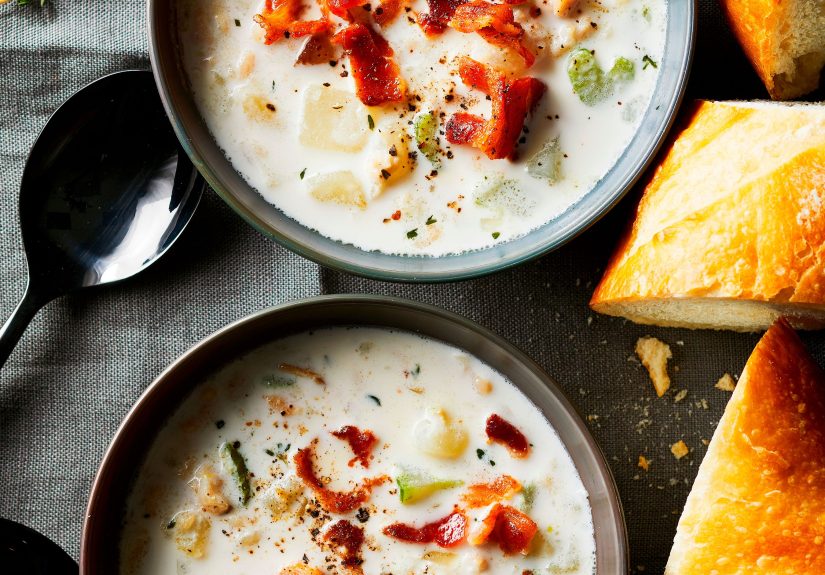
Serve with oyster crackers and the reserved bacon on top. Optional: chives, parsley, or a tiny dash of hot sauce.
How to Thicken Clam Chowder (Without Turning It Into Wallpaper Paste)
Chowder texture is personal. Some folks want it spoon-coating; others want it sip-able. Here are the most reliable methods:
1) Potato-Thickened (No Flour)
The simplest method: once potatoes are tender, mash a cup or so of them against the side of the pot,
then stir back in. You’ll get a naturally thicker chowder without a floury taste.
This approach keeps the clam flavor cleaner and lighter.
2) Light Roux (Flour + Fat)
A small roux adds classic body and helps stabilize the dairy. Keep it modestthis is soup, not a caulk gun.
3) “Blended Base” Method
Want restaurant-style silkiness without extra flour? Blend a portion of the cooked chowder base (before dairy and clams),
then stir it back in. This emulsifies the broth and gives you a creamy texture that still feels “clam-forward,” not “cream-forward.”
Fresh Clams: Quick Prep (If You’re Going the Extra Mile)
If you’re using live clams, soak them in cold salted water to help them purge sand, then rinse.
Steam them just until they open, strain the cooking liquid through a fine filter (cheesecloth helps), and chop the meat.
Discard any clams that don’t open during cooking. That’s your chowder’s version of a background check.
Flavor Upgrades That Still Taste Like New England
- Bay + thyme for cozy depth.
- A splash of dry white wine can brighten the base (keep it subtle).
- Hot sauce on the side adds a vinegary zing without hijacking the bowl.
- Chives or parsley for freshness (and to look like you planned this).
Serving Ideas
The classics are classic for a reason: oyster crackers, crusty bread, or a sourdough bowl if you’re feeling dramatic.
Pair it with a crisp salad and suddenly your Tuesday night has “coastal main character energy.”
Storage and Reheating
Clam chowder keeps well in the fridge for about 3–4 days.
Reheat slowly over medium-low heat, stirring often, and do not boil.
If it thickens too much overnight, loosen it with a splash of clam juice, milk, or water.
Freezing is tricky because dairy can separate. If you must freeze, do it before adding dairy, then add cream after thawing and reheating.
Your future self will thank you, and your chowder won’t look like it’s going through a breakup.
FAQ: New England Clam Chowder Troubleshooting
Why did my chowder taste too salty?
Bacon + canned clams + bottled clam juice can stack salt fast. Use low-sodium stock only if needed,
taste before salting, and consider using more potato or a splash of dairy to soften the edges.
Why is my chowder thin?
Potatoes may not have released enough starch (waxy potatoes do that), or you didn’t simmer long enough.
Mash some potatoes, blend a cup of the base, or add a small flour slurry/roux next time.
How do I keep clams tender?
Add them at the end and heat briefly. Long simmering turns clams chewy. The chowder should taste like clamsnot like you’re doing jaw exercises.
Conclusion
A great New England clam chowder recipe isn’t about fancy tricksit’s about smart order of operations:
build flavor with pork and aromatics, cook potatoes in clam-rich broth, keep dairy gentle, and treat clams like the delicate ingredient they are.
Do that, and you’ll have a creamy Boston-style chowder that feels both comforting and coastal, even if your “ocean view” is a laptop wallpaper.
Chowder Experiences & Real-World Lessons (The 500-Word, Very-Real-Life Add-On)
Chowder has a funny way of becoming the “accidental main event.” Someone suggests soup. Another person hears “clam chowder”
and suddenly you’re hosting a small, unofficial festival where everybody has an opinion, a spoon, and a childhood memory.
That’s part of the charm: New England clam chowder isn’t just dinnerit’s a conversation starter with potatoes.
One of the most common real-world moments happens right after you serve it: the great thickness debate.
Some people want chowder so thick a spoon can stand upright like it’s doing a trust fall. Others want it more brothy,
the kind you can sip between bites of oyster crackers. In practice, the happiest kitchens keep the base moderately thick,
then let each person customize. Extra crackers for the “thicker!” crowd, a splash of warm milk or clam juice for the “lighter!” crowd.
Everybody wins, and nobody has to write a strongly worded comment about “authentic chowdah.”
Another classic experience: the “I’ll just leave it simmering” mistake. Chowder punishes neglect.
If you boil after adding dairy, the texture can split. If you simmer clams too long, they tighten up.
That’s why chowder is best treated like a short, focused meeting: show up, do the important work, then end it on time.
Many home cooks learn to stage itfinish the potato-broth base early, then add dairy and clams right before serving.
It’s the difference between tender clams and clams that feel like they’ve been training for a marathon.
Then there’s the sand story. Anyone who has cooked fresh clams more than once has a tale of that one batch that carried
a tiny beach inside the shells. The lesson isn’t “never use fresh clams.” The lesson is: soak in salted water, rinse well,
and always strain the clam broth. That quick strain is basically chowder insurance. And when someone asks why you’re pouring
broth through cheesecloth like you’re performing a magic trick, you can calmly say, “Because I enjoy soup without crunch.”
Chowder also shows up in seasonal rituals. In colder months, it’s the cozy, snowy-day bowl that makes your home smell like comfort.
In warmer months, it somehow still works because the briny clam flavor feels summeryeven if you’re wearing shorts and the soup is telling you to buy a scarf.
It’s the rare dish that fits both “storm outside” and “dockside lunch” moods, depending on what you serve with it.
And finally: leftovers. Chowder the next day is often thicker and, in a good way, more unifiedlike the flavors had a sleepover.
The real-life trick is reheating slowly and gently, stirring like you mean it, and adding a splash of liquid if needed.
Done right, day-two chowder tastes like you planned ahead (even if you absolutely did not).