Table of Contents >> Show >> Hide
- What “Viruses That Replace Antibiotics” Actually Means
- Why We’re Even Talking About Replacing Antibiotics
- What the New Research Is Showing
- Where Phages Look Most Likely to Make a Real Difference
- Proof Isn’t a Vibe: What Counts as Evidence
- “Can You Just Take a Phage Pill?” The Practical Barriers
- Viruses Already Replace Chemicals in One Place: Food Safety
- So… Will Viruses Replace Antibiotics?
- Safety Note (Because Biology Is Not a Hobby)
- Experiences: What It Feels Like When “Viruses vs. Bacteria” Leaves the Headline and Enters Real Life
“Viruses” usually don’t get invited to the “future of medicine” party. They’re the unwashed goblins of biologyshowing up unannounced, breaking things, and leaving you with a fever and regret.
But some viruses have a very different hobby: they hunt bacteria. And right now, with antibiotic resistance rising and the drug-development pipeline feeling… let’s say “under-caffeinated,” researchers are taking a hard look at these bacterial hunters as a serious alternative.
The headline version is spicy: viruses could replace antibiotics. The reality is smarter (and honestly more interesting): a growing body of research suggests bacteriophagesoften shortened to phagescould help treat certain infections, especially those that shrug off standard antibiotics.
In some cases, phages might reduce antibiotic use or make old antibiotics work better again. That’s not science fiction. That’s science with lab coats and paperwork.
What “Viruses That Replace Antibiotics” Actually Means
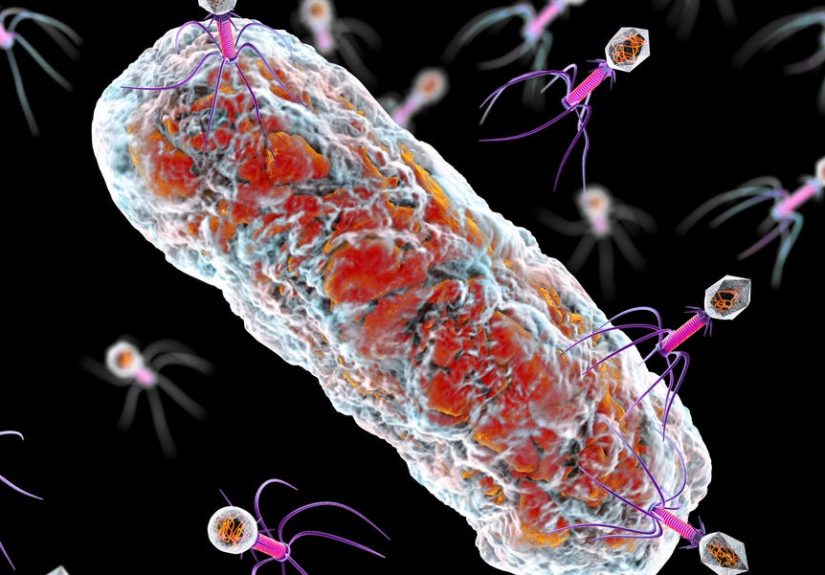
The viruses in the story are bacteriophages: viruses that infect bacteria. They don’t target human cells. They don’t “catch” you. They don’t spread through a classroom like a rumor.
They’re more like microscopic heat-seeking missiles that only lock onto particular bacterial targets.
Phages 101: The Short, Non-Boring Version
A lytic phage typically works like this: it attaches to a specific bacterium, injects its genetic material, hijacks the bacterial machinery, makes copies of itself, and then ruptures (lyses) the bacterial cell.
The end result is simple: fewer bacteria. The weird part is that the phage multiplies where the bacteria are, which is a very different vibe from antibiotics that diffuse through the body and hit many microbes at once.
That specificity is both phage therapy’s superpower and its greatest inconvenience. Antibiotics can be broad-spectrumuseful when you’re not sure what’s causing an infection. Phages are more like a custom key: incredibly effective if it fits, useless if it doesn’t.
Why We’re Even Talking About Replacing Antibiotics
Antibiotics changed human history. They also created a predictable evolutionary response: bacteria adapted. In the U.S., antibiotic-resistant infections remain a major public health threat, affecting millions each year and contributing to tens of thousands of deaths.
Resistance is fueled by many factorsoveruse, misuse, and the fact that bacteria are basically the world’s most motivated survivalists.
So when you see “new study” headlines about viruses replacing antibiotics, the backdrop is this: we need more tools. Not one magic tool. A toolbox.
What the New Research Is Showing
Modern phage research isn’t just “spray phages and hope.” It’s increasingly precise: phage matching, engineered phages, anti-biofilm strategies, and phage-derived enzymes designed to puncture bacterial defenses.
U.S. agencies and medical centers are funding and organizing work to close the gaps: how to manufacture phages consistently, how to design strong clinical trials, and how to use them safely when infections are complex.
Key takeaway from recent studies and trials
- Phage therapy shows promise against multidrug-resistant (MDR) infections, especially in difficult settings like device-related infections and chronic biofilms.
- Phages may work alongside antibiotics (phage-antibiotic synergy), sometimes improving outcomes and potentially lowering the needed antibiotic “blast radius.”
- Delivery is becoming more sophisticated: inhaled/nebulized approaches for lung infections, localized delivery for joints or wounds, and carefully designed “cocktails” to reduce bacterial escape.
The most honest summary: we’re not watching antibiotics get thrown into a museum exhibit labeled “Old-Timey Medicine.” We’re watching a serious contender emergeone that could replace antibiotics in certain scenarios and complement them in many more.
Where Phages Look Most Likely to Make a Real Difference
1) Antibiotic-resistant infections that have run out of options
When bacteria resist multiple antibiotic classes, clinicians may face narrow choices. In the U.S., some patients have received investigational phage therapy through expanded access pathways when standard approaches fail.
Programs like UC San Diego’s IPATH have helped push clinical use forward, especially for severe, complicated infections.
2) Biofilms: the bacterial “fortress mode”
Many stubborn infections involve biofilmssticky bacterial communities that cling to surfaces like implanted devices, chronic wounds, or lung mucus in cystic fibrosis.
Biofilms can make bacteria dramatically harder to eradicate. Certain phages can penetrate or disrupt biofilms, and researchers are studying how to combine phages with antibiotics or other agents to break the fortress.
3) Device-related infections (joints, hardware, catheters)
Prosthetic joint infections and other device-associated infections can be hard to cure because bacteria cling to surfaces and hide inside protective layers. Mayo Clinic has highlighted phage therapy research in this space and developed efforts like phage susceptibility testing and registries/biobanks to better study patient outcomes.
4) Targeted “precision antimicrobials” that spare the microbiome
One of the collateral damages of broad-spectrum antibiotics is friendly-fire against your normal microbiome.
Because phages are often specific, they may leave more beneficial bacteria intactat least in principle. That could matter for side effects and long-term health, though it’s still an active area of study.
Proof Isn’t a Vibe: What Counts as Evidence
A headline can be based on a lab study, a small clinical series, or a large randomized trialand those are not interchangeable.
Phage therapy has encouraging data from compassionate-use experiences and early trials, but broad adoption depends on bigger, well-controlled studies.
What we have right now
- Compassionate-use cases and case series that show feasibility and potential benefit in severe infections.
- Early-stage clinical trials evaluating safety, dosing, and microbiological effects in defined patient groups.
- Growing federal and institutional support to standardize manufacturing and trial design.
What we still need
- Larger randomized controlled trials comparing phage-based approaches to standard care.
- Standard manufacturing and quality controls (phages are living-ish biological entities, which adds complexity).
- Clear clinical playbooks: when to use phages, how to match them, and how to monitor response.
“Can You Just Take a Phage Pill?” The Practical Barriers
Barrier 1: Matching the phage to the bacteria
Many phages are picky eaters. That’s great for precision, but it means treatment often requires testing a patient’s bacterial isolate against available phageslike auditioning tiny predators to find the one that actually shows up to do the job.
Barrier 2: Bacteria can develop phage resistance, too
Bacteria can evolve to evade phages, just as they evolve antibiotic resistance. Researchers address this by using phage cocktails, combining phages with antibiotics, and selecting phages that exploit bacterial trade-offs (where escaping the phage makes the bacteria weaker in another way).
Barrier 3: The immune system and delivery challenges
Phages are viruses, and your immune system notices foreign particles. Depending on dosing and route (IV, inhaled, topical), immune responses can influence how long phages persist and how well they work.
Delivery also matters: lungs are not the same as joints, and bloodstream infections are not the same as wound infections. This is why modern studies focus heavily on formulation and route.
Barrier 4: Regulation and access in the United States
Here’s the big reality check: phage therapy is not currently a licensed treatment in the United States.
In practice, access typically happens through clinical trials or expanded access pathways when a patient has a serious infection that isn’t responding to standard therapies. That means paperwork, oversight, and specialized clinical partnersmore “organized medicine” than “DIY science.”
Viruses Already Replace Chemicals in One Place: Food Safety
If you want proof that regulators can get comfortable with bacteriophages, food safety is an interesting precedent.
U.S. regulations allow a Listeria-specific bacteriophage preparation as an antimicrobial agent on certain foods under defined conditions. That’s not the same as treating a bloodstream infectionbut it shows phages can be evaluated, standardized, and regulated for safety and purpose.
So… Will Viruses Replace Antibiotics?
In some situations? Possibly. In all situations? Unlikely.
Antibiotics are broad, fast, and easy to prescribequalities that matter in emergencies. Phage therapy is targeted and potentially powerful, especially against resistant bacteria and biofilms, but it often requires bacterial identification, matching, and specialized production.
The more realistic future looks like:
- Phages as an add-on when antibiotics are failing or resistance is high.
- Phages as a replacement in certain narrow, well-defined infections where matching and delivery are feasible.
- Phage-derived tools (like endolysins and engineered approaches) that behave more like conventional drugs but keep phage advantages.
In other words: fewer “one-size-fits-all” antibiotics, more precision optionsphages included.
Safety Note (Because Biology Is Not a Hobby)
This article is for general information, not medical advice. If you have an infection or questions about antibiotic resistance or investigational therapies, talk with a licensed clinician. Please don’t attempt to source or use phages on your own.
Experiences: What It Feels Like When “Viruses vs. Bacteria” Leaves the Headline and Enters Real Life
The easiest way to understand phage therapy is to imagine the moment antibiotics stop being reassuring. It’s not dramatic in a movie wayno ominous violin music, no slow-motion hallway sprint. It’s quieter: a culture report that keeps coming back resistant, a fever that won’t budge, a surgical site that looks like it’s ignoring everything you throw at it.
Clinicians talk about “limited options,” but patients hear “we’re running out of moves.”
In that space, the idea of using viruses to fight bacteria stops sounding weird and starts sounding practical. At centers involved in phage therapy, the process often begins with something very unglamorous: a bacterial sample. The lab grows the culprit, confirms what it is, and then the real matchmaking starts.
Phages aren’t magic; they’re specific. So researchers test a library of phages against the patient’s bacteria like a microscopic dating showexcept the roses are plaques on a petri dish, and rejection is the default.
When a phage (or a cocktail) shows activity, the next experience is paperwork. The public rarely appreciates how much modern medicine is part science, part logistics, and part “please sign here.”
In the U.S., investigational phage therapy typically lives inside clinical trials or expanded access pathways. That means regulatory steps, institutional review, sourcing the phage product, and planning administrationsometimes under time pressure when infections are severe.
It’s not an off-the-shelf antibiotic moment. It’s closer to assembling a specialized rescue team.
Then comes the human side: cautious hope with a side of realism. Patients and families often want a simple promise“This will work.” Clinicians can’t give that, because biology doesn’t do guarantees.
What they can offer is a rationale: the bacteria is resistant, the phage targets that bacterium in testing, and there’s a plan to monitor response. Sometimes phages are used alongside antibiotics, not because the antibiotics are “winning,” but because combinations can reduce the odds that bacteria escape either treatment.
In respiratory infections, the experience can look like nebulized therapymore familiar, less sci-fi. In joint or device infections, it can involve localized delivery, coordinated with surgery, cleaning, or hardware management.
And even when things improve, it can feel more like turning a stubborn steering wheel than flipping a light switch. Reduced bacterial counts, improved symptoms, fewer fevers, better lab markerssmall wins that add up.
The most striking experience from the research side is how “alive” the strategy feels. Antibiotics are static molecules; phages are biological entities that interact with bacteria in a dynamic arms race.
That’s why teams emphasize careful selection, cocktails, and follow-up testing. It’s also why the field is so energized: each success isn’t just a single patient storyit’s a proof point that precision antimicrobials can work differently than the tools we’ve relied on for decades.
The headline says “replace antibiotics.” The lived experience says: “add a smarter weapon to the fightand use it carefully.”