Table of Contents >> Show >> Hide
- Why Oblong Is the MVP Shape for Meat
- Platter vs. Tray: Same Vibe, Different Job
- Choosing the Right Size: Don’t Let the Turkey Spill Over the Edge
- Material Matters: What Your Platter Is Made Of Changes Everything
- Heat: How to Keep Meat Looking Great (and Staying Safe)
- How to Build a Meat Platter That Looks Like You Planned It
- Specific Meat Examples: Matching the Platter to the Protein
- Care, Cleaning, and Storage: Keeping Your Platter Nice
- Buying Checklist: Your “No Regrets” Oblong Meat Platter
- Conclusion: The Quiet Power of the Right Platter
- Experiences From Real Kitchens: of “Yep, Been There” Moments
There are two kinds of hosts in the world: the ones who quietly place the roast on the table and call it a day…
and the ones who understand that an oblong serving dish is basically a stage. A runway. A red carpet for meat.
It’s where your brisket gets applause, your turkey gets its moment, and your prime rib politely asks for a standing ovation.
In other words, the “oblong serving dish (meat)” isn’t just a piece of servewareit’s a tool that affects temperature,
presentation, portioning, and (let’s be honest) the number of “oohs” and “aahs” you get before anyone even takes a bite.
Let’s talk about what it is, why the shape matters, how to choose the right one, and how to use it like you’ve been
casually hosting magazine-worthy dinners since birth.
Why Oblong Is the MVP Shape for Meat
Meat, in its most celebratory forms, tends to be… long. Briskets, pork loins, tenderloins, racks of lamb, whole fish,
and carved turkey breast all “read” better on a longer surface than on a round plate where everything piles into a sad heap.
An oblong (oval or rectangular) platter gives you a natural layout: slices can be fanned, shingled, or layered in a way
that looks intentional instead of “we were attacked by hunger and did what we had to do.”
Practically speaking, the shape also creates logical zones: meat in the middle, garnish along the edges, sauce or resting
juices drizzled over the top, and any carving “extras” (like ribs or crispy bits) tucked at the ends like little prizes.
Oblong platters also play nicer with a crowded tableslipping between side dishes instead of hogging the center like a
giant round serving plate that demands its own zip code.
Platter vs. Tray: Same Vibe, Different Job
People often call everything “a platter,” but there’s a useful distinction:
- Platter: generally flatter, meant for presentation and serving at the table. Great for carving displays and buffet layouts.
- Tray: more likely to have higher walls and/or handles because it’s designed to carry food across rooms without chaos.
If your meat is traveling (kitchen → patio → cousin’s house → your dignity), choose something with handles and a secure rim.
If your meat is starring in a table moment, a classic oblong platter wins on looks and easy serving.
Choosing the Right Size: Don’t Let the Turkey Spill Over the Edge
Size is the #1 reason people buy a platter twice. The first one is “cute.” The second one is “functional.”
For meat, you want enough length for the main cut plus space for slices to spread out without stacking like a deli counter.
A simple sizing guide
- 14–15 inches: great for a small roast, chicken pieces, pork tenderloin medallions, or charcuterie for 4–6 people.
- 16–18 inches: the sweet spot for most holiday and dinner-party meatscarved turkey breast, brisket slices, prime rib for 6–8 people.
- 20+ inches: for full birds, big briskets, rib roasts, or when your family’s love language is “more meat.”
Don’t ignore depth, either. A platter that’s too shallow turns into a juice slip-n-slide, especially with brisket or roast
poultry. Look for a modest lip or a bit of depth so drippings stay on the dish instead of migrating across your tablecloth
like they’re trying to escape.
Material Matters: What Your Platter Is Made Of Changes Everything
The best oblong serving dish for meat is the one that matches how you cook and how you host. Here’s the real-world breakdown.
Porcelain & vitrified ceramic
These are classic choices because they look clean, feel substantial, and can handle a lot of normal serving abuse.
They’re also a good “neutral backdrop” for food photographyif your guests take pictures before eating (a very real species of guest).
Many porcelain and ceramic platters are dishwasher safe, and some are oven-safe for gentle warming.
Stoneware
Stoneware tends to have a warmer, more rustic look (think cozy dinner party, not formal banquet). It often holds heat well,
which can help your sliced meat stay warmer at the table. The trade-off: some stoneware glazes can show utensil marks or
cut marks over time, especially if people use knives directly on the platter.
Stainless steel
If your hosting style is “buffet line, big crowd, zero stress,” stainless steel is your friend. It’s durable, lighter than
heavy ceramics, and doesn’t chip like porcelain. It’s also a strong choice outdoors. The main downside is aesthetics: it can
look more catering-hall than candlelit dinnerunless you lean into that sleek, modern vibe.
Glass
Glass platters can look gorgeous and feel “special occasion,” especially for cold meat presentations (charcuterie, carved ham, chilled roast beef).
For hot meat, glass works if it’s designed for heat, but you’ll want to confirm it’s safe for warming if that’s part of your plan.
Wood boards (the “charcuterie board that became a meat platter” move)
A large wood board can double as a serving surface for sliced meatsespecially barbecue and roastsbecause it looks rustic and inviting.
Boards with juice grooves are especially handy when carving and serving juicy proteins. The caution: don’t leave wet meat sitting forever,
and don’t use wood for foods you’re worried about staining (beets and turmeric are basically chaos agents).
A quick safety note on decorative or vintage ceramics
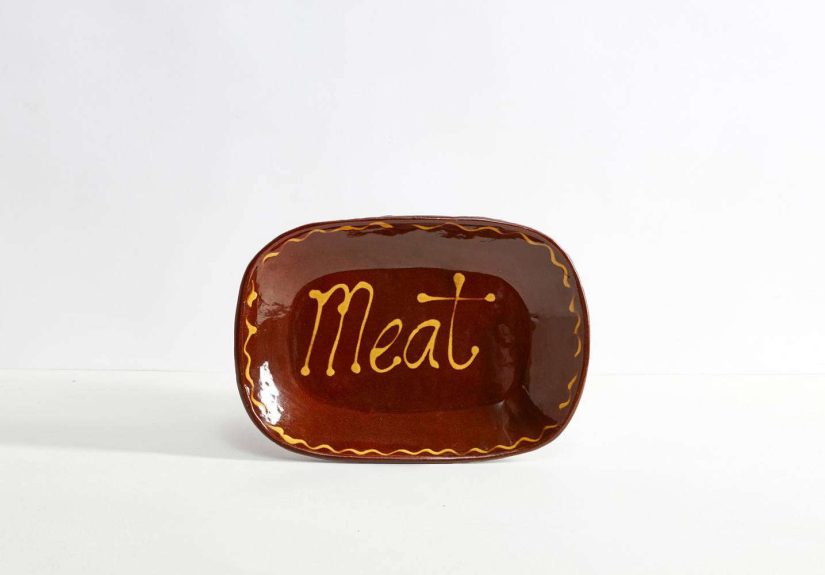
If you’re using older, handmade, imported, or heavily decorated ceramic serveware, make sure it’s actually intended for food use.
Some ceramic glazes can leach leadparticularly if the surface is worn, chipped, cracked, or not made to modern standards.
Translation: if it’s “so pretty you’d display it on a wall,” double-check before you let your brisket live on it.
Heat: How to Keep Meat Looking Great (and Staying Safe)
Serving meat is a temperature game. You want it warm enough to be delicious, but not sitting around so long that it drifts into
the food-safety danger zone. The platter itself can helpif you use it thoughtfully.
Pre-warm the platter (if it’s oven-safe)
A warm platter is a secret weapon for sliced meats. If your dish is oven-safe, you can warm it briefly at a low temperature,
then transfer carved meat onto it. This helps prevent that depressing “perfectly cooked roast goes cold in five minutes” moment.
(Nobody wants to reheat prime rib. That’s how steak becomes regret.)
Use the oven as a holding zone
If you’re juggling sides, guests, and the mysterious disappearance of your carving fork, a low oven can hold food warm.
Many home ovens can maintain low warming temperatures (often in the 170–200°F range), which is useful for short-term holding
before you bring the meat to the table.
Buffet strategy: small batches win
If you’re setting out meat on a buffet, consider slicing and plating in waves: put out one platter, keep the rest warm,
and refresh as needed. It looks better, stays warmer, and avoids the sad “last slice drying out under fluorescent lighting” scenario.
How to Build a Meat Platter That Looks Like You Planned It
Here’s the formula that works for everything from holiday turkey to weeknight pork loin.
1) Let the meat rest (then don’t lose the juices)
Resting keeps meat juicier and easier to slice. Use a cutting board (ideally with a groove) to catch drippings.
Those drippings are flavordon’t waste them. You can drizzle a little over the sliced meat on the platter for shine and taste.
2) Slice with intention
Slice across the grain where it applies (brisket and many roasts love this). For poultry, slice breast meat cleanly and
arrange it in overlapping pieces. Uniform slices look professional, but don’t stress: people are still going to chew it.
3) “Shingle” the slices
Shingling is the easiest visual upgrade: overlap slices like roof tiles. It makes a modest amount of meat look abundant,
and it keeps edges from drying as fast.
4) Add a sauce plan (don’t drown it)
Provide sauces on the side whenever possiblegravy boat, small bowl, ramekinso guests can choose their destiny.
If you do drizzle, keep it light: a glossy finish, not a soup situation.
5) Garnish like a grown-up
Garnish should be edible or at least not annoying. Good options:
- Fresh herbs (parsley, thyme, rosemary)
- Lemon wedges (great for grilled meats and poultry)
- Pickled onions or cornichons (especially for charcuterie-style platters)
- Roasted garlic cloves (they’re cute and useful)
Avoid the classic garnish trap: curly parsley nobody eats. It’s basically plastic grass for meat.
Specific Meat Examples: Matching the Platter to the Protein
Turkey
A large oval platter is practically made for a carved turkey presentation. You can fan sliced breast meat in the center,
tuck thighs or drumsticks toward the ends, and keep garnishes around the perimeter. If you’re serving gravy, keep it separate
so the skin doesn’t go soggy.
Brisket
Brisket loves a rectangular platter with a bit of depth. You’ll usually have two textures (lean slices and fattier, juicier bits),
so give them zones. Add pickles, onions, and maybe a ramekin of sauce so it feels like a proper spread.
Prime rib / rib roast
Prime rib looks best when slices are laid in a gentle arc or shingled in a long line. A warmed platter helps here.
Keep au jus or horseradish sauce on the side so guests can choose between “polite dip” and “I came here to feel alive.”
Pork tenderloin
Medallions can look sparse if scattered. Shingle them tightly, then add a bright elementapple slices, herbs, a mustard sauceto make the platter look abundant.
Care, Cleaning, and Storage: Keeping Your Platter Nice
- Don’t cut on ceramic unless you’re okay with marks. Use a board for carving, then transfer.
- Check dishwasher rules for metallic rims, hand-painted details, and certain glazes.
- Stack carefully (felt pads or a towel between platters prevents scratches and chips).
- For wood boards: wash promptly, dry upright, and oil occasionally so the board doesn’t crack or warp.
Buying Checklist: Your “No Regrets” Oblong Meat Platter
Before you buy, ask these questions:
- Can it hold the meat you actually serve? Measure your roasting pan or cutting board for a reality check.
- Do you need handles? If you carry food far, handles reduce stress and spills.
- Is it oven-safe (if you want to warm it)? Not all serveware can handle heat.
- Is it easy to clean? If it’s a pain, you won’t use itno matter how pretty it is.
- Is it food-safe? Especially important for decorative, handmade, or older ceramic pieces.
Conclusion: The Quiet Power of the Right Platter
The right oblong serving dish makes meat easier to serve, easier to keep warm, and dramatically more impressive on the table.
It keeps juices where they belong, helps you portion without chaos, and turns “here’s dinner” into “behold: dinner.”
Whether you go porcelain, stoneware, stainless, glass, or a big wood board, the best choice is the one that matches your
real hosting lifeyour kitchen, your crowd, your cleanup tolerance, and your desire to make meat look like a headline.
Experiences From Real Kitchens: of “Yep, Been There” Moments
If you’ve hosted even one holiday meal, you’ve probably lived some version of this: the roast comes out perfect, you rest it,
you carve it, and then you realize your serving platter is the size of a salad plate. Suddenly you’re building a meat skyscraper,
and gravity is drafting a resignation letter for your tablecloth. This is the moment people become “platter people.”
Another classic experience: the “pretty platter” dilemma. Someone gifts you a gorgeous, decorative ceramic dishbright colors,
hand-painted details, looks like it belongs in a magazine spread. You pull it out for a big dinner, load it with sliced steak,
and then a friend casually mentions, “Hey, aren’t some glazes not food-safe?” Now you’re smiling on the outside while mentally
Googling “lead glaze dinnerware” at the speed of light. The lesson most hosts learn: the platter can be beautiful, but it also
needs to be made for food, not just admiration.
Then there’s the temperature lesson, usually learned at a party where you’re trying to do everything at once. You carve the turkey,
arrange it beautifully, set it out… and 20 minutes later it’s lukewarm because your dining room is basically a meat refrigerator.
That’s when a warm platter starts sounding less “extra” and more “why didn’t anyone tell me this sooner?” The hosts who crack this
code usually develop a rhythm: keep the platter warm, keep the meat covered briefly if needed, and only put out what will be eaten
soonespecially on a buffet where food sits longer.
Outdoor gatherings have their own platter saga. At a barbecue, people want to hover, grab, and graze. If your platter is too shallow,
the brisket juices run like they’re late for a meeting. If it’s too heavy, carrying it from kitchen to patio feels like a farmer’s
walk competition. If it’s too delicate, one enthusiastic guest with metal tongs turns it into a percussion instrument.
This is why many experienced hosts keep two “meat platforms”: a tough, easy-carry option for outdoors (often with handles),
and a prettier, table-centered platter for indoor dinners.
And finally: the serving-tool mystery. You’ll set out the most gorgeous oblong platter, perfectly arranged, and then discover
you have no serving fork, no tongs, and the only available utensil is a tiny dessert spoon. Suddenly guests are performing
seafood-tower-level precision just to pick up a slice of roast. Seasoned hosts learn that the platter is only half the system:
the other half is the tool that makes serving effortless. Put a proper set of tongs or a carving fork right on the platter,
and your beautiful presentation stays beautiful instead of turning into a free-for-all.
The good news? Every one of these experiences has a simple fixusually involving the right size, the right material, a little
heat strategy, and the humble serving utensil. When those pieces come together, the oblong serving dish stops being “a plate”
and becomes what it was meant to be: a confident, functional centerpiece that makes the meat look like it showed up wearing a tux.