Table of Contents >> Show >> Hide
- First, Which “Order” Are We Even Talking About?
- Why Instagram Reorders Lists in the First Place
- What Signals Might Influence Follower Order?
- What Follower Order Usually Does Not Mean
- How to Check New Followers Without Going Full Detective
- What the Order Can Be Useful For (Without the Drama)
- Privacy, Boundaries, and Not Letting an Algorithm Wreck Your Mood
- FAQ: Quick Answers People Actually Want
- Real-World Experiences: What People Notice (and What It Usually Means)
- Conclusion: So… Does It Mean Something?
Confession: most of us have opened an Instagram follower list the way people open the fridgehoping something new will magically appear. And sometimes it does. A new follower. A familiar face sitting weirdly high on the list. Someone you swear you never talk to floating near the top like a social-media ghost.
So… does the order of followers on Instagram mean something?
Yes. But not in the “Instagram is exposing your secret admirers” way TikTok comments would like you to believe. The order usually reflects a mix of personalization, mutual connections, and interaction signalsplus plenty of behind-the-scenes experimentation. It can hint at who you engage with (or who Instagram thinks you might want to engage with), but it is not reliable evidence of stalking, crushing, cheating, or any other plot twist.
First, Which “Order” Are We Even Talking About?
Instagram has multiple lists that look similar but behave differently. Before we assign meaning to anything, we have to name the list.
1) Your Followers List (People Who Follow You)
This is the list you see when you tap Followers on your profile. Depending on your account, your device, and Instagram’s current tests, the list may appear to prioritize people who feel “relevant” to you (mutuals, frequent interactions, or accounts Instagram thinks you know). Some users also notice the newest followers appear near the top, but that is not a guarantee across all accounts and versions.
2) Your Following List (People You Follow)
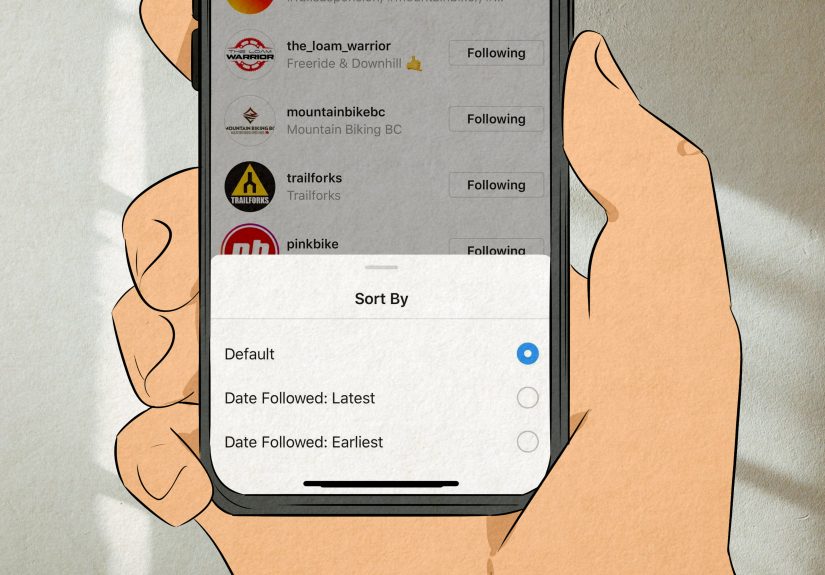
This is the list you see when you tap Following. Instagram has introduced tools that make this list more sortable and “manageable” (think: cleaning out old follows, finding people you barely interact with, and so on). The key point: this list often has more visible sorting controls than your Followers list.
3) Someone Else’s Followers/Following List (Viewed From Your Account)
This is where the confusion really takes off. When you view another person’s followers or following list, the order you see can be personalized to you. Meaning: you and your friend might look at the exact same account and see a different “top” section.
That’s why follower-order detective work often collapses in the courtroom of reality.
Why Instagram Reorders Lists in the First Place
Instagram is a platform built on ranking and recommendations. It uses automated systems to predict what you’ll find relevantwhether that’s posts in your Feed, suggested content, or the accounts it surfaces most prominently. Lists can be treated similarly: instead of being a boring phone book, they can become a “shortcut” to people you’re likely looking for.
In other words: Instagram isn’t trying to write your romantic subplot. It’s trying to reduce scrolling (and keep you in the app).
What Signals Might Influence Follower Order?
Instagram doesn’t publish a neat little recipe card titled: “How We Sort Your Followers List (Step 1: Add drama).” But we do know how Instagram generally approaches ranking: it relies on signals and predictions about what you care about most.
Here are the most common categories of signals that can affect who floats toward the top across Instagram surfacesincluding lists.
Relationship Signals: Your History With an Account
If you regularly interact with someone, Instagram has a strong reason to make that person easy to find. Relationship signals can include:
- Direct messages (frequency and recency)
- Comments (especially back-and-forth)
- Likes and story reactions
- Tags, mentions, and shared posts
- Profile taps and repeated searches (sometimes)
Example: You message your cousin every week, react to their stories, and comment “STOPPP” on their Reels. Even if you haven’t thought about it, Instagram’s like: “Cool, I’ll put Cousin Chaos near the top so you don’t have to scroll for two business days.”
Mutual Connections: “People You Both Know” Energy
Mutual followers and mutual following connections can push accounts higher when you view someone else’s list. Instagram likes showing social overlap because it helps you identify people you might recognize.
Example: You check a friend’s followers list. Instagram may show mutual friends first because those are the accounts most meaningful to you, the viewer.
Relevance & Predictions: What Instagram Thinks You’re Looking For
Instagram’s ranking approach is based on predictionslike how likely you are to engage with an account or search for it again. So even if you don’t interact a ton, Instagram might still surface someone if it predicts you’ll want them easily accessible.
Example: You searched for a classmate twice this week to check their post about a club meeting. Instagram could interpret that as “high intent” and keep them closer to the top for a while.
Recency: Newer Stuff Can Get a Temporary Boost
On many platforms, recency plays a role. In some cases, newly followed accountsor newly active accountscan appear higher temporarily. But this is inconsistent and can be overridden by other signals like strong relationship history.
Experiments & Rollouts: The App You Have vs. The App Your Friend Has
Instagram constantly runs tests. Two people can have the “same” Instagram and still not have the same exact interface, sorting options, or list behavior. That’s why one person swears the list is chronological, while another swears it’s random, while a third swears it’s arranged by “who is thinking about me the most” (which is… not a scientifically recognized sorting method).
What Follower Order Usually Does Not Mean
Let’s rescue your brain from unnecessary overthinking. Follower order is a weak signal. Here are the most common mythsand why they don’t hold up.
Myth: “Top of my followers list = my stalkers.”
Nope. Instagram is much more likely to rank accounts by your interactions (messages, comments, engagement patterns) than by “who quietly views you.” Also, many profile views are invisible, and Instagram has privacy and safety reasons not to turn your follower list into a surveillance dashboard.
Myth: “If someone is first on a friend’s followers list, they must be close.”
Not necessarilybecause you are the viewer. Instagram may be showing you mutuals or accounts it thinks you care about first, not who the profile owner cares about most.
Myth: “The order is proof of cheating / secrets / hidden behavior.”
Follower order is not courtroom-grade evidence. It’s closer to “a guess made by a hungry algorithm at 2 a.m.” The list can shift due to searches, mutual connections, updates, or simple product changes.
How to Check New Followers Without Going Full Detective
If your real goal is simple“Who followed me recently?”here are safer, more accurate options than staring at list order and trying to read tea leaves.
Use Notifications the Smart Way
Instagram can notify you of new followers (depending on your device settings and notification preferences). This gives you a direct answer, not an interpretive dance.
Use Built-In Sorting When Available
Instagram has added more list-management tools over time, especially for the Following list (and categories like “least interacted with”). If you see a sort option (often displayed as a small control near the top of the list), that’s the closest thing to an official “order” you can trust.
Important: Features vary. If you don’t have a sorting option, that doesn’t mean you’re doing something wrongit may simply not be rolled out to your account or your current app version.
If You’re a Creator/Brand, Use Insights Instead of Guessing
Professional tools inside Instagram can show follower trends, growth, and engagement patterns. That’s far more useful than assuming “top of list” equals “top fan.”
What the Order Can Be Useful For (Without the Drama)
Follower order isn’t a lie detector, but it can still be practical if you use it for the right reasons.
1) Finding Your “Warm Audience”
If the same people keep appearing near the top across surfaces (DM share suggestions, story reactions, frequent profile taps), that often means you have a stronger relationship loop with them. For creators, these are the people most likely to comment, share, and stick around.
2) Cleaning Up Your Social Graph
Instagram has introduced tools (like “least interacted with”) that help you manage who you follow. If you’re trying to make Instagram feel less noisy and more fun, those tools can help you unfollow accounts you no longer care aboutwithout manually scrolling through years of history.
3) Avoiding the “Why Can’t I Find Them?” Scroll
Instagram’s default ordering often tries to reduce friction. If it surfaces familiar accounts higher, that can genuinely save time.
Privacy, Boundaries, and Not Letting an Algorithm Wreck Your Mood
Because this topic is so emotionally “sticky,” it’s worth saying out loud:
You don’t owe anyone access to your profile just because a list looks a certain way.
If follower order is making you anxious, consider practical boundaries:
- Go private if you want control over who follows you.
- Remove followers you don’t trust (you don’t need a dramatic announcement).
- Restrict or block accounts that cross lines.
- Limit story audience (Close Friends is underrated for peace of mind).
- Be cautious with third-party apps claiming to reveal “secret order” or “profile viewers.” Many are unreliable at best and risky at worst.
FAQ: Quick Answers People Actually Want
Why does the follower order change?
Because Instagram updates ranking systems, runs experiments, and reacts to new signals (like recent interactions or mutual connections). Your behavior changes; the list reacts.
Why do I see a different order than my friend sees?
When you’re viewing someone else’s lists, Instagram may personalize what you see to your accountespecially showing mutual connections or accounts it thinks you’re looking for.
Does Instagram show who views my profile in follower order?
Follower order isn’t a reliable “profile viewers” tracker. Instagram does not provide a simple, official list of profile viewers, and list order can be influenced by many other signals.
Is the order chronological?
Sometimes you’ll notice newer followers near the top, but it’s inconsistent and can vary by account, device, and Instagram tests. Treat it as “maybe,” not “always.”
Real-World Experiences: What People Notice (and What It Usually Means)
(A 500-word, reality-based look at common experiences around follower order.)
Experience #1: “Why is my crush always near the top?”
This is probably the most common storyline on Earth, right after “I’ll just watch one more Reel.” People notice a name hovering near the top of their followers list and assume it means the other person is obsessively checking their profile. In reality, what’s more likely is that you have been interacting with them more than you realizesearching their username, viewing their stories, replying once or twice, or clicking their profile from a tagged post. Instagram reads that as interest and keeps them easier to access. The list is reflecting your behavior patterns (and maybe mutual connections), not sending you a certified love letter from Instagram HQ.
Experience #2: “My friend and I see different people at the top of the same list.”
This one is a great experiment if you want proof that you shouldn’t overinterpret list order. Two people open the same public profile’s followers list and get different “top” accounts. Usually the explanation is boring in the best way: mutual followers, shared network overlap, and viewer personalization. Instagram is trying to show you people you might know or care about first. Your friend has a different network, different interaction history, and different “likely to recognize” signalsso their top results differ. If follower order were a universal truth, it would look the same for everyone. It often doesn’t.
Experience #3: “Someone I never talk to is suddenly at the topdid something happen?”
Sometimes a random account floats upward and it feels ominous, like the opening scene of a thriller. Usually, it’s just math. Maybe they followed you recently and got a recency bump. Maybe you have mutual followers and Instagram is grouping “socially relevant” accounts. Maybe you searched them once after seeing their name somewhere. Or maybe Instagram is testing a new way to sort lists and your account is part of the experiment. The important part: one surprising placement doesn’t equal a meaningful event. If it keeps happening consistently across days and devices, that’s a stronger signal that there’s an interaction patternstill not a “secret message,” but a pattern.
Experience #4: “As a creator, I used follower order to find my ‘real fans.’”
Creators sometimes look at who appears prominently and assume those are their top supporters. That can be partly true if those people also appear frequently in other engagement-heavy places (DM share suggestions, story replies, comment threads, repeat likes). But a smarter move is combining what you observe with actual metrics: which posts are saved, shared, replied to, and which followers consistently comment. Follower order can be a quick hint, but Insights are your receipts.
Experience #5: “Follower order made me anxious, so I changed how I use Instagram.”
This is the most underrated outcome: people realize the list isn’t a trustworthy mind-reader and decide to stop treating it like one. They go private, remove followers they don’t know, use Close Friends for stories, and stop checking lists like they’re decoding an ancient prophecy. The result is usually better mental health and a calmer feed. Ironically, the less you “chase meaning” in the order, the more Instagram becomes what it was supposed to be: a tool, not a mood detector.
Conclusion: So… Does It Mean Something?
The order of followers on Instagram can reflect signals like interaction history, mutual connections, and Instagram’s predictions about who you’re trying to find. But it’s not a reliable indicator of who’s stalking you, who’s secretly in love, or what’s happening behind closed doors. Instagram optimizes for convenience and engagement, not for narrating your personal life.
If you want a healthier takeaway, try this: use follower order as a navigation shortcut, not a psychic reading. When you need real answers, rely on direct communication, privacy settings, and actual engagement metricsnot list placement.