Table of Contents >> Show >> Hide
- Why Bother Peeling Peaches?
- Step 0: Choose Peaches That Peel Easily
- What You Need to Peel Peaches
- Peeling Peaches in 3 Easy Steps (Blanch & Shock)
- Alternative Ways to Peel Peaches
- How to Keep Peeled Peaches from Browning
- What to Do with Perfectly Peeled Peaches
- Peach Peeling Troubleshooting
- Real-Life Peach Peeling Experiences & Pro Tips
Juicy, sun-warmed peaches are one of the best parts of summer… right up until the fuzzy skins and slippery pits turn your kitchen into a sticky battleground. If you’ve ever fought with a vegetable peeler and ended up mangling perfectly good fruit, you’re not alone. The good news? Once you learn how to peel peaches the smart way, it’s shockingly easy.
In this guide, you’ll learn how to peel peaches in 3 easy steps using the classic blanch-and-shock method (the same approach professional pastry chefs rely on), plus a couple of backup techniques for under- or overripe fruit. We’ll also cover how to choose peaches that peel beautifully, how to keep them from browning, and what to do with your mountain of perfectly peeled slices.
Why Bother Peeling Peaches?
Peach skin is edible, but there are plenty of times it gets in the way:
- Smoother texture in desserts: For cobblers, crisps, pies, and tarts, skins can turn tough and chewy while the flesh softens.
- Better jam and preserves: Skins can curl and float in jam, giving a stringy texture you don’t want on toast.
- More kid-friendly: Kids (and some adults) hate the fuzz. Peeled peaches are usually a hit.
- Prepping for canning or freezing: Most canning and freezing guides recommend peeling for best quality and safety.
So if you’re baking, canning, or freezing, learning how to peel peaches quickly is a game-changer.
Step 0: Choose Peaches That Peel Easily
Before we get to the 3 main steps, there’s one “step zero” that makes everything easier: choosing the right peaches.
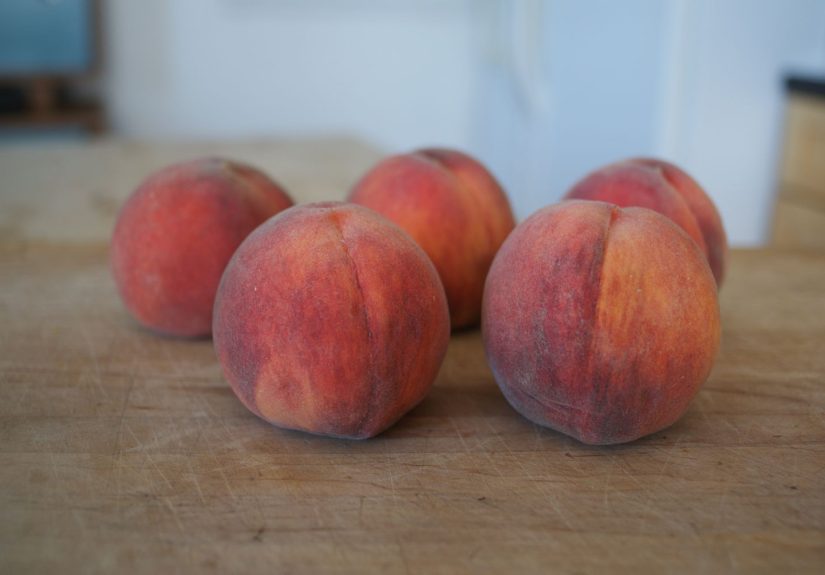
For the blanch-and-shock method, you want peaches that are ripe but still slightly firm:
- They should give a little when gently pressed, but not feel mushy.
- The color should be vibrant with little to no green near the stem.
- They should smell fragrant and peachy (if they don’t smell like anything yet, they’re probably underripe).
Underripe peaches can be stubborn and may peel better with a vegetable peeler. Very soft, overripe fruit may fall apart in hot water, so a small paring knife works best there. Keep this in mind as you choose your peeling method.
What You Need to Peel Peaches
Gather your tools before you start, because once things are hot and slippery, you’ll be glad you did.
- Large pot for boiling water
- Large bowl filled with ice water (for an ice bath)
- Sharp paring knife
- Slotted spoon or spider strainer
- Cutting board and kitchen towel
- Optional: vegetable peeler (for firm, underripe peaches)
- Optional: bowl of cool water with lemon juice or ascorbic acid to prevent browning
Peeling Peaches in 3 Easy Steps (Blanch & Shock)
This is the go-to method in home kitchens and professional bakeries alike. The basic idea: give peaches a quick dip in hot water, then chill them fast so the skins loosen and slip right off.
Step 1: Score and Blanch the Peaches
-
Bring water to a boil.
Fill a large pot with enough water to fully submerge your peaches. Bring it to a rolling boil over high heat. -
Wash and score the peaches.
Rinse your peaches to remove fuzz and dirt. Using a sharp paring knife, make a shallow “X” on the bottom of each peach. You just want to cut through the skin, not deep into the flesh. This “X” creates tabs that will help the skin peel off easily later. -
Blanch in boiling water.
Carefully lower the peaches into the boiling water using a slotted spoon. Don’t overcrowd the potwork in batches if needed.- Ripe, medium peaches: 30–45 seconds
- Firmer peaches: up to 60 seconds
The goal is to loosen the skin, not cook the fruit.
You’ll often see the edges of the scored “X” starting to curl backthat’s your sign the skin is ready to slip.
Step 2: Shock in an Ice Bath
-
Prepare an ice bath.
While the water heats, fill a large bowl with cold water and plenty of ice. -
Transfer the peaches.
As soon as their blanching time is up, lift the peaches out of the boiling water with a slotted spoon. -
Cool them quickly.
Immediately plunge the peaches into the ice water. Let them sit for about 30–60 seconds, or until cool enough to handle comfortably.
This “shock” step stops any cooking and helps the skin separate cleanly from the flesh so you don’t end up with mushy fruit.
Step 3: Slip Off the Peach Skins
-
Work over a cutting board or bowl.
Peaches are juicy, and things will get drippythis is not a white-shirt activity. -
Start at the scored “X.”
Use your fingers or the tip of your knife to lift a corner of the skin where you scored the peach. -
Peel in big strips.
Gently pull the skin away from the flesh. On a well-blanched, ripe peach, the skins should practically fall off in large sections. -
Trim any stubborn spots.
If a bit of skin clings around the stem or a bruise, use your paring knife to carefully scrape or trim it away.
That’s itthree simple steps and you’re left with perfectly peeled peaches ready for whatever recipe you’re dreaming up.
Alternative Ways to Peel Peaches
The blanch-and-shock method is ideal for ripe, juicy peaches, but sometimes your fruit has other plans. Here’s how to handle tricky cases.
Method 1: Use a Vegetable Peeler (for Firm Peaches)
If your peaches are still quite firm and not very fragrant, blanching may not loosen the skins much. In that case, a sharp Y-peeler or straight vegetable peeler can be your friend.
- Peel from top to bottom in smooth, gentle strokes.
- Rotate the peach as you go, keeping pressure light to avoid digging into the flesh.
- If you hit a very hard patch, that area may still be underripeplan to cook or macerate those slices so they soften.
This method works best for peaches you’ll be baking, where a slightly firmer texture isn’t an issue.
Method 2: Use a Paring Knife (for Very Soft Peaches)
On the opposite end, very soft, super-ripe peaches can fall apart if you blanch them. If the fruit feels like it might collapse when you pick it up, skip the hot water and:
- Cut a shallow line from stem to blossom end with a paring knife.
- Slide the tip of the knife just under the skin and gently “shave” it off in thin strips.
- Work slowly to avoid losing too much juicy flesh.
This technique is perfect when you’re turning overripe peaches into sauces, smoothies, or purées where a few rough edges won’t matter.
How to Keep Peeled Peaches from Browning
Just like apples, peeled peaches can brown when exposed to air. It doesn’t make them unsafe, but it does look a little sad in a pie or fruit salad.
To keep them pretty:
- Lemon water: Add a few tablespoons of lemon juice to a large bowl of cool water and dunk peeled slices as you work.
- Ascorbic acid solution: Some canning guides recommend dissolving powdered vitamin C or commercial ascorbic acid in water, then soaking peaches briefly before packing.
- Work in small batches: Peel a few peaches at a time and get them straight into your recipe, freezer bags, or jars.
What to Do with Perfectly Peeled Peaches
Once you know how to peel peaches quickly, you’ll start looking for excuses to buy more. Here are some delicious ways to put them to work:
- Classic peach pie: Tender peeled slices bake more evenly and give you a silky filling.
- Cobbler, crisp, or crumble: No chewy bits of skin hiding under the topping.
- Peach jam or preserves: Peeled peaches cook down into a smooth, spreadable texture.
- Smoothies and sorbet: Skins can add bitterness; peeled peaches taste cleaner.
- Freezer peaches: Toss slices with a little sugar and lemon, then freeze in bags for winter baking.
- Peach salsa: Peeled fruit gives a clean, bright bite alongside tomatoes, jalapeños, and herbs.
Peach Peeling Troubleshooting
“My peach skins didn’t slip offwhat went wrong?”
A few common culprits:
- The peaches were too underripe.
- The water wasn’t hot enough or didn’t stay at a boil.
- You didn’t blanch them long enough (try adding 15–30 seconds).
If a second quick blanch doesn’t help, switch to a vegetable peeler or paring knife and plan to bake or cook that batch.
“Did I over-blanch my peaches?”
If your peaches feel very soft or start to look a little cooked, you probably left them in the boiling water too long. Don’t toss themthey’re still perfect for:
- Peach butter or purée
- Smoothies
- Ice cream mix-ins
- Peach sauce for pancakes, waffles, or yogurt
“Do I have to peel peaches for every recipe?”
Nope. For rustic crisps or grilling, you can often leave the skins on. But if you want a smooth texturein pies, jams, baby food, sorbet, or elegant dessertspeeling usually gives you a better result.
Real-Life Peach Peeling Experiences & Pro Tips
Most people’s first experience with peeling peaches goes something like this: you grab a peeler, start scraping away, and suddenly the peach turns into a slippery, mangled mess. You’re left holding the pit, wondering how a piece of fruit just outsmarted you. That’s exactly why bakers and canners swear by the blanch-and-shock methodonce you’ve tried it, you never go back.
Picture this: it’s peak peach season, you’ve scored a big box from a local farm stand, and you’ve promised a pie, a cobbler, and maybe some jam if you have energy left. You line up your tools, bring the water to a boil, and tentatively drop in the first few peaches. Thirty seconds later you scoop them into the ice bath, pick one up, and tug gently at the corner of the “X.” When the skin slides off in one perfect piece, there’s always this little moment of triumphoh, so that’s how the pros do it.
Of course, it doesn’t always go perfectly. Maybe you get a batch of peaches that looked ripe at the store but feel rock-hard when you cut into them. The skins cling stubbornly, the “X” never curls back, and you start doubting everything. This is when it pays to stay flexible. For very firm peaches, a vegetable peeler really can save the day. You might not get those dramatic curls of skin falling away, but you’ll still end up with neat slices that bake up beautifully in a crisp or galette.
Then there’s the opposite problem: the peaches are too ripe. Maybe they sat on the counter one day too long while you got busy. When you pick one up, it feels like it might collapse in your hand. If you try to blanch these, they can turn to mush fast. That’s when you switch gears and grab a paring knife. Instead of fighting for perfect wedges, lean into what the fruit wants to becomeslice away the skin gently and plan on making sauce, jam, or a rustic cobbler where a soft, spoonable texture is a feature, not a flaw.
People who prep peaches in big batchesespecially home cannersdevelop little rituals that make the job easier. Some set up an assembly line: one person scores and blanches, another shocks and peels, and a third slices and packs the fruit into jars or freezer bags. Others swear by a big bowl of lemon water in the middle of the table, where every peeled slice goes for a quick swim before it hits the recipe bowl, staying bright and golden instead of turning brown.
One surprisingly useful tip from many experienced cooks: peel fewer peaches than you think you’ll need, then reassess. It’s easy to get excited and prep an entire crate, only to realize halfway through that you’re out of sugar or jars. Starting with a smaller batch keeps the process fun instead of overwhelming, and you can always peel more if your pie dish or canning funnel isn’t full yet.
Another common experience: once you get fast at peeling peaches, you stop reserving them just for big projects. Suddenly your weekend pancakes get a quick peach topping, your yogurt gets a few peeled slices, and that basic greens salad becomes more interesting with sweet peach wedges and a handful of nuts. Knowing you can peel a couple of peaches in just a few minutes makes it easier to add them to everyday meals, not just special-occasion desserts.
Over time, you’ll start to develop your own instincts. You’ll know by feel whether a peach is a “blanch and shock” candidate, a “grab the peeler” situation, or a “this belongs in a smoothie” level of soft. That’s the real secret behind peeling peaches in 3 easy steps: the method is simple, but the more you do it, the more confident and relaxed you’ll feel. And once peach season rolls around again, you’ll be readywith a big pot, a bowl of ice, and a plan.