Table of Contents >> Show >> Hide
- What Is PegLeg?
- How the Raspberry Pi Became the Star of the Story
- What Could PegLeg Actually Do?
- Why Would Anyone Implant a File Server?
- Why PegLeg Is Not Coming to a Store Near You
- PegLeg and the Biohacking Movement
- What PegLeg Teaches About the Future of Wearable Computing
- Specific Examples: Where PegLeg Ideas Could Be Useful Without the Implant
- The Human Experience: Awe, Discomfort, and the “Nope” Factor
- Experience-Based Reflections on PegLeg and Body Tech
- Conclusion
- SEO Tags
Some tech projects make you say, “Wow, the future is here.” Others make you say, “Wow, the future needs a chaperone.” PegLeg, a biohacking project that placed Raspberry Pi-powered file-sharing hardware under human skin, sits comfortably in the second categorysomewhere between cyberpunk poetry, maker-culture bravery, and a very strong argument for keeping your warranty paperwork outside your thigh.
At its core, PegLeg is not a medical implant, a consumer gadget, or a product waiting for a glossy launch video with soft piano music. It is an experimental subdermal computer project created by biohackers who wanted to explore whether a tiny, wireless, offline file server could live inside the human body. The project drew attention because later versions used Raspberry Pi Zero W hardware, wireless power, local networking, and storage in a package small enoughthough still very much not “small”to be implanted beneath the skin.
The result is strange, fascinating, impractical, and important. PegLeg is not important because everyone should rush out and install a Wi-Fi hotspot in their leg. Please do not. It is important because it reveals where open-source computing, body modification, privacy culture, and DIY biohacking collide. The sparks are bright. The safety questions are brighter.
What Is PegLeg?
PegLeg began as a body-implantable take on the PirateBox idea. PirateBox was an offline, local file-sharing system: users connect to a nearby Wi-Fi network, upload or download files, chat, and exchange information without using the broader internet. Think of it as a tiny neighborhood library, except the librarian is a circuit board and the building might be someone’s leg.
The PegLeg project adapted that concept for the grinder and biohacker community. “Grinders” are body-modification technologists who experiment with implanted magnets, RFID chips, sensors, and other devices. The PegLeg device was designed to create a local wireless network, store data, and allow nearby phones or computers to connect. It could hold files, stream media, and potentially mesh with similar devices nearby.
The project’s early version reportedly used stripped-down router hardware and external wireless power. Later versions moved toward Raspberry Pi Zero W hardware, a logical choice because the board is small, inexpensive, wireless-capable, and supported by a massive maker community. The Raspberry Pi Zero W includes Wi-Fi, Bluetooth, a 1GHz single-core processor, and 512MB of RAMmodest by laptop standards, but impressive when the goal is “computer that can disappear under skin.”
Still, “small computer” does not automatically mean “good implant.” A Raspberry Pi Zero W is tiny on a desk, but inside a human body it becomes a fairly large foreign object. A speck of dust is small. A grain of rice is small. A credit card-sized computer board under skin? That is not small; that is your leg filing a formal complaint.
How the Raspberry Pi Became the Star of the Story
The Raspberry Pi is beloved because it turns wild ideas into weekend projects. People use it for home servers, retro gaming consoles, robotics, smart mirrors, weather stations, security cameras, and digital dashboards. It is affordable, flexible, and well-documented. For normal humans, that means “great for learning Python.” For biohackers, it apparently means “let’s see whether this can become part of someone.”
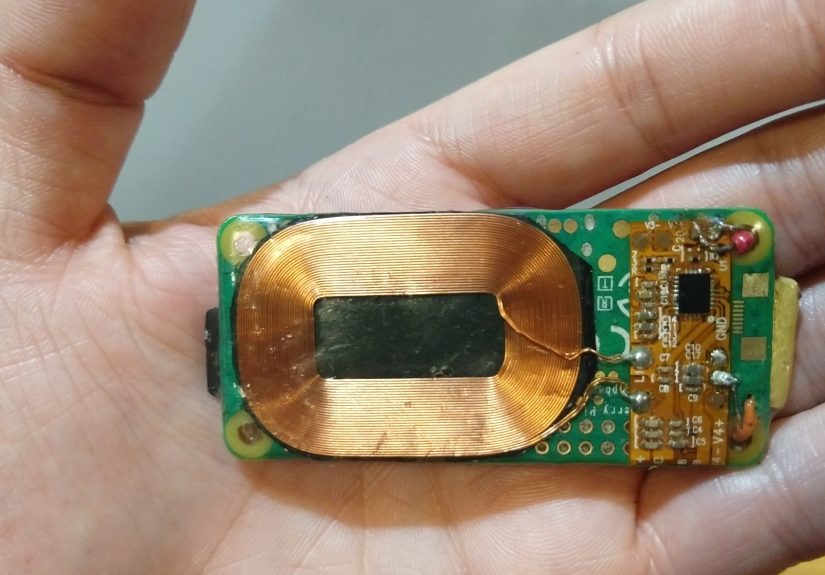
PegLeg’s Raspberry Pi-based version reportedly removed unnecessary ports and connectors to reduce size and failure points. The board was paired with storage, wireless networking, and an induction-based power approach. Instead of implanting a battery, which can swell, leak, fail, or create serious safety concerns, the device relied on external wireless charging. In simple terms, the implant could be powered from outside the body when needed.
That design decision matters. Batteries are one of the scariest parts of any DIY implant concept. Consumer batteries are not meant to be sealed inside tissue. If a phone battery swelling on a desk is bad, imagine the same problem inside a human body. Actually, do not imagine it too vividly; your lunch deserves better.
Wireless power reduced one risk but introduced practical limits. PegLeg was not a magical always-on server running from body heat like a sci-fi prophecy. It needed an external power source nearby. That makes it less like Iron Man’s arc reactor and more like a Raspberry Pi wearing a very dramatic hiding place.
What Could PegLeg Actually Do?
PegLeg’s most interesting function was not internet access. It did not connect the user’s body directly to the global web. Instead, it created a local wireless network that nearby devices could join. Once connected, users could access files stored on the implant, upload files, or interact with local services, depending on the software configuration.
In practical terms, PegLeg could act like a hidden offline server. It could store music, movies, documents, text files, encrypted data, chat logs, or experimental web pages. A nearby phone could connect to it the way it might connect to a Wi-Fi hotspot. The difference, of course, is that most hotspots do not require stitches.
The project also explored mesh-network thinking. If multiple PegLeg-style devices could communicate, they might form local networks without internet infrastructure. That idea has long fascinated emergency responders, privacy advocates, activists, artists, and technologists. In disaster zones, classrooms, remote communities, or heavily censored environments, offline sharing tools can be useful. But again, those use cases do not require putting the hardware under your skin. A backpack works. A pocket works. A lunchbox works. Your thigh is not the only real estate on the market.
Why Would Anyone Implant a File Server?
That question is the heart of the PegLeg story. On one level, the answer is: because hackers like proving that something can be done. Many important technologies began as impractical stunts, lab curiosities, or “wouldn’t it be funny if…” conversations that accidentally became history. The first personal computers looked like toys to serious mainframe people. Early smartphones looked excessive. Wearables looked silly until everyone started counting steps like their watch was a tiny fitness accountant.
On another level, PegLeg is about ownership. If your body can carry data, who controls that data? If your implant broadcasts a network, are you a person, a platform, a storage device, or a walking terms-of-service nightmare? If someone uploads illegal or copyrighted files to a device inside another person, who is responsible? The user? The uploader? The device creator? The person whose leg is now technically a server room?
These questions sound absurd until they do not. Modern life is already filled with devices that blur boundaries between body, identity, and data. Fitness trackers collect health metrics. Continuous glucose monitors transmit readings. Smartwatches detect falls and heart rhythms. Pacemakers and neurostimulators use software. Cochlear implants restore hearing through electronics. The difference is that those devices usually serve clear medical purposes and are subject to regulation, testing, and clinical oversight. PegLeg belongs to a different universe: experimental, nonmedical, provocative, and intentionally outside the store shelf.
Why PegLeg Is Not Coming to a Store Near You
There are several reasons PegLeg is not headed for a friendly retail display between smart speakers and wireless earbuds.
1. Implant Safety Is Not Optional
Any object placed inside the body can trigger inflammation, infection, scar tissue formation, rejection-like responses, or long-term complications. Even medically approved implants require sterile procedures, biocompatible materials, risk analysis, monitoring, and removal plans. A DIY computer board wrapped in protective resin may be impressive, but it is not the same as a clinically validated implantable device.
Foreign body response is not a dramatic phrase invented by cautious people to ruin the fun. It is the body’s normal reaction to implanted material. The immune system notices the object and may create inflammation or fibrous tissue around it. For electronics, that can affect comfort, heat transfer, signal performance, and long-term stability. The body is not a project enclosure. It is warm, salty, wet, moving, healing, sweating, flexing, and extremely opinionated.
2. Heat Matters
Computers generate heat. Raspberry Pi boards are efficient, but they still produce warmth under load. Outside the body, heat dissipates into air. Inside the body, heat must pass through coating, tissue, and skin. That raises design questions: How warm does it get? How long can it run? Does the coating spread heat safely? What happens during charging? A small temperature issue on a desk becomes a much bigger issue when the desk is made of you.
3. Cybersecurity Gets Weird Fast
A connected implant raises serious cybersecurity questions, even when it is not a medical device. Who can connect? Is the network encrypted? Can strangers upload files? Can malicious files be stored? Could the device be tracked by its wireless signature? Could someone exploit the software? The U.S. Food and Drug Administration has repeatedly emphasized that connected medical devices need cybersecurity planning because vulnerabilities can affect safety and effectiveness. PegLeg is not a regulated medical product, but the same general principle applies: wireless electronics inside or on bodies deserve serious threat modeling.
4. Legal Responsibility Is Murky
Offline file sharing sounds delightfully rebellious until the files become illegal, harmful, stolen, or classified. If a person carries anonymous uploads inside an implant, legal responsibility becomes a swamp with Wi-Fi. A platform can have terms of service. A cloud provider can remove content. A person with a subdermal file server cannot exactly “take down” content without powering the device, connecting to it, and managing storage. The project’s creativity is real, but so are the legal headaches.
5. It Solves a Problem That Pockets Already Solved
The most common criticism of PegLeg is simple: why not carry the Raspberry Pi in a pocket, bag, bracelet, belt, or shoe? A wearable or portable version could do almost everything the implant does with far less risk. The implant adds permanence, drama, and philosophical weightbut not much practical advantage. For most users, the best place to install a Raspberry Pi is still “not inside your body.” Revolutionary, I know.
PegLeg and the Biohacking Movement
PegLeg makes more sense when viewed as part of the broader biohacking movement. Biohacking includes everything from sleep tracking and nutrition experiments to implanted magnets and open-source medical research. Some biohacking is mainstream wellness in a hoodie. Some of it is garage science. Some of it is art. Some of it is activism. Some of it makes emergency-room staff stare quietly into the middle distance.
The grinder community often treats the body as a platform for experimentation. Magnets implanted in fingertips can create a sense of electromagnetic fields. RFID and NFC implants can unlock doors or store small bits of data. LED implants can glow beneath the skin. PegLeg pushed the idea further by exploring whether a full computing node could become subdermal.
Whether one sees that as visionary or reckless depends on values. Engineers may admire the miniaturization. Doctors may focus on infection risk. Privacy advocates may see censorship-resistant data exchange. Lawyers may reach for aspirin. Artists may see a living sculpture. Product managers may ask whether it comes in matte black. The project works as a mirror: it reflects what each community fears and desires about the future of human-computer integration.
What PegLeg Teaches About the Future of Wearable Computing
The most useful lesson from PegLeg is not that people should implant Raspberry Pis. The useful lesson is that computing is moving closer to the body. We already carry phones almost constantly. We wear watches, rings, earbuds, glucose monitors, smart glasses, and biometric patches. Medical implants are becoming more connected, more software-driven, and more data-rich. The boundary between device and body is narrowing.
However, the future likely belongs less to bulky implanted general-purpose computers and more to purpose-built, low-power, medically tested, biocompatible systems. A successful implant must be small, safe, durable, secure, removable when needed, and useful enough to justify the risk. “It can stream a movie from your thigh” is memorable, but it is not the same as restoring hearing, regulating heart rhythm, or monitoring glucose.
PegLeg’s value is cultural and experimental. It asks big questions in a very physical way. What is the body allowed to become? Who owns the data we carry? How much risk should individuals be allowed to take with themselves? When does self-experimentation become innovation, and when does it become a cautionary tale with solder fumes?
Specific Examples: Where PegLeg Ideas Could Be Useful Without the Implant
Many of PegLeg’s concepts are genuinely useful when separated from surgery. A Raspberry Pi-based offline file server can help teachers share materials in classrooms without reliable internet. Libraries can use local networks to distribute public-domain books, community archives, or event resources. Emergency teams can use portable mesh nodes when infrastructure fails. Artists can create interactive installations where visitors connect to a local network and discover hidden content. Journalists and activists can use offline sharing tools in areas where connectivity is limited or monitored.
In all of those examples, the device can live in a box, backpack, wall mount, or weatherproof case. The magic is not the incision. The magic is the local network. PegLeg simply made that idea impossible to ignore by giving it a body.
The Human Experience: Awe, Discomfort, and the “Nope” Factor
Every memorable technology produces an emotional response before it produces a market. PegLeg produces several at once. There is awe: someone actually made a working subdermal Raspberry Pi-style file server. There is discomfort: the body is not a gadget drawer. There is humor: “thigh-speed internet” is objectively funny. There is skepticism: why implant what can be worn? There is curiosity: what happens when computing becomes intimate enough to require wound care?
That emotional mix is why PegLeg became more than a niche maker story. It arrived at the intersection of cyberpunk fiction and real hardware. For decades, science fiction imagined people carrying data in their bodies, modifying themselves with machines, and living inside networks. PegLeg took that imagery and made it lumpy, surgical, wireless, and weirdly practical for local file sharing.
The project also exposes a gap between possibility and wisdom. Just because something can be built does not mean it should become normal. But if nobody ever tests boundaries, technology becomes boring, safe, and occasionally trapped in committee meetings forever. Society needs pioneers, skeptics, regulators, doctors, engineers, ethicists, and at least one friend willing to say, “Buddy, maybe put the server in your backpack first.”
Experience-Based Reflections on PegLeg and Body Tech
Working around maker culture and small-board computing teaches one lesson very quickly: the easiest part of a project is often getting the board to boot. The hard parts are power, durability, heat, maintenance, and explaining to someone why a “temporary prototype” has been zip-tied to a chair for eight months. PegLeg magnifies every one of those problems because the enclosure is not plastic, aluminum, or acrylicit is living tissue.
Anyone who has built Raspberry Pi projects knows the familiar little frustrations. A microSD card corrupts. A cable comes loose. A library update breaks something that worked beautifully yesterday. A Wi-Fi configuration behaves like it has a personal grudge. The device runs fine on the bench but fails when moved into the real environment. Normally, you fix these problems by unplugging the board, opening the case, swapping parts, reflashing software, or muttering at a terminal window until morale improves. With an implant, basic troubleshooting becomes much more complicated. There is no convenient “open case” button on a human leg.
That is why PegLeg is such a powerful thought experiment. It forces makers to think beyond the fun demo. A wearable device can be removed. A pocket server can be upgraded. A smartwatch can be replaced. An implant must be designed with failure in mind from the beginning. What happens if the device stops responding? What happens if the coating cracks? What happens if the user wants it removed? What happens if the software needs a security patch? These are not boring details. These are the details that separate a clever hack from a responsible technology.
The experience also highlights how quickly “cool” becomes “complicated.” Imagine showing a friend a Raspberry Pi that streams files over a local network. They might say, “Nice project.” Now imagine saying the same Raspberry Pi is under your skin. Suddenly the conversation includes medical ethics, airport security, infection risk, consent, privacy, law enforcement, and whether your pants have good wireless charging alignment. The technical achievement has not changed much, but the human context has changed completely.
For builders, PegLeg is a reminder to respect constraints. The body is not just another enclosure. It moves, heals, reacts, and protects itself. For writers and technologists, it is a reminder that innovation is not always sleek. Sometimes the future arrives as an uncomfortable prototype with rough edges and a brilliant, questionable idea at its center. For everyday readers, PegLeg offers a practical takeaway: you can admire radical experimentation without volunteering your own thigh as beta hardware.
The most balanced response to PegLeg is neither blind celebration nor easy mockery. It is possible to say, “That is amazing,” and “Please do not commercialize that,” in the same breath. PegLeg deserves attention because it pushes the conversation forward. It does not deserve imitation by untrained hobbyists. The best version of its legacy may be safer wearable mesh devices, better discussions about data ownership, more thoughtful implant design, and a renewed appreciation for pocketsthe original removable storage technology.
Conclusion
PegLeg is one of those rare projects that sounds fictional until you learn enough details to become both impressed and mildly alarmed. A Raspberry Pi-style subdermal file server is technically fascinating, culturally rich, and wildly impractical for ordinary use. It shows how far open-source hardware can travel when placed in the hands of determined biohackers. It also shows why medical safety, cybersecurity, biocompatibility, and legal accountability matter.
No, PegLeg is not coming to a store near you. That is probably good news. But as a symbol of where human-computer integration might go, it is unforgettable. It reminds us that the future is not always a clean glass rectangle in your hand. Sometimes it is a tiny server under someone’s skin, broadcasting big questions to anyone close enough to connect.
SEO Tags
Note: This article is for informational and editorial purposes only. It does not provide medical, surgical, or implantation instructions. Implanting electronics under the skin can be dangerous and should not be attempted without appropriate medical, legal, and safety oversight.