Table of Contents >> Show >> Hide
- Carpal Tunnel Syndrome in Plain English (and One Tiny Tunnel)
- What Is Phalen’s Maneuver (and What Is It Trying to Prove)?
- How Phalen’s Maneuver Is Performed (What You’ll Actually Do in the Exam Room)
- How Accurate Is Phalen’s Maneuver?
- Phalen’s Maneuver Works Best When the Story Fits
- Other Tests Often Paired With Phalen’s Maneuver
- What Happens After Phalen’s? Confirming CTS the Smart Way
- Practical Tips Before Your Appointment
- FAQs About Phalen’s Maneuver
- Real-World Experiences With Phalen’s Maneuver (What People Commonly Notice)
- Conclusion
If your hand has been throwing nightly “pins-and-needles parties” and your wrist feels like it’s hosting a tiny traffic jam, your doctor might reach for a simple in-office check called Phalen’s maneuver (also known as Phalen’s test or the wrist flexion test). It’s quick, noninvasive, andyeskind of looks like your wrists are doing yoga in an upside-down prayer pose.
Quick note: This article is for education, not a diagnosis. Carpal tunnel syndrome can look like other problems (neck issues, tendon irritation, different nerve entrapments), so it’s best to use Phalen’s maneuver as part of a full clinical evaluation with a qualified healthcare professional.
Carpal Tunnel Syndrome in Plain English (and One Tiny Tunnel)
Carpal tunnel syndrome (CTS) happens when the median nerve gets squeezed as it passes through the carpal tunnel at your wrist. That tunnel is a narrow passage made of wrist bones and a strong band of tissue (the flexor retinaculum). When pressure rises inside the tunnelbecause of swelling, irritation, fluid shifts, or anatomythe nerve can start to complain.
Common CTS symptoms your provider is listening for
- Numbness or tingling in the thumb, index, middle, and part of the ring finger (the pinky is usually spared)
- Night symptoms that wake you up (many people “shake out” their hand for relief)
- Aching in the wrist/hand, sometimes creeping up the forearm
- Weak grip, clumsiness, or dropping items (keys, phones, your dignityjust kidding… mostly)
- Thenar changes (in more advanced cases): weakness or shrinking of the thumb-base muscles
CTS is common. It shows up in people who do repetitive hand tasks, people with certain health conditions, and sometimes people who are simply unlucky with wrist anatomy. It can also flare with temporary swelling (for example, fluid shifts during pregnancy).
What Is Phalen’s Maneuver (and What Is It Trying to Prove)?
Phalen’s maneuver is a provocative test. That means it tries to “provoke” your symptoms on purpose by placing your wrist in a position that can increase pressure in the carpal tunnel.
The logic is simple: if the median nerve is already irritated, certain wrist positions may recreate the classic tingling/numbness pattern. If those symptoms show up reliably during the maneuverespecially in the median nerve distributionit supports CTS as a likely diagnosis.
How Phalen’s Maneuver Is Performed (What You’ll Actually Do in the Exam Room)
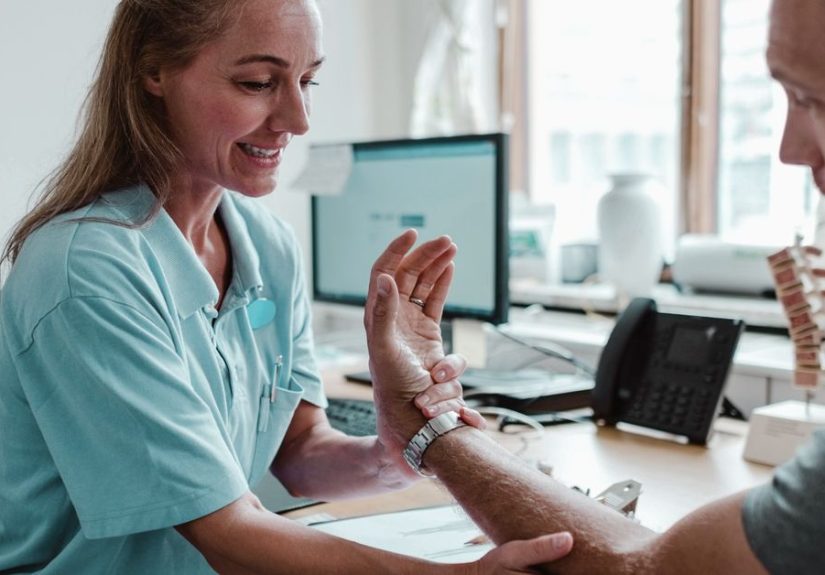
Your clinician may perform Phalen’s test in slightly different ways, but the core idea is the same: prolonged wrist flexion.
The classic Phalen position
- You bring the backs of your hands together, wrists bent downward (like a “reverse prayer”).
- You hold the position for about 30 to 60 seconds (sometimes up to a full minute).
- Your provider asks what you feel and where you feel it.
What counts as a “positive” Phalen’s maneuver?
A result is typically considered positive when it reproduces tingling, numbness, burning, or pain in the median nerve distribution (thumb, index, middle, and the thumb-side of the ring finger), especially if symptoms appear within that 30–60 second window.
Reverse Phalen and modified versions
Some clinicians use a reverse Phalen (wrist extension, palms together like a normal prayer) or a modified wrist-flexion position based on comfort, range of motion, or to compare sides. The key is still the same: a position that may stress the median nerve and recreate symptoms.
Important detail: a test can be “positive” and still not mean CTS is guaranteed. Phalen’s maneuver is a clueuseful, but not a verdict.
How Accurate Is Phalen’s Maneuver?
Here’s where things get interesting (and why your doctor doesn’t crown Phalen’s test the king of carpal tunnel). Research shows wide variation in how well Phalen’s maneuver identifies CTS. In different studies, sensitivity and specificity can range from modest to fairly gooddepending on:
- How the test is performed (angle, timing, instructions, and what “positive” means)
- How CTS is confirmed (clinical diagnosis vs nerve conduction studies vs ultrasound)
- How severe the CTS is (mild cases can be sneaky; advanced cases may be obvious)
- Whether other conditions are present (arthritis, tendon irritation, generalized neuropathy, neck issues)
Many modern clinical guidelines and expert reviews emphasize a practical point: don’t rely on one provocative test alone. Phalen’s maneuver can support a diagnosis, but it’s best used alongside symptom history and other exam findings (and sometimes confirmatory testing).
Why a “good” test can still mislead
Imagine a smoke alarm. It’s great at detecting smoke, but it might also scream when you burn toast. That’s Phalen’s maneuver in a nutshell: it can be helpful at detecting median nerve irritation, but it can also react to “toast”other wrist/nerve issues that aren’t classic CTS.
Phalen’s Maneuver Works Best When the Story Fits
Clinicians don’t interpret Phalen’s maneuver in a vacuum. They match it to the bigger picture:
When a positive Phalen’s result is more convincing
- Symptoms are strongest at night or with wrist flexion (sleeping with bent wrists is a common trigger).
- Tingling/numbness is in the classic median nerve pattern (thumb, index, middle, radial half of ring finger).
- Shaking the hand relieves symptoms (often called a “flick” behavior).
- There are supporting exam clues (reduced sensation in median-innervated fingers, weakness of thumb abduction, thenar muscle changes).
When a negative Phalen’s result doesn’t rule CTS out
Mild or early CTS can produce symptoms that come and go. If the nerve irritation isn’t flaring at the moment of testing, Phalen’s may be negative even when CTS is still the correct diagnosis. This is one reason clinicians often combine multiple questions and tests rather than betting everything on one maneuver.
Other Tests Often Paired With Phalen’s Maneuver
Phalen’s is usually part of a small lineup. Your provider may use:
- Tinel’s sign: tapping over the median nerve at the wrist to see if it triggers tingling
- Median nerve compression (carpal compression / Durkan test): applying pressure over the carpal tunnel to reproduce symptoms
- Sensation testing: checking light touch or two-point discrimination
- Strength testing: especially muscles at the base of the thumb (thenar muscles)
- Clinical scoring tools (like CTS-focused checklists that combine symptoms and exam findings)
Think of it like assembling a case. One clue might be suggestive. Several consistent clues raise confidence.
What Happens After Phalen’s? Confirming CTS the Smart Way
If your symptoms and exam strongly suggest CTS, a clinician may start with conservative steps (like night splinting and activity adjustments) without extensive testing. But in other situations, additional testing can be useful.
Nerve conduction studies and EMG
Electrodiagnostic testing (nerve conduction studies, sometimes paired with EMG) can measure how well the median nerve conducts signals. These tests are often used when:
- Symptoms are atypical or the diagnosis is uncertain
- There’s concern about severity (significant numbness, weakness, or muscle changes)
- Surgery is being considered and you want a baseline assessment
- Treatment hasn’t helped and the clinician wants to reassess the diagnosis
Ultrasound
Ultrasound can sometimes visualize median nerve swelling and structural issues at the wrist. It’s not required for every case, but it can be a helpful piece of evidence in the right context.
Ruling out look-alikes
CTS can mimicor be mimicked byother problems. A careful exam may also evaluate for:
- Ulnar neuropathy (often affects the ring and pinky fingers)
- Cervical radiculopathy (nerve root irritation from the neck)
- Pronator syndrome (median nerve compression higher in the forearm)
- Arthritis or tendon inflammation around the wrist/thumb
- Generalized neuropathy (for example, from systemic conditions)
Practical Tips Before Your Appointment
If you’re being evaluated for CTSor you suspect itsmall details help your clinician interpret Phalen’s maneuver and other tests more accurately.
- Track timing: Do symptoms wake you at night? Are mornings worse?
- Map the fingers: Which fingers tingle? Does the pinky stay normal?
- Note triggers: Phone use, gaming, driving, gripping tools, typing, or sleeping posture.
- List relief: Shaking out the hand, changing position, using a brace, taking breaks.
- Work/sports context: Repetitive wrist motion, vibration tools, heavy gripping, or long practice sessions.
FAQs About Phalen’s Maneuver
Can I do Phalen’s test at home?
You can physically copy the position, but self-testing is tricky because it’s easy to over-interpret (or under-interpret) sensations. If holding the position causes sharp pain, significant numbness, or symptoms that linger, stop and talk with a healthcare professional. The goal isn’t to “prove” anything at homeit’s to get the right diagnosis and plan.
Does a positive Phalen’s test mean I need surgery?
Not automatically. A positive Phalen’s supports CTS as a possibility, but treatment decisions depend on severity, duration, functional impact, and whether there’s weakness or muscle changes. Many cases improve with conservative approaches when addressed early.
Why does it hit at night?
People often sleep with wrists flexed, which can increase pressure in the carpal tunnel. Fluid shifts and reduced movement overnight can also make symptoms more noticeable. That’s why night splinting (keeping the wrist neutral) is a common first-line strategy.
Real-World Experiences With Phalen’s Maneuver (What People Commonly Notice)
In real clinical settings, Phalen’s maneuver is less “gotcha!” and more “let’s see what your nerve does under stress.” Many patients walk in thinking they’ll get one definitive test with a dramatic thumbs-up or thumbs-down. What they often get instead is a conversation that starts the moment the clinician says, “Tell me exactly what you feel.”
One common experience: people are surprised by how specific the tingling can be. They might say, “It’s not my whole handit’s mostly my thumb and first two fingers,” which is exactly the kind of detail that makes Phalen’s more meaningful. Others realize the opposite: “My pinky is tingling too,” which can nudge the clinician to think about an ulnar nerve issue or a broader nerve irritation pattern.
Another frequent experience is timing. Some people feel symptoms in seconds, while others feel nothing until the final part of the hold. Clinicians often pay attention to whether symptoms appear quickly and whether they match the patient’s usual complaint. A sensation that perfectly mirrors “what wakes me up at 2 a.m.” is more compelling than a vague discomfort that feels new or different.
Emotion matters, too. A lot of people feel a weird mix of relief and annoyance: relief because the test recreates a familiar symptom (“Okay, I’m not imagining this”), and annoyance because it’s uncomfortable (“Why is my wrist auditioning for a horror movie?”). Providers typically coach through it: keep shoulders relaxed, avoid clenching, and report sensations clearly. That coaching isn’t fluffit reduces false signals from tension and helps isolate what the nerve is doing.
People who use their hands heavilystylists, gamers, musicians, cashiers, mechanics, students typing nonstopoften describe a pattern of “fine during the day, wrecked at night.” In those cases, Phalen’s can feel like a fast-forward button that recreates the end-of-day flare. Patients sometimes mention that the test position resembles how they hold a phone, a controller, handlebars, or tools. That connection can be a lightbulb moment: if a posture repeatedly triggers symptoms, posture changes and neutral-wrist breaks may become part of the plan.
A final real-world theme: Phalen’s maneuver often sparks a better conversation about next steps. Patients ask, “If this is positive, what now?” Clinicians may explain that CTS diagnosis is usually a combination of symptom pattern + exam, and that confirmatory testing may be used if symptoms are atypical or severe. People who worry that nerve tests will be unbearable often feel better when they learn what those tests are for and when they’re truly needed. Many patients also appreciate hearing a simple goal: reduce pressure on the nerve, calm irritation, and prevent long-term weakness.
In short, the “experience” of Phalen’s isn’t just the wrist positionit’s the way it clarifies the story. The test is most valuable when it helps connect symptoms to anatomy and turns “my hand feels weird” into a focused plan for evaluation and care.
Conclusion
Phalen’s maneuver is a classic, quick screening tool that can help support the diagnosis of carpal tunnel syndrome by reproducing median nerve symptoms during sustained wrist flexion. But it’s not a solo act. The best diagnostic accuracy comes from combining Phalen’s with a careful symptom history, other exam findings, andwhen appropriateconfirmatory testing like nerve conduction studies or ultrasound. If hand numbness, tingling, or weakness is disrupting your sleep or daily life, a clinician can help you sort out whether CTS is the cause and what to do next.