Table of Contents >> Show >> Hide
- Why These Home Inspection Photos Are So Entertaining
- The Hall of Fame of Home Inspection Nightmares
- The Funniest Repair Fails Usually Follow the Same Pattern
- What Buyers Can Learn From These Home Repair Fails
- What Sellers Should Learn Before the Inspector Arrives
- Conclusion: Funny in Photos, Serious in Real Life
- Experiences Related to Home Inspection Nightmares – Funniest Home Repair Fails
There are two kinds of home repair photos on the internet. The first kind makes you whisper, “Wow, that’s clever.” The second makes you lean closer to the screen and say, “Is that… duct tape holding up plumbing?” This article is about the second kind.
“Home inspection nightmare” photos go viral because they hit a very specific sweet spot: half comedy, half financial panic attack. A toilet installed at a weird angle is funny. A breaker panel that looks like it was wired during a blackout is less funny, unless it’s happening in someone else’s house on your phone. But beneath the laughs, these images reveal something useful. The funniest home repair fails usually point to the same real-world problems inspectors flag over and over: water where it should not be, wires where they definitely should not be, and repairs that seem to have been completed by confidence alone.
If you have ever looked at a listing photo and thought, “That corner seems oddly cropped,” congratulations: your instincts may already be inspector-certified. Let’s walk through the most common types of home inspection nightmares, why they happen, why they are sometimes hilarious, and why they are never as harmless as they look.
Why These Home Inspection Photos Are So Entertaining
The reason these photos spread so fast is simple. They tell a story in one glance. A mismatched patch on the ceiling says, “There was a leak.” Fresh paint around a basement crack says, “There was a leak, and somebody panicked elegantly.” A sink drain made from a maze of fittings says, “A person watched one-third of a tutorial and decided that was enough education for the day.”
What makes the funniest home repair fails memorable is the gap between appearance and reality. A bad DIY repair often tries to look clever, temporary, or “good enough.” A home inspector sees something else: a safety issue, a moisture issue, or a much bigger repair bill waiting backstage.
The Hall of Fame of Home Inspection Nightmares
1. Electrical Work That Looks Like a Dare
No category delivers more jaw-dropping inspection photos than electrical mistakes. These are the images where the comments section instantly divides into two groups: electricians and people suddenly grateful they rent.
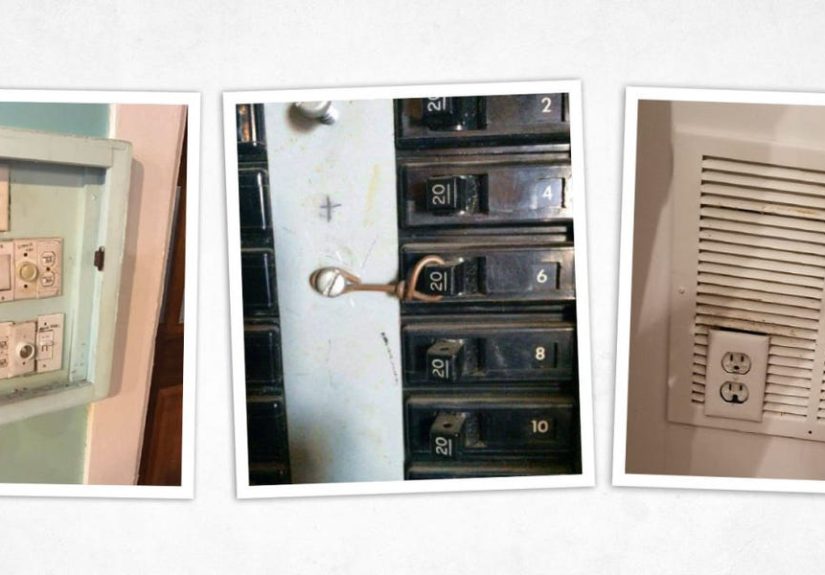
Classic examples include double-tapped breakers, missing outlet covers, exposed splices, reversed polarity, ungrounded outlets, overloaded power strips being used as permanent wiring, and junction boxes left open like a little surprise gift for the next person who reaches in. Some photos show extension cords functioning as part of the home’s “infrastructure,” which is a polite way of saying the house appears to have been wired by wishful thinking.
The joke, of course, is that bad electrical repairs often look impressively bold. Someone really committed to the bit. Unfortunately, inspectors know that “creative” electrical work can mean overheating, arcing, shock hazards, and fire risk. A funny photo of a light switch installed sideways, upside down, or in the world’s least helpful location might be a small problem. A panel full of messy, mismatched wiring is not.
If a repair photo makes you ask, “Should that wire be visible?” the answer is probably no.
2. Plumbing That Appears to Have Lost a Bet
Plumbing fails are the slapstick comedy of home inspections. Water has impeccable timing, and it loves to reveal shortcuts at the worst possible moment. That is why so many hilarious inspection photos involve sink drains, toilet installations, water heaters, and mystery pipes heading off in directions no pipe should ever choose.
The classics are legendary: duct tape around drain assemblies, bizarre trap shapes under sinks, mismatched fittings that look like leftover parts from three different decades, disconnected condensate or drain lines, active leaks into buckets, rusted water heater bottoms, and vents held together with the engineering equivalent of crossed fingers.
The problem with goofy plumbing is that it rarely stays goofy. It graduates into stains, rot, mold, warped flooring, bad smells, and the kind of ceiling collapse that ruins both your day and your downstairs lighting fixture. A lot of these failures start with a tiny leak and a big attitude. “It’s just a drip” becomes “Why is the baseboard soft?” faster than homeowners expect.
In inspection photos, plumbing disasters often have one visual clue in common: improvisation. When the plumbing system looks more like modern sculpture than plumbing, the house is trying to tell you something.
3. Roof Repairs Powered by Hope, Tar, and Optimism
Roof problems are less flashy in photos, but they are some of the most expensive. A bad roof repair is like a bad haircut on a very expensive hat: everyone notices eventually, and the fix is never as cheap as you want it to be.
Inspectors frequently see missing or damaged shingles, worn flashing around chimneys and vents, sagging areas, patched-over leaks, clogged or failing roof drainage, and signs that water has been sneaking in for quite some time. In nightmare photos, roof fails often show up as bizarre patchwork, strange sealant smears, or improvised flashing that looks suspiciously handmade.
This is where home inspection photos become unintentionally poetic. A small brown ceiling stain is the house saying, “I have a roof problem and I’m trying to be subtle.” The attic, meanwhile, is yelling. Once roof leaks begin, they tend to invite other guests: insulation damage, mold growth, stained drywall, wood rot, and damaged framing. It’s the home-maintenance version of one tiny plot hole wrecking the whole movie.
And yes, a tarp can be a temporary solution. “Temporary” is doing a lot of heavy lifting there.
4. Water Damage: The Sneakiest Villain in the Album
If electrical fails are shocking and plumbing fails are chaotic, moisture damage is the quiet mastermind. It hides behind fresh paint, under flooring, around windows, inside crawl spaces, and in the basement corner the listing photos strangely forgot to show.
Many of the most alarming inspection pictures are not dramatic at first glance. A little bubbling paint. A faint stain. A suspiciously musty storage room. A downspout dumping water right next to the foundation like it holds a grudge. Poor grading around the home can funnel water toward the structure instead of away from it, which is the landscaping equivalent of throwing your problems indoors.
This is one reason home inspectors obsess over gutters, downspouts, drainage, flashing, grading, crawl spaces, and signs of past leaks. Moisture is patient. It can damage wood, encourage mold, stain materials, weaken finishes, and contribute to structural trouble over time. The funniest part of some repair photos is how obviously someone tried to hide it. The least funny part is that water usually wins round two.
If a room smells “vintage basement,” that is not a design style.
5. HVAC and Venting Fails That Deserve Their Own Sitcom
Heating, cooling, and venting problems do not always produce the most photogenic nightmares, but when they do, they are glorious. Think sagging ducts, disconnected vents, dirty returns, damaged insulation, poorly supported condensate lines, and systems that appear to be one loud rattle away from retirement.
These fails are especially sneaky because homeowners often get used to them. “The upstairs has always been hot.” “The laundry room has always smelled like a warm sock.” “The furnace makes that sound because it’s old.” Sometimes true. Sometimes the system is sending a cry for help in surround sound.
In inspection photos, HVAC fails often look messy rather than dramatic. But messy can be expensive. Improper venting, poor airflow, moisture around equipment, disconnected ducts, or makeshift wiring around HVAC components can affect comfort, efficiency, indoor air quality, and safety. Dryer vent issues also belong in this chaos category. A clogged or poorly routed vent is not quirky. It is a problem with a fan club made of lint.
6. Structural “Fixes” That Challenge Gravity
Then we arrive at the category that makes everyone stop laughing for a second: structural shortcuts. These are the photos with cracked foundations, sloping floors, hacked joists, makeshift posts, questionable shims, sticking doors, or walls that seem to be expressing emotional fatigue.
Not every crack means doom, and not every uneven floor means the house is one sigh away from collapse. But some images clearly show repairs that treat symptoms instead of causes. A post jammed under a beam without proper support is not a permanent solution. It is a suspenseful sentence written in lumber.
Structural photos unsettle people because they mess with the one thing a house is supposed to do really well: stay house-shaped. When inspectors flag movement, framing damage, sloping, bulging, or significant cracking, they are not being dramatic. They are acknowledging that gravity has opinions.
The Funniest Repair Fails Usually Follow the Same Pattern
After enough inspection reports and viral photos, a pattern becomes impossible to ignore. The funniest home repair fails usually begin with one of these dangerous little sentences:
- “I watched a video.”
- “It only needs to hold for now.”
- “Nobody will notice.”
- “Caulk fixes everything.”
- “It passed the eye test.”
The reason these failures become inspection nightmares is not just lack of skill. It is misplaced confidence. Cosmetic coverups are common. So are temporary fixes that quietly become permanent. Fresh paint can hide stains. A rug can hide damaged flooring. Storage boxes can hide foundation cracks. Cabinets can hide plumbing leaks. But inspectors are trained to look for the story behind the surface.
That is why the funniest photos often include a tiny detail that gives everything away: a warped baseboard, a scorch mark, a rust trail, a crooked vent, a sagging line, a patch that is just a little too fresh, or a repair so oddly specific that it raises seven questions in under three seconds.
What Buyers Can Learn From These Home Repair Fails
If you are buying a house, nightmare photos are actually useful homework. They teach you to look beyond staging and charm. Nice lighting and throw pillows are wonderful. They are not waterproofing.
When touring a property or reviewing photos, pay attention to:
- Water stains on ceilings, walls, or around windows
- Fresh paint patches in suspicious places
- Uneven floors or doors that do not latch cleanly
- Visible extension cords used like permanent fixtures
- Basement mustiness, staining, or efflorescence
- Odd plumbing configurations under sinks or near water heaters
- Missing covers, exposed wiring, or dated electrical components
- Improvised roof or gutter repairs
The point is not to panic. Nearly every home has defects. The point is to know the difference between a manageable repair and a warning sign wearing a lampshade.
What Sellers Should Learn Before the Inspector Arrives
Sellers can learn something valuable from these photos too: hilarious problems become expensive negotiation points. The more obviously improvised a repair looks, the less confidence buyers will have in the rest of the house. One goofy fix can make people wonder what is hiding behind the walls, above the ceiling, or under the floor.
Before listing a home, it pays to address visible leaks, electrical oddities, drainage issues, loose fixtures, damaged caulk, unsafe rails, and obvious venting or plumbing problems. Even minor maintenance matters because buyers use small clues to guess at bigger ones. A dripping faucet may only need a small fix, but to a nervous buyer it can whisper, “Deferred maintenance lives here.”
In other words, if your house has a repair that would make strangers laugh on the internet, fix that before the photographer gets there.
Conclusion: Funny in Photos, Serious in Real Life
Photos of home inspection nightmares are funny because they capture a universal truth: houses remember every shortcut. They remember the rushed weekend project, the bargain repair, the “temporary” patch from three winters ago, and the mysterious decision to run plumbing like it was solving a maze. These images make great entertainment because they turn hidden home systems into visible chaos.
But the real lesson is practical. The funniest home repair fails are rarely random. They are visual clues pointing to common inspection issues involving moisture, roofs, drainage, electrical systems, plumbing, HVAC, and structure. Laugh at the photo, absolutely. Then learn from it. In homeownership, comedy becomes tragedy the moment water reaches drywall or a breaker starts heating up.
The best homes are not the ones with zero flaws. They are the ones where repairs were done correctly, problems were not hidden, and nobody tried to convince a piece of duct tape to become a licensed contractor.
Experiences Related to Home Inspection Nightmares – Funniest Home Repair Fails
Anyone who has spent time around real estate, remodeling, or homeownership eventually collects stories that sound fake until you see the photos. One buyer walks into a charming older home with original trim, pretty hardwood floors, and a kitchen staged like a magazine spread. Everything feels perfect until the inspector opens the electrical panel and goes silent for a full five seconds. That silence says more than a thousand words. Inside is a tangle of mismatched wiring, a few sloppy connections, and the unmistakable feeling that several decades of “small fixes” were performed by several very optimistic people. The buyer still loves the house, but now the conversation changes from “What color should we paint the dining room?” to “How much does it cost to sleep peacefully at night?”
Another common experience comes from sellers who genuinely do not realize how bad a previous repair looks until an inspector points at it. A homeowner may have lived for years with a little stain near a skylight, a bit of mustiness in the basement, or a bathroom fan that sounds like it is grinding coffee. Because the issue developed slowly, it became background noise. Then the inspection happens, and suddenly the home’s private weirdness is translated into formal report language. That is always an awakening. It is one thing to think, “The upstairs gets humid in summer.” It is another to read that the attic ventilation appears inadequate and there may be signs of past moisture intrusion.
Buyers also talk about the emotional whiplash of inspection day. First there is anticipation. Then curiosity. Then the inspector says something like, “You’re going to want to see this.” Sometimes it is a small issue, like a loose handrail or missing outlet cover. Sometimes it is a plumbing arrangement under a sink that looks like it was assembled from leftover parts in a discount bin. People laugh because the photo is absurd, but the experience is memorable because it changes how they see the house. The fantasy becomes a physical object with systems, age, maintenance history, and consequences.
Contractors and inspectors often describe a similar theme: the most dangerous repairs are not always the ugliest. Some nightmare photos are obvious. Others are deceptively tidy. A fresh patch of paint can hide a stain. A finished basement can hide moisture. A cleaned-up utility area can distract from venting problems or aging equipment. This is why experienced professionals tend to be suspicious of anything that looks just a little too freshly “fixed.” Good repairs usually disappear because they solve the problem. Bad repairs draw attention because they are trying too hard not to.
There is also a surprisingly useful side to these horror stories. They teach homeowners what to take seriously. After seeing enough inspection-nightmare photos, people get smarter. They stop ignoring soft flooring near tubs. They stop treating gutter overflow as a cosmetic issue. They stop assuming old wiring is charming. They start noticing grading, flashing, caulk failure, odd smells, and little hints of water. In that sense, the funniest home repair fails become accidental education. They are a crash course in how houses fail slowly, visibly, and often in ways that could have been prevented earlier.
That may be the strangest truth of all: home inspection nightmares are funny because they are relatable. The photos are outrageous, but the lesson is simple. Houses do not need perfection. They need attention, proper repairs, and a healthy respect for the fact that every “quick fix” has the potential to become a future photo that strangers laugh at online.