Table of Contents >> Show >> Hide
- What Is the Piper nv Smart Home Security System?
- Key Features That Made Piper nv Stand Out
- How Piper nv Worked Day to Day
- Pros and Cons of the Piper nv Smart Home Security System
- Important Update: Piper nv Has Been Decommissioned
- What Piper nv Can Teach You About Choosing a Modern Security Camera
- Is an All-in-One Smart Home Security System Right for You?
- Real-World Experiences with Piper nv and Lessons for Today’s Smart Homes
- Final Thoughts
Before smart doorbells began gossiping about every passing car and tiny cameras started watching over our pets,
there was Piper nv – an all-in-one smart home security system with night vision that tried to do
everything in a single device. It was camera, siren, hub, and environmental monitor rolled into one.
Even though Piper nv has now been officially decommissioned and no longer works as a live system, it still pops up
in conversations because it was ahead of its time. Understanding what it offered – and where it struggled – is
incredibly useful if you’re shopping for a modern smart home security camera with night vision today.
What Is the Piper nv Smart Home Security System?
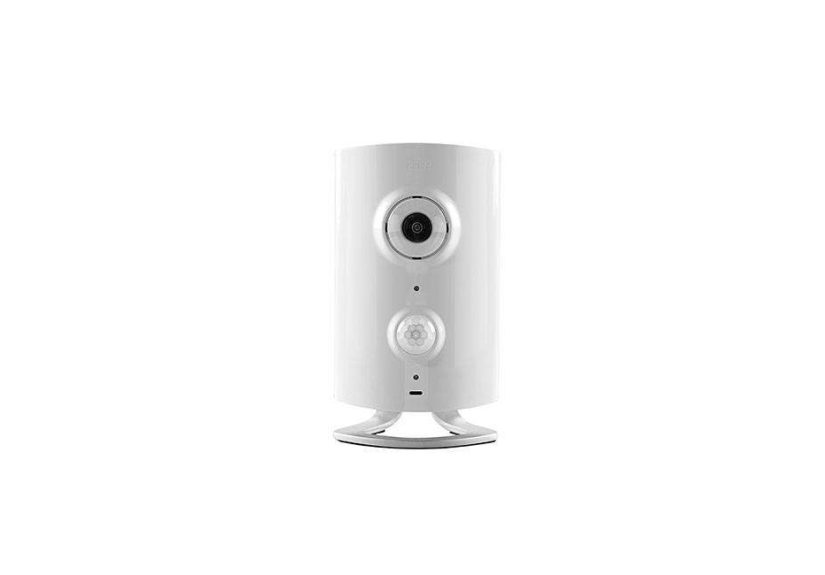
Piper nv (short for “night vision”) was a compact, mains-powered smart home security device designed by
Icontrol Networks as an upgrade to the original Piper camera. It combined a panoramic HD camera, a powerful siren,
Z-Wave home automation, and multiple environmental sensors into one unit that you controlled from a mobile app.
Instead of installing separate cameras, motion sensors, and a smart hub, Piper nv tried to be your:
- Indoor security camera with a 3.4 MP sensor and 1080p HD video.
- Ultra-wide 180-degree fisheye lens with electronic pan, tilt, and zoom.
- Night vision camera for low-light and fully dark rooms.
- Home monitoring system with motion, sound, temperature, humidity, and light sensors.
- Loud 105 dB siren and two-way audio.
- Z-Wave hub for basic home automation with compatible switches and sensors.
The concept was simple: you put Piper nv in a strategic spot in your home, connected it to Wi-Fi, and configured
everything from an Android or iOS app. From there, it could watch your home, trigger sirens or lights through
Z-Wave devices, send alerts, and show live video – all without a monthly subscription.
Key Features That Made Piper nv Stand Out
Panoramic HD Camera with Electronic Pan-Tilt-Zoom
Piper nv’s calling card was its 180-degree fisheye lens. Instead of a narrow tunnel view of your living room, you
got a wall-to-wall, floor-to-ceiling look at the space. You could electronically “pan” and “tilt” within that
giant image through the app, zooming in to see details or dividing the screen into four zones to monitor different
areas at once.
It wasn’t a mechanical pan-tilt camera – the device itself didn’t physically rotate – but the wide lens plus
software pan-tilt-zoom (PTZ) was a clever workaround that reduced moving parts while still giving broad coverage.
1080p Resolution and Enhanced Night Vision
Compared with the original Piper, the “nv” edition upgraded the camera to a 3.4-megapixel sensor capable of
streaming 1080p video, along with infrared LEDs for true night vision.
In practice, that meant:
- Clearer daytime footage with more detail in faces and objects.
- Infrared illumination in the dark – no need to leave lights on.
- Automatic switching between day and night modes.
Reviews at the time noted that the night vision was one of the biggest improvements over the original Piper,
making the system much more reliable if you wanted 24/7 monitoring.
All-in-One Sensors for Smarter Alerts
Piper nv didn’t just watch; it listened and sensed your environment. The device packed in:
- Passive infrared motion detection (up to about 30 feet).
- Sound detection for loud noises or sudden events.
- Temperature, humidity, and ambient light sensors to monitor indoor conditions.
These sensors allowed for more nuanced rules, like:
- Send an alert if motion is detected and it’s supposed to be “away” mode.
- Turn on a Z-Wave smart switch when light levels drop in the evening.
- Warn you if the temperature suddenly drops, which might indicate a heating failure.
Z-Wave Hub for Basic Home Automation
One big differentiator was the built-in Z-Wave controller. Instead of buying a separate hub, you could pair
Z-Wave door/window sensors, smart plugs, and other devices directly with Piper nv.
This turned Piper nv into a beginner-friendly automation hub. Users could:
- Automatically turn on a lamp if motion was detected at night.
- Have smart plugs cut power to certain devices when switching to “vacation” mode.
- Use door or window sensors to trigger recordings and alerts.
105 dB Siren and Two-Way Audio
Piper nv didn’t whisper. It packed a siren rated around 105 dB – loud enough to startle intruders and annoy
family members in equal measure. With its built-in microphone and speaker,
you could also:
- Talk through the app to whoever was at home (“Yes, I see you sneaking extra snacks”).
- Listen in when an alert triggered.
- Use the siren as part of custom rules, such as sounding when motion is detected while armed.
Battery Backup and Local Resilience
Piper nv was powered via an AC adapter but included a backup compartment for three AA batteries so it could keep
running during a power outage. That, plus its internal sensors and siren,
meant the device could still respond to some conditions even if the lights went out – as long as its cloud
service remained reachable.
How Piper nv Worked Day to Day
In everyday use, Piper nv was managed almost entirely through the mobile app. Installation was designed to be
idiot-proof: plug in, connect to Wi-Fi, and follow guided steps. Many reviewers praised the initial setup as
fast and friendly, even for non-technical users.
Once configured, you could choose between security modes like:
- Home – You’re inside, so you might disable motion alerts but leave environmental monitoring on.
- Away – Full security mode with motion detection, alerts, and recordings active.
- Vacation – A stricter “away” mode for long trips.
The app let you create “rules” (similar to IFTTT recipes) such as:
- If motion is detected while in Away mode, then sound the siren, start recording, and send a push notification.
- If noise is detected at night, then start a clip and turn on a smart light.
- If temperature exceeds a threshold, send a warning in case your HVAC is acting up.
Live video viewing, four-panel quad-view, sensor history graphs, and clip playback were all done in-app. Some
reviewers found the interface easy to understand; others criticized occasional lag and connection issues,
especially on slower networks.
Pros and Cons of the Piper nv Smart Home Security System
What Piper nv Did Really Well
- Truly all-in-one design – Camera, siren, sensors, and automation hub in one sleek package.
- No required monthly fees – Cloud clips and monitoring rules without a subscription were a huge selling point.
- Wide panoramic view – One unit could cover an entire room instead of needing multiple cameras.
- Strong siren and useful two-way audio – Great deterrent and communication tool.
- Easy entry into home automation – Z-Wave integration made it simple to add sensors and smart plugs.
Where Piper nv Fell Short
-
App and connectivity quirks – Some users reported choppy video, occasional connection drops,
and a sometimes sluggish interface, especially on lower-bandwidth connections. -
“Pan-tilt” that wasn’t truly pan-tilt – The software PTZ was clever, but those expecting a
rotating camera were disappointed. -
Limited ecosystem and cloud dependency – Clips were primarily stored in the cloud and could only
be accessed via the app, with few advanced export options. -
Relatively high price at launch – It was more expensive than some competing stand-alone cameras,
though fans argued the “hub + camera + sensors” bundle justified it. -
Single-point failure – Because so much lived in one device and its supporting cloud, if Piper
went down, a big chunk of your system went down with it.
Important Update: Piper nv Has Been Decommissioned
Here’s the part that matters most if you’re thinking of buying a used Piper nv or dusting one off from a box in
your closet: the Piper and Piper nv cameras and their mobile apps were officially shut down in March 2024.
Because the hardware depended heavily on Piper’s cloud servers for authentication, video storage, and app
functionality, the shutdown effectively turned all units into non-functional bricks. Live streaming, recording,
and notifications no longer work, even if the device still powers on.
You may still see Piper nv units listed on auction sites or resale marketplaces with their original descriptions
(like “Smart Home Security System with Night Vision, 180-degree Camera”).
However, as of now, they should be treated as collectibles or potential DIY hacking projects, not as reliable
security systems.
In other words: Piper nv is best understood today as an important chapter in the history of smart home security,
not a camera you should rely on to protect your home in 2025 and beyond.
What Piper nv Can Teach You About Choosing a Modern Security Camera
Even though Piper nv has been retired, it set a bar that modern smart home security systems still chase. If
you’re shopping for a current smart home security camera with night vision, here are lessons drawn from the Piper
nv era:
1. Look for Wide Coverage and Clear Resolution
Piper nv’s 180-degree lens and HD resolution showed how valuable a wide field of view is. Today, you’ll find
cameras offering 2K or 4K resolution with pan-tilt motors and AI object tracking for even more precise coverage.
Make sure your next camera:
- Covers the whole room or key entry points without blind spots.
- Has at least 1080p resolution (higher is better if your bandwidth allows it).
- Offers reliable night vision – ideally color night vision or enhanced IR.
2. Check How Night Vision Actually Looks
Piper nv’s night vision was a big upgrade, but like many early IR cameras, grainy footage was common under
challenging conditions. When considering modern systems:
- Look for real-world samples of night footage, not just marketing screenshots.
- Check how well faces and objects are recognized in the dark.
- Consider whether you need color night vision or if traditional IR is enough.
3. Evaluate Cloud vs. Local Storage and Vendor Risk
Piper nv’s shutdown is a perfect reminder that cloud-only systems are only as long-lived as the company behind
them. To protect yourself:
- Favor cameras that support local storage (microSD, NVR) in addition to cloud.
- Review a vendor’s track record and support policies.
- Consider whether basic features remain usable if the cloud service disappears.
4. Consider Built-In Automation and Ecosystem Fit
Piper nv used Z-Wave to talk to smart plugs, sensors, and switches, making security and home automation work
together. Today, you might want:
- Integration with major ecosystems like Amazon Alexa, Google Assistant, Apple Home, or Matter.
- Automation rules that let cameras trigger lights, locks, or other devices.
- Simple app-based rules – not a programming degree – to link events and actions.
Is an All-in-One Smart Home Security System Right for You?
Piper nv’s design philosophy still divides people: some love the simplicity of a single device that tries to do
everything; others prefer separate pieces that can be swapped, upgraded, or mixed across brands.
An all-in-one approach can be ideal if you:
- Live in an apartment, condo, or small home where one camera can see most of the action.
- Want simple setup and minimal wiring.
- Prefer not to juggle multiple apps or hubs.
On the other hand, a modular system may be better if you:
- Have a larger property with multiple entry points.
- Want redundancy – if one camera fails, the whole system doesn’t go dark.
- Like to mix hardware from different manufacturers over time.
Piper nv proved that an all-in-one smart home security system with night vision can be incredibly convenient and
powerful. It also showed that relying heavily on one vendor’s cloud can be a single point of failure.
Real-World Experiences with Piper nv and Lessons for Today’s Smart Homes
To really understand the appeal of Piper nv, it helps to picture how people actually used it in everyday life.
Many owners set a single unit in the living room or near the main entrance, tilted it carefully so the 180-degree
lens captured both the front door and part of the kitchen. When they left for work, they tapped “Away” in the app
and let Piper nv quietly take over.
For parents, the night vision and wide field of view made it a kind of hybrid between a security camera and a
baby monitor. You could check in to see if the kids really were doing homework at the table or if the dog had
claimed the couch again. The ability to talk through the built-in speaker was surprisingly useful: a quick
“Hey, I’m watching, no jumping on the furniture!” tended to reset behavior faster than any text message ever
could.
Environmental sensors also played a bigger role than many expected. Owners in colder climates used temperature
alerts as backup protection for frozen pipes, while those in hot regions liked being warned if the A/C failed on
a scorching day. Piper nv wasn’t a full HVAC system, but it gave people one more set of eyes (and sensors) on the
health of their home.
Of course, it wasn’t all smooth sailing. Some users learned the hard way that placing the camera near windows
could confuse the motion sensor or cause glare at night. Others discovered the difference between “helpful
alerts” and “my phone is blowing up” – especially if pets roamed freely in front of the camera. Fine-tuning
sensitivity and rules became part of the ownership experience, much like adjusting notification settings on a
new phone.
The biggest emotional swing came with the announcement that services would shut down. Imagine trusting a device
for years – maybe using it to monitor your home office, watch over elderly parents’ living spaces, or just keep
an eye on your front door – only to be told that on a specific date, the system would simply stop working.
That message left many early smart home adopters feeling burned and a bit skeptical about cloud-dependent gear
in general.
There’s an important lesson in that experience. When you invest in a “smart” device, you’re not just buying
electronics; you’re buying into an ongoing relationship with a service. Piper nv owners had to confront questions
that are still very relevant:
- What happens to my hardware if the company is acquired, changes direction, or shuts down?
- Can I still access my recordings without the cloud?
- Am I comfortable with mission-critical features – like security alerts – depending on remote servers?
For anyone planning a new smart home setup today, the Piper nv story can be a helpful guide. Look for cameras and
systems that:
- Offer local storage in addition to cloud options.
- Provide clear, transparent communication about product lifecycles and support timelines.
- Integrate with widely adopted standards so you’re not locked into a dead-end ecosystem.
At the same time, it’s fair to give Piper nv credit: it pushed the category forward. Its combination of night
vision, panoramic video, environmental sensing, loud siren, and home automation in a single device helped shape
expectations for what a “smart home security system” should be. Many of the conveniences people now take for
granted – app-based arming modes, sensor-driven rules, live HD video from anywhere – felt genuinely futuristic
when Piper nv arrived.
If you once owned a Piper nv, you probably remember both sides of that story: the peace of mind of being able to
check on your home from anywhere, and the frustration of eventually losing that capability due to a server switch
being flipped somewhere far away. For new buyers, that history can help you make smarter, more resilient choices
as you pick a modern smart home security system with night vision that will keep protecting your home for years to
come.
Final Thoughts
Piper nv was an ambitious, feature-packed smart home security system with night vision that tried to deliver a
complete solution in one box. It offered a wide-angle 1080p camera, solid night vision, powerful sensors, a loud
siren, and Z-Wave automation – all without mandatory subscription fees. For many early adopters, it worked well
and felt ahead of its time.
But its eventual shutdown also highlights the risks of depending entirely on a proprietary cloud. Today, its best
role is as a case study: what to love about an all-in-one smart security device, and what to be cautious about
when you’re trusting a single platform with your home’s safety.
Use Piper nv’s strengths as your shopping checklist – and its shutdown as your reminder to ask tough questions
about long-term support. That way, your next “smart” security system with night vision won’t just impress you on
day one; it will still be watching over you, reliably, years down the road.