Table of Contents >> Show >> Hide
- What Is the Popliteal Pulse?
- Why the Popliteal Pulse Matters
- Before You Start: What You Need (Hint: Not Much)
- How to Find the Popliteal Pulse (Step-by-Step)
- Pro Tips: Make the “Shy Pulse” Less Shy
- How to Describe What You Feel
- Why You Might Not Be Able to Feel It (And Why That Can Be Normal)
- When a Missing or Weak Popliteal Pulse Can Matter
- Common Mistakes (So You Don’t Accidentally Palpate “Nothing”)
- A Quick “Practice Plan” That Actually Works
- Bottom Line
- Real-World Experiences With the Popliteal Pulse (500+ Words)
If the human body had a “Where’s Waldo?” pulse point, the popliteal pulse would be it. It’s real, it’s useful, and it’s also famously shytucked behind your knee where tendons, muscles, and anatomy do their best impression of a privacy screen.
This guide breaks down what the popliteal pulse is, why clinicians care about it, and exactly how to find it without turning your leg into a pretzel. We’ll also cover what it means if you can’t feel it (spoiler: that’s not automatically a disaster), plus practical tips to make it easier.
Quick note: This is educational info, not medical advice. If you have symptoms like one leg suddenly turning cold, painful, numb, or changing color, don’t “DIY diagnose”get medical care.
What Is the Popliteal Pulse?
The popliteal pulse is the pulse you feel from the popliteal artery, a major blood vessel that runs behind the knee. Every time your heart pumps, pressure waves travel through your arteries. When an artery runs close enough to the surface (or can be pressed against a firm structure), you can sometimes feel that wave as a pulse.
Behind the knee is a small anatomical zone called the popliteal fossathink of it as a shallow “diamond-shaped” space at the back of the knee. The popliteal artery runs deep through this region, which is why the popliteal pulse is often harder to find than, say, the wrist pulse.
Where does the popliteal artery come from?
In the simplest route-map version: the femoral artery (in the thigh) continues down and becomes the popliteal artery behind the knee, then branches into arteries that supply the lower leg and foot. That’s why checking pulses around the knee and foot can give clues about blood flow “downstream.”
Why the Popliteal Pulse Matters
Most people go their entire lives without ever needing to hunt for a popliteal pulseand that’s fine. But in health care (and sometimes sports medicine), it’s part of a bigger story: How well is blood reaching the lower leg and foot?
Common reasons clinicians check it
- Peripheral circulation checks: Especially when evaluating the pulses in the legs and feet as part of a vascular exam.
- Suspected peripheral artery disease (PAD): Narrowed arteries can reduce blood flow, sometimes showing up as weaker pulses below a blockage.
- After injury or surgery: Trauma around the knee or leg can affect vessels; pulses help confirm circulation.
- When foot pulses are hard to find: If ankle or foot pulses are weak or difficult, checking higher up can help narrow down where flow might be reduced.
- Clues for unusual conditions: In specific situations, problems behind the knee (like aneurysm or entrapment) can be relevantusually alongside other symptoms.
In short: the popliteal pulse is less about “counting your heart rate” and more about “checking the plumbing.”
Before You Start: What You Need (Hint: Not Much)
- Two fingers: Use your index and middle finger. (Your thumb has its own pulse and can confuse you.)
- A relaxed leg: Tension is the enemy. Tight hamstrings can hide the artery.
- Patience: Even clinicians practice thisbecause the popliteal pulse is deep.
How to Find the Popliteal Pulse (Step-by-Step)
There are a few workable positions. The most common for beginners is lying down with the knee slightly bent.
Method 1: Supine (lying on your back) the classic approach
- Lie on your back with your leg supported and relaxed.
- Slightly bend your knee (about 30–60 degrees). You can place your foot flat on the surface or rest the leg over a pillow.
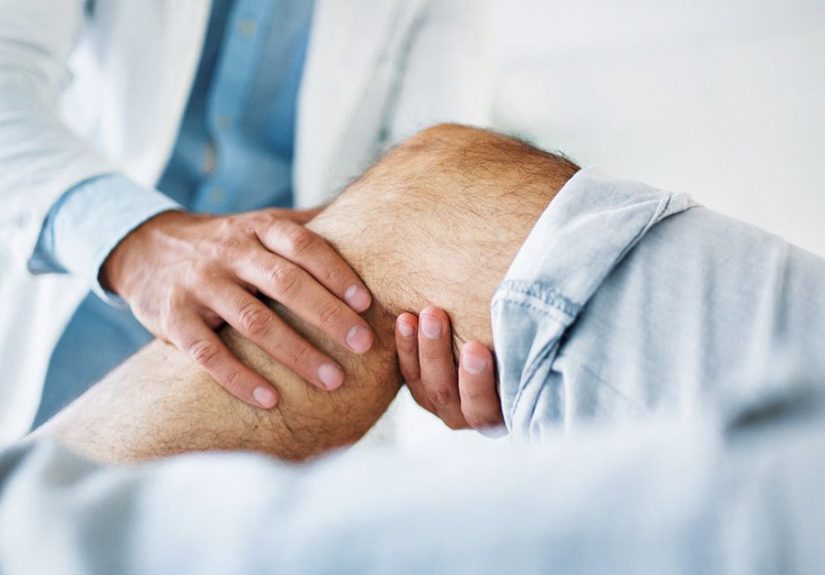
- Wrap your hands around the knee so your thumbs are on the front of the knee and your fingers are behind it.
- Slide your fingertips into the center of the back-of-knee space (the popliteal fossa). Aim for the midline, then slightly adjust side-to-side if you don’t feel anything.
- Press firmly but not painfullythis pulse is deep. Start with gentle pressure, then increase gradually.
- Wait a few seconds with steady pressure. Sometimes you feel it only after your fingers “settle.”
Method 2: Prone (lying on your stomach) good if the knee can relax
- Lie on your stomach with the knee slightly bent (a pillow under the ankle can help).
- Place fingertips into the soft area behind the knee and press inward.
- Adjust slowly a little medial (inner side) and lateral (outer side) until you find the beat.
Method 3: Seated the “I don’t want to lie down” option
- Sit with your knee bent and your foot resting on the floor.
- Reach behind your knee and press into the popliteal fossa.
- Relax the thigh as much as possibleif you’re tensing, it’s like trying to hear a whisper next to a blender.
Pro Tips: Make the “Shy Pulse” Less Shy
1) Relaxation beats brute force
If your hamstrings are clenched, the artery is basically hiding behind muscle tension. Try slow breathing, let your leg go heavy, and avoid holding your foot rigid.
2) Warmth helps
Cold can make blood vessels constrict and can make your fingers less sensitive. Warm hands, a warm room, or a blanket over the legs can improve your odds.
3) Use two hands like a “knee hug”
Encircling the knee and using both sets of fingertips (rather than poking with one finger) often gives better contact and control.
4) Move millimeters, not miles
If you don’t feel it right away, don’t jump to a totally different spot. Keep your fingers in the popliteal fossa and shift slightly side-to-side or a bit lower in the space.
5) Compare both legs
Pulses aren’t just about “present vs absent.” They’re about symmetry. If one side feels noticeably weaker than the other, that can be more meaningful than “I can’t find it at all.”
How to Describe What You Feel
Clinicians typically describe pulses by:
- Rate: How fast (beats per minute).
- Rhythm: Steady or irregular.
- Strength (amplitude): Often graded on a scale (for example, absent, diminished, normal, bounding).
For home learning, the most helpful takeaway is: Is it there? Is it similar on both sides? Does it match how you feel at other pulse points?
Why You Might Not Be Able to Feel It (And Why That Can Be Normal)
Here’s the reassuring truth: the popliteal pulse can be hard to palpate even when circulation is fine. Common reasons include:
- It’s deep: The popliteal artery sits deeper than many other pulse points.
- Body build: More soft tissue or very muscular legs can make it tougher.
- Leg position: Too straight or too tense can hide it.
- Cold temperature: Vasoconstriction can reduce the feel of pulses.
- Low blood pressure / dehydration: Pulse volume can be smaller.
- Normal anatomical variation: Not everyone’s vessels run in identical paths.
If you’re learning, it’s completely normal to miss it the first (or tenth) time. Health care students have entire practice labs dedicated to pulses for a reason.
When a Missing or Weak Popliteal Pulse Can Matter
A weak or absent pulse can be meaningful when it matches symptoms or other exam findings. It’s not a stand-alone “gotcha” test.
Symptoms that deserve medical attention
Get checkedespecially urgently if symptoms are suddenif you notice:
- New leg pain (especially severe or sudden)
- One foot/leg colder than the other
- Numbness, weakness, or tingling that doesn’t resolve
- Color changes (pale, blue-ish, or markedly darker than usual)
- Wounds on the foot or leg that heal slowly
- Cramping in the calf when walking that improves with rest (a classic PAD-style pattern)
Clinicians often combine pulse findings with other cluesskin temperature, capillary refill, Doppler ultrasound, and sometimes ankle-brachial index (ABI) testingto understand what’s happening.
Common Mistakes (So You Don’t Accidentally Palpate “Nothing”)
Using your thumb
Your thumb has a pulse. If you use it, you may “find” your heartbeat instead of theirs. Two fingertips are the move.
Poking too lightly
This is one of the rare times where firmer pressure is often required. The popliteal artery is deepgentle taps may not reach it.
Pressing painfully
Firm is good. Painful is not. If you’re digging hard enough to make someone flinch, the muscles will tense and the pulse will disappear anyway.
Searching outside the popliteal fossa
If you’re too high into the thigh or too low into the calf, you’re not in the right “window.” Stay behind the knee in that soft central area.
A Quick “Practice Plan” That Actually Works
- Start with easier pulses (wrist, top of foot if you can find it).
- Practice when warm and relaxed (after a shower beats after standing outside in winter).
- Try multiple positions (supine vs seated vs prone).
- Check both legs and notice differences.
- Don’t panic if you can’t feel ituse it as a skill-building moment, not a diagnosis.
Bottom Line
The popliteal pulse is the pulse of the popliteal artery behind the knee. It’s an important clinical pulse point because it helps evaluate blood flow to the lower leg, but it’s also notoriously difficult to feel because the artery sits deep in the popliteal fossa. With the right position (slightly flexed knee), a relaxed leg, two fingertips, and patient technique, most people can learn to locate iteventually.
Real-World Experiences With the Popliteal Pulse (500+ Words)
Because the popliteal pulse is a little elusive, people tend to have the same “wait… is it just me?” experiences when they first try to find it. Here are a few real-life patterns clinicians and learners commonly describeso if you recognize yourself, congratulations: you’re normal.
The nursing-student moment: “I swear I felt it… then it vanished.”
One of the most common early experiences is feeling a faint beat for a second and then losing it immediately. That’s usually because the leg muscles tense up the moment someone starts concentratingor because the examiner starts “chasing” the pulse by moving too quickly. In skills labs, instructors often remind students to hold steady pressure for a few seconds. The pulse can show up after your fingers settle, and it can disappear the second you poke, lift, and reposition repeatedly.
The “why can I feel it on one leg but not the other?” experience
People often find a popliteal pulse on one side more easily, even in healthy individuals. Small differences in vessel path, muscle tone, or how the knee is bent can change the result. That’s why clinicians compare both sides: not because bodies are perfectly symmetrical, but because big differences can be more meaningful than “present vs absent.” A common learning win is realizing that a tiny adjustmentslightly more knee flexion, or shifting fingertips a few millimeterscan make the difference.
The “post-workout calf tightness” scenario
Athletes or active people sometimes become curious about leg circulation after noticing calf tightness or cramping during runs, long practices, or intense gym sessions. In many cases, it’s routine muscle fatigue or conditioning issues. But this curiosity often leads to a practical lesson: the popliteal pulse is not a great “at-home reassurance tool” because it’s hard to palpate even when everything is fine. When athletes talk to sports medicine clinicians, the evaluation usually includes a broader picturesymptoms during activity, foot pulses, blood pressure comparisons, and sometimes imagingrather than relying on one hard-to-find pulse point.
The “cold room, cold hands, no pulse” realization
Another common experience is trying to find the popliteal pulse in a chilly room and concluding it’s gone forever. Cold can reduce fingertip sensitivity and cause blood vessels to constrict, making pulses feel weaker. People often report that they can’t find it at all until they warm upafter a hot shower, in a warmer room, or simply after resting with a blanket. Clinicians run into this too, which is why warming the patient and ensuring they’re relaxed is often part of a good vascular exam.
The clinician’s “use the right tool” experience
In real practice, when a pulse is difficult to palpate, clinicians frequently reach for a Doppler device. This is one of those “work smarter, not harder” moments: the goal isn’t to win a finger-strength contest; it’s to confirm blood flow accurately. People are often surprised to learn that “hard to feel” doesn’t automatically equal “bad circulation.” Sometimes it just equals “deep artery + real-world body variation.”
The biggest takeaway from these experiences is simple: the popliteal pulse is a skill. Like parallel parking or cracking an egg one-handed, it gets easier with practiceand it’s okay if it’s awkward at first.