Table of Contents >> Show >> Hide
- What Makes a Prospect Heights Townhouse Kitchen Special?
- Layout: The Secret Ingredient Nobody Sees First
- Cabinetry: Where Beauty Meets Survival Skills
- Materials That Fit the Prospect Heights Mood
- Lighting: The Unsung Hero of the Townhouse Kitchen
- Color Palettes That Feel Fresh but Timeless
- Appliances and Function: Modern Convenience Without Visual Chaos
- Designing for Entertaining in a Brooklyn Townhouse
- Budget-Smart Ideas for a Prospect Heights Townhouse Kitchen
- Common Mistakes to Avoid
- Real-Life Experiences With a Prospect Heights Townhouse Kitchen
- Conclusion
A Prospect Heights townhouse kitchen is not just a place to scramble eggs, reheat coffee, and wonder why everyone in the house suddenly needs a snack at the exact same time. It is the hardworking heart of a Brooklyn homepart cooking zone, part gathering space, part architectural balancing act. In a neighborhood known for brownstones, tree-lined streets, historic facades, and homes with serious old-soul charm, the kitchen has to do more than look good. It must respect the past while making room for modern life, modern appliances, and the occasional oversized farmers market haul.
The beauty of a Prospect Heights townhouse kitchen lies in that tension between heritage and function. Many townhouses in this part of Brooklyn come with narrow footprints, deep floor plans, tall ceilings, original moldings, rear extensions, and layouts that were not exactly designed for today’s open-plan living. Earlier kitchens were often tucked away, treated as service rooms rather than social spaces. Today, homeowners want kitchens that connect to dining rooms, gardens, family rooms, and daily routines. The result is a design challenge that is equal parts puzzle, poetry, and plumbing.
When done well, a townhouse kitchen in Prospect Heights feels layered rather than staged. It may include custom cabinetry, natural wood, marble or quartz countertops, antique-inspired hardware, open shelving, practical pantry storage, and a generous island that works harder than a New Yorker trying to catch the Q train during a service change. The goal is not to erase the history of the house. The goal is to let the kitchen speak the same language as the architecturejust with better lighting and fewer mystery cabinets.
What Makes a Prospect Heights Townhouse Kitchen Special?
Prospect Heights has a distinctive residential character. Its townhouses and brownstones often feature high ceilings, long rooms, elegant staircases, decorative fireplaces, original woodwork, and tall windows. These details give the home personality, but they also create design decisions that are not always simple. Should the kitchen stay in the rear extension? Should walls come down? Should the dining room remain formal, or should the kitchen become the main social zone? These are not small questions. They shape how the entire house feels.
A successful Prospect Heights townhouse kitchen usually solves three issues at once: space, light, and flow. Space matters because many townhouses are narrow compared with suburban homes. Light matters because interiors can feel dim in the middle of a deep floor plan. Flow matters because modern families often use the kitchen as a command center, homework station, entertaining hub, and snack distribution department. A pretty kitchen that bottlenecks during breakfast is like a designer chair nobody can sit innice for photos, not so great for Tuesday morning.
The Old-Meets-New Design Philosophy
The best townhouse kitchens do not try to pretend the building was built yesterday. Instead, they contrast clean-lined modern elements with restored historic details. Think flat-panel or inset cabinetry beside original crown molding. Picture a marble island under restored plasterwork. Imagine warm oak floors meeting a sleek slab backsplash. This approach creates a dialogue between eras, allowing the kitchen to feel fresh without looking like it wandered into the wrong house.
This old-meets-new philosophy is especially effective in Prospect Heights because the architecture already brings depth. A kitchen does not need to shout when the house itself has character. Subtle design choices often work best: unlacquered brass that develops patina, handmade tile with slight variation, natural stone with movement, or wood cabinets that add warmth without overwhelming the room.
Layout: The Secret Ingredient Nobody Sees First
Cabinet color gets attention. Countertops get compliments. Lighting gets Instagrammed. But layout is the quiet genius behind a great kitchen. In a Prospect Heights townhouse kitchen, layout can determine whether the space feels generous or cramped, elegant or awkward, calm or like a tiny obstacle course with cookware.
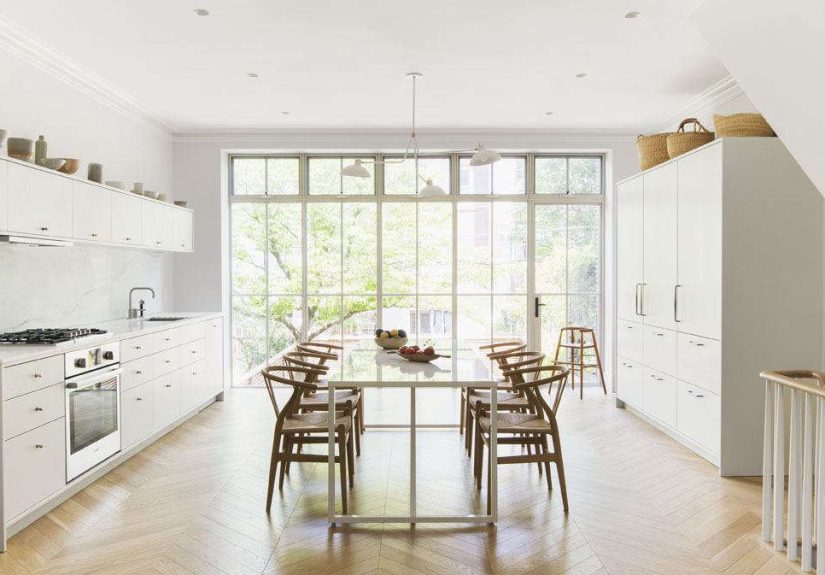
Many Brooklyn townhouses have kitchens positioned toward the rear of the home, sometimes in a narrow extension. This can be both a challenge and an opportunity. A rear kitchen may offer access to the garden, which is a major luxury in city living. With the right design, glass doors, large windows, or a widened opening can create a beautiful indoor-outdoor connection. Suddenly, the kitchen is not just a room at the back of the house. It becomes the bridge between interior life and outdoor space.
Galley, L-Shape, or Island Layout?
A galley layout can be extremely efficient in a narrow townhouse kitchen. With cabinets and appliances placed along parallel walls, everything stays within easy reach. The trick is to avoid making the space feel like a hallway wearing an apron. Good lighting, pale surfaces, reflective materials, and open shelving near windows can help the room breathe.
An L-shaped kitchen works beautifully when the room opens to a dining area or family space. It creates a natural work zone while leaving room for a table, banquette, or freestanding island. In wider townhouse kitchens, an island can become the anchor. It provides prep space, storage, seating, and a visual center. It also becomes the place where everyone gathers, even when there is a perfectly good sofa ten feet away. Kitchens have gravitational pull. Scientists should study this.
For many Prospect Heights homes, the most successful kitchen layout is a hybrid: a long run of cabinetry along one wall, a sink or range positioned for efficiency, tall storage tucked to one side, and an island or peninsula that separates the cooking area from the social area. The design should support movement rather than block it. When two people can cook, one person can make coffee, and a child can look for cereal without causing a traffic jam, the layout is doing its job.
Cabinetry: Where Beauty Meets Survival Skills
Cabinetry is the backbone of a townhouse kitchen. In Prospect Heights, custom cabinetry is often worth considering because historic homes rarely come with perfectly standard dimensions. Walls may be uneven. Ceilings may be tall. Corners may be quirky. A stock cabinet system can work in some cases, but custom or semi-custom cabinetry often makes better use of every inch.
Warm wood cabinetry is especially appealing in townhouse kitchens because it softens the architecture and adds a natural, lived-in feeling. White oak, walnut, maple, and painted wood all have their place. A full wall of white cabinets can brighten a room, while wood cabinets add texture and depth. Some homeowners choose a mix: painted perimeter cabinets with a wood island, or wood lower cabinets with light upper shelves. This layered look feels more personal than a one-note kitchen.
Smart Storage for Real Life
A beautiful kitchen without good storage is basically a very expensive stage set. Real households need places for cutting boards, baking sheets, spices, trash bins, recycling, snacks, pet supplies, small appliances, and that one pan lid nobody can identify but everyone is afraid to throw away.
For a Prospect Heights townhouse kitchen, smart storage might include deep island drawers, pull-out pantry cabinets, appliance garages, vertical tray dividers, hidden charging drawers, toe-kick storage, and built-in recycling centers. Open shelving can look charming near a window or above a coffee station, but it should be used strategically. Open shelves are perfect for pretty dishes, cookbooks, and ceramics. They are less perfect for mismatched plastic containers that appear to reproduce overnight.
Tall cabinetry is another strong choice in townhouses with high ceilings. Floor-to-ceiling cabinets create visual height and offer serious storage. A rolling library ladder may sound dramatic, but in a tall Brooklyn kitchen, it can be both functional and delightfully theatrical. Who says retrieving the waffle maker cannot feel like a scene from a boutique hotel?
Materials That Fit the Prospect Heights Mood
The material palette of a Prospect Heights townhouse kitchen should feel durable, warm, and timeless. This is not the place for fragile finishes that panic at the sight of tomato sauce. City kitchens work hard, and townhouse kitchens often serve families, guests, pets, and dinner parties. The materials need to look good on day one and still have dignity after year ten.
Countertops and Backsplashes
Natural stone remains a favorite for homeowners who want movement and character. Marble is beautiful, classic, and slightly dramaticlike a friend who always arrives in a great coat. It does require care, especially around acidic foods and staining ingredients. Quartz offers a more low-maintenance option, with many designs that mimic natural stone. Soapstone can bring a moody, historic feel, while butcher block adds warmth, especially on an island or baking zone.
Backsplashes can define the kitchen’s personality. A slab backsplash in the same material as the countertop creates a seamless, refined look. Handmade subway tile feels classic and approachable. Zellige-style tile adds texture and subtle irregularity. For a bolder kitchen, patterned tile or a carefully chosen color can add energy without overwhelming the architecture. The key is restraint. In a townhouse with original details, the backsplash should enhance the story, not grab the microphone and sing over everyone.
Flooring That Connects the Home
Wood flooring is common in townhouse kitchens because it creates continuity with adjoining rooms. If the kitchen opens to a dining area or parlor floor, matching or refinishing wood floors can make the entire level feel larger. In high-traffic homes, durable finishes matter. Some homeowners prefer tile in the kitchen zone, especially if the room connects to a garden. Tile can handle mud, water, and energetic cooking sessions, but it should be chosen carefully so it does not visually chop up the floor plan.
Lighting: The Unsung Hero of the Townhouse Kitchen
Lighting can make or break a Prospect Heights townhouse kitchen. Because many townhouses are deep and narrow, natural light may be strongest at the front and back, leaving the center dim. A thoughtful lighting plan layers ambient, task, and accent lighting so the kitchen works at every hour.
Recessed lights can provide general brightness, but they should not be the only source. Pendant lights over an island add focus and character. Under-cabinet lights make prep work easier. Sconces near open shelves or windows create warmth. A statement fixture over a dining nook can turn the kitchen into a true gathering space. Good lighting does not just help you see the cutting board. It changes the mood of the room.
Letting Natural Light Do the Heavy Lifting
If the kitchen sits at the rear of the house, large windows or glass doors can transform the space. A view toward the garden makes the kitchen feel calmer and more expansive. Even a small backyard can become part of the design when framed properly. Black steel doors, wood-framed windows, or classic French doors can all work, depending on the style of the home.
Reflective surfaces can also help. Light countertops, glazed tile, glass-front cabinets, and pale wall colors bounce daylight deeper into the room. That does not mean everything must be white. A warm neutral palette can brighten a kitchen while still feeling cozy and sophisticated.
Color Palettes That Feel Fresh but Timeless
The most successful Prospect Heights townhouse kitchens often avoid trendy extremes. Instead of chasing whatever color is currently having a social media moment, they use palettes that complement the architecture. Warm whites, soft grays, mushroom tones, sage green, deep navy, charcoal, clay, cream, and natural wood all work beautifully in Brooklyn townhouses.
For a lighter kitchen, creamy cabinets with brass hardware and a stone countertop can feel elegant without being cold. For a moodier space, dark green or deep blue lower cabinets paired with white walls and warm wood can create drama. For a modern organic look, white oak cabinets, stone surfaces, and plaster-like walls deliver quiet luxury without shouting about it.
Color can also appear in smaller moments: a tiled backsplash, painted pantry cabinet, vintage rug, artwork, Roman shade, or upholstered banquette. These details are easier to change over time than major cabinetry, which is helpful if your taste evolves or if a future buyer does not share your passion for eggplant purple.
Appliances and Function: Modern Convenience Without Visual Chaos
Modern townhouse kitchens need serious performance, but appliances should not dominate the room. Panel-ready refrigerators and dishwashers can help cabinetry feel continuous. A professional-style range can become a focal point, especially when paired with a custom hood. Induction cooktops are increasingly popular for homeowners who want a sleek surface and efficient cooking. A speed oven, steam oven, or built-in coffee system may be useful depending on lifestyle, but every appliance should earn its place.
In compact townhouse kitchens, appliance placement matters. The refrigerator should be accessible without interrupting the cooking zone. The dishwasher should sit near the sink. The trash and recycling should be close to prep space. The range should have landing areas on both sides when possible. These details sound technical, but they are what make the kitchen feel effortless.
The Quiet Luxury of a Good Pantry
A pantry is one of the most valuable features in a townhouse kitchen. It does not have to be a walk-in room. A tall pull-out pantry, a wall of shallow cabinets, or a built-in larder can dramatically improve daily function. In a neighborhood where grocery shopping might involve specialty stores, farmers markets, and one heroic trip to carry heavy bags home, pantry storage is not a luxury. It is emotional support in cabinet form.
Designing for Entertaining in a Brooklyn Townhouse
A Prospect Heights townhouse kitchen often needs to support entertaining. Brooklyn homes have a way of attracting dinner guests, neighbors, relatives, and friends who “just stopped by” but somehow stay until dessert. The kitchen should allow the host to cook without being isolated. This is one reason open kitchens and kitchen-dining combinations are so appealing.
An island with seating lets guests gather without standing directly in the cooking path. A beverage station keeps people from opening the refrigerator every four minutes. A built-in banquette can create a cozy breakfast area that doubles as a dinner party overflow zone. Even a small kitchen can entertain well if the zones are clear and storage is thoughtful.
The best entertaining kitchens also include surfaces that are forgiving. Honed stone, durable quartz, wood with character, and washable paint finishes all help the kitchen survive real life. A kitchen should not be so precious that guests feel nervous setting down a glass. Nobody wants to attend a dinner party where the countertop has more rules than the host.
Budget-Smart Ideas for a Prospect Heights Townhouse Kitchen
Townhouse renovations can become expensive quickly, especially when structural work, plumbing, electrical upgrades, or landmark-related considerations enter the conversation. However, a beautiful kitchen does not always require the most expensive choice in every category. The smartest renovations spend money where it matters most.
Custom cabinetry may be worth the investment if the room has unusual dimensions. High-quality lighting is worth prioritizing because it affects everything. Durable countertops are worth considering because they take daily abuse. But homeowners can save with simple cabinet profiles, classic tile, vintage furniture, open shelving, or a carefully chosen mix of high and low finishes.
Where to Splurge and Where to Save
Splurge on the layout, because fixing a bad layout later is painful. Splurge on skilled labor, especially in older homes where surprises may hide behind walls. Splurge on cabinet interiors and hardware, because drawers and hinges are used constantly. Save on overly trendy finishes. Save on decorative extras that can be added later. Save by choosing timeless materials that do not need to be replaced when the trend cycle gets bored and runs off to invent another shade of beige.
Vintage and antique pieces can also add soul without requiring a huge budget. A reclaimed wood table, old brass pendant, framed artwork, or vintage runner can make a new kitchen feel settled. In a Prospect Heights townhouse, these pieces often feel more appropriate than anything too shiny or showroom-perfect.
Common Mistakes to Avoid
The first mistake is ignoring the architecture. A kitchen that looks beautiful in a suburban new build may feel out of place in a Brooklyn townhouse. Proportion, trim, ceiling height, and adjacent rooms should guide the design.
The second mistake is underestimating storage. Minimal kitchens look lovely until the blender, toaster, lunch boxes, and six bags of snacks have nowhere to go. Storage should be designed for the way the household actually lives, not for an imaginary family that owns three plates and one elegant wooden spoon.
The third mistake is choosing poor lighting. One overhead fixture will not do the job. A layered lighting plan is essential, especially in deep townhouse layouts.
The fourth mistake is over-renovating. Removing every trace of age can make a townhouse feel generic. The charm of a Prospect Heights home often comes from its imperfections: old floors, original trim, tall windows, and slightly quirky proportions. A good kitchen works with those qualities instead of sanding them out of existence.
Real-Life Experiences With a Prospect Heights Townhouse Kitchen
Living with a Prospect Heights townhouse kitchen teaches you things that design boards cannot. On paper, the kitchen is a collection of materials, measurements, and finishes. In real life, it is where someone drops keys on the island, where a dog waits hopefully under the prep counter, where weekend pancakes happen, and where the entire household mysteriously gathers while one person is trying to unload the dishwasher.
One of the biggest lessons is that flow matters more than almost anything. A townhouse kitchen may look generous in photos, but daily routines reveal whether the layout truly works. If the refrigerator door blocks the walkway, everyone notices. If the trash pull-out is too far from the prep zone, cooking becomes annoying. If the coffee station is located in the busiest corner, mornings turn into a tiny ballet of elbows and apologies. The best kitchens are designed around habits, not just aesthetics.
Another experience homeowners often mention is the importance of light. In a deep Brooklyn townhouse, the rear kitchen can feel magical when morning sun comes through garden-facing doors. That same space can feel flat in the evening without proper lighting. Under-cabinet lights, warm pendants, and dimmable ceiling fixtures make the difference between “cozy dinner prep” and “why does this onion look suspicious?” Lighting should be planned early, not added as a desperate final act.
Storage also becomes a daily reality check. Deep drawers are usually more useful than standard lower cabinets because they make pots, pans, and containers easier to reach. A pantry wall can change the entire rhythm of the kitchen. Even a narrow pull-out cabinet can become a hero if it holds oils, spices, and everyday ingredients. In a townhouse kitchen, every inch should have a job, but not every inch needs to be packed. A little breathing room makes the space feel calmer.
Materials reveal their personalities over time. Marble develops patina. Brass darkens. Wood softens. Handmade tile catches light differently throughout the day. These changes are not flaws; they are part of the charm. A Prospect Heights townhouse kitchen should not feel frozen. It should age gracefully, just like the house around it. The trick is choosing materials you will still enjoy when they show evidence of real life.
Entertaining in this type of kitchen also proves that people gather where they feel comfortable. A kitchen island with stools becomes the preferred seat in the house. A banquette turns into a reading nook, laptop zone, and snack station. A garden-facing kitchen makes even a simple dinner feel special. Guests may compliment the stone or cabinetry, but what they remember is the atmosphere: warm light, easy conversation, good food, and a space that feels like it belongs to the home.
The most valuable experience is this: a Prospect Heights townhouse kitchen should be personal. It should not be a showroom pretending nobody lives there. It can have a vintage rug, a slightly imperfect ceramic bowl, cookbooks with sauce on the pages, and a drawer full of mystery utensils. That is the difference between a kitchen that photographs well and a kitchen that lives well. The best version does both.
Conclusion
A Prospect Heights townhouse kitchen is a design opportunity with serious personality. It asks homeowners to balance history with convenience, beauty with storage, and elegance with the reality of weekday dinners. The most successful kitchens respect the bones of the townhouse while introducing modern function through smart layouts, layered lighting, custom cabinetry, durable materials, and warm details.
Whether the kitchen sits in a narrow rear extension, opens to a garden, or connects to a dining room, the goal is the same: create a space that feels natural to the house and useful to the people who live there. A great townhouse kitchen does not need to be flashy. It needs to be thoughtful, welcoming, and ready for everything from quiet coffee to loud dinner parties. Bonus points if it also has a drawer that finally solves the mystery lid problem.