Table of Contents >> Show >> Hide
- Why Chevy Chase Still Owns a Corner of Christmas
- The Career That Made the Complication Possible
- The Movie That Became Bigger Than Its Reviews
- So, What Are Chevy Chase’s “Sins”?
- Why Christmas Makes Audiences More Forgiving
- The Strange Comfort of a Flawed Comic Icon
- Can We Enjoy the Movie Without Excusing the Behavior?
- Why the Movie Still Works in the Streaming Era
- Christmastime, Forgiveness, and Selective Memory
- Extra Reflections: What Watching Chevy Chase at Christmas Feels Like
- Conclusion
- SEO Tags
Every December, something strange happens in American living rooms. The lights go up, the eggnog comes out, somebody burns a tray of cookies, and millions of viewers welcome Chevy Chase back into their homes as if the internet has not spent the other eleven months arguing about him. That is the odd magic behind National Lampoon’s Christmas Vacation: it turns one of Hollywood’s most complicated comedy figures into the unofficial patron saint of overdecorated roofs, holiday meltdowns, and suburban optimism gone hilariously wrong.
The title “Christmastime Is When We Seemingly Forgive All of Chevy Chase’s Sins” is not really about pretending the past does not exist. It is about a bigger cultural habit: the way nostalgia softens sharp edges. Chase’s public reputation includes enormous talent, landmark comedy, professional conflict, reports of difficult behavior, and a long list of co-stars with stories that range from affectionate to exasperated. Yet when Clark Griswold stands in the snow, dreams of a perfect family Christmas, and slowly loses his grip on sanity, audiences often choose laughter over judgment. For 97 minutes, the conversation becomes less about Chevy Chase the controversial celebrity and more about Clark Griswold, the man who just wants his bonus check and a working string of lights.
Why Chevy Chase Still Owns a Corner of Christmas
Chevy Chase’s holiday staying power begins with a simple fact: Christmas Vacation understands seasonal stress better than most holiday movies. It is not about a magical village, a royal romance, or a perfectly frosted gingerbread world where everyone owns matching pajamas. It is about family crowding into one house, relatives testing your last nerve, money worries, food disasters, and the dangerous belief that this year will finally be perfect.
Clark Griswold is not cool. He is not smooth. He is not even especially wise. That is why he works. Chase plays him as a man powered by fantasy, denial, and enough electrical ambition to threaten the local power grid. The performance leans into the qualities that made Chase famous: deadpan timing, physical comedy, smug confidence, and sudden humiliation. Clark is ridiculous, but he is also recognizable. Many adults have felt the Clark inside them whisper, “This holiday will be beautiful,” five minutes before the oven breaks, the in-laws arrive early, and the dog does something unforgivable under the tree.
The Career That Made the Complication Possible
To understand why audiences keep forgiving Chevy Chase at Christmas, it helps to remember how large his comedic shadow once was. Chase first became a national figure as one of the breakout performers on Saturday Night Live, where his deadpan delivery and physical comedy helped define the early identity of the show. His work on “Weekend Update” gave him one of the most famous comic personas of the 1970s: charming, aloof, quick, and just arrogant enough to make the arrogance part of the joke.
After leaving SNL, Chase moved into a run of film roles that turned him into a major comedy star. Caddyshack, Fletch, Three Amigos, and the Vacation series all strengthened his image as the tall, dry, smirking master of comic self-importance. He did not play underdogs in the usual cuddly way. He played men who thought they were in control, which made it funnier when the universe immediately disagreed.
That persona reached its warmest and most durable form in Clark Griswold. The earlier Vacation movies made Clark a family man with big plans and catastrophic judgment, but Christmas Vacation gave him the perfect battlefield. Christmas is already a holiday of impossible expectations. Put Clark in charge of it, hand him a ladder, add 25,000 lights, and you have a comedy engine that still runs decades later.
The Movie That Became Bigger Than Its Reviews
Released in 1989, National Lampoon’s Christmas Vacation was directed by Jeremiah S. Chechik and written by John Hughes, with Chase starring alongside Beverly D’Angelo, Randy Quaid, Juliette Lewis, Johnny Galecki, and a packed cast of relatives, neighbors, and holiday victims. It was not greeted as a flawless masterpiece by critics. In fact, its reputation grew over time, which is often how Christmas classics work. The first wave asks, “Is this great cinema?” The second wave asks, “Do we watch this every year while quoting it into a plate of leftovers?” That second wave usually wins.
The movie’s commercial life also helped cement its place in the holiday canon. It performed strongly at the box office and eventually became one of those seasonal titles that cable television, streaming platforms, and family tradition refuse to let die. Today, its appeal is less about plot than ritual. Viewers know the jokes are coming. They know Cousin Eddie will arrive. They know the turkey will be a tragedy. They know Clark’s patience will collapse spectacularly. The repetition is the point.
So, What Are Chevy Chase’s “Sins”?
The word “sins” in the title works best as a cultural shorthand, not as a courtroom filing. Chase’s reputation has long been tangled with reports that he could be abrasive, dismissive, and difficult on set. Stories involving Saturday Night Live, Community, and even the making of Christmas Vacation have contributed to a public image that is far from cuddly.
One often discussed example is his troubled time on Community, where Chase played Pierce Hawthorne, a character whose bigotry and cluelessness were frequently used for satire. Reports from the show’s production described tension between Chase, cast members, and creator Dan Harmon. The controversy intensified after Chase reportedly used a racial slur on set during a dispute over his character’s dialogue. Later accounts and interviews have revisited the incident, with Chase denying racist intent while others described the moment as painful and disruptive.
Another story tied directly to Christmas Vacation involves filmmaker Chris Columbus, who was initially attached to direct the movie. Columbus later said he stepped away after uncomfortable meetings with Chase, deciding he could not work with him. Jeremiah S. Chechik ultimately directed the film, while Columbus went on to direct Home Alone, another holiday giant. In a strange bit of Christmas-movie fate, one difficult meeting helped create two seasonal classics instead of one.
Chase himself has often responded to criticism with a mix of defiance, humor, and limited apology. In interviews and in the 2026 CNN documentary I’m Chevy Chase and You’re Not, the portrait that emerges is not simple. There is brilliance, insecurity, ego, regret, defensiveness, and the stubborn comic instinct to make a joke even when silence might be wiser. In other words, the public Chevy Chase story is messy. Very messy. Possibly “untangling Christmas lights in the garage while muttering to yourself” messy.
Why Christmas Makes Audiences More Forgiving
Nostalgia edits the footage
Nostalgia is not a neutral force. It is an editor with a soft-focus lens. When people watch Christmas Vacation, they are rarely approaching it as a fresh critical object. They are revisiting childhood couches, grandparents’ houses, school breaks, late-night reruns, and family jokes that have survived longer than some appliances. The movie becomes attached to personal memory, and personal memory has a way of making art feel innocent even when the artist is complicated.
Clark Griswold is separate from Chevy Chase
Many viewers also separate the performer from the character, at least during the holidays. Clark is not Chevy Chase exactly, even though Chase’s comic instincts define him. Clark is a symbolic figure: the father who wants too much, tries too hard, and fails loudly. He is the human embodiment of a holiday Pinterest board after real life has attacked it with scissors. Audiences forgive Clark because Clark is us, only taller and more likely to staple-gun the house.
The movie lets frustration feel festive
Holiday entertainment often insists that Christmas is about peace, joy, and togetherness. Christmas Vacation says, “Yes, and also sewage, squirrels, stingy bosses, and emotional collapse.” That honesty is refreshing. The film gives viewers permission to laugh at the pressure of the season instead of pretending everything is wrapped in velvet ribbon. Chase’s performance channels holiday frustration so precisely that even viewers aware of his off-screen reputation may find themselves laughing before they remember they were supposed to be judging.
The Strange Comfort of a Flawed Comic Icon
Part of Chase’s continuing fascination is that his flaws are not hidden behind a perfectly polished celebrity image. He has often seemed prickly in public, and that prickliness complicates the usual nostalgia machine. Some stars become beloved because they appear generous and warm. Chase remains watchable partly because the arrogance is built into the comic design. His characters often think they are the smartest person in the room, and the joke is that they are not.
That is especially true of Clark Griswold. Clark believes he can engineer joy through force of will. He thinks enough lights, gifts, decorations, and family togetherness will produce the perfect Christmas. Of course, the harder he pushes, the worse everything becomes. This is the emotional center of the movie: Christmas cannot be conquered. It can only be survived, preferably with snacks.
In that sense, Chase’s complicated reputation almost adds an unintended layer to the annual rewatch. We are watching a performer famous for confidence play a man whose confidence repeatedly explodes in his face. We are watching a star associated with ego embody the foolishness of ego. The comedy becomes accidentally confessional.
Can We Enjoy the Movie Without Excusing the Behavior?
This is the question modern audiences keep asking about older entertainment: can we still enjoy the work when the person behind it is complicated? The answer does not have to be dramatic. Enjoying Christmas Vacation does not require pretending every story about Chase is false or irrelevant. It also does not require throwing the movie into the fireplace like a cursed fruitcake.
A more honest approach is to hold two ideas at once. Chevy Chase helped create some unforgettable comedy. Chevy Chase has also been the subject of many credible reports and first-person accounts describing behavior that disappointed or hurt colleagues. Both things can be true. Mature pop-culture criticism does not need heroes without blemishes or villains without talent. It can admit that art often arrives wrapped in contradiction.
That may be why Christmas is the perfect season for this discussion. The holiday is already full of contradiction. It is spiritual and commercial, joyful and stressful, generous and expensive, intimate and overcrowded. Christmas Vacation fits because it is not pure sweetness. It is chaos with a bow on it.
Why the Movie Still Works in the Streaming Era
In the streaming age, holiday movies multiply like ornaments in an attic box. Every platform has cozy romances, snow-covered towns, and characters who discover love after inheriting a bakery. Yet Christmas Vacation still cuts through because it has texture. It is loud, physical, cranky, and specific. It does not look like a greeting card. It looks like a family gathering after everyone has had too much sugar and not enough personal space.
Chase’s timing remains central to that durability. His facial reactions, pauses, double takes, and slow-burn frustration give the movie its rhythm. Beverly D’Angelo’s Ellen Griswold also deserves enormous credit for grounding Clark’s madness. She makes the family feel real enough that Clark’s absurdity has something to bounce against. Randy Quaid’s Cousin Eddie, meanwhile, arrives like a holiday grenade in a bathrobe.
The film’s best jokes are not just jokes; they are pressure valves. The lights do not work. The relatives complain. The boss disappoints. The dinner fails. The neighbors suffer. The police arrive. And still, somehow, Christmas survives. That is why the movie returns every year. It tells viewers that a disastrous holiday can become a funny memory, which is one of the most comforting lies families tell themselvesand occasionally, it is true.
Christmastime, Forgiveness, and Selective Memory
When people say Christmas makes us forgive Chevy Chase’s sins, what they often mean is that the season changes the emotional lighting. The same viewer who might read a profile about Chase’s difficult reputation in March may laugh warmly at Clark Griswold in December. This is not necessarily hypocrisy. It is compartmentalization, and entertainment depends on it more often than we admit.
Still, forgiveness is not the same as forgetfulness. The better word may be “suspension.” During Christmas, audiences suspend the argument. They let the movie do what it has always done. They quote the lines, laugh at the meltdowns, and remember the people they used to watch it with. Afterward, the bigger conversation can return. But for one evening, Clark gets the room.
That may be the real secret of Chevy Chase’s holiday afterlife. He is not forgiven because everyone agrees he deserves a spotless reputation. He is forgiven because Clark Griswold belongs to the audience now. Once a performance becomes tradition, it escapes the performer a little. It becomes part of family culture, seasonal habit, and shared language. The artist remains complicated; the ritual keeps glowing.
Extra Reflections: What Watching Chevy Chase at Christmas Feels Like
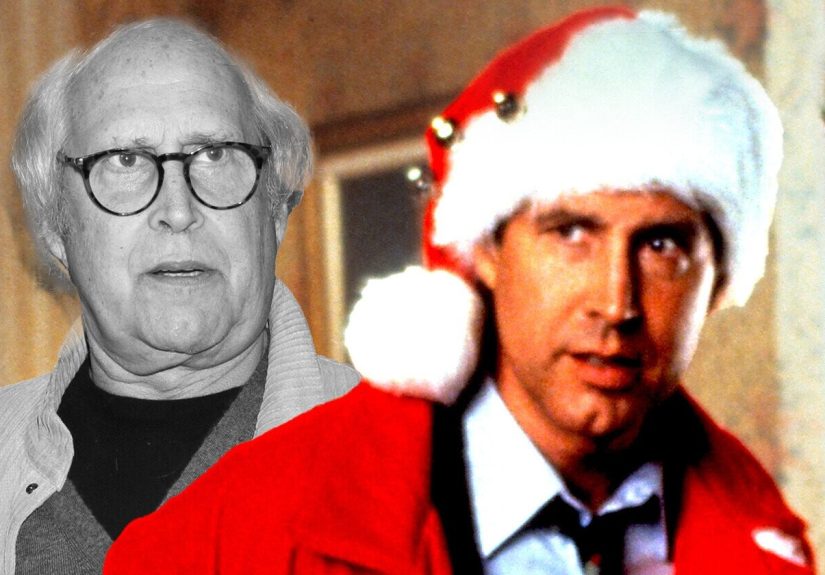
Watching Christmas Vacation during the holidays is less like watching a movie and more like opening a box of decorations you forgot you owned. Some pieces are charming, some are cracked, and one mystery ornament makes you wonder who in the family ever thought a glitter-covered pickle was necessary. But the whole box still feels like yours. That is the experience many viewers have with Chevy Chase at Christmastime: the comedy is familiar, the nostalgia is strong, and the complications are sitting right there in the corner wearing a Santa hat.
For many families, this movie is not introduced with a lecture about Chase’s career. It is introduced with laughter. A parent says, “You have to see this part.” An uncle quotes Cousin Eddie. Someone warns the younger viewers that the humor is a little rough around the edges. Then Clark appears, already trying too hard, and the room relaxes. The movie has the rhythm of a holiday gathering: people enter too loudly, things go wrong, tempers rise, and somehow everyone stays until the end.
The experience is also tied to the way Christmas makes people sentimental about imperfect men. Clark is not a model father or husband in the polished modern sense. He is impatient, unrealistic, and occasionally one bad bulb away from becoming a neighborhood hazard. But he cares. His dream of Christmas is overblown because his desire to create happiness is overblown. That is why viewers keep rooting for him even when he behaves like a man who should not be allowed near electrical equipment without supervision.
There is also something oddly comforting about a holiday movie that admits family togetherness can be unbearable. Many Christmas stories sell harmony; Christmas Vacation sells endurance. It understands that love sometimes means not screaming when a relative says something rude, brings an uninvited pet, or parks a suspicious vehicle in front of your house. In that setting, Chase’s gift for irritation becomes useful. He turns forced cheer into physical comedy. His smile tightens. His eyes widen. His voice climbs. Suddenly, every viewer who has ever hosted Christmas dinner feels seen.
At the same time, modern viewers are more aware than ever that beloved entertainment does not exist in a snow globe. The stories about Chase’s behavior do not disappear just because the movie is funny. A thoughtful rewatch can include that awareness. It can recognize that the performance is brilliant and that the performer’s reputation is complicated. It can laugh without worshiping. It can appreciate without erasing. That kind of viewing is not less joyful; it is simply more honest.
In my experience, the most interesting holiday classics are the ones that survive changing conversations. Christmas Vacation survives because it is not dependent on Chevy Chase being universally beloved. It is dependent on Clark Griswold being universally understandable. We know that desperate need to make one day beautiful. We know the panic of expenses, guests, expectations, and traditions that seem simple until we are responsible for them. We know the fantasy of standing under glowing lights and feeling, for once, that all the effort was worth it.
That is why Christmastime gives Chevy Chase a strange annual pardon. Not a total pardon, not a historical pardon, and not a demand that anyone ignore the record. It is more like a temporary holiday visa stamped “Clark Griswold may enter.” For a little while, the performance gets to be bigger than the discourse. The lights come on. The house glows. The family laughs. And somewhere between the squirrel, the sled, the bonus check, and the final explosion of holiday absurdity, we remember that comedy can be messy because people are messy.
Maybe that is the most honest way to watch Chevy Chase now. Do not flatten him into a saint because Christmas is cozy. Do not flatten him into a scandal because modern culture loves a clean verdict. Let the contradictions stand. Let the movie be funny. Let the stories matter. Let Clark Griswold hang one more impossible strand of lights across the roof of American holiday culture. And when everything finally sparks to life, laugh if you want to. Just do not pretend the wiring was ever simple.
Conclusion
Christmastime Is When We Seemingly Forgive All of Chevy Chase’s Sins because Christmas has always been a season of selective tenderness. Chevy Chase’s public legacy is complicated, full of groundbreaking comedy and uncomfortable stories. Yet National Lampoon’s Christmas Vacation remains a holiday staple because Clark Griswold is bigger than celebrity reputation. He is the patron saint of overdoing it, underestimating reality, and believing that one more decoration might finally make everything perfect.
The healthier way to enjoy the film is not to erase the complications, but to understand them. Chase’s career can be admired without being sanitized. The movie can be loved without becoming a defense brief. Every December, viewers return to Clark because he captures something painfully funny about the holidays: our expectations are absurd, our families are exhausting, and our best memories often begin as disasters. That is not forgiveness exactly. It is tradition, glowing stubbornly in the snow.