Table of Contents >> Show >> Hide
- At a Glance: The Short Answer
- Hardware Showdown: Power, Speed, and Storage
- Games and Exclusives: Where the Magic Happens
- Backward Compatibility and Your Old Library
- Online Services: Game Pass vs. PlayStation Plus
- Controllers and Overall Feel
- Price, Value, and Future-Proofing
- So…Which Console Is Right for You?
- Real-World Experiences: Living With a PS5 vs. Xbox Series X
You’ve finally decided: it’s time to join (or rejoin) the console wars. But now you’re staring at two sleek black boxes, the PlayStation 5 and Xbox Series X, wondering which one will actually make you happy and which one will become an expensive dust collector next to your TV.
The good news? Both consoles are fast, powerful, and built for 4K, high-frame-rate gaming. The better news? They have very different personalities. Choosing between PS5 and Xbox Series X isn’t just about teraflops; it’s about the games you love, how you play, and what you want your gaming life to look like for the next several years.
At a Glance: The Short Answer
If you just want the elevator pitch, here it is:
- Choose PS5 if you love cinematic single-player exclusives, want the amazing DualSense controller, and care a lot about PlayStation’s ecosystem (PS4 library, PS VR2, and now the PS5 Pro option for enthusiasts).
- Choose Xbox Series X if you want the most value for your money via Game Pass, care about backward compatibility across four generations of Xbox, and like the idea of your games and saves following you across console, PC, and cloud.
- Choose “both” if you have the budget, zero self-control around tech, and plan to live your best gamer life.
With that out of the way, let’s dig into the details so you can make a choice you won’t regret the first time a big exclusive drops.
Hardware Showdown: Power, Speed, and Storage
CPU and GPU: Tiny Numbers, Big Feelings
On paper, the Xbox Series X has a slight edge in raw GPU power. Microsoft’s box packs roughly 12 teraflops of GPU performance, while the PS5 sits at around 10.28 teraflops. In theory, that means Xbox can push slightly higher resolutions or more stable frame rates in some games.
In reality? For most third-party games (think big cross-platform titles like Call of Duty or Assassin’s Creed), the difference is usually tiny or invisible unless you’re pausing to zoom in on Digital Foundry comparison videos. Both consoles handle 4K, HDR, and up to 120 FPS in supported titles. Most people see “this looks great”, not “ah yes, a 7% performance gap.”
Storage and Load Times
Where Sony flexes is storage speed. The PS5’s custom SSD is famously fast, with raw bandwidth significantly higher than the Series X drive. That translates into:
- Very quick load times
- Fast fast-travel in open-world games
- Developers being able to stream in big, detailed worlds smoothly
The Xbox Series X SSD is no slouch; it also offers snappy loads and supports “Quick Resume,” which lets you hop between multiple games in a few seconds. That feature alone is a big quality-of-life win if you bounce between titles a lot.
For storage capacity, both consoles now generally ship with 1–2 TB SSDs depending on the model or bundle, but big modern games eat space like it’s free snacks. Both systems support expanding storage:
- PS5: Standard M.2 NVMe SSD slot, so you can shop for compatible drives and upgrade yourself.
- Xbox Series X: Uses proprietary expansion cards (and now, third-party versions), which are easy to use but often more expensive per gigabyte.
Design and Noise
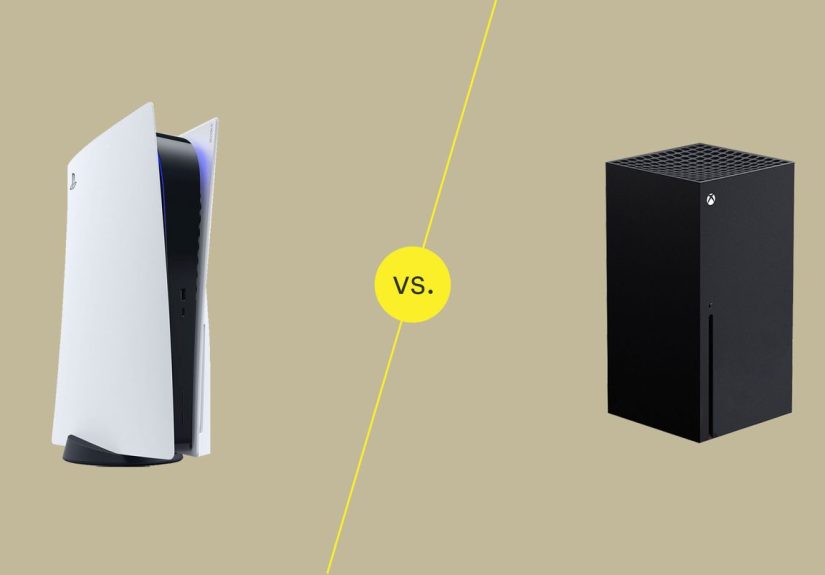
PS5: Tall, curvy, and dramaticlike it was designed by someone who really wanted you to notice you bought a next-gen console. Newer slim and Pro versions reduce the footprint a bit, but it’s still visually bold.
Xbox Series X: A simple black rectangular tower that blends into entertainment centers more easily. It looks like a high-end mini PC or a designer subwoofer that decided to get into gaming.
Both are impressively quiet in normal use. If your old console sounded like a jet engine, either of these will feel like you just put noise-cancelling on your living room.
Games and Exclusives: Where the Magic Happens
PlayStation 5: Single-Player Story Heaven
Sony’s biggest advantage has been consistent for years: exclusives. If you care about cinematic, story-driven experiences, the PS5 is stacked with heavy hitters from PlayStation Studios and partners, including:
- God of War Ragnarök
- Marvel’s Spider-Man 2
- Horizon Forbidden West
- Ratchet & Clank: Rift Apart
- Long tail of enhanced PS4 hits like Ghost of Tsushima and The Last of Us Part II
Many of these eventually show up on PC, but if you want to play them first on console, PS5 is still the place to be. If you love narrative adventures, emotional storytelling, and gorgeous visuals, Sony’s lineup feels like an all-star film festival where you get to swing a hammer, a sword, or a web.
You also get access to PlayStation VR2 (if you invest in the headset) and a growing catalog of PS5 and PS4 games enhanced for the Pro, offering higher resolutions and more stable frame rates for those who want a premium experience.
Xbox Series X: Game Pass and Player Freedom
Microsoft’s pitch is different: rather than a small handful of “must-play” exclusives, Xbox leans hard into value and variety.
With Xbox Game Pass, you get:
- A rotating library of hundreds of games, from AAA blockbusters to quirky indies
- All first-party Xbox games included on day one
- Cloud gaming options on supported devices so you can keep playing away from your couch
There are also strong exclusives and console-first titles in the mix (from series like Forza and Halo, plus new IPs), but the main draw is the “Netflix for games” experience. If you like trying many different titles without buying each one, the Series X with Game Pass is incredibly appealing.
Backward Compatibility and Your Old Library
PS5 is backward compatible with most PS4 games, and many of them run better thanks to the stronger hardware and SSD. That’s huge if you already have a PS4 library or plan to snag cheap PS4 titles on sale. But native support for PS3, PS2, and PS1 is limited; older generations are mostly handled via cloud streaming in certain regions and tiers of PlayStation Plus.
Xbox Series X, on the other hand, is famously good at backward compatibility. It supports a sizeable list of games from the original Xbox, Xbox 360, Xbox One, and Series X|S. Many of these older titles benefit from higher resolutions, better performance, or HDR upgrades. If you’ve been in the Xbox ecosystem for years, the Series X feels like all your past purchases coming with you into the future.
If preserving and upgrading your back-catalog of games matters a lot, Xbox wins this round.
Online Services: Game Pass vs. PlayStation Plus
Both consoles require a subscription for online multiplayer and offer game libraries as part of their services, but the structure is different.
Xbox Game Pass & Xbox Live Gold (now rolled into Game Pass Core/Ultimate)
- Game Pass Core / Ultimate: Online multiplayer plus access to a curated library.
- Game Pass Console & PC: Massive catalog of games, including all first-party titles day one, plus many third-party releases.
- Cloud gaming: Play select titles on other devices without downloading them locally.
For sheer game volume and convenience, Game Pass is tough to beat and is a major reason many people pick Xbox even if they like some PlayStation exclusives.
PlayStation Plus (Essential, Extra, Premium)
- Essential: Online multiplayer + monthly games + cloud saves.
- Extra / Premium: Access to a library of PS4 and PS5 titles, including some big-name exclusives, plus classic games and cloud streaming in select regions.
PlayStation Plus has improved and now offers solid value, especially if you missed some of the last-gen hits. But unlike Game Pass, most Sony first-party games don’t hit PS Plus on day one. They usually arrive months or years later, after their main sales window.
Controllers and Overall Feel
DualSense (PS5): The Immersion King
The DualSense controller is one of PS5’s standout features. Its adaptive triggers and advanced haptics can simulate everything from the tension of a bowstring to the patter of rain or the rumble of a speeding car. In well-supported games, it genuinely adds to immersion and makes the console feel “next-gen” beyond just visuals.
As Sony refines the DualSense (including newer models with improved features and battery options), the controller remains a big reason people fall in love with the PS5 experience.
Xbox Wireless Controller: Familiar, Comfortable, Reliable
The Xbox Series X controller is more evolutionary than revolutionary. It sticks to a familiar shape and layout that many players already like, with improved ergonomics, better grip textures, and a handy share button. It might not have the fancy haptics of the DualSense, but it’s:
- Comfortable for long sessions
- Widely supported on PC and mobile devices
- Available in tons of colors and special editions (plus Elite controllers for serious customizers)
If you want something that “just works” across devices, it’s excellent. If you want your controller to pretend it’s a tiny special-effects studio, DualSense is the star.
Price, Value, and Future-Proofing
Prices fluctuate based on region, bundles, seasonal sales, and hardware revisions. In general:
- Base PS5 / PS5 Slim: Often priced similarly or slightly lower than Series X in many markets, especially during promos.
- PS5 Pro: A premium, more expensive option geared toward enthusiasts who want the best performance and upgraded upscaling tech for 4K (and future titles like GTA 6).
- Xbox Series X: Often positioned as the powerful, “full-fat” Xbox, sometimes at a slight premium depending on local promotions.
On raw value, Xbox Series X plus Game Pass is hard to beat if you’re on a budget but want to play lots of different games. On the other hand, if you know you’ll buy specific Sony exclusives at launch and replay them, PS5’s value comes from quality over quantity.
In terms of future-proofing, both consoles are designed to last for years. PS5 now has the Pro model for people who want a mid-generation jump. Xbox may answer with its own refreshes, but even base Series X hardware is powerful enough that you won’t feel outdated anytime soon.
So…Which Console Is Right for You?
Here’s a quick personality test:
- The Story Lover: You live for cinematic, emotional, single-player epics. Choose PS5.
- The Variety Gamer: You want to try everything, from indies to AAA, without buying every game. Choose Xbox Series X with Game Pass.
- The Tech Enthusiast: You care about shiny visuals, high frame rates, and the most advanced controller features. Lean PS5 (or PS5 Pro).
- The Ecosystem Loyalist: Your friends are all on one platform, you own a bunch of old games, and you want to keep that going. Stick with the console you’re already invested inPS5 if you’re a PlayStation veteran, Xbox Series X if you’ve been on Team Xbox.
There’s no universally “better” console. There’s just the one that fits you better. Once you figure out your prioritiesgames, price, ecosystem, tech featuresthe right choice becomes a lot clearer.
Real-World Experiences: Living With a PS5 vs. Xbox Series X
Specs and bullet points are helpful, but what does it actually feel like to live with these consoles day-to-day? Let’s walk through a few realistic scenarios that might look suspiciously like your own life.
Scenario 1: The Busy Adult With Limited Time
You work, you have family or school, and gaming is your way to unwind for an hour or two at night. On PS5, that might mean slowly working your way through a big single-player exclusive like Spider-Man 2 or God of War Ragnarök. You play a chapter, enjoy the story, and put it down until tomorrow. The experience feels curatedalmost like binge-watching a prestige TV show, but you’re in control of the action.
On Xbox Series X with Game Pass, your nights might look different. One evening you’re trying a brand-new indie that just dropped, the next night you’re experimenting with a racing game, and on the weekend you dive into co-op with friends. You don’t feel locked into a single game; instead, the whole library feels like a buffet. If you’re the type who gets bored easily or likes to “game sample,” Xbox may match your habits perfectly.
Scenario 2: The Friend Group Factor
Let’s be honest: sometimes the “right” console is simply the one your friends have. Cross-play helps, but not every game supports it equally, and party chat is smoother when everyone is on the same platform.
If most of your friends are already on PlayStation, PS5 makes it easier to join their party chats, jump into shared games, and compare trophies. If your group is deep into Xboxespecially long-time players with 360 and One-era collectionsSeries X is a no-brainer so you can tap into their Game Pass recommendations and co-op sessions.
The emotional experience of gaming with friends often ends up mattering more than slightly sharper shadows or faster textures, so don’t underestimate this factor.
Scenario 3: The “Family Console” in the Living Room
If you’re buying a console that’s going in the main living room, used by kids, guests, and adults, both systems can do the jobbut they shine in different ways.
On PS5, family-friendly games and mainstream hits are easy to find, and the interface is clean and approachable. The DualSense can wow guests when they feel the advanced haptics for the first time. Parents who love single-player adventures can enjoy their “story time” after the kids go to bed.
On Xbox Series X, a Game Pass subscription turns the console into an endless toy box. Kids can jump between racing games, platformers, and party titles without you needing to buy each one individually. If you’re setting up multiple Xbox consoles or mixing Xbox and PC in the house, sharing libraries and accounts is also straightforward. For a family that loves variety and experiments a lot, Series X plus Game Pass feels incredibly convenient.
Scenario 4: The Tech Nerd With a 4K TV and Big Plans
If you’re the sort of person who actually tweaks TV settings, knows what VRR and 120 Hz mean, and owns a soundbar you’re far too proud of, both consoles will keep you happybut PS5 with the Pro option may tempt you more.
You’ll notice things like smoother 4K performance, better upscaling in optimized games, and improved ray tracing support. Add in the DualSense’s nuanced haptics, and you’re maximizing every inch of that fancy screen and sound system.
On the Xbox side, you still get robust 4K and high-frame-rate performance, rock-solid HDR implementation, and excellent support for modern TV features. For tech fans who also value flexibilityespecially if you split time between console and PCXbox still delivers a polished, “power user friendly” experience.
Scenario 5: The “One Console for the Next 5–7 Years” Buyer
Maybe you’re not planning to buy another console until this one gives up. In that case, think long-term:
- If you want a curated pipeline of big cinematic blockbusters roughly every year or two, and you’re excited about future PlayStation exclusives, PS5 is a safe bet.
- If your priority is having an ever-changing library of games to explore without constantly spending $60–$70 per title, Xbox Series X plus Game Pass feels future-ready.
In both cases, you’re getting a powerful, modern console that will stay relevant for years. The real difference is how you want your gaming life to feelfocused on big, unforgettable blockbusters, or wide and adventurous with endless variety.
Once you answer that question honestly, you’ll know whether the PS5 or Xbox Series X is truly the right console for you.

![18 Best Types of Charts and Graphs for Data Visualization [+ How to Choose]](https://corkopencoffee.org/wp-content/uploads/2026/05/18-best-types-of-charts-and-graphs-for-data-visualization-how-to-choose-qKM1PBYG-thumb.jpg)