Table of Contents >> Show >> Hide
- Meet the Linux Distro That Boots You Straight Into Python
- Why This Idea Is So Ridiculously Appealing
- What Makes snakeware Different From a Normal Linux Distro
- Where Python Really Can Be “All You Need”
- Where the Fantasy Meets Reality
- So Who Is This Python Linux Distro Actually For?
- The Bigger Idea Hidden Inside the Joke
- Experience: What It Actually Feels Like to Live in a Python-First Linux World
- Conclusion
- SEO Tags
If you’ve ever opened a Linux terminal and thought, “This is nice, but what if my whole computer spoke fluent Python?” then congratulations: your inner chaos gremlin has excellent taste. That delightfully oddball idea is the heart of snakeware, a Python-first Linux distro that asks a question most mainstream operating systems politely avoid asking at dinner parties: What if the user space was basically all Python?
And no, this is not one of those “Linux for everyone” stories where the answer is secretly just Ubuntu with a prettier wallpaper and a sticker that says developer edition. This is a much nerdier, much more charming experiment. In snakeware, Python is not just another language installed on the system. It is the mood, the interface, the playground, and in many ways the star of the show.
That makes this distro fascinating for Python fans, Linux tinkerers, educators, and anyone who has ever wanted a computer that feels a little more like a programmable toy box and a little less like an office copier with kernel modules. But it also raises an obvious question: can Python really be all you ever need in a Linux distro?
The honest answer is: for some people and some use cases, surprisingly often. For everyone else, it is still an idea machine, not a full replacement for a conventional desktop Linux setup. And that is exactly why it is worth talking about.
Meet the Linux Distro That Boots You Straight Into Python
snakeware is a free Linux distribution built around a Python-based user space. Instead of treating Python as a handy scripting language living quietly beside the shell, snakeware drags Python to the center of the stage and hands it the microphone. Boot the system, and you are dropped directly into a Python interpreter. Right away, the message is clear: this machine expects you to think in Python first.
That one design choice changes the entire vibe. Traditional Linux distros greet you with a desktop environment, a login manager, or a shell. snakeware says, “Here is a prompt. Please begin talking to your computer like a programmer.” It is a little old-school, a little futuristic, and a lot more fun than it has any right to be.
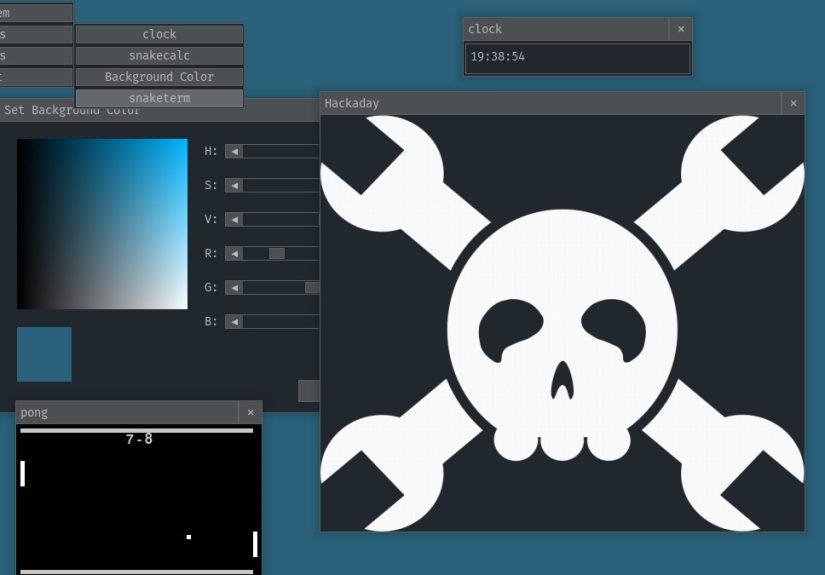
The distro also includes snakewm, a lightweight graphical environment written in Python with pygame and pygame_gui. That means the graphical layer is not pretending to be a giant conventional desktop stack. It is intentionally lean, approachable, and hackable. If most Linux desktops feel like apartment buildings, snakeware feels like a treehouse you built yourself and are still adding weird windows to on weekends.
That spirit matters. The project is not just trying to prove that Python can run on Linux. Of course it can. The point is to show that Python can become the primary way a user interacts with the system. It is less “install Python on Linux” and more “what happens when Python is the personality of Linux?”
Why This Idea Is So Ridiculously Appealing
Python Already Feels Like a Better Shell for Many Tasks
Part of snakeware’s appeal is that it takes a truth Linux users already know and pushes it to the extreme. Python is often a better fit than shell scripting once tasks get even slightly messy. Need to walk a directory tree, parse data, make HTTP requests, rename a hundred files, launch subprocesses, or build a quick little utility? Python is usually more readable, more maintainable, and far less likely to turn into a punctuation crime scene.
Classic shell tools are still fast and powerful, but they can get brittle in a hurry. Bash is fantastic until your “simple script” grows tentacles. Python, by contrast, scales gracefully from one-liner experiments to full applications. It gives you batteries-included modules, third-party packages, and syntax that does not make your future self file a complaint.
That is why a Python Linux distro feels less absurd than it sounds. Many Linux users already use Python as glue code for system administration, automation, packaging workflows, data handling, and development tasks. snakeware just removes the pretense and says the quiet part out loud: if Python is already doing half the work, why not let it run the room?
The REPL Is No Longer a Sad Little Waiting Room
Another reason the idea lands better now than it might have a decade ago is that Python’s interactive experience has improved. Modern Python makes the REPL feel more capable and far less like a dusty emergency exit. In current versions, the default interactive shell supports features like multiline editing, history browsing, paste mode, and even syntax highlighting.
That matters because snakeware is built around the idea that the interpreter is not just a tool you visit occasionally. It is home base. If you are going to live in a Python prompt, it helps when that prompt behaves like it was designed sometime after flip phones peaked.
Better still, Python’s REPL is naturally friendly to experimentation. You can test snippets, inspect objects, automate tasks, launch processes, and prototype ideas without ceremony. It is a format that encourages curiosity, and snakeware leans hard into that. This is a distro for people who enjoy asking, “What happens if I try this?” and then immediately trying it.
It Lowers the Barrier to Contribution
One of the smartest things about snakeware is philosophical, not technical. By making the user space largely Python, the project lowers the barrier to contribution. Python is widely taught, widely used, and generally easier for beginners to read than a lot of systems code. That means a curious learner can meaningfully poke around sooner.
Instead of needing deep knowledge of a giant desktop stack, a new contributor can build or tweak apps in a language they may already know. That gives the distro a playful educational quality. It feels like a Linux distribution and a programming sandbox had a very productive coffee date.
What Makes snakeware Different From a Normal Linux Distro
Here is where we should separate the fun headline from the practical reality. snakeware is not claiming that Python replaces the Linux kernel, the bootloader, or every low-level system component. The system is still Linux underneath. Drivers, hardware support, boot processes, and other foundational pieces remain part of the usual operating system world.
The radical part is the user space: the programs and environment a human actually interacts with. That is where snakeware tries to make Python the default language, default interface, and default way of thinking. Instead of piling a thick stack of traditional userland layers on top, it keeps the concept tight and intentionally opinionated.
That is also why the project feels more like a statement than a product. Conventional Linux distros optimize for broad compatibility, mature packaging, enterprise stability, or polished daily-driver usability. snakeware optimizes for hackability, experimentation, approachability, and the pure joy of seeing a bold idea actually boot.
In other words, Ubuntu wants to help you get work done. snakeware wants to make you grin and immediately start opening files you probably should not edit before coffee.
Where Python Really Can Be “All You Need”
Within the right boundaries, the title is not just clicky. It is defensible. Python can cover a shocking amount of ground in a Linux environment:
1. Automation and System Tasks
Python excels at the kind of repetitive, file-heavy, process-heavy work Linux users do all the time. With the standard library alone, you can inspect directories, move files, parse configuration data, work with JSON, open sockets, handle paths sanely, and launch external commands. That already replaces a huge chunk of ad hoc shell scripting.
2. Interactive Experimentation
A Python prompt is a natural command center for trying ideas quickly. You can test logic, inspect system state, run commands, and iterate without creating a full project. For learners and tinkerers, that feels empowering in a way a conventional terminal sometimes does not.
3. Small Apps and Desktop Toys
Because snakewm is built with Python tools, the distro encourages simple graphical experimentation. Tiny utilities, games, widgets, and proof-of-concept applications fit the environment nicely. The line between “user” and “maker” gets refreshingly blurry.
4. Learning Linux Through a Friendlier Language
Linux can feel intimidating because it often asks beginners to understand many layers at once. Python gives you a gentler entry point. A distro like snakeware lets people explore operating system ideas with a language that is usually easier to read than shell, C, or sprawling desktop framework code. That makes it an unusually interesting teaching tool.
Where the Fantasy Meets Reality
Now for the responsible adult section of the article. Python is powerful, but it is not fairy dust.
First, performance is still a real consideration. Python is fantastic for developer speed, but not every systems task wants the overhead of an interpreted language. If your goal is maximum efficiency at every layer, a Python-heavy user space is going to raise eyebrows, and not the flattering kind.
Second, package management on Linux is more complicated than “just pip install everything and ride into the sunset.” Modern Python packaging guidance strongly encourages using virtual environments for third-party packages, and Linux distributions increasingly mark their base Python environments as externally managed. Translation: your system Python and your project Python should not be treated like roommates sharing one toothbrush.
That is important because mainstream Linux distros are built around OS package managers for stability and maintainability. snakeware is fun precisely because it is willing to blur boundaries that conventional distros keep carefully separated. That makes it exciting, but it also makes it more experimental than practical for many production-style workflows.
Third, snakeware’s graphical environment is intentionally lightweight. This is not trying to out-GNOME GNOME or out-KDE KDE. If you expect a full mainstream desktop experience with polished hardware support, mature integrations, and a thousand convenience features, snakeware will gently hand you a Python prompt and wish you emotional resilience.
So Who Is This Python Linux Distro Actually For?
Quite a few people, actually.
If you are a Python developer, snakeware is a fascinating thought experiment made real. It shows how far Python can stretch as a user-facing systems language.
If you are an educator or learner, it is compelling because it turns the operating system into a teaching surface. The machine itself nudges you toward experimentation.
If you are a Raspberry Pi hobbyist or retro-computing fan, the project has extra charm. Its stripped-down, interpreter-first feel evokes the era when home computers invited people to type code instead of burying them under layers of glossy abstraction.
If you are a Linux purist who enjoys unusual design choices, snakeware is simply interesting. It proves that the Linux distro landscape still has room for projects that are weird on purpose.
Who is it not for? People who need a bulletproof enterprise workstation by Monday morning. People who hear the phrase “proof of concept” and immediately develop a rash. People who want every app, driver, and workflow to behave exactly like a mainstream distro. Those folks should absolutely keep their sensible Fedora or Ubuntu install, and frankly they are probably sleeping better because of it.
The Bigger Idea Hidden Inside the Joke
What makes snakeware more than a novelty is that it points to a larger truth about Linux and software design. We often accept the default stack because it is familiar, not because it is inevitable. snakeware asks what happens when you optimize a distro around approachability and programmability instead of tradition.
That makes it valuable even for people who never plan to install it. It reminds us that user space is not sacred. Desktop conventions are not laws of physics. Shells, window managers, and application layers are design choices, and design choices can be reimagined.
In that sense, snakeware is less about replacing your current distro and more about expanding your imagination of what a Linux distro can be. The project is charming because it is opinionated, but it is useful because it exposes assumptions most of us stopped noticing years ago.
Experience: What It Actually Feels Like to Live in a Python-First Linux World
Imagine turning on your computer and landing not in a desktop full of icons, notifications, and urgent little status badges, but in a Python interpreter. No giant application launcher. No crowded panel daring you to debug your audio settings before breakfast. Just a clean prompt inviting you to start shaping the machine with code. The experience feels less like using a sealed appliance and more like stepping into a workshop before the project begins.
That changes your mindset almost immediately. In a conventional distro, you usually think, “Which app should I open?” In a Python-first distro, the question becomes, “What should I make this system do?” That is a subtle but powerful shift. Even tiny tasks feel more participatory. Need to inspect files? You can script it. Want to rename a batch of images? You can script it. Curious about the system state? You can inspect it live. The computer stops feeling like a vending machine for prebuilt software and starts feeling like a programmable instrument.
There is also a surprising sense of calm in the minimalism. Because the environment is intentionally lightweight, it encourages focus. You are not drowning in layers of desktop abstraction. You are closer to the logic of what the machine is doing. For beginners, that can be eye-opening. For experienced developers, it can be refreshing. It is the rare kind of computing experience that feels both stripped down and full of possibility at the same time.
Of course, living this way is not always convenient. A Python-centric workflow rewards curiosity, but it also expects initiative. If you are used to full mainstream desktop polish, a project like this can feel delightfully clever for the first hour and a little demanding by the third. Some tasks that are effortless on a mature desktop may require tinkering, improvisation, or a willingness to embrace rough edges. The fun is real, but the friction is real too.
Still, that friction is part of the appeal for the right audience. It makes the system memorable. It makes you notice the layers you usually ignore. It teaches by exposing structure. And in a world of software that increasingly tries to hide its own machinery, there is something oddly satisfying about a distro that says, “Here is the machine. Here is Python. Good luck, have fun.”
That is why snakeware sticks in your head. It is not merely a Linux distro with Python installed. It is a computing experience organized around the idea that programming can be the primary interface, not a secondary skill. For a student, that can feel empowering. For a hobbyist, it can feel playful. For a seasoned Linux user, it can feel like rediscovering the joy of experimentation that probably got them into this stuff in the first place.
And even if you never daily-drive it, spending time with a concept like this has a way of changing how you see “normal” systems. You come away noticing just how much of modern computing is convention, not necessity. That alone makes the experience worthwhile.
Conclusion
Python Is All You’ll Ever Need In This Linux Distro is a bold title, but in the case of snakeware, it is not empty hype. The project genuinely explores what happens when Python becomes the main language of user interaction, the basis of the graphical environment, and the friendliest path into the system. It is clever, educational, approachable, and just rebellious enough to be interesting.
Is it the future of Linux for everyone? Probably not. Is it one of the most entertaining and thought-provoking examples of a Python Linux distro in recent memory? Absolutely. And in a tech world that often mistakes sameness for maturity, that kind of experiment is worth celebrating.
Sometimes the most useful projects are not the ones that replace the mainstream. They are the ones that remind us the mainstream was a choice all along.