Table of Contents >> Show >> Hide
- First, what are we actually comparing?
- Nutrition showdown: protein, fiber, and the stuff your body actually notices
- Health benefits, broken down by goal
- Potential downsides and “gotchas” worth knowing
- Which one should you choose? A practical guide
- Smart ways to “upgrade” any rice or quinoa meal
- Bottom line
- Real-World Experiences: What People Commonly Notice
- “Quinoa keeps me full longer” is a very normal observation
- Brown rice feels familiarbut “heavier” to some people
- White rice is the “comfort carb” for a reason
- Quinoa wins for “easy protein upgrades” in plant-forward cooking
- Budget and availability shape habits more than anyone admits
- Small swaps are usually more sustainable than dramatic overhauls
Quinoa and rice have one thing in common: they’re both masters of showing up to dinner and making everything else look more organized.
But nutritionally? They’re not identical twinsmore like cousins who share a last name and very different hobbies.
If you’ve ever wondered whether quinoa is truly “healthier” than rice (or just better at being photographed next to avocado),
this guide breaks it down in a practical, science-based waywithout turning your plate into a math worksheet.
First, what are we actually comparing?
“Rice” is a big family. When most people say rice, they usually mean white rice or brown rice.
White rice is typically refined (the bran and germ are removed), while brown rice keeps those layers, making it a whole grain.
Quinoa, meanwhile, is technically a seed but cooks and eats like a grainoften called a “pseudo-cereal.”
It’s also naturally gluten-free, which makes it popular for people avoiding gluten.
Why the type of rice matters
Comparing quinoa to “rice” without specifying the type is like comparing a laptop to “phones.”
Brown rice (whole grain) generally brings more fiber and micronutrients than white rice (refined).
So the most useful comparison is really:
quinoa vs. white rice and quinoa vs. brown rice.
Nutrition showdown: protein, fiber, and the stuff your body actually notices
Quinoa and rice are both carbohydrate-based staples, so neither is “low-carb.”
The bigger differences come down to protein quality, fiber content, and how your body processes them.
Here’s what typically separates the two.
Protein: quinoa has the edge (and it’s not subtle)
Cooked quinoa is known for having more protein than cooked rice in similar portions. One standout detail:
quinoa is often described as a complete protein, meaning it contains all nine essential amino acids.
Most grains are lower in certain amino acids (notably lysine), but quinoa tends to be more balanced.
In real life, this matters most if you rely heavily on grains for meals (especially in plant-forward diets).
If dinner is “grain + vegetables” more often than “grain + chicken,” quinoa can help bump up protein without adding another food group.
Fiber: brown rice and quinoa both help, white rice… not so much
Fiber is where the “which rice?” question becomes the whole story.
Whole grains provide more fiber than refined grains, and fiber does a lot of behind-the-scenes work:
it slows digestion, supports gut health, and can help keep blood sugar steadier after meals.
Quinoa and brown rice both contribute meaningful fiber, while white rice typically contributes far less.
That difference can affect fullness (satiety) and how quickly you’re hungry again.
If you’ve ever eaten a big bowl of white rice and then found yourself rummaging for snacks an hour later,
that’s not a moral failingthat’s physiology.
Blood sugar response: what happens after you eat it
The glycemic index (GI) is one tool used to estimate how quickly carbohydrate foods raise blood sugar.
Foods with more fiber and/or protein tend to digest more slowly, often producing a gentler rise.
That’s why intact or whole grains (and grain-like foods such as quinoa) are often recommended as smarter carb choices than refined grains.
A key nuance: GI isn’t the entire story. Your portion size, what you eat with the grain (protein, fat, fiber),
and even how it’s prepared can shift the real-world impact.
Rice paired with salmon and vegetables is a different experience than rice paired with… more rice.
Health benefits, broken down by goal
1) Better fullness and steadier energy
If your goal is “stay full longer” and “avoid the snack spiral,” quinoa and brown rice usually outperform white rice.
Fiber helps slow digestion, and quinoa’s extra protein can add to that staying power.
For many people, this translates into fewer energy dips and less “Why am I starving again?” confusion.
2) Heart health: whole grains tend to win
Whole grains are consistently associated with cardiovascular benefits in dietary guidance and nutrition education:
better cholesterol patterns, improved metabolic markers, and overall support for heart-healthy eating patterns.
Brown rice qualifies as a whole grain, and quinoa is commonly grouped with whole grains in practical guidance because it offers similar benefits
(fiber, minerals, and a more intact structure than refined grains).
In plain English: if you’re choosing between quinoa, brown rice, and white rice,
quinoa and brown rice are usually the more heart-friendly choicesespecially when they replace refined grains.
3) Blood sugar management and insulin sensitivity
For people focused on prediabetes, insulin resistance, or general blood sugar steadiness, the “whole vs. refined” distinction matters.
Fiber-rich grains and intact grains tend to raise blood glucose more slowly than refined grains,
which is why many diabetes-friendly plate guides and carb education materials highlight options like quinoa and brown rice.
Practical tip: portion and pairing often matter as much as the grain choice.
Keeping grain portions reasonable and pairing them with non-starchy vegetables plus a protein
can make quinoa or rice fit smoothly into a blood-sugar-friendly meal.
4) Digestive health and gut support
Fiber doesn’t just help you “stay regular” (though it does that too, with impressive dedication).
Different types of fiber can help feed beneficial gut bacteria, slow digestion, and reduce post-meal spikes.
Quinoa and brown rice contribute more fiber than white rice, making them stronger choices for digestive support.
5) Gluten-free needs: quinoa is an easy yes
Quinoa is naturally gluten-free and widely used in gluten-free eating patterns.
Rice is also naturally gluten-free, but the benefit of quinoa is that it brings extra protein and fiber to the table,
which can help balance gluten-free meals that otherwise lean heavily on refined starches.
(The one caution: if you have celiac disease, always watch for cross-contact in processing facilities for any grain-like food.)
Potential downsides and “gotchas” worth knowing
Rice and arsenic: a real concern, but not a reason to panic
Rice can absorb inorganic arsenic from the environment more readily than some other crops.
Health agencies have looked closely at this, especially for infants and young children who might consume rice cereal or rice-based snacks often.
The most practical takeaway for most people is not “never eat rice,” but rather:
vary your grains and avoid relying on rice as the only staple day after day.
One more nuance: rinsing rice may remove some surface starch, but research referenced by the FDA suggests rinsing has minimal effect on arsenic levels
and may wash away some nutrients from certain types of rice.
The safest, simplest strategy is variety: rotate quinoa, oats, barley, farro, whole wheat, and other grains (as tolerated),
so no single food dominates your weekly menu.
Quinoa and “soapy” bitterness
Quinoa naturally contains compounds called saponins on the outer coating, which can taste bitter if not rinsed well.
Many packaged quinoas are pre-rinsed, but if your quinoa tastes like it tried to clean your mouth with dish soap,
a quick rinse and drain before cooking can help.
(Your taste buds deserve a safe workplace.)
Digestive adjustment
If you’re not used to higher-fiber eating, jumping from white rice to quinoa-all-day-every-day can feel like your digestive system is staging a protest.
A gradual shiftmixing quinoa with rice, increasing portion size slowly, and drinking enough watercan make it easier.
Which one should you choose? A practical guide
Choose quinoa more often if you want…
- More protein per serving without adding meat or dairy
- A complete protein option for plant-forward meals
- More fiber than white rice, with a nutty, hearty texture
- Gluten-free variety beyond the usual rice routine
Choose brown rice more often if you want…
- A familiar taste with more nutrition than white rice
- Whole-grain benefits at a typically lower cost than quinoa
- A great base for stir-fries, bowls, and meal prep
Choose white rice (yes, it can still fit) if you want…
- Something gentle when you’re dealing with a sensitive stomach
- Fast-digesting carbs around intense activity (some athletes prefer this)
- A budget-friendly staple you can pair with fiber-rich foods (beans, vegetables)
The healthiest choice is often less about the grain in isolation and more about the meal you build around it.
If your bowl is half vegetables, includes a protein, and uses a reasonable portion of grains,
quinoa, brown rice, or even white rice can all be part of an overall healthy eating pattern.
Smart ways to “upgrade” any rice or quinoa meal
- Pair carbs with protein: chicken, tofu, eggs, fish, Greek yogurt sauces, beans, or lentils.
- Add volume with vegetables: roast a sheet pan of veggies and toss them into bowls all week.
- Use healthy fats: olive oil, avocado, nuts, seedssmall amounts add satisfaction.
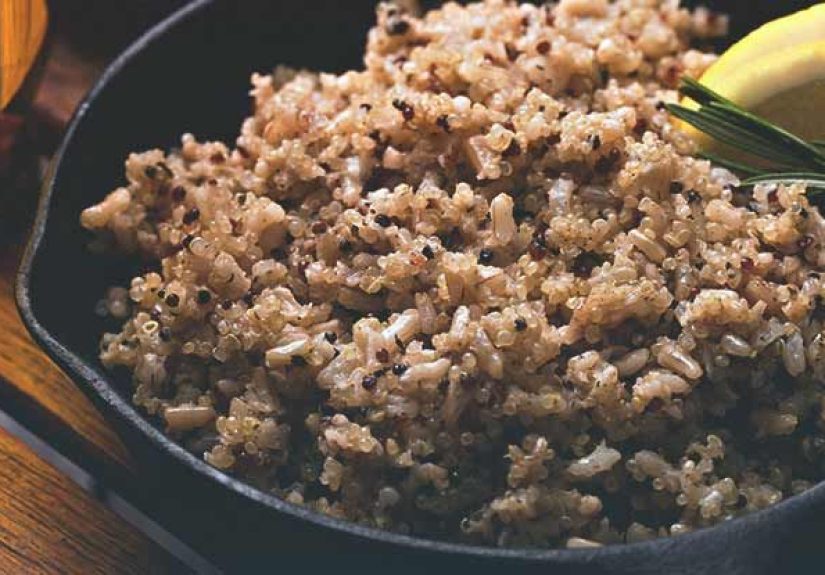
- Try mixed grains: half quinoa, half brown rice can be a “best of both worlds” move.
- Watch the sneaky stuff: sugary sauces can turn a healthy grain bowl into dessert cosplay.
Bottom line
If we’re talking pure nutrition per bite, quinoa often beats white rice thanks to more protein, more fiber,
and a complete amino acid profile. But brown rice closes the gap by delivering whole-grain benefits and useful fiber
at a usually friendlier price.
The most “healthy” choice is the one you can enjoy consistentlywhile keeping your overall diet balanced and varied.
Rotate your grains, choose whole grains often, and build meals that include vegetables and protein.
Your body doesn’t need perfection; it needs patterns.
Real-World Experiences: What People Commonly Notice
Nutrition charts are helpful, but day-to-day eating is where quinoa vs. rice becomes real. Here are some common experiences people report
when they swap between quinoa, brown rice, and white riceplus a few practical examples that make the differences easier to feel, not just read.
“Quinoa keeps me full longer” is a very normal observation
Many people notice that a quinoa bowl holds them over longer than an equal-size bowl of white rice. The reason isn’t magicit’s mechanics:
quinoa brings more protein and usually more fiber than white rice, and those slow digestion. In practice, that can look like:
you eat lunch at noon, and at 3 p.m. you’re still functioning like a reasonable human instead of hunting for snacks like a raccoon with deadlines.
A simple example: a quinoa-and-veggie bowl with chickpeas (or chicken) often feels “complete” without needing extra sides.
The same bowl built on white rice can still be healthy, but people often find they want more protein or fiber to feel satisfied.
Brown rice feels familiarbut “heavier” to some people
Brown rice has a chewy texture and a nuttier taste than white rice. Some people love that and feel like it makes a meal more substantial.
Others find it a little too dense, especially if they grew up eating fluffy white rice daily. A common compromise is mixing:
half brown rice + half white rice (or half quinoa + half rice). That blend keeps the texture friendly while nudging nutrition in a better direction.
Meal prep fans often point out that brown rice holds up well for leftoversless likely to turn mushy than some white rice varieties.
In bowls, stir-fries, and soups, that sturdiness can be a perk.
White rice is the “comfort carb” for a reason
White rice gets a bad reputation online, but in real life, it’s often the easiest grain to digest and the most universally loved.
People with sensitive stomachs sometimes tolerate white rice better than higher-fiber grains. Athletes doing intense training may also use white rice
because it’s a convenient source of fast-digesting carbohydratesespecially when they need energy and don’t want a lot of fiber sitting heavily.
The key experience-based hack is pairing. When people add fiber and protein to a white-rice meal, it often “behaves” differently:
think white rice with salmon, edamame, and a big cucumber salad; or white rice with beans and sautéed greens.
The rice isn’t the whole storythe meal composition is.
Quinoa wins for “easy protein upgrades” in plant-forward cooking
People who eat less meat often like quinoa because it quietly supports protein goals without changing their whole routine.
For example, a vegetarian taco bowl with quinoa, black beans, salsa, roasted peppers, and avocado can feel balanced even without cheese or sour cream.
Similarly, quinoa works well in cold saladssomething rice can do too, but quinoa’s texture often stays pleasantly springy after chilling.
Budget and availability shape habits more than anyone admits
In everyday life, rice is often cheaper and easier to find in large bags, especially in households that cook grains frequently.
Quinoa can cost more, but people who buy it in bulk often say it becomes a “weekly staple” once the price feels manageable.
A practical pattern is using rice for large family meals (stir-fries, curries) and quinoa for smaller batches (lunch bowls, salads).
Small swaps are usually more sustainable than dramatic overhauls
One of the most consistent experiences is that people stick with changes that don’t feel like punishment.
Instead of “Never eat white rice again,” the sustainable moves tend to be:
switching to brown rice sometimes, using quinoa in a couple meals per week, mixing grains, or improving the meal around the rice.
The result is less diet drama and more long-term consistencywhich is where health benefits actually come from.

![18 Best Types of Charts and Graphs for Data Visualization [+ How to Choose]](https://corkopencoffee.org/wp-content/uploads/2026/05/18-best-types-of-charts-and-graphs-for-data-visualization-how-to-choose-qKM1PBYG-thumb.jpg)