Table of Contents >> Show >> Hide
- What the Remodelista Holiday Market Was (and Why It Mattered)
- The Essentials: Date, Location, and the “What You Need to Know” Stuff
- The Vendor Lineup: A Crash Course in “California Cool” Shopping
- How People Shopped the Market: Strategies That Still Work Today
- Why the 2014 LA Market Still Feels Relevant
- 500-Word Experience Appendix: What It Felt Like to Be There (and How to Recreate It)
- Conclusion
If you were in Los Angeles on Saturday, December 6, 2014 and you had even a passing interest in
good-looking objects (or you just enjoy the sport of “buying gifts that make you look like a thoughtful genius”),
the Remodelista Holiday Market was basically your Super Bowlonly with fewer commercials and more
hand-thrown ceramics.
Hosted at Big Daddy’s Antiquesa warehouse of beautiful old things just begging to be adoptedthe
market packed in a curated lineup of California designers and indie shops. Entry was free, the vibe was equal parts
laid-back and design-nerdy, and the shopping was the kind that makes you say, “I’m not impulse buying; I’m
investing in craft.” (Totally different. Obviously.)
What the Remodelista Holiday Market Was (and Why It Mattered)
Remodelista’s markets weren’t dreamed up in a corporate boardroom with a “synergy” whiteboard. They started as a
simple idea: gather favorite makers and designers, bring readers together, and turn holiday shopping into something
closer to a party than a parking-lot endurance test.
By 2014, the concept had matured into a proper seasonal ritual. The LA edition landed at Big Daddy’s Antiques and
focused on what Southern California does best: easy style, high taste, and the kind of sunlight that makes even
a tote bag look editorial.
The Essentials: Date, Location, and the “What You Need to Know” Stuff
When and where
- Date: Saturday, December 6, 2014
- Hours: 10 a.m. to 5 p.m.
- Venue: Big Daddy’s Antiques, 3334 S La Cienega Place, Los Angeles (near Culver City)
- Admission: Free
- Parking: Valet was available
Food and fuel (a.k.a. shopping insurance)
Shopping is cardio for people who don’t like cardio. Thankfully, Valerie Confections was part of the
dayserving coffee and treatsbecause nobody makes wise gift decisions while operating on “two almonds and ambition.”
Gardenista x Terrain: the outdoorsy glow-up
One of the charming 2014 twists: a dedicated Gardenista section plus DIY workshops
with Terrain involved. Translation: you could shop for the home and for the garden, then
learn how to make something seasonal without having to pretend you’ve been “really into wreaths lately.”
The Vendor Lineup: A Crash Course in “California Cool” Shopping
The LA 2014 market promised more than 30 designers and indie shopsan intentionally mixed bag of
home goods, personal accessories, apothecary, textiles, and objects that make you want to redecorate your entire life
(starting with your entryway and your habits).
Here are a few standout names that help capture the market’s personality:
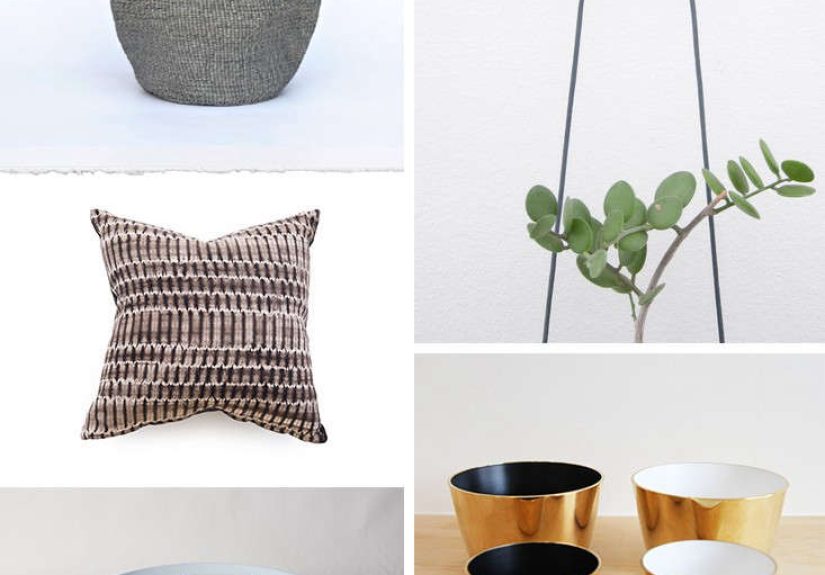
Block Shop Textiles: pattern with a pulse
Block Shop brought hand-block-printed textiles with the kind of modern geometry that looks equally
good draped on a chair, wrapped around a neck, or artfully “accidentally” left out on a bed. The brand’s roots in
handmade production and craft-forward design made it the perfect market match: elevated, not preciousspecial, but
still usable.
Brendan Ravenhill (Ravenhill Studio): lighting that feels like a “forever” piece
If you’ve ever stared at your ceiling fixture and thought, “You’re not ugly, but you’re not doing anything for me,”
then you understand why Brendan Ravenhill resonated. His work is known for being built to last,
grounded in craft, and tied to American manufacturing. Holiday shopping, but make it heirloom-adjacent.
wrk-shp: smart, functional objects with clean lines
wrk-shp leaned into practical design: home goods that feel calm and intentional. A highlight from
the era: concrete-and-wood details and straightforward forms that look good in real houseswhere people live, cook,
and occasionally stack mail in a way that is not “minimalist,” just “Tuesday.”
Le Feu de L’Eau: candles with an art-school soul
The market also included Le Feu de L’Eau, known for hand-labeled candles with a distinctive design
sensibility. It’s the kind of gift that says, “I know your taste,” without the awkwardness of actually saying,
“I know your taste.”
Edible Gardens LA and other home-and-outdoor favorites
The LA Times preview noted vendors like Edible Gardens LA alongside a strong mix of makers across
ceramics, clothing, and home goodsexactly the kind of variety that makes it easy to knock out a gift list without
defaulting to “gift card plus guilt.”
How People Shopped the Market: Strategies That Still Work Today
Even though this was a single-day event in 2014, the way it encouraged people to shop is timeless: buy fewer things,
buy better things, and meet the humans who made them. Here are a few market-tested approaches that were especially
useful in a lineup like this:
1) Start with the “easy wins”
Textiles, candles, small ceramics, and apothecary goods are gift-list lifesavers. They’re personal without being too
personal, stylish without being risky, and they don’t require the recipient to own a power drill. (A win for everyone.)
2) Buy one “statement” gift for your hardest person
Every family has one: the person who already owns everything, including confidence. In 2014 LA, lighting, jewelry,
and design-forward home objects were the move. One strong piece beats five “nice” items that quietly migrate to a
drawer.
3) Shop the venue, too
Big Daddy’s Antiques wasn’t a blank event hall; it’s a destination in its own right. That matters. A market inside a
space full of vintage and architectural salvage changes your brain chemistry. You come for gifts and leave thinking,
“Maybe I’m an ‘antique urn’ person now.”
Why the 2014 LA Market Still Feels Relevant
Long before “shop small” became a ubiquitous slogan, events like this made the case for intentional buying in a way
that felt funnot preachy. The market celebrated:
- Local makers and regional design identity (hello, California cool).
- Craft and processobjects with a story, not just a barcode.
- Usabilityitems meant to be lived with, not only photographed.
- Communitythe rare shopping scenario where talking to strangers is a feature, not a hazard.
In other words, it wasn’t “just a market.” It was a little ecosystemdesign media, independent businesses, and
readers meeting in real life, inside a warehouse of beautiful things, during peak gifting season.
500-Word Experience Appendix: What It Felt Like to Be There (and How to Recreate It)
Picture this: you pull up to Big Daddy’s Antiques on a bright December morning, and the air feels like LA’s version
of wintercrisp enough to justify a light jacket, not crisp enough to ruin your hair. You step inside and immediately
get that “I should own fewer things, but better things” sensation. It’s not guilt. It’s inspiration wearing good shoes.
The first thing you notice is the setting. A venue like Big Daddy’s doesn’t politely fade into the background. It
stares you down with vintage mirrors, industrial lighting, weathered garden pieces, and the kind of patina that makes
new stuff look like it needs to try harder. You start browsing vendors, but the antiques keep flirting with you from
the corners. It’s design multitaskingyour wallet’s least favorite kind.
Then the market rhythm kicks in: slow loops, quick stops, and a lot of “I’m just looking” that turns into “Okay,
I’m buying it, but it’s for someone else… probably.” A table of block-printed textiles catches your eye, and suddenly
you’re imagining a scarf as a gift, a table runner as a personality upgrade, and a throw pillow as therapy. Nearby,
lighting pieces feel like tiny sculpturesobjects that make you understand why people get weirdly emotional about
the right bulb temperature.
Somewhere between “handmade” and “why does this simple object feel so perfect,” you remember to be practical. You
mentally sort gifts into categories: the host who needs a candle that looks as good as it smells; the friend who
deserves real craft, not a last-minute mug; the relative who claims to want “nothing,” which is historically false.
The beauty of a curated market is that almost everything can become a great gift if you match it to the right person.
A small ceramic piece becomes a desk talisman. A well-made bag becomes an everyday companion. A planted gift becomes
a gentle nudge toward caring for something besides a phone battery.
And yes, there’s coffee. Because even the most stylish shoppers become feral without caffeine. You grab something
sweet, reset your brain, and go back in with renewed confidence. That’s the secret sauce: the event is shopping, but
it behaves like a day outpart treasure hunt, part social hour, part “I just learned what I actually like.”
Want to recreate the spirit now? Borrow the blueprint: choose one great venue (a vintage shop, a garden center, a
craft fair with real maker presence), go with a short list of people to shop for, and commit to buying fewer, better
objects. Ask questions. Learn the stories. Make your gifts feel like discoveriesnot obligations. And if possible,
keep snacks involved. The best design decisions, historically, are rarely made while hungry.
Conclusion
The Remodelista Holiday Market in LA 2014 captured a specific momentLos Angeles design energy,
independent makers, and a venue that made every object feel a little more cinematic. But the bigger takeaway still
holds: when you shop close to the source (the people, the process, the place), your home ends up filled with things
that don’t just look good. They feel good to own, give, and live with.