Table of Contents >> Show >> Hide
- Introduction: The Florist Who Made Cabbage Look Glamorous
- Who Was Constance Spry?
- Early Life: From Derby to Dublin and a Practical Education
- A Difficult Marriage and a Life Rebuilt
- The Big Floral Break: Flower Decoration Ltd.
- Constance Spry and the Democratization of Beauty
- Royal Commissions, Society Weddings, and Public Fame
- Wartime, Resilience, and the Move Toward Cookery
- Coronation Chicken: The Dish That Would Not Retire
- The Constance Spry Rose and a Living Legacy
- Why The Surprising Life of Constance Spry Is Required Reading
- Lessons from Constance Spry for Modern Creatives
- Experience Section: Living with the Spry Mindset Today
- Conclusion: The Woman Who Made Beauty Behave Badly
- SEO Tags
Note: This article is an original, fully rewritten synthesis based on verified public biographical, design, gardening, and food-history information about Constance Spry. It contains no copied passages and is written for web publication.
Introduction: The Florist Who Made Cabbage Look Glamorous
If Constance Spry walked into a modern flower shop, she might admire the roses, nod politely at the orchids, and then ask why nobody had invited the kale. That, in one leafy sentence, is why her story remains so irresistible. Spry did not merely arrange flowers. She rearranged taste, class expectations, domestic education, women’s work, and the idea of what beauty could look like when it stopped behaving itself.
Born Constance Fletcher in Derby, England, in 1886, she became a teacher, reformer, florist, author, cookery-school founder, royal decorator, businesswoman, and accidental food-history celebrity. She helped popularize a looser, more natural style of flower arranging, used hedgerow plants and vegetables when polite society expected polished blooms, and later became associated with Coronation chicken, one of the most famous ceremonial dishes of the twentieth century.
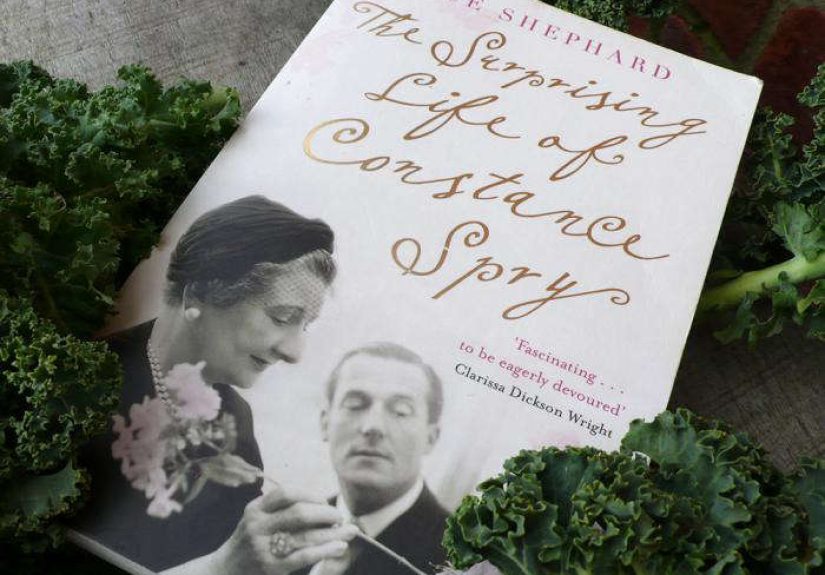
The title The Surprising Life of Constance Spry fits because her life really does arrive in chapters that feel as if someone shuffled several biographies together: early education work, a difficult first marriage, a daring professional reinvention in middle age, high-society commissions, wartime resilience, cookery publishing, and a rose named in her honor after her death. Required reading? Absolutely. Preferably with tea, a vase, and a suspiciously decorative cabbage nearby.
Who Was Constance Spry?
Constance Spry was a British floral designer, educator, author, and entrepreneur whose influence reached far beyond bouquets. She became famous in the 1930s for flower arrangements that looked fresh, dramatic, and slightly rebellious. Instead of treating flowers as stiff little soldiers standing to attention, she let them bend, wander, lean, and behave like actual living things.
Her work was revolutionary because it challenged both visual rules and social rules. In Spry’s world, a branch from the hedgerow could sit beside a cultivated rose. A kitchen pot could become a vase. Seed pods, berries, weeds, grasses, vegetables, and fruit could all earn their place in a room. She made the ordinary look expensive and the expensive look less terrified of nature.
Spry also taught. This matters. She was not simply a decorator for fashionable drawing rooms; she believed that creative skill could give women confidence, income, and independence. Her schools and books helped make flower arranging and domestic design more democratic. Her message was not, “Buy the rarest blossom.” It was closer to, “Look properly at what is already around you.”
Early Life: From Derby to Dublin and a Practical Education
Constance Fletcher was born into a family that valued education. Her father’s work took the family to Ireland, and Dublin became important in shaping her early life. She trained as a teacher and developed a strong interest in domestic science, health, and practical education. Before she became a household name in flowers, she worked in fields that were considered useful rather than glamorous.
This background explains much about her later success. Spry was not a florist trained only in luxury. She understood work, kitchens, classrooms, budgets, and the daily lives of women who had to make things function before they made them beautiful. Her sense of design grew from use, not just display.
During a period when many women were expected to remain within narrow social boundaries, Spry kept moving. She worked, taught, organized, and adapted. Her early life gave her the discipline that later allowed her to manage a large business, publish books, teach students, and handle demanding clients who probably believed flowers should arrive by magic and never involve mud.
A Difficult Marriage and a Life Rebuilt
One reason Constance Spry’s biography feels modern is that it includes reinvention after hardship. Her first marriage was unhappy, and she eventually left it, raising her son while continuing to work. In the early twentieth century, that decision required nerve. Respectability was a heavy coat, and women were often expected to wear it even when it was suffocating.
Spry’s life did not follow the tidy script society preferred. Yet that may be precisely why her work later felt so alive. She understood that beauty was not the same as obedience. Her designs had movement because she did. Her arrangements broke rules because she had already learned that some rules deserved breaking.
Before opening her flower business, she became headmistress at a continuation school in East London, where girls and young women learned practical skills such as cooking, sewing, and household management. This was not glamorous work, but it was deeply connected to her values. Spry believed education could change lives, especially for women who had been told to expect little.
The Big Floral Break: Flower Decoration Ltd.
In 1929, when many people would have been settling into the safest possible routine, Spry launched her flower business, Flower Decoration Ltd. She was in her early forties, which makes her a patron saint of anyone who has ever thought, “Maybe I am too late to start.” Spry’s answer was a brisk, fragrant no.
Her breakthrough came when she created striking displays for Atkinson’s perfumery on Old Bond Street. The arrangements were unlike the stiff, formal floral designs that shoppers expected. She used natural materials with theatrical confidence, and people noticed. In fact, they noticed so enthusiastically that her window displays became a public sensation.
The genius of Spry’s approach was that it felt both luxurious and accessible. She could decorate for aristocratic weddings and grand events, but her materials often came from gardens, fields, roadsides, and kitchens. She saw beauty in the overlooked. A lesser designer might have seen weeds. Spry saw line, texture, mood, and possibly an unpaid intern with roots.
Her Signature Style: Wild, Sculptural, and Unafraid
Constance Spry’s flower arrangements were not small apologies in vases. They were sculptural, expressive, and full of personality. She liked asymmetry, movement, and unexpected combinations. Her arrangements could include roses, branches, berries, seed heads, grasses, vegetables, and whatever else seemed capable of behaving beautifully under pressure.
This was not randomness. It was trained observation. Spry understood scale, proportion, color, and setting. She knew how a stem curved, how a branch could create architecture, and how a humble container could make an arrangement feel alive rather than staged. Her style anticipated today’s naturalistic floral design, seasonal decorating, and “foraged” aesthetic long before social media made everyone photograph a twig in golden hour.
Constance Spry and the Democratization of Beauty
Spry’s most radical idea was not that flowers could be wild. It was that beauty did not belong only to the rich. Her books encouraged readers to create charm with modest materials. Her famous philosophy suggested that one could feel like a millionaire for a few pence if one had imagination, attention, and a willingness to stop apologizing for simple things.
That idea still feels powerful. In a consumer culture that often treats beauty as something delivered in a box, Spry reminds us that style can begin with noticing. A jam jar, a chipped bowl, a branch of blossom, a handful of herbs, or a spray of berries can change a room. The point is not perfection. The point is presence.
Her approach also gave women creative authority inside the home. Domestic spaces were often dismissed as ordinary, but Spry treated them as stages for art, skill, and self-expression. She made the table, mantel, hallway, and windowsill matter. In doing so, she helped blur the line between craft and design.
Royal Commissions, Society Weddings, and Public Fame
By the 1930s, Constance Spry had become one of the most fashionable floral designers in Britain. Her company grew, her Mayfair shop became a destination, and her client list included society figures, designers, and members of the royal circle. She worked on major weddings and prestigious events, building a reputation for arrangements that were elegant but never dull.
Spry’s fame crossed the Atlantic as well. American audiences became aware of her unconventional style, and she lectured in the United States. Her emphasis on “dirt gardening,” vegetables, weeds, and natural materials must have sounded refreshingly direct in rooms where flower arranging had become wrapped in too many rules. Spry did not reject discipline; she rejected lifelessness.
Her decorations for royal and high-society events proved that informal materials could be grand. That was the trick. She did not make aristocratic rooms look cheaper; she made ordinary materials look worthy of aristocratic rooms. It was social alchemy, with stems.
Wartime, Resilience, and the Move Toward Cookery
The Second World War changed Britain, and Spry adapted again. Her career had always connected flowers, education, and domestic skill, so the move toward food and cookery was not as strange as it first appears. She understood that domestic life was not merely decorative. It was practical, emotional, and often political.
At Winkfield Place, she became closely associated with Rosemary Hume and cookery education. Together, they helped build a school environment where food, presentation, and household management were treated seriously. This work eventually led to one of the most famous cookbooks of its era: The Constance Spry Cookery Book, published in 1956.
The book became a kitchen authority for many readers. It represented a certain postwar ideal: competent, elegant, reassuring, and ambitious. It taught people not only what to cook but how to think about entertaining, planning, and domestic confidence. In other words, Spry had moved from arranging flowers to arranging life.
Coronation Chicken: The Dish That Would Not Retire
No discussion of Constance Spry is complete without Coronation chicken. Created for Queen Elizabeth II’s coronation celebrations in 1953, the dish is commonly associated with Spry and Rosemary Hume. It combined cooked chicken with a mildly curried, creamy sauce and was designed for a formal luncheon served to foreign guests.
Like many famous dishes, Coronation chicken has had a complicated afterlife. It has appeared in elegant buffets, supermarket sandwiches, picnic tubs, and office lunches of varying dignity. At its best, it is fragrant, balanced, and historically charming. At its worst, it tastes like a chicken got lost in a mayonnaise fog while carrying a raisin. Still, its endurance proves the strength of the idea: a celebratory dish that blended British formality with global flavors at a moment of national ceremony.
Spry received an OBE in the 1953 Coronation Honors, the same year her public reputation reached one of its highest points. By then, she had become far more than a florist. She was a cultural figure whose influence touched flowers, food, interiors, teaching, and the public imagination.
The Constance Spry Rose and a Living Legacy
Constance Spry died in 1960 at Winkfield Place after a fall. The following year, rose breeder David Austin introduced his first English rose and named it Constance Spry. The choice was fitting. Austin’s rose combined old-fashioned romance with a new breeding vision, much as Spry’s own work combined tradition with rebellion.
The Constance Spry rose is known as a vigorous climbing rose with large, deeply cupped pink blooms and a strong myrrh fragrance. It flowers once, but dramatically. That seems appropriate. Spry herself had the gift of making one gesture memorable.
Her legacy continues in modern floral design. Today’s interest in seasonal flowers, garden-style arrangements, wild materials, sustainability, and natural movement all owes something to the path she helped clear. Every time a designer uses branches, seed pods, herbs, grasses, or vegetables in a sophisticated arrangement, Spry’s ghost is probably nearby, nodding approvingly and wondering whether the vase could be less boring.
Why The Surprising Life of Constance Spry Is Required Reading
Sue Shephard’s biography matters because Spry’s life is not only about flowers. It is about class mobility, women’s education, entrepreneurship, taste, survival, and the underrated intelligence of domestic creativity. The book restores complexity to a woman who might otherwise be reduced to a name on a cookbook or a rose label.
Spry’s story also challenges a lazy assumption: that decorative work is lightweight. Her career proves the opposite. Decoration can be cultural argument. A flower arrangement can ask who gets to define elegance. A cookery school can ask who receives training and opportunity. A book about household beauty can become a quiet manifesto for resourcefulness.
That is why Constance Spry still feels relevant. She did not wait for ideal conditions. She began again. She made use of what was available. She built a business from taste, labor, and nerve. She taught others. She turned domestic knowledge into public authority. And she made cabbage, of all things, socially ambitious.
Lessons from Constance Spry for Modern Creatives
1. Start with What You Have
Spry’s genius began with attention. She did not need rare flowers to create beauty. She used what others ignored. For modern creatives, that is a practical lesson: limitations can sharpen style. A small budget, a plain room, or a handful of materials can become the beginning of originality rather than the end of possibility.
2. Break Rules After You Understand Them
Spry’s arrangements looked free, but they were not careless. She understood shape, balance, texture, and scale. Her rebellion worked because it had structure beneath it. This is useful for writers, designers, cooks, teachers, and entrepreneurs. Learn the rules well enough to know which ones are useful and which ones are merely furniture in the way.
3. Teach What You Know
Spry’s influence grew because she shared her knowledge. Her schools and books turned personal talent into public legacy. Teaching did not weaken her brand; it strengthened it. In today’s world, where expertise can disappear into private achievement, Spry reminds us that sharing skill can be a form of leadership.
4. Reinvention Has No Expiration Date
Opening a flower business in her forties was not a late start. It was the right start. Spry’s career is a useful antidote to the modern panic that everyone must become successful by breakfast at age twenty-five. Some talents require time, bruises, detours, and a few questionable vases before they fully bloom.
Experience Section: Living with the Spry Mindset Today
Reading about Constance Spry changes the way a person looks at ordinary surroundings. Suddenly, the garden is no longer just a garden. It is a supply cupboard with bees. The kitchen is no longer only a place where onions go to make people cry. It is a studio of color, texture, shape, scent, and possibility. A bunch of parsley begins to look suspiciously decorative. A branch blown down after rain seems less like yard waste and more like a design opportunity with excellent posture.
The most useful experience connected to Spry’s life is trying her method in a real room. Not a magazine room. Not a spotless showroom where nobody owns phone chargers. A real room with keys on the table, laundry nearby, and one chair that collects everyone’s belongings as if it has signed a contract. Into that room, place a simple arrangement made from whatever is available: a few supermarket flowers, a clipping of greenery, herbs from the kitchen, or even bare branches in a jug. The mood changes immediately. The room looks less abandoned by civilization. More importantly, the person who made the arrangement feels capable.
That feeling is Spry’s lasting gift. She understood that beauty is not only something to admire; it is something to do. Making a small arrangement teaches observation. You begin asking better questions. Is the line too stiff? Does the container fight the stems? Would one dramatic branch do more than twelve nervous carnations? Should the mint be in the salad or the vase? These are not trivial questions. They train the eye to notice proportion, rhythm, contrast, and restraint.
Spry’s philosophy also helps with entertaining. Many people freeze at the idea of hosting because they imagine a perfect table, perfect food, perfect lighting, and guests who never spill anything red. Spry offers a kinder approach. Use what you have, but use it with confidence. A simple meal can feel generous with a thoughtful centerpiece. A mismatched table can feel charming if the details have intention. A slightly imperfect arrangement can be more welcoming than a flawless one that seems to whisper, “Do not touch anything, including the air.”
There is also an emotional lesson in her story. Spry rebuilt her life more than once. She turned practical skills into art, hardship into independence, and domestic knowledge into cultural authority. That matters for anyone starting over, changing careers, or trying to make meaningful work from ordinary materials. Her life says that reinvention does not require permission from the fashionable crowd. Sometimes it begins with a teacher, a shop window, a few branches, and the audacity to believe that weeds can be wonderful.
For modern readers, The Surprising Life of Constance Spry is not just a biography to enjoy and shelve. It is an invitation to practice. Arrange something. Cook something. Teach something. Rescue a plain corner of the house from boredom. Look at the materials already within reach and ask what they might become. Constance Spry’s world was full of flowers, but her real subject was possibility. That never goes out of season.
Conclusion: The Woman Who Made Beauty Behave Badly
Constance Spry’s life is surprising because it refuses to stay in one category. She was an educator, florist, entrepreneur, author, cookery figure, and design rebel. She made natural materials fashionable, gave domestic creativity intellectual weight, and proved that elegance could come from hedgerows as well as hothouses.
Her story deserves renewed attention not because nostalgia is pretty, but because her ideas still work. Use what is near. Trust your eye. Learn deeply. Share generously. Do not confuse rules with taste. And never underestimate the decorative potential of a vegetable with confidence.
Required Reading: The Surprising Life of Constance Spry is more than a look back at a famous floral designer. It is a reminder that creative courage often begins at home, in ordinary rooms, with ordinary materials, waiting for someone bold enough to see them differently.