Table of Contents >> Show >> Hide
- What Is the Google Nest Learning Thermostat, Exactly?
- How the Nest Learning Thermostat Actually Saves Energy
- Installation and Compatibility: Can You Use One?
- Everyday Use: What It’s Like Living With a Nest
- Pros and Cons at a Glance
- Is the Nest Learning Thermostat Worth It for You?
- Hands-On Experiences with the Nest Learning Thermostat (500+ Words)
- Final Verdict
If your energy bill makes you wince every month, your thermostat is a great place to start fixing it.
Heating and cooling can eat up almost half of the average American home’s energy use, so even small
tweaks in temperature control can add up to real money. The Google Nest Learning Thermostat promises
to do those tweaks for youautomaticallywhile looking like a tiny piece of sci-fi art on your wall.
In this in-depth review, we’ll dig into how the Nest Learning Thermostat actually saves energy, what it’s
like to live with one, who will get the most benefit, and where it still falls short. Think of this as a
real-world, energy-saving deep divenot just a shiny smart-home commercial.
What Is the Google Nest Learning Thermostat, Exactly?
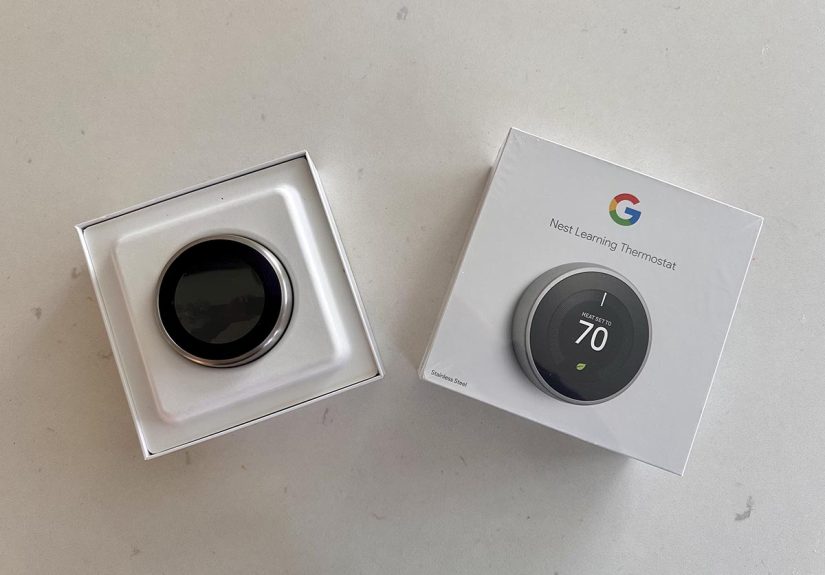
The Google Nest Learning Thermostat is a smart, Wi-Fi–connected thermostat that replaces your traditional
wall unit. Instead of simply letting you tap up or down, it:
- Connects to your home’s Wi-Fi so you can control it from your phone, tablet, or voice assistant.
- Uses built-in sensors and your phone’s location to figure out when you’re home or away.
- “Learns” your temperature preferences over the first couple of weeks and builds an automatic schedule.
- Gives you reports and hints (like the little green Nest Leaf icon) to nudge you into more efficient habits.
The current Nest Learning Thermostat line (3rd and 4th generation devices) features a round, metal body
with a bright, high-resolution display. The outer ring turns like a classic analog thermostat dial,
which makes it feel familiar even if everything happening behind the scenes is very 21st century.
It’s different from Google’s more affordable Nest Thermostat model, which is also smart but doesn’t
have the same level of self-learning and premium build. The Learning Thermostat is the flagship version,
aimed at people who want both energy savings and a polished smart-home experience.
How the Nest Learning Thermostat Actually Saves Energy
A lot of thermostats claim to be “smart.” What makes the Nest Learning Thermostat stand out is that it
actively tries to reduce how often your HVAC system runswithout making you freeze, sweat, or constantly
micromanage the settings.
1. Auto-Schedule That Actually Learns Your Habits
During the first one to two weeks, the Nest Learning Thermostat watches how you use it. If you regularly:
- Turn the heat down at night,
- Drop the cooling when you leave for work, or
- Crank the temperature up around 6 p.m.,
it will begin building a schedule that follows those patterns automatically. This “Auto-Schedule”
feature is what separates it from basic programmable thermostats. Instead of forcing you to wrestle
with complicated menus and tiny buttons, you just live your life, and it creates the program for you.
Of course, you’re not stuck with whatever it learns. You can fine-tune the schedule in the app, turn
off learning if it’s a little too enthusiastic, or wipe the schedule and start fresh. That flexibility
matters if your routine changessay, you start working from home three days a week.
2. Home/Away Assist and Eco Temperatures
One of Nest’s most powerful energy-saving tools is its ability to stop heating and cooling an empty home.
Using motion sensors in the thermostat and your phone’s location, the Nest Learning Thermostat can tell
when you’re gone and automatically switch to its “Eco” temperature range.
Eco mode typically allows the temperature to drift a little farther from your comfort setting
(for example, letting your home warm up more in summer or cool down more in winter) instead of working
hard to maintain a perfect 72°F for your furniture and houseplants. When you’re on the way home, it can
start nudging things back toward your preferred comfort zone so you walk into a house that feels right,
not like a refrigerator or sauna.
The key here: you’re not paying to condition your home when nobody’s there to enjoy it. That’s where a
big chunk of energy savings tends to come from.
3. Energy Reports, the Nest Leaf, and Gentle Guilt Trips
The Nest Learning Thermostat includes:
- Monthly energy reports that show when your system ran the most.
- Daily usage charts so you can see spikeslike that one brutally hot day when your AC never took a break.
- The Nest Leaf icon, which appears when you choose a more efficient temperature.
None of this is mandatory, but it’s surprisingly motivating. When you see exactly how often your HVAC
system runs, it becomes easier to accept a degree or two of compromiseespecially when that little green
Leaf shows up as a tiny digital pat on the back.
4. Real-World Energy Savings: What the Studies Say
Nest has published data from large studies of customer energy bills. Across tens of thousands of homes,
the Nest Learning Thermostat has been associated with average savings of around:
- 10–12% on heating costs
- 15% on cooling costs
For a typical U.S. household, independent analyses have translated those percentages to roughly
$100–$150 per year in lower utility bills, depending on your climate, energy rates, and how aggressively
you let the system optimize. Over a few years, that can more than pay back the thermostat’s purchase price.
It’s worth noting that ENERGY STAR’s broader smart-thermostat numbers are a bit more modestaround
8% savings on heating and cooling bills on average. Your results may be closer to that if your habits
were already pretty efficient or if your climate is mild. If you’re going from “I leave the heat on 72°F
all winter” to “smart scheduling and Eco mode,” you’ll likely see the bigger side of the savings range.
Installation and Compatibility: Can You Use One?
Before you fall in love with the sleek metal puck, you need to make sure it can actually run your system.
The Nest Learning Thermostat is compatible with most standard 24-volt HVAC systems in U.S. homes,
including:
- Gas, oil, and electric furnaces
- Central air conditioning
- Heat pumps (with or without auxiliary heat)
- Some boiler and radiant systems
Many systems work without a dedicated C-wire (common wire), but some will need one for stable power.
The Google Home or Nest compatibility checker can walk you through which wires you have, but if you see
an intimidating rainbow of copper coming out of your wall, it might be worth having an HVAC pro handle
the install.
For a typical forced-air system, installation is very doable for a confident DIYer:
- Turn off power to the HVAC system at the breaker.
- Remove the old thermostat (and mark the wires by the terminal labels, not colors).
- Install the Nest base plate and connect the wires.
- Snap on the Nest display, restore power, and go through setup.
For most homes, this takes 30–45 minutes. If you already know which end of a screwdriver to hold,
you’ll probably be fine.
Everyday Use: What It’s Like Living With a Nest
Once the Nest Learning Thermostat is set up, it mostly fades into the backgroundwhich is exactly
what a good thermostat should do. But there are some day-to-day details worth calling out.
App Control and Smart-Home Integration
You can control the thermostat from the Google Home app on your phone or tablet, adjusting the
temperature, changing the mode (heat, cool, heat-cool, off), tweaking schedules, and setting up routines.
Some highlights:
- Remote control: Turn the heat down after you’ve already left for vacation or warm up the house on your way home.
- Voice control: Use Google Assistant or, with compatible skills, Amazon Alexa to say things like “Set the hallway to 70.”
- Scheduling from the app: Recent updates now let older Nest Learning Thermostats manage schedules directly in the Google Home app, which is a big usability win.
If you have other smart-home devices (smart lights, smart plugs, security cameras), the Nest can join
routineslike turning the thermostat to Eco mode when you arm your security system and leave the house.
The Learning Curve (for You and the Thermostat)
The “learning” part of the Nest is both its magic and its occasional pain point. A few common experiences:
-
Over-enthusiastic schedule building: If you constantly fiddle with the temperature
(because, say, everyone in your family has radically different ideas of what “comfortable” means),
Nest will try to accommodate all of you. The schedule can end up looking like a roller coaster. -
Needing to retrain it: If your lifestyle changesnew job, school schedule, or
seasonal shiftyou may want to clear or heavily edit the schedule so it can learn again. -
Occasional “Hey, who touched the thermostat?” moments: Because it’s adjusting based on patterns,
you might see temperatures shift slightly at times you didn’t explicitly choose. You can always override it,
but it takes a week or two to build trust.
The good news is that you’re in control. You can turn off Auto-Schedule, lock in a simple manual schedule,
or use the Nest mostly as a beautifully designed, remotely controlled programmable thermostat if the
“learning” aspect isn’t your thing.
Pros and Cons at a Glance
Big Advantages
- Real potential for energy savings thanks to schedule learning, Eco mode, and away detection.
- Sleek, premium design that looks intentionally modern instead of “builder grade beige plastic.”
- Easy remote control from your phone, even when you’re not home.
- Detailed energy reports that help you understand how your HVAC system is actually used.
- Strong smart-home integration with Google Assistant and many other ecosystems.
Potential Downsides
- Higher upfront cost compared with basic programmable thermostats or budget smart models.
-
Learning features aren’t for everyone: If your routine is unpredictable, you may end up
adjusting it a lot or turning learning off. - Complex systems may need professional installation, especially older boilers or multi-zone setups.
-
Long-term support matters: Earlier Nest generations are beginning to lose app support,
so it’s wise to buy the current generation and keep an eye on software support timelines over the years.
Is the Nest Learning Thermostat Worth It for You?
Whether the Nest Learning Thermostat is “worth it” comes down to a simple equation: how much energy it can
realistically save you versus how much it costs to buy and install.
Let’s say:
- Your average monthly energy bill is around $150.
- About half of that is heating and coolingso $75.
- A smart thermostat saves you roughly 10% on heating and cooling.
That’s about $7.50 per month or $90 per year. If your climate is more extreme and your HVAC runs hard for
several months, your savings could easily be closer to $120–$150 annually. In that scenario, the Nest Learning
Thermostat can pay for itself in 2–3 years and then keep saving you money.
Who Will Get the Most Out of a Nest Learning Thermostat?
You’re more likely to love (and benefit from) the Nest if:
- You live in a climate with hot summers, cold winters, or both.
- Your current thermostat is either non-programmable or you never bothered to program it.
- Your household has reasonably consistent routines (work hours, school schedules).
- You’re comfortable with smartphone apps and smart-home tech.
On the other hand, you may want to think twice if:
- You rent and can’t change the thermostat without landlord approval.
- Your HVAC system is very old or unusual (definitely check compatibility first).
- You’re rarely away from home and already keep temperatures moderate.
For many homeowners, though, the Nest Learning Thermostat is one of the most impactful “invisible upgrades”
you can make: you don’t see it working, but you do notice the comfort and the lower bills.
Hands-On Experiences with the Nest Learning Thermostat (500+ Words)
It’s one thing to say “This thermostat learns your schedule.” It’s another to see what that looks like after
you’ve lived with it for a few months. Let’s walk through what a typical experience might be like in a
real-world American home.
Imagine a two-story house in a mixed-climate statehot summers, chilly winters. Before Nest, the family’s
thermostat routine looked a lot like many households: someone cranks the AC when they get home, forgets to
turn it down at night, then everyone complains the next morning about how cold it is. In winter, the heat
stays a bit higher than needed because “nobody wants to wake up freezing,” and the system basically runs on
vibes and guesswork.
After installing the Nest Learning Thermostat, the first week feels mostly normal. Everyone still turns the
dial up or down when they’re too hot or cold. But quietly, the thermostat is taking notes. It notices that:
- The family tends to leave around 8 a.m. on weekdays.
- They like the temperature slightly cooler at night in summer.
- Weekends are chaotic, but they’re almost always home Saturday mornings.
By the second or third week, the schedule begins to emerge. The Nest starts easing off the AC during weekday
work hours, drifting toward an Eco temperature once it sees everyone has left. Around 4:30 p.m., when the
first person usually heads home, it nudges the system back on so the house is comfortable by the time the
front door opens. No one had to program a thing.
Winter brings a different pattern. The Nest learns that the family likes a warmer living room in the evening,
but they’re willing to let the bedrooms be cooler overnight. It automatically drops the set point a bit after
everyone goes to bed and starts warming things back up before the morning alarm goes off. The parents eventually
notice that they’re not having the nightly “Did you remember to turn down the heat?” conversation anymore.
The monthly energy report becomes a quiet reality check. The first one might show a rough baseline: lots of
system runtime, not many Nest Leaf moments. Over time, though, the graph changes. There are fewer hours of
continuous runtime, more Eco periods when the house is empty, and a gentle reminder that “You used a bit more
energy this month during the heat wave” or “You used less energy than similar homes in your area.” That last
line is the one people like to screenshot and brag about.
Not everything is perfect. Sometimes the Nest misinterprets a one-off schedulelike when everyone leaves early
one Friday for a road tripand briefly tries to turn that into a habit. Other times, someone gets annoyed
because the system didn’t warm up quite as early as they wanted on an extra-cold morning. These are the moments
when you either:
- Manually bump the temperature and let Nest learn from the correction, or
- Open the app and make a small permanent tweak to the schedule.
Over a few months, the thermostat and the family reach a truce: Nest handles the bulk of the temperature
decisions automatically, and the humans intervene only when something unusual happens. The most visible signs
of success are boring in the best way:
- Fewer “I’m freezing” or “It’s boiling in here” arguments.
- Less time standing in front of the thermostat, frowning.
- Utility bills that start trending gently downward instead of up.
This is the real value of the Nest Learning Thermostat. It’s not that it performs magic nobody else can.
It’s that it quietly enforces all the little good habitsturning temperatures down at night, using Eco mode
when you’re gone, pre-warming or pre-cooling around your schedulewithout asking you to become a full-time
energy manager. You still get to be picky about comfort, but the thermostat handles the math.
In short, the Nest Learning Thermostat isn’t just a cool gadget; it’s a practical tool that nudges your home
toward smarter, more efficient behavior every day. If you’re willing to give it a couple of weeks to learn and
you occasionally nudge it back on track, it can become one of the most quietly valuable devices in your entire
smart-home setup.
Final Verdict
The Google Nest Learning Thermostat delivers on its core promise: making your home more efficient without
demanding a ton of effort from you. It won’t bankrupt your utility company, but it can trim a noticeable slice
off your heating and cooling costs, especially if you’re upgrading from a basic, unprogrammed thermostat.
If you’re comfortable with apps, like the idea of a thermostat that mostly runs itself, and want a device that
looks as good as it performs, the Nest Learning Thermostat is a strong, future-minded choice for your home.