Table of Contents >> Show >> Hide
- Why Roast Beetroot?
- Easy Roast Beetroot Recipe
- How to Roast Beetroot Step by Step
- Best Tips for Perfect Roast Beetroot
- Flavor Variations to Keep Things Interesting
- What to Serve with Roast Beetroot
- How to Store and Reheat Roast Beetroot
- Common Roast Beetroot Mistakes
- Frequently Asked Questions
- Why This Roast Beetroot Recipe Works
- Kitchen Experiences and Real-Life Notes on Roast Beetroot
- Conclusion
Beetroot has a reputation problem. For some people, it is the earthy overachiever of the produce drawer. For others, it is that suspicious purple orb that looks like it belongs in a science fair, not dinner. But roast beetroot changes minds fast. Roasting coaxes out the vegetable’s natural sweetness, softens its earthy edge, and turns a humble root into something rich, silky, and quietly dramatic. In other words, it is the kitchen equivalent of taking off your glasses in a teen movie and suddenly becoming the prom queen.
This easy roast beetroot recipe is built for real life. It does not require chef-level knife skills, obscure pantry items, or the emotional stamina of a twelve-step tasting menu. It is simple, flexible, and deeply delicious. Once you master the basic method, you can serve roasted beetroot as a side dish, fold it into grain bowls, toss it into salads, blend it into dips, or eat it straight from the pan while pretending you are “just checking the seasoning.”
In this guide, you will learn exactly how to roast beetroot, how long it takes, how to peel it without turning your kitchen into a crime scene, and how to make it taste so good that even skeptical eaters will reach for seconds.
Why Roast Beetroot?
Roasting is one of the best ways to cook beetroot because dry heat concentrates flavor. Instead of tasting watery or dull, roasted beets become sweeter, deeper, and more complex. Their texture transforms too. A properly roasted beet is tender all the way through, with a creamy bite that works beautifully in both casual weeknight meals and dinner-party plates that make you feel much fancier than usual.
Another reason roast beetroot deserves a spot in your meal rotation is its versatility. You can keep the seasoning basic with olive oil, salt, and pepper, or dress it up with balsamic vinegar, orange zest, fresh thyme, dill, honey, goat cheese, feta, toasted walnuts, pistachios, or arugula. Beetroot plays well with tangy, creamy, citrusy, and herbaceous flavors, which makes it one of the easiest vegetables to reinvent without much effort.
There is also the nutrition angle, which is a nice bonus. Beetroot is naturally low in calories, contains fiber, and brings vibrant color to the plate. So yes, it is delicious, but it also looks like you made an intentional life choice. That is always satisfying.
Easy Roast Beetroot Recipe
Ingredients
- 6 medium fresh beetroot
- 2 tablespoons olive oil
- 1 teaspoon kosher salt
- 1/2 teaspoon freshly ground black pepper
- 1 teaspoon fresh thyme leaves, optional
- 1 tablespoon balsamic vinegar or fresh lemon juice, optional for finishing
Optional Flavor Boosters
- 1 teaspoon honey or maple syrup
- 1 clove garlic, finely grated
- Orange zest
- Crumbled goat cheese or feta
- Chopped walnuts, hazelnuts, or pistachios
- Fresh dill or parsley
Equipment
- Sheet pan or baking dish
- Aluminum foil or parchment paper
- Knife and cutting board
- Gloves or paper towels for peeling, optional but smart
How to Roast Beetroot Step by Step
1. Preheat the oven
Set your oven to 400°F. This is a dependable middle ground for roasting beetroot: hot enough to encourage caramelization, but gentle enough to cook the centers without drying the outside. If your beets are especially large, patience is part of the recipe.
2. Trim and wash the beetroot
Cut off the greens, leaving about half an inch of stem attached. Trim the long root tip if needed, but do not cut too deeply into the beet. Keeping the skin on during roasting helps protect moisture and makes peeling easier later. Scrub the beets well under running water to remove dirt. Beetroot grows in the ground and likes to bring a little of the garden home with it.
3. Decide whether to roast whole or cut
For the easiest, juiciest result, roast the beetroot whole. This method takes longer, but it gives you tender beets with concentrated flavor and less risk of drying out. If you want faster cooking, you can peel and cube the beetroot first, then roast the pieces. Whole beets are a little more forgiving; cubed beets are quicker and great for bowls, salads, and meal prep.
4. Season the beetroot
If roasting whole, place each beet on a piece of foil, drizzle with a little olive oil, and season lightly with salt and pepper. Wrap each one into a loose packet and place them on a baking sheet. If roasting cubes, toss them in olive oil, salt, pepper, and thyme, then spread them in a single layer on a lined pan.
5. Roast until fork-tender
Whole medium beetroot usually takes 45 to 75 minutes, depending on size and freshness. Large ones may take longer. Cubed beetroot often roasts in 25 to 35 minutes. The beets are ready when a knife or fork slides in with very little resistance. Think soft, not mushy. We are making roast beetroot, not beet jam.
6. Cool slightly, then peel
Let the roasted beetroot cool until safe to handle. Then rub off the skins with paper towels or your fingers. Gloves can help if you would prefer your hands not to look like you have been solving a very dramatic mystery. The skins should slip off easily when the beets are properly roasted.
7. Slice and finish
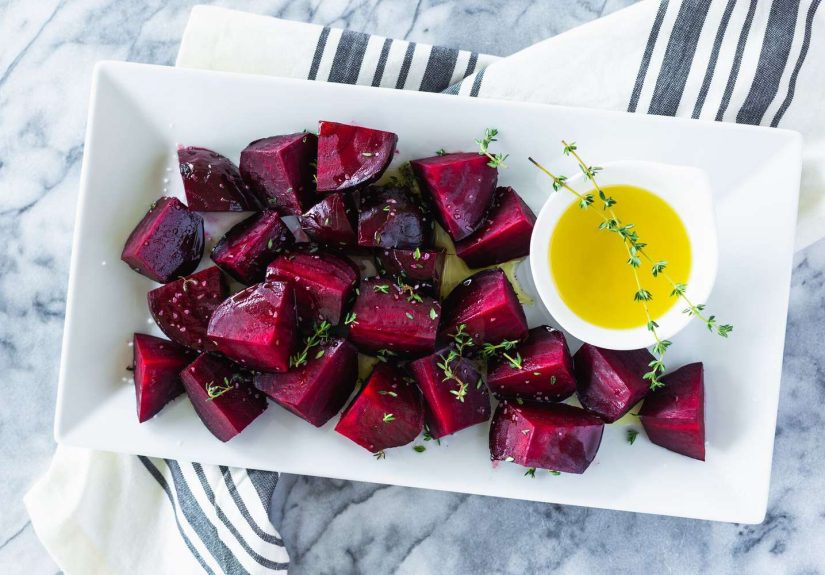
Cut the beets into wedges, rounds, or cubes. Taste one. Then add a finishing touch like balsamic vinegar, lemon juice, orange zest, fresh herbs, or a drizzle of honey. This last step brightens the flavor and keeps the roasted beetroot from tasting flat.
Best Tips for Perfect Roast Beetroot
Choose similar-sized beets
If your beetroot ranges from tiny marble to softball, the roasting time will be all over the place. Try to buy beets of similar size so they cook evenly. If you have a mixed bunch, remove the smaller ones earlier and let the larger ones keep roasting.
Do not overcrowd the pan
If you are roasting cubed beetroot, spread it in a single layer with some breathing room. Overcrowding traps steam and prevents browning. Vegetables need space, just like people in elevator lines.
Use acid at the end
Beetroot loves a little brightness. Balsamic vinegar, red wine vinegar, lemon juice, or orange juice can wake up the flavor beautifully. This small move makes the finished dish taste more balanced and less one-note.
Save the greens if they are fresh
If your beetroot comes with greens attached and they still look lively, do not toss them. Sauté them with olive oil and garlic, or stir them into soups and grain bowls. It is a smart, low-waste way to stretch the ingredient further.
Flavor Variations to Keep Things Interesting
Balsamic Herb Roast Beetroot
Toss the warm roasted beetroot with balsamic vinegar, thyme, and a touch of honey. This version is simple, elegant, and very dinner-party friendly.
Citrus Roast Beetroot
Add orange zest, orange juice, and chopped mint or dill. The citrus lifts the earthiness and gives the dish a fresh, almost spring-like personality.
Garlic Butter Beetroot
Mix melted butter with roasted garlic and toss it with hot beets just before serving. It is rich, savory, and ideal for colder nights when you want your vegetables to feel more comforting.
Beetroot with Feta and Pistachios
Top roasted beetroot with crumbled feta, chopped pistachios, and parsley. You get sweetness, saltiness, creaminess, and crunch in one easy side dish.
Warm Beetroot Salad
Layer roasted beetroot over arugula with goat cheese, walnuts, and a mustard vinaigrette. Suddenly your side dish has become the main character.
What to Serve with Roast Beetroot
Roast beetroot works with far more than holiday menus and aspirational salad photos. Try it with roast chicken, salmon, pork tenderloin, lentils, quinoa, farro, or a simple omelet. You can pair it with tangy yogurt sauces, creamy labneh, or a swipe of hummus. It also fits beautifully into grain bowls with leafy greens, toasted seeds, and a sharp vinaigrette.
One of the best ways to use roast beetroot is as a make-ahead ingredient. Roast a batch on Sunday, then add it through the week to lunch boxes, wraps, pasta salads, and snack plates. It is the kind of meal prep that feels suspiciously adult, in the best way.
How to Store and Reheat Roast Beetroot
Let the cooked beetroot cool, then store it in an airtight container in the refrigerator. It is best within 3 to 4 days. You can eat it cold, bring it to room temperature, or reheat it gently in a skillet or oven. Microwaving works too, though it may soften the texture a bit more.
If you want to freeze roast beetroot, cut it into pieces first and freeze it flat on a tray before transferring it to a freezer-safe bag or container. That makes it easier to grab just what you need later. Frozen beetroot is best used in soups, purees, or blended sauces, though it can still work in cooked side dishes.
Common Roast Beetroot Mistakes
Underseasoning
Beetroot is naturally sweet, but it still needs salt and acid to taste complete. A little seasoning goes a long way toward making the flavor pop.
Peeling too early
Peeling raw beetroot is possible, but it is messier and less forgiving. Roasting with the skin on is easier for beginners and often produces better texture.
Not checking for doneness
Time is only a guideline. Size matters. The real test is tenderness. If the center still feels firm when pierced, keep roasting.
Forgetting contrast
Roast beetroot is excellent on its own, but it gets even better with contrast. Add something tangy, crunchy, creamy, or fresh. The best dishes usually balance more than one texture and flavor.
Frequently Asked Questions
Do I have to peel beetroot before roasting?
No. In fact, leaving the skin on is often easier and helps the beetroot stay moist. Peel it after roasting, when the skin slips off more easily.
Why does beetroot take so long to roast?
Beetroot is dense, especially when roasted whole. That density is part of what gives it such a creamy, satisfying texture once cooked. Small beets roast faster than large ones, and cubes roast faster than whole roots.
Can I roast different colors together?
Yes, but know that red beetroot likes to share its color with absolutely everything. If you want golden or striped beets to stay visually distinct, roast them separately.
Can I make roast beetroot ahead of time?
Absolutely. Roast it a day or two in advance, then slice and season before serving. This makes it especially useful for entertaining or weekday meal prep.
Why This Roast Beetroot Recipe Works
The beauty of this roast beetroot recipe is that it keeps the technique simple while giving you room to improvise. The base method is easy enough for beginners, but the results feel polished. Roasting concentrates the beets’ natural sugars, the olive oil helps the edges soften and caramelize, and the finishing acid keeps the flavor bright. It is not trying to be flashy. It just works.
And that may be the real magic of roast beetroot. It turns one sturdy vegetable into something adaptable, colorful, and genuinely craveable. It can be rustic or elegant, casual or date-night worthy, practical or slightly dramatic. In a world full of complicated recipes shouting for attention, roast beetroot quietly shows up and does an excellent job.
Kitchen Experiences and Real-Life Notes on Roast Beetroot
The first time many people make roast beetroot, there is a brief moment of doubt. The beets look dusty, hard, and oddly prehistoric. You wash them, wrap them, and slide them into the oven wondering whether this will be worth the effort. Then the kitchen starts to smell warm, sweet, and faintly earthy, and suddenly the whole thing feels much more promising. That is one of the charms of this recipe: it does not look flashy in the beginning, but it delivers at the finish line.
Roast beetroot also teaches patience in a useful way. It is not fast food, and that is part of the experience. You cannot rush a dense root vegetable into tenderness by staring aggressively through the oven door. Instead, you let the heat do its work. That slow transformation makes the result feel earned. When you finally rub off the skins and slice into the glossy jewel-toned flesh, it feels a little like kitchen magic, even if the method was wonderfully low-effort.
For home cooks, roast beetroot becomes easier and more enjoyable after the first try. You learn little tricks. Wear gloves if you do not want pink fingertips. Use a separate cutting board if you are emotionally attached to the color of your wooden one. Add lemon or vinegar at the end, not the beginning, for a cleaner, brighter finish. Keep goat cheese nearby because it almost always makes the plate better. These small lessons turn the recipe from “something you tried once” into “something you actually make.”
There is also something satisfying about serving roast beetroot to people who claim they do not like beets. They usually say this with the confidence of someone who has suffered through a can of bland sliced beets at some point in the distant past. Fair enough. But a warm platter of roasted beetroot with herbs, citrus, and a little salty cheese can change minds fast. It is one of those dishes that invites a cautious first bite and then a surprised second helping.
Another reason this recipe earns repeat status is that it fits different moods. On busy weekdays, roast beetroot can be meal prep. On weekends, it can be part of a more thoughtful dinner spread with greens, grains, and roasted fish or chicken. Around the holidays, it looks festive without trying too hard. Bright, bold, and naturally colorful, it brings instant contrast to beige-heavy tables. And let us be honest, every table needs at least one dish that looks like it has a personality.
In the end, roast beetroot is the kind of recipe that quietly improves your cooking life. It is simple enough to memorize, flexible enough to customize, and delicious enough to keep around for the long haul. Not bad for a root vegetable that started out looking like it belonged in a gardening catalog.
Conclusion
If you want a vegetable side dish that is easy, flavorful, and surprisingly versatile, roast beetroot is hard to beat. With just a few ingredients and a little oven time, you get tender, sweet, richly colored beets that can stand on their own or anchor a bigger meal. Keep the method simple, season well, finish with something bright, and let the beetroot do what it does best: turn humble ingredients into something memorable.