Table of Contents >> Show >> Hide
- What Is Sarna, Exactly?
- What Scabies Looks Like in Photos
- Most Common Scabies Symptoms
- How Scabies Spreads
- How Doctors Diagnose Scabies
- Scabies Treatments That Actually Work
- Cleaning Your Environment Without Turning Your Home Into a Disaster Movie
- When to See a Doctor Quickly
- What the Scabies Experience Often Feels Like
- Final Thoughts
If you searched for sarna, you are most likely looking for information about scabies, the itchy skin condition caused by tiny mites that burrow into the upper layer of the skin. It is common, treatable, and wildly annoying. In other words, it is the kind of problem that can turn a normal Tuesday into an all-night scratching festival.
The good news is that scabies usually responds well to proper treatment. The less-good news is that it can look like several other skin problems at first, including eczema, bug bites, allergic rashes, or dry irritated skin. That is why people often search for phrases like “scabies photos,” “scabies symptoms,” and “how to tell if I have scabies” before they finally land in a clinic or dermatologist’s office.
In this guide, we will walk through what scabies is, what it tends to look like in photos, the most common symptoms, how it spreads, the treatments doctors use, and what the real experience of dealing with it often feels like. This article is written in standard American English for readers who want clear, practical answers without panic, fluff, or suspicious internet folklore.
What Is Sarna, Exactly?
Scabies is a skin infestation caused by the human itch mite, Sarcoptes scabiei. The mite is tiny, far too small to spot easily with the naked eye, but it causes a very noticeable reaction. Female mites burrow into the top layer of the skin, where they lay eggs. Your immune system reacts to the mites, their eggs, and their waste, and that reaction leads to the classic symptoms: intense itching, bumps, irritation, and sometimes visible burrows.
This is not a hygiene issue. Let’s retire that myth with confidence. Scabies can affect people of any age, income level, or bathing schedule. It spreads because of close contact, not because someone forgot to become a soap commercial.
There is also a more severe form called crusted scabies. This version causes thick crusts on the skin and carries a much heavier mite load, which makes it more contagious and more urgent to treat. It is more likely to occur in people with weakened immune systems, older adults, or those living in institutional settings.
What Scabies Looks Like in Photos
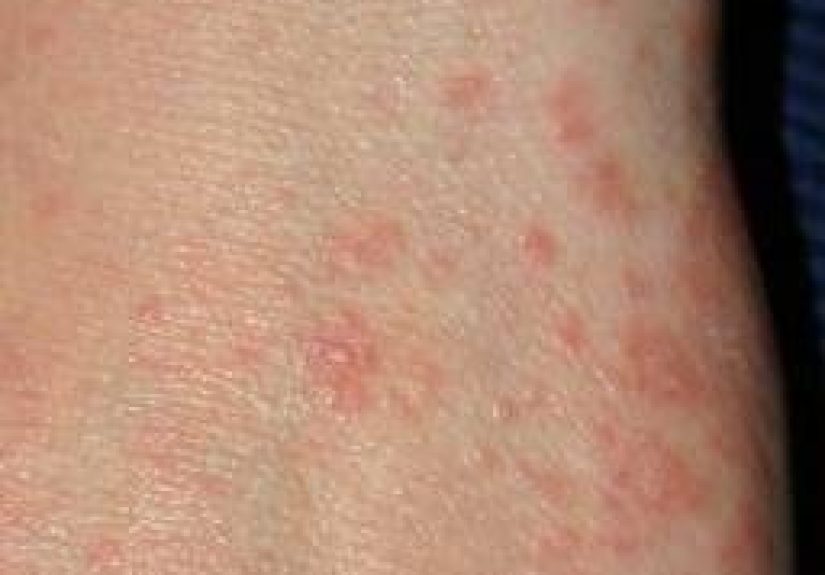
People love searching for scabies photos because the condition can be surprisingly sneaky. In images, scabies may appear as tiny red, pink, brown, or gray bumps, depending on skin tone. Sometimes the rash looks like pimples. Sometimes it resembles hives. Sometimes it looks like a line of little bites. And sometimes it looks like eczema had a very bad attitude.
One of the most recognizable signs in photos is the burrow: a thin, wavy, thread-like track in the skin. Burrows are not always obvious, especially when scratching, inflammation, and secondary irritation have already joined the party. In many photos, what stands out most is not the burrow itself but the aftermath: open scratch marks, scabby spots, or clusters of irritated bumps.
Scabies photos on darker skin tones may show the rash as brown, gray, or violet-toned rather than bright red. That matters because plenty of people expect every rash to look textbook red, and skin does not always cooperate with textbook photography.
Common body areas shown in scabies images include the finger webs, wrists, elbows, waistline, buttocks, groin, and around the nipples. In babies and young children, photos may also show the scalp, face, neck, palms, and soles.
Most Common Scabies Symptoms
Intense itching, especially at night
This is the headline symptom. Many people describe the itch as relentless, sleep-disrupting, and much worse after getting into bed. If your skin seems to become dramatically more dramatic at night, scabies often enters the differential diagnosis.
A rash made of small bumps or blisters
The rash can be patchy or widespread. It may look like pimple-like bumps, tiny blisters, or a row of irritated spots. Some people develop scaly or eczema-like patches rather than a neat little pattern that politely labels itself.
Thin lines or burrows
These are narrow, slightly raised, winding tracks where mites have burrowed. They may be easier to spot on the hands, wrists, or feet than on inflamed areas that have already been scratched to pieces.
Sores from scratching
Scabies does not just itch. It dares you not to scratch. Repeated scratching can break the skin, leading to open sores and, in some cases, bacterial infection.
Body areas where symptoms often show up
- Between the fingers
- On the wrists and elbows
- In the armpits
- Around the waistline or belt line
- On the buttocks
- On the genitals
- Around the nipples
- Under rings, bracelets, or watchbands
In adults, scabies usually appears below the neck. In infants and young children, it can also involve the scalp, face, neck, palms, and soles. Kids may become cranky, tired, or unable to sleep well because the itch is so intense.
How Scabies Spreads
Scabies most often spreads through prolonged, direct skin-to-skin contact. That is why it commonly moves through households, sexual partners, child care settings, dorm-like environments, shelters, long-term care facilities, and other places where people live or spend close time together.
A quick handshake or brief hug usually is not enough to spread typical scabies. The exception is crusted scabies, which is much more contagious and can spread more easily through limited contact or contaminated bedding, clothing, or furniture.
Scabies can sometimes spread through shared textiles such as towels, bedding, or clothing, especially in close living situations. It also does not come from pets. Animal mites may cause temporary skin irritation, but they do not cause the same human scabies infestation.
If one person in a home has scabies, close contacts often need treatment too, even if they do not have symptoms yet. That is because symptoms can take weeks to show up after the first exposure.
How Doctors Diagnose Scabies
A healthcare professional may diagnose scabies by examining the rash, identifying burrows, and asking about symptoms such as severe nighttime itching or whether other household members have become itchy too. In many cases, the pattern and location of the rash are strong clues.
Sometimes a doctor also uses a skin scraping or another close-up method to look for mites, eggs, or mite waste under a microscope. That said, not every diagnosis requires a microscope cameo. Clinical exam alone is often enough when the symptoms fit.
Because scabies can mimic eczema, allergic contact dermatitis, folliculitis, bedbug bites, and other itchy conditions, getting a proper diagnosis matters. This is not a great condition for DIY detective work with seven tabs open and one escalating sense of doom.
Scabies Treatments That Actually Work
1. Prescription creams or lotions
The standard treatment for classic scabies is usually a prescription scabicide, most commonly permethrin 5% cream. It is typically applied to clean, dry skin over the whole body from the neck down, then left on for the amount of time your clinician recommends, often overnight, before being washed off.
Children and infants may need treatment on the scalp, neck, and face too, but that should follow a clinician’s instructions because young children are treated differently from adults. Some people need a second application about one week later, depending on the treatment plan and whether symptoms persist.
2. Oral medication
In some cases, a doctor may prescribe oral ivermectin. This may be considered for severe scabies, crusted scabies, people who cannot use topical treatment well, or situations where treatment needs to be coordinated across multiple people. Oral treatment is not a casual over-the-counter fix; it should be used under medical guidance.
3. Relief for the itch
Even after the mites are dead, the itching can continue for a few weeks. This is one of the most frustrating parts of the whole experience. Post-treatment itching does not always mean treatment failed. Your skin may still be reacting to what is left behind in the skin.
Doctors may recommend itch-relief strategies such as:
- Antihistamines
- Mild topical steroids after scabies has been properly treated
- Moisturizers or soothing lotions
- Treatment of any secondary bacterial skin infection if present
4. Treat close contacts too
This point is easy to skip and very hard to regret later. Household members and sexual partners are often treated at the same time, even if they do not feel itchy yet. Otherwise, scabies can bounce from one person to another like the world’s rudest boomerang.
5. Do not expect it to go away on its own
Scabies generally does not disappear without treatment. Without proper therapy, the mites remain, symptoms continue, and the infestation can spread to others.
Cleaning Your Environment Without Turning Your Home Into a Disaster Movie
Once treatment starts, basic environmental cleaning helps prevent reinfestation. The key is to focus on items used in the few days before treatment, not to launch a full-scale cleansing of every object you have touched since middle school.
Wash clothing, bedding, and towels used recently in hot water, then dry them in a hot dryer. Items that cannot be washed can usually be dry-cleaned or sealed in a plastic bag for several days. Mites do not survive very long away from human skin, so practical measures work better than panic cleaning.
Also wear clean clothes after treatment, and notify close contacts from recent weeks so they can seek medical advice if needed. If you have crusted scabies, environmental cleaning becomes more important because this form spreads more easily through contaminated items.
When to See a Doctor Quickly
You should seek medical care if you have a very itchy rash that is getting worse, if other people in your household are developing symptoms, if you see thick crusts on the skin, or if scratching has led to pain, pus, spreading redness, or fever.
Children, older adults, pregnant patients, and people with weakened immune systems should be evaluated promptly. If you have already used a treatment and are still miserable weeks later, it may mean you need a different diagnosis, a repeat treatment plan, or help managing post-scabies itch.
What the Scabies Experience Often Feels Like
There is the medical description of scabies, and then there is the lived experience. The medical description is tidy. The lived experience is usually not. People often notice the itching first, but they do not always recognize it right away. At first it may seem like dry skin, a detergent reaction, stress rash, mosquito bites, or some kind of random skin rebellion. Then night arrives, and the itch suddenly starts acting like it has a personal grudge.
One of the most common experiences people describe is sleep disruption. The itching often becomes most intense at night, which means bedtime stops being restful and starts feeling like a negotiation with your own skin. Adults may lie awake scratching their wrists, fingers, waist, or ankles. Children may become irritable, overtired, and clingy. Parents may not immediately realize that the “fussy phase” is actually a very itchy infestation making everyone miserable.
Another common part of the experience is confusion. Scabies rarely arrives wearing a name tag. It can look like eczema, allergic rash, acne-like bumps, or insect bites. Plenty of people spend days or weeks trying moisturizers, anti-itch creams, or changing soaps before realizing they need a medical diagnosis. That delay is understandable. Scabies is common, but it is also a master of disguise.
Then there is the household factor. Once one person is diagnosed, the situation often becomes less about one itchy person and more about group logistics. Who needs treatment? Which sheets need washing? Did everyone change clothes after treatment? Did anyone forget the hand towels? Suddenly your laundry room becomes the most emotionally charged place in the house.
People also frequently report embarrassment, even though scabies is not a sign of poor hygiene. Because it can spread through close contact and because the word “mites” tends to send everyone mentally sprinting into the woods, many people feel ashamed or hesitant to tell others. That shame is misplaced, but it is still real. A calmer, more accurate framing helps: scabies is a treatable medical condition, not a moral failure and not a cleanliness score.
A particularly frustrating experience is post-treatment itching. Many people expect treatment to feel like flipping off a light switch: medicine on, itch gone, problem solved. In reality, the skin may continue to itch for a few weeks even after effective treatment. That can make people think the medication did not work when, in fact, the immune system is still reacting. This period can be emotionally exhausting because every new bump or itch feels suspicious. Was that normal healing? Or round two? That uncertainty is one of the hardest parts.
People with crusted scabies or those who are misdiagnosed for a while may also experience complications from scratching. Broken skin can sting, burn, or become infected. At that point, the issue is not only itch but also soreness, tenderness, and the stress of dealing with a skin problem that feels visible and constant.
There is also a practical experience that nobody enjoys: the cleaning and communication phase. Washing recently used bedding, towels, and clothing is manageable, but it is still work. Informing close contacts can feel awkward. Telling a partner, roommate, or family member that they may need treatment too is not exactly anyone’s dream conversation starter. But it matters, because coordinated treatment is often the difference between ending the problem and accidentally recycling it.
And yet, despite all of this, the experience usually does improve. Once the condition is identified correctly and treated properly, most people begin moving in the right direction. The rash settles. Sleep improves. The panic dialing in your brain gets quieter. The laundry mountain shrinks. Life becomes gloriously less itchy. That is the part worth remembering: scabies is maddening, but it is treatable, and with the right diagnosis and follow-through, most people do get through it just fine.
Final Thoughts
If you came here searching for “sarna: photos, symptoms, and treatments,” the big takeaway is simple: scabies is a common and highly itchy skin infestation caused by mites, but it is treatable with proper medical care. The rash can look different from person to person and may resemble other skin conditions, which is why photos alone cannot replace a diagnosis. The strongest clues are often the combination of severe nighttime itching, the typical body locations, possible burrows, and the fact that close contacts may also become itchy.
Prompt treatment matters, and so does treating close household or sexual contacts when a clinician advises it. Just as important, do not panic if the itch lingers for a while after treatment. Your skin may need time to calm down even after the mites are gone. If symptoms are severe, unusual, or not improving, a dermatologist or healthcare professional can help sort out whether you are dealing with active scabies, post-scabies irritation, or something else entirely.