Table of Contents >> Show >> Hide
- What Luke Grimes Actually Said in His Tribute
- Why This Tribute Hit Fans So Hard
- Luke Grimes Had Been Preparing Fans for an Emotional Ending All Along
- Why Kayce Dutton Was the Emotional Core of the Goodbye
- What the Finale Resolved, and Why the Tribute Feels Like Closure
- The End of Yellowstone Was Also the End of a TV Phenomenon
- Was It Really the End? Yes for the Era, No for the Universe
- Why Luke Grimes’ Farewell Feels Bigger Than One Instagram Caption
- End of an Era, Start of a Lasting Legacy
- The Experience of Saying Goodbye to Yellowstone: 500 More Words on Why This Tribute Stays With You
Some TV goodbyes are polite. A few are dramatic. And then there are the ones that hit like a boot to the chest while a fiddle plays somewhere in the distance. Luke Grimes’ farewell to Yellowstone landed squarely in that last category. After years of playing Kayce Dutton, Grimes shared a simple but deeply personal tribute that instantly sent fans into their feelings: “End of an era.”
That short message did not need fireworks, a ten-slide carousel, or a grand speech about legacy. It worked because Yellowstone never belonged to polished sentiment. The show was all dust, blood, silence, family loyalty, and people making terrible choices while looking fantastic on horseback. So when Grimes said goodbye in a stripped-down, emotional way, it felt true to both the series and the character who became one of its quiet centers.
For fans who followed the Dutton saga through delays, behind-the-scenes drama, and one extremely long wait for the final episodes, the tribute felt like confirmation that the ride was really over. Not “maybe over.” Not “franchise over, but probably not really.” Original-series over. Cowboy hats emotionally removed. Bunkhouse lights dimmed. Tissue box deployed.
What Luke Grimes Actually Said in His Tribute
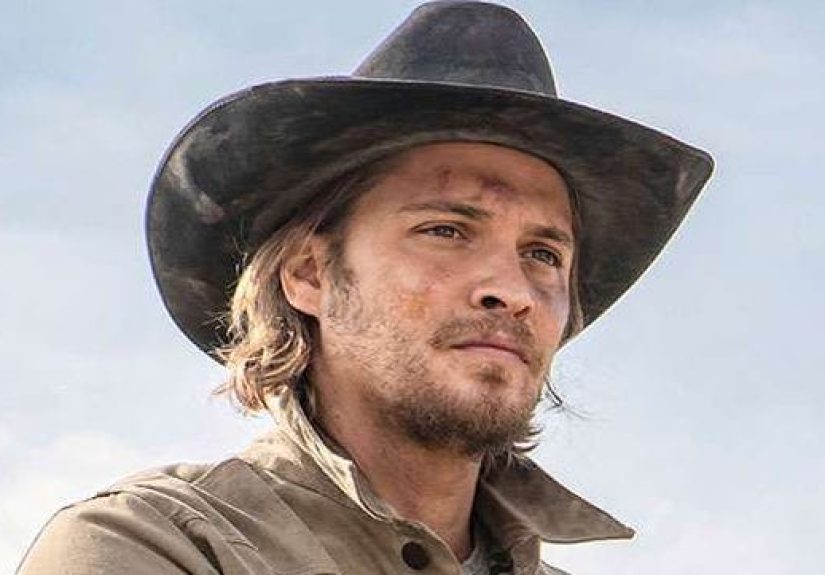
After the finale, Luke Grimes posted a farewell message that read like a clean, honest exhale after years in the saddle: “End of an era. Goodbye Kayce. You are a better man than I. To my Yellowstone family, thank you for the experience of a lifetime.” It was concise, sincere, and devastating in the best way.
The most striking line may have been the simplest one: “Goodbye Kayce.” Actors say goodbye to roles all the time, but this one felt different because Kayce Dutton was never just another TV tough guy. He was the character most often caught between violence and mercy, family duty and personal peace, inherited power and moral exhaustion. Saying goodbye to Kayce meant saying goodbye to the one Dutton who always seemed to be asking whether this whole empire was worth the human cost.
And then there is that line: “You are a better man than I.” That is the kind of message fans immediately grab onto because it suggests Grimes did not just play Kayce. He respected him. Maybe even envied him a little. Kayce carried guilt, trauma, and rage, but he still kept reaching for decency. On a show where many characters solved problems with intimidation, manipulation, or what we will politely call “creative outdoor body disposal,” Kayce’s conscience mattered.
Why This Tribute Hit Fans So Hard
The tribute worked because it did not feel manufactured for social media. It felt like the emotional residue of a long job, a strange job, and a career-defining job finally coming to an end. By the time Grimes posted it, audiences already knew the Yellowstone finale had been framed as a real ending, not just a season break with better lighting. Fans had spent months bracing for closure, and Grimes gave them the emotional punctuation mark.
There is also the fact that Yellowstone became much bigger than a hit cable drama. It turned into a cultural habit. Families watched it together. Couples argued about Beth and Jamie like they were distant cousins with anger issues. People bought the merch, quoted Rip, and started acting as if owning one flannel shirt and one cast-iron skillet qualified them for ranch management. When a show becomes that embedded in people’s routines, a goodbye post feels personal.
Grimes’ message also arrived after years of anticipation around how the story would conclude. The final episodes did not simply have to wrap up plots. They had to justify the wait, the hype, the franchise expansion, and the emotional investment of an audience that had stuck around through uncertainty. His tribute signaled that, from his perspective, the ending meant something.
Luke Grimes Had Been Preparing Fans for an Emotional Ending All Along
What makes the tribute even more resonant is that Grimes had already hinted, in interviews before the finale, that the ending would carry real emotional weight. He described it as “profound” and “beautiful,” and elsewhere admitted he was a mess after reading the final script. That matters, because it tells fans the post-finale emotion was not performative cleanup. The goodbye had been building for a while.
He also spoke openly about the strange pressure surrounding the final stretch of Yellowstone. The show returned after a long delay, and by then it was carrying the burden of expectation that only giant pop-culture phenomena really understand. Fans wanted answers. Critics wanted to see whether the series could stick the landing. The cast wanted to finish strong. That is a lot for one ranch, frankly.
Grimes’ comments suggested that he viewed the final run not as a tired obligation, but as a meaningful conclusion. That attitude comes through in the tribute. It is not bitter. It is not cynical. It does not read like someone saying, “Welp, that happened.” It reads like someone who knows exactly how rare it is to play a character long enough for the goodbye to matter.
Why Kayce Dutton Was the Emotional Core of the Goodbye
For all the chaos in Yellowstone, Kayce often functioned as the show’s emotional translator. Beth was the flamethrower. Rip was the enforcer. Jamie was the walking cautionary tale. John was the patriarch who confused love with pressure so often it should have come with a warning label. Kayce, meanwhile, was the one character who seemed genuinely torn by the cost of loyalty.
That made him uniquely suited to carry the emotional weight of the ending. Kayce was never fully comfortable with the Dutton machine. He loved his family, but he could also see how the ranch swallowed people whole. He loved Monica and Tate, and much of his arc centered on trying to imagine a life that was not defined by the violence and duty baked into the family name.
So when Grimes says goodbye to Kayce, he is saying goodbye to a character who represented something larger than plot. Kayce was the question at the center of Yellowstone: can a person inherit a brutal system without becoming brutal himself? The answer was never neat, but that tension gave the character his gravity.
What the Finale Resolved, and Why the Tribute Feels Like Closure
Part of the reason Grimes’ message landed so well is that the finale gave Kayce a meaningful role in the show’s final reckoning. Instead of merely surviving the chaos, he became essential to resolving the central conflict over the ranch. In the end, Kayce helped engineer a transfer of the Yellowstone land to Thomas Rainwater and the Broken Rock Reservation, bringing the story full circle in a way that felt poetic rather than purely transactional.
That decision mattered because it did more than solve a property dispute. It reframed the whole series. Yellowstone began as a story about land, legacy, and control. It ended by acknowledging that preserving the place required surrender rather than domination. For a show so often driven by force, that was a surprisingly reflective note to leave on.
Meanwhile, the final episode also brought resolution to the long-simmering Beth and Jamie war, sent the bunkhouse crew toward new futures, and closed the original Dutton chapter with enough finality to make Grimes’ “End of an era” line feel earned. Even for viewers who had mixed feelings about specific story choices, the ending clearly intended to say: this story has reached its endpoint.
The End of Yellowstone Was Also the End of a TV Phenomenon
Another reason the tribute resonated is the scale of what Yellowstone became. This was not a niche favorite slipping quietly into the streaming void. The finale drew massive viewership, proving that even after delays and controversy, the series remained one of television’s biggest conversation starters. That kind of audience does not happen by accident.
The show tapped into something that modern television rarely captures at this scale: appointment viewing with identity attached. Watching Yellowstone was not just about plot. It was about mood, image, and belonging. It appealed to viewers who loved Western iconography, family drama, antiheroes, beautiful landscapes, and dialogue that could go from philosophical to feral in under thirty seconds.
That is why Grimes’ goodbye felt like more than an actor posting a farewell. It felt like the closing of a chapter in TV culture, especially for fans who treated Sunday nights like a standing reservation at the Dutton family disaster buffet.
Was It Really the End? Yes for the Era, No for the Universe
Of course, this is the Yellowstone universe, which means one ending tends to open the door to three more cowboy-adjacent possibilities. The franchise has continued to expand through spinoffs and follow-up projects, and Kayce himself eventually returned in Marshals. That later continuation adds an interesting wrinkle to Grimes’ tribute.
His “End of an era” line still holds up because he was not saying the larger franchise would vanish into the Montana sunset. He was saying that a specific chapter had ended: the original Yellowstone run, the Dutton-ranch era as fans knew it, and his time inhabiting Kayce within that exact story framework. In other words, sometimes “goodbye” really means goodbye to a version of something, not necessarily every version forever.
That actually makes the tribute more moving, not less. It recognizes that what fans loved was not just a brand name. It was a particular cast, a particular rhythm, and a particular emotional storm. You can continue a universe. You cannot perfectly recreate an era.
Why Luke Grimes’ Farewell Feels Bigger Than One Instagram Caption
Grimes’ tribute captures a truth that long-running television often reveals: actors do not just leave jobs, they leave parallel lives. For years, he lived with Kayce’s silences, loyalties, contradictions, and choices. He watched the character evolve from impulsive son to weary protector to one of the few people capable of imagining a future beyond endless family warfare.
That is why the farewell reads with such clarity. It is appreciative without being overly polished. It is emotional without becoming melodramatic. Most of all, it feels specific. He is not speaking in generic farewell language. He is speaking directly to Kayce, to the cast, and to the experience. Fans can tell the difference.
And in the age of endlessly optimized celebrity posting, that kind of plainspoken sincerity still has power. No gimmick. No brand voice. No suspiciously perfect paragraph that sounds like it was focus-grouped by five publicists and a horse trainer. Just a real goodbye.
End of an Era, Start of a Lasting Legacy
Luke Grimes’ emotional Yellowstone tribute matters because it distilled everything fans were feeling into one short, memorable phrase. “End of an era” was not just a caption. It was the right obituary for a TV juggernaut that changed the modern Western, built a sprawling franchise, and gave viewers one of the most recognizable fictional families of the last decade.
More importantly, it honored Kayce Dutton in exactly the right way. Not with spectacle, but with respect. Not with empty hype, but with gratitude. Grimes understood that the character deserved a goodbye with some dust on its boots and a little ache in its chest.
That is probably why fans responded so strongly. The post did not just mark the end of a series. It acknowledged the strange little grief that comes with watching a world you have lived in for years finally fold up its tent. Yellowstone may live on through spinoffs, but that original chapter is done. Luke Grimes said it in six words, and honestly, nobody was emotionally prepared.
The Experience of Saying Goodbye to Yellowstone: 500 More Words on Why This Tribute Stays With You
What makes a farewell like this linger is not only the show itself, but the experience audiences attach to it. A long-running series becomes a kind of emotional furniture in people’s lives. It is there through job changes, breakups, holidays, random Sunday nights, and those weird stretches of time when everyone insists they are “too busy” but somehow still manage to watch a ranch war unfold in premium denim. When a show ends, viewers are not simply processing a finale. They are processing the end of a routine.
That is especially true for Yellowstone, which had a larger-than-life quality that invited viewers to sink into its world. The landscapes were huge, the grudges were bigger, and the family conversations often felt one bad sentence away from turning into a full-blown emotional stampede. Watching it became an experience: the opening music, the tension in the bunkhouse, Beth entering a room like chaos in designer boots, Rip glowering with Olympic-level commitment, and Kayce standing in the middle of it all like a man trying to keep his soul from filing a formal complaint.
Luke Grimes’ tribute taps directly into that shared experience. Fans were not just reacting to his sadness. They were recognizing their own. They had watched Kayce grow older, quieter, and more burdened. They had watched him try to protect his wife and son while still being pulled into the gravity of the Dutton name. Over time, viewers began to see him not just as one character among many, but as a kind of emotional witness to everything the family became. When Grimes said goodbye, it felt like the audience was losing the person who had silently carried a lot of the show’s conscience.
There is also something deeply relatable about the idea of saying goodbye to a version of yourself. That is part of what makes the tribute feel larger than television. Grimes was closing the door on a role, yes, but his words sounded like the kind of thing anyone might say at the end of a major chapter: goodbye to the person I was in this season of life, thank you to the people who walked through it with me, and wow, that meant more than I knew at the time. That emotional shape is universal, even if most of us do not experience it while standing near a television dynasty and several deeply stressed horses.
For fans, the tribute also works because it gives permission to be sentimental. Modern audiences often pretend to be too cool for sincere emotion right up until the moment a favorite character leaves and suddenly everyone is writing mini-essays in comment sections. Grimes skipped the irony and went straight for honesty. That honesty made the goodbye feel communal. It turned a personal message into a shared final nod between actor, character, cast, and audience.
In the end, that is why the tribute continues to resonate. It reminds people that entertainment is not trivial just because it comes through a screen. Stories become landmarks. Characters become companions. And when an era ends, even one full of power struggles, family feuds, and enough menace to terrify a small town, the goodbye can still feel tender. Luke Grimes gave Yellowstone exactly that kind of farewell: simple, heartfelt, and impossible to shrug off.

![18 Best Types of Charts and Graphs for Data Visualization [+ How to Choose]](https://corkopencoffee.org/wp-content/uploads/2026/05/18-best-types-of-charts-and-graphs-for-data-visualization-how-to-choose-qKM1PBYG-thumb.jpg)