Table of Contents >> Show >> Hide
- What Exactly Is Strep Throat in Kids?
- How Is Strep Throat Usually Diagnosed?
- So What Are At-Home Strep Throat Tests for Kids?
- Pros of Using a Home Test for Kids’ Strep Throat
- Cons and Limitations of At-Home Strep Tests
- When a Home Strep Test Might Make Sense
- When You Should Skip the Home Test and See a Doctor First
- How to Use a Home Strep Test Safely and Smartly
- The Bottom Line: Should You Use a Home Test for Kids’ Strep Throat?
- Real-Life Experiences: What Parents Say About Home Strep Tests
Your kid wakes up with a flaming-red throat, a cranky mood, and a suspiciously hot forehead.
You look at the clock, then at your calendar, then at your car keys.
Do you really have time to sit in a waiting room today?
Cue the tempting thought: “Can I just use a home test for strep?”
At-home tests for kids’ strep throat are becoming easier to find, and some parents swear they’ve saved them
hours in urgent care. But strep throat isn’t just any sore throat. Because it’s caused by
group A Streptococcus bacteria, it needs antibiotics to clear and to prevent complications.
So the decision to test at home versus heading to the pediatrician deserves more than a quick scroll
through online reviews.
In this in-depth guide, we’ll walk through how strep throat works in kids, what home tests can (and can’t) do,
the pros and cons of using them, and how real families are combining home testing with telehealth and
pediatric visits. Think of this as your calm, slightly nerdy friend in your corner when your kid’s tonsils
are throwing a tantrum.
What Exactly Is Strep Throat in Kids?
Strep throat is a bacterial infection usually caused by group A Streptococcus (often called “strep A”).
It’s especially common in school-aged kids between about 5 and 15 years old. Unlike many sore throats caused
by viruses, strep throat can’t be treated by rest and fluids aloneit typically needs antibiotics prescribed
by a healthcare professional.
Common Strep Throat Symptoms in Children
Typical strep symptoms may include:
- Sudden sore throat that gets worse quickly
- Painful swallowing
- Fever, often 101°F (38.3°C) or higher
- Red, swollen tonsils, sometimes with white patches or streaks of pus
- Swollen, tender lymph nodes in the neck
- Headache, stomachache, or nausea (especially in younger kids)
Some classic cold symptomsrunny nose, cough, hoarse voiceactually make strep throat less likely and
a viral infection more likely. That’s important, because we don’t want to give antibiotics for viral sore
throats they can’t fix.
Why Does an Accurate Diagnosis Matter?
Untreated strep throat can sometimes lead to complications like:
- Rheumatic fever, which can affect the heart and joints
- Kidney inflammation (post-streptococcal glomerulonephritis)
- Peritonsillar abscess (a painful collection of pus behind the tonsils)
These complications are not common, but they’re serious enough that health organizations emphasize
diagnosing and treating strep accurately rather than guessing. That’s where testingeither in the office
or at homecomes in.
How Is Strep Throat Usually Diagnosed?
Traditionally, strep throat is diagnosed at a doctor’s office or clinic with:
1. Rapid Antigen Detection Test (RADT)
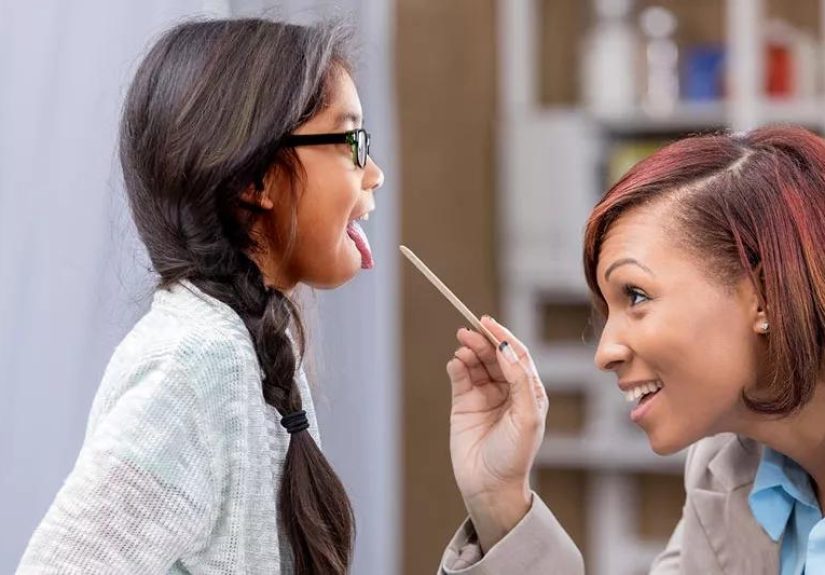
The clinician swabs the back of your child’s throat and tonsils, mixes the swab with a solution, and
then applies it to a test strip. Results usually show up in about 5–10 minutes.
Large analyses of these rapid tests in children show that on average they correctly identify strep throat
about 86% of the time (sensitivity) and correctly rule it out about 95% of the time (specificity).
In plain English: they’re very good, but not perfect. That’s why some negative tests in kids are
still followed up with a throat culture, depending on the practice and your child’s risk factors.
2. Throat Culture
A throat culture uses a swab sample sent to a lab, where it’s grown on a special medium to see if
strep bacteria appear. It takes longeroften 24–48 hoursbut it’s considered the gold standard
for diagnosing strep.
Pediatric guidelines often recommend confirming negative rapid tests with a culture in children, especially
when their symptoms strongly suggest strep. This balance between speed (rapid tests) and accuracy (culture)
is exactly the balance parents are trying to recreate at home.
So What Are At-Home Strep Throat Tests for Kids?
At-home strep tests are basically rapid antigen tests you can buy at the pharmacy or online. The general steps look like this:
- You swab your child’s throat and tonsils.
- You mix the swab in a provided solution.
- You place a few drops on a test device that looks a lot like a pregnancy test or COVID-19 rapid test.
- You wait the specified number of minutes and read the lines on the strip.
Some newer options involve collecting a swab at home and mailing it to a lab (often a PCR test) for more
accurate results within about 24–48 hours. Those tend to be more sensitive than standard rapid tests,
but of course you don’t get instant answers.
Many home strep tests are cleared for use in older children and adults, but the fine print can vary.
Some specify an age cutoff or recommend that an adult collect the sample for younger kids.
That’s why reading the instructionsand not just the product titleis essential.
Pros of Using a Home Test for Kids’ Strep Throat
1. Convenience (Especially at 9:00 p.m.)
The biggest selling point: you don’t have to drag a miserable child out of bed,
wrestle them into pants, and brave traffic and waiting rooms. You can swab at home,
in pajamas, with their favorite cartoon playing in the background.
2. Faster Decisions
A positive home test can help you and your pediatrician move more quickly.
For example, you might:
- Use a telehealth visit, show the test result, and get a prescription sent in.
- Decide it’s worth going into the office the same day.
Even though a home test isn’t a stand-alone prescription ticket, it can focus the conversation with
your child’s clinician and sometimes avoid delays.
3. Reduced Exposure to Other Germs
During respiratory virus season, waiting rooms can feel like a live demo of every virus currently in circulation.
If a home test can help triage who truly needs an in-person visit, that can be a small win for family health.
4. Helpful for Families in Rural or Busy Settings
For families who live far from clinics, have limited transportation, or juggle multiple kids and jobs,
every trip to the office has a cost. Home testsespecially when combined with telemedicine or
after-hours nurse linescan be a useful tool in those scenarios.
Cons and Limitations of At-Home Strep Tests
1. Accuracy Depends on How Well You Swab
Even in research studies, rapid tests miss some true strep infections.
Now imagine doing the swab while your child is gagging, squirming, and negotiating for three popsicles
in exchange for “just one more second.” It’s easy to get a less-than-ideal sample.
A poorly done swab can increase the risk of a false negativemeaning the test says “no strep” when strep
is actually present. That could delay proper treatment.
2. You Still Need a Clinician for Antibiotics
Even the best at-home strep test can’t prescribe antibiotics. A positive result should lead to consultation
with a pediatrician, urgent care, or family doctor. Many clinicians appreciate having a home test result,
but they still consider your child’s overall symptoms and exam before deciding on treatment.
3. Risk of Over-Testing and Over-Treating
Some guidelines caution against testing kids who clearly have viral symptoms (like a bad cough, runny nose,
and congestion) because a positive test in that situation could represent harmless bacterial carriage
rather than true strep infection. Over-testing can drive overuse of antibiotics, which we want to avoid
for both individual and public-health reasons.
4. False Sense of Security From a Negative Test
A negative home test should not be seen as a free pass to ignore worsening symptoms.
If your child still looks really unwell, has trouble swallowing, or their fever isn’t improving,
you should contact a healthcare professional regardless of what the test strip says.
5. Not All Tests Are Created Equal
Medical-grade tests used in clinics go through validation, quality-control processes, and are used by
trained staff. At-home options can vary in quality, instructions, and regulatory clearance.
It’s wise to look for products that are clearly authorized or cleared by the FDA,
and to be cautious about cheap, no-name kits from random sellers.
When a Home Strep Test Might Make Sense
Scenario 1: The “This Really Looks Like Strep” Situation
Your 10-year-old wakes up with a sudden sore throat, fever, and no runny nose or cough.
Their sibling had confirmed strep last week. A home test might be reasonable as a first stepespecially
if you can quickly follow up with your pediatrician (via telehealth or in-person) to interpret the result
and decide on treatment.
Scenario 2: Rural or Limited-Access Families
If you live an hour from the nearest clinic or lack easy transportation, a home test can help you decide
whether the long trip is needed urgently. A positive test with classic symptoms may push you to go in sooner;
a negative test with mild symptoms might support a phone call or telehealth check-in first.
Scenario 3: Supplement to Telehealth
Some pediatric telehealth services specifically encourage home strep tests and walk parents through
the swabbing process on camera. In that context, the home test becomes part of a supervised evaluation,
which can make it more reliable and clinically useful.
When You Should Skip the Home Test and See a Doctor First
Regardless of what’s in your medicine cabinet, there are times when the safest choice is to seek
in-person medical care before you even think about a home test. Call your pediatrician, urgent care,
or emergency services (depending on severity) if your child has:
- Difficulty breathing or swallowing
- Drooling because it hurts too much to swallow
- A stiff neck or trouble opening their mouth
- A fever that is very high or not improving with medication
- Severe throat pain on one side with trouble turning the head
- Signs of dehydration (very little urine, dry mouth, listlessness)
- They’re younger than 2 and seem very unwell
These can be signs of more serious illness or complications that need hands-on evaluation,
not just a swab and a test strip.
And remember: this article is for general information only and doesn’t replace advice from your child’s
healthcare professional. When in doubt, especially with young children, it’s always appropriate to ask
a doctor or nurse for guidance.
How to Use a Home Strep Test Safely and Smartly
1. Read the Instructions Like a Recipe You’ve Never Tried Before
Different brands have slightly different steps and timing. Treat the insert like a brand-new baking recipe:
don’t assume you already know how it works just because you’ve used other tests before.
2. Get a Good Swab
This is the least fun part, but it matters the most. Aim to:
- Swab the tonsils and the back of the throat on both sides.
- Avoid touching the tongue, cheeks, or teeth.
- Follow the swabbing time recommended by the instructions.
If your child absolutely won’t cooperate, that’s a sign you may need a professional to do the test.
3. Time the Result Precisely
Set a timer on your phone. Reading the test too early or too late can give misleading results.
“I glanced at it sometime after I brushed my teeth” is not the level of precision we’re going for here.
4. Don’t Use a Home Test to Decide Whether to Ignore Concerning Symptoms
If your child looks really unwell, the test result is just one piece of the story.
Worsening pain, persistent high fever, breathing problems, or a child who is unusually sleepy or hard to wake up
all deserve medical attention, even if your home test was negative.
5. Use the Results as a Conversation Starter With Your Pediatrician
Jot down:
- When symptoms started
- What the test result was and when you did it
- Any medications you’ve already given (fever reducers, etc.)
This helps your child’s clinician put the test into context and decide whether further testing or treatment is needed.
The Bottom Line: Should You Use a Home Test for Kids’ Strep Throat?
Home tests for kids’ strep throat can be a helpful toolbut they’re not a magic shortcut that replaces
professional care. Used thoughtfully, they can:
- Offer quick, at-home insight when your child has classic strep symptoms
- Support telehealth visits and urgent decisions, especially for busy or rural families
- Reduce some unnecessary in-person trips when combined with clinician guidance
But they also come with real limitations: imperfect accuracy, tricky swabbing, and the risk of underreacting
(or overreacting) to a single result. They’re best thought of as one tool in a bigger toolkit that includes
symptom monitoring, professional medical advice, and your own parental instincts.
If you decide to keep a home strep test in your bathroom cabinet, pair it with a plan:
who you’ll call, what symptoms will always send you in person, and
how you’ll use the result to guidenot replaceyour child’s medical care.
When used wisely, home tests can help you move from panic to a clear action plan,
even on those chaotic school-day mornings.
Real-Life Experiences: What Parents Say About Home Strep Tests
While research studies give us numbers, parents give us the “this is how it actually feels at 2 a.m.” side
of the story. Many caregivers describe home strep tests as emotional tools as much as medical ones.
When a child spikes a fever and complains of throat pain, having a test on hand can feel like
a small bit of control in a situation that otherwise feels chaotic.
Take a scenario you might recognize: a working parent with two kids in school and one toddler in daycare.
It’s Sunday night, the big science project is due Monday, and your second-grader suddenly says
“It hurts to swallow.” In this kind of moment, some parents say reaching for a home test helps them
decide whether to rearrange the entire next day, cancel meetings, and plan for an in-office visit
first thing in the morningor whether they can start with supportive care, observation, and a call
to the pediatrician’s nurse line.
Other families use home strep tests as part of a telehealth routine. One parent might schedule a video visit
while the other sets up the test at the kitchen table. The clinician walks them through the swabbing technique
(“Aim for the tonsils, not the tongue!”), waits for the result, and then helps interpret it.
Parents in this situation often say they feel much more confident using the test when someone
with medical training is virtually “in the room” guiding each step.
Of course, not every experience is positive. Some parents admit that the first time they tried a home test,
their child gagged, cried, and refused to cooperate. The test came back negative, but the child still looked awful.
The parent ended up in urgent care anywaywhere the clinician repeated the swab, got a positive test,
and started antibiotics. Those families often say they learned a key lesson: a home test result
is only as good as the swab and should never override your gut feeling that your child isn’t okay.
Some caregivers also share that home tests can lower anxiety even when they don’t change the medical plan.
For example, a teen who frequently gets sore throats might become extremely anxious about missing school
or sports. Doing a home test, getting a negative result, and then confirming with a quick telehealth check
can reassure both the teen and the parent that they’re not ignoring something serious. It doesn’t mean
they never end up in the office, but it can turn an “I’m spiraling” evening into a more manageable
“We have a plan” kind of night.
Perhaps the most important shared experience is this: parents who feel informed and prepared tend to feel
calmer when illness strikes. Whether they ultimately use home strep tests regularly or decide they’re
not worth the stress, they feel better knowing the trade-offs. For some, that means keeping a
test kit next to the thermometer and fever medicine. For others, it means sticking to in-office testing
but having clear red-flag symptoms written on a note on the fridge. In both cases, the real win
is the sameparents who feel empowered to make thoughtful, confident decisions for their kids’ health.