Table of Contents >> Show >> Hide
- Why Putting in Contacts With Long Nails Feels Harder
- Before You Start: Set Yourself Up for Success
- How to Put on Contact Lenses With Long Nails: 10 Steps
- Step 1: Wash and Dry Your Hands Like You Mean It
- Step 2: Keep the Lens on the Pad of Your Finger, Not Near the Nail
- Step 3: Check That the Lens Is Right-Side Out
- Step 4: Use Your Non-Dominant Hand to Hold the Upper Lid
- Step 5: Pull Down the Lower Lid With a Different Finger
- Step 6: Look Straight Ahead or Slightly Up
- Step 7: Touch the Lens to the Eye Gently Using the Finger Pad
- Step 8: Release the Lids in the Right Order
- Step 9: Do a Comfort Check Before Moving On
- Step 10: Repeat the Same Routine Every Time
- Common Mistakes to Avoid
- Extra Tips for Acrylic Nails, Gel Nails, and Very Long Nails
- What If You Still Cannot Get the Lens In?
- Real-World Experiences With Contact Lenses and Long Nails
- Conclusion
Putting in contact lenses with long nails can feel like trying to perform delicate eye yoga while wearing tiny plastic talons. It is possible, though. Plenty of contact lens wearers manage long natural nails, gel manicures, acrylics, and all the glam that comes with them. The trick is not bravery. The trick is technique.
If you have ever hovered in front of a mirror with one lens on your fingertip, blinking like a suspicious owl, this guide is for you. The good news is that learning how to put on contact lenses with long nails is mostly about creating better habits. Once you stop relying on the tips of your nails and start using the pads of your fingers, the whole process gets less dramatic and a lot more successful.
This article walks through 10 practical steps to help you insert contacts safely, comfortably, and without turning your morning routine into an action movie. Along the way, you will also learn how to avoid common mistakes, protect your eyes from scratches and irritation, and make your contact lens routine much easier to manage over time.
Why Putting in Contacts With Long Nails Feels Harder
Long nails change your angles. They make it harder to grip a soft lens, easier to poke your eyelid by accident, and more likely that you will tear or contaminate the lens if you rush. Soft contact lenses are delicate, and your eyes are even more delicate. That is why good contact lens hygiene matters just as much as insertion technique.
The main problem is not simply nail length. It is how you use your hands. Many beginners try to “grab” the lens with their nails, or they bring their fingers straight toward the center of the eye too fast. That is where trouble starts. A better approach is slow, controlled, and boring in the best possible way.
Think of it like handling a potato chip that also needs to sit directly on your eyeball. Confidence helps. Precision helps more.
Before You Start: Set Yourself Up for Success
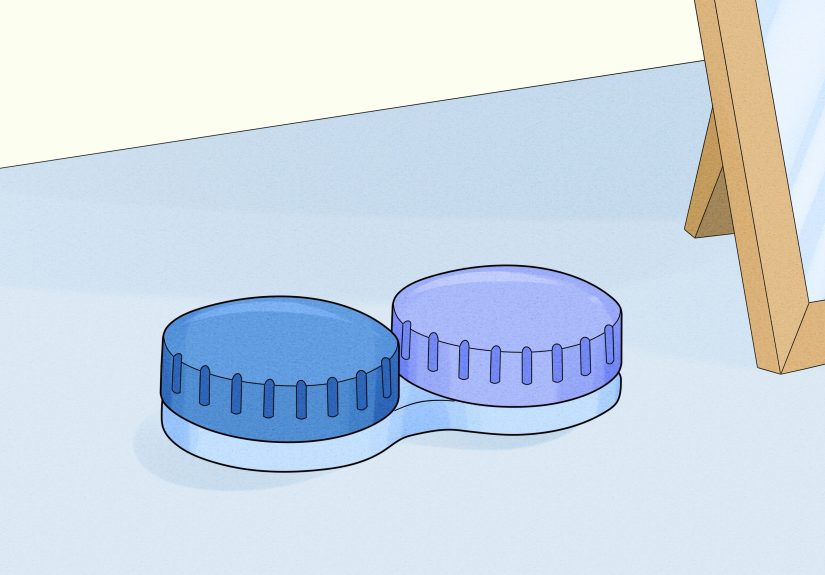
Before getting into the 10 steps, it helps to create a setup that makes contact lens insertion easier. Use a clean mirror in a well-lit room. Stand over a sink with the drain closed, or place a clean towel over the counter in case the lens drops. Keep your contact lens case, fresh solution, and a lint-free towel nearby. If you wear reusable soft lenses, make sure the correct lens goes in the correct eye. Starting with the same eye every time can help you avoid mix-ups.
Also, do not try this while multitasking, texting, singing a power ballad, or chasing a dog out of the bathroom. Give your eyes the full VIP treatment for two minutes.
How to Put on Contact Lenses With Long Nails: 10 Steps
Step 1: Wash and Dry Your Hands Like You Mean It
The first rule of contact lens safety is simple: clean hands only. Wash with mild soap, rinse thoroughly, and dry your hands completely. Any leftover lotion, oily residue, fragrance, or moisture can make the lens slippery, cloudy, or irritating once it goes into your eye.
If you have long nails, be extra careful around the nail beds and underneath the tips where residue can hide. This is not the moment for a rushed splash-and-dash hand rinse. Your lens is going directly onto your eye, not onto a dinner plate.
Step 2: Keep the Lens on the Pad of Your Finger, Not Near the Nail
This step is the game changer. Instead of balancing the lens near the tip of your nail, place it on the soft pad of your index finger or middle finger. Many people with long nails find the middle finger easier because the angle can feel more stable. The goal is to let the fleshy fingertip control the lens while the nail stays far away from your eye.
If the lens keeps folding, do not pinch it aggressively. Let it rest in solution for a second, then reposition it gently. With practice, you will find the sweet spot where the lens sits like a tiny bowl on your finger.
Step 3: Check That the Lens Is Right-Side Out
A contact lens that is inside out is not impossible to wear, but it is definitely annoying. Look at the lens from the side. If it forms a smooth bowl with edges pointing upward, you are good. If the edges flare outward like a saucer trying to be dramatic, flip it.
This small step saves time. A lens that feels wrong often is wrong, and no amount of blinking will turn an upside-down lens into a good decision.
Step 4: Use Your Non-Dominant Hand to Hold the Upper Lid
One of the biggest issues for contact lens beginners is blinking right before the lens lands. To stop that, use your non-dominant hand to lift and hold the upper eyelid firmly against the brow bone. Hold the lashes too if needed, as long as you are gentle.
This matters even more with long nails because it helps keep your dominant hand from wandering too close to the eye. It also gives you better control and keeps the top lid from swooping down like a curtain during the final second.
Step 5: Pull Down the Lower Lid With a Different Finger
Now use a finger from your dominant hand, usually the middle finger, to pull down the lower eyelid while the lens stays balanced on the fingertip you will use for insertion. This creates a wider opening and reduces the chance that your lashes or lids will interfere.
Yes, this can feel like your hands are auditioning for a puzzle competition. That is normal. Once your fingers know their jobs, the movement becomes automatic.
Step 6: Look Straight Ahead or Slightly Up
Many people find it easier to place the lens while looking straight into a mirror. Others prefer looking slightly upward so the lens lands on the white part of the eye first and then settles into place. Both methods can work. The best choice is the one that helps you stay calm and steady.
If you are nervous, looking slightly up often feels less intense because you are not aiming directly at your pupil. It is still your eye, of course, but somehow the brain complains a little less.
Step 7: Touch the Lens to the Eye Gently Using the Finger Pad
Bring the lens toward the eye slowly. Not kind of slowly. Actually slowly. The contact lens should meet the eye with the soft pad of your finger doing the work and the nail pointed away the entire time. Once the lens touches the eye, let it settle rather than pressing it in.
This is where long nails can get people in trouble. If you angle your hand too steeply, the nail may approach the eye first. Rotate your wrist slightly if needed so the finger pad arrives before anything else. Gentle contact is enough. This is not a doorbell.
Step 8: Release the Lids in the Right Order
After the lens touches the eye, release the lower lid first, then the upper lid. This helps the lens stay in place instead of popping out. Blink slowly a few times and let the contact settle naturally.
If the lens moves off-center, close your eye and massage the lid gently. Often, the lens will slide into position on its own. If it feels sharp, gritty, or oddly dramatic, take it out, rinse or clean it as directed for your lens type, and try again with a fresh start.
Step 9: Do a Comfort Check Before Moving On
Once the lens is in, ask yourself one question: does this feel normal? A properly inserted contact lens may feel noticeable for a second, especially if you are new to lenses, but it should not feel painful, scratchy, or like something is stabbing your eye with tiny regret.
If you have redness, significant discomfort, blurry vision that does not clear quickly, or the sense that the lens is damaged, remove it. Never keep wearing a torn or uncomfortable lens just because you worked hard to get it in. Effort does not turn a bad lens into a safe lens.
Step 10: Repeat the Same Routine Every Time
The secret to mastering how to put in contacts with long nails is repetition. Use the same hand positions, the same eye order, and the same slow pace each time. Consistency reduces mistakes and builds muscle memory fast.
Start with the same eye first every day. Store and handle your lenses the same way every time. The more predictable your process becomes, the less likely you are to improvise with a nail too close to your cornea.
Common Mistakes to Avoid
Using Nails to Pinch or Scoop
This is the classic mistake. Nails can tear the lens, nick the surface, or scratch the eye. If you wear acrylic nails or extra-long natural nails, this matters even more. Your fingertips are your tools. Your nails are just along for the ride.
Handling Contacts With Wet Hands
Water and contact lenses are a famously bad couple. Wet hands make lenses harder to control, and non-sterile water can expose your eyes to organisms that do not belong there. Dry hands give you better grip and better hygiene.
Putting in Contacts After Makeup
Contacts should generally go in before makeup and come out before makeup removal. That lowers the chance of mascara flakes, eyeliner smudges, glittery shadow, or makeup remover getting on the lens. Your eye should not have to deal with both a contact lens and rogue shimmer fallout before breakfast.
Using Old Solution or Topping Off
If you wear reusable lenses, use fresh disinfecting solution every time. Do not “top off” yesterday’s solution with a splash of new liquid and call it a day. That shortcut may reduce how well the solution disinfects your lenses and case.
Ignoring Pain, Redness, or Blurry Vision
If your eye hurts, turns red, becomes light-sensitive, or your vision changes, remove the lens and contact an eye care professional. Contact lenses are safe for many people when used correctly, but they are not casual little fashion accessories. They are medical devices.
Extra Tips for Acrylic Nails, Gel Nails, and Very Long Nails
If your nails are especially long, a few practical tweaks can make a big difference:
- Use a magnifying mirror if your bathroom lighting is terrible.
- Try inserting the lens with your middle finger instead of your index finger if that keeps the nail farther back.
- Keep your thumb and index fingernails a little shorter than the others if you want a compromise between style and function.
- Ask your eye doctor whether daily disposable contact lenses could simplify your routine if lens cleaning feels like a burden.
- Practice when you are not rushed. Learning this skill five minutes before school, work, or a road trip is bold, but not wise.
What If You Still Cannot Get the Lens In?
If you are struggling, it does not mean you are bad at contacts. It means you are learning a weird, highly specific skill that involves touching your own eye on purpose. That takes time. Step away for a minute, rewash your hands, calm your blinking reflex, and try again.
If insertion remains consistently difficult, make an appointment with your eye doctor or optician for a hands-on refresher. They can show you safer positioning, confirm that the lens fit is right, and recommend options that may be easier to handle. Sometimes the issue is not your nails. Sometimes it is the lens material, dryness, anxiety, or technique.
Real-World Experiences With Contact Lenses and Long Nails
People who wear contact lenses with long nails often describe the learning curve in the same way: the first few tries feel ridiculous, and then one day it suddenly clicks. At the beginning, there is usually a lot of hovering, second-guessing, blinking, and dropping the lens into the sink like it has a personal grudge. Many first-time wearers assume long nails automatically make contacts impossible, but the actual experience is usually more about patience than impossibility.
One common experience is that the process feels easier once people stop trying to be fast. Speed sounds efficient, but it usually creates awkward hand angles and accidental pokes. Slowing down helps wearers notice where the nail is pointing, how far the fingertip is from the eye, and whether the lens is balanced correctly. In real life, that slower pace often saves time because it prevents failed attempts.
Another thing many contact lens wearers notice is that certain nail shapes are harder to work with than others. Extremely pointed nails can make people feel nervous even if they never actually scratch their eye. Squared or rounded shapes often feel less intimidating during insertion. Some people keep two nails slightly shorter, especially the thumb and index finger, because it gives them a little extra confidence without sacrificing the whole manicure.
There is also the makeup factor. People who wear contacts and love eye makeup quickly learn that order matters. Inserting lenses before applying makeup usually leads to a cleaner, more comfortable day. Waiting until after mascara, eyeliner, or glitter shadow often leads to smudges, watery eyes, or the deeply annoying sensation that something tiny is camping under the lens. It is not glamorous, but it is educational.
Many long-nail wearers also report that removal can feel scarier than insertion at first. That makes sense. Inserting is mostly about placement, while removal can feel like you have to pinch a slippery invisible sticker off your eye. Over time, though, most people discover that sliding the lens down first or using the pads of the fingers gently from the sides works much better than trying to grab from the center. Once that becomes familiar, confidence rises fast.
Dry environments can make the experience tougher too. Air conditioning, long screen time, and tired eyes can make lenses feel less cooperative. On those days, people often say the lens seems harder to place or slower to settle. Building a calm routine helps: wash, dry, position, insert, blink, breathe. It sounds basic, but routine is what turns a stressful process into a boring one, and boring is exactly what you want with contact lenses.
Perhaps the most helpful real-world lesson is this: almost nobody looks polished and effortless during the practice stage. Even people who now pop in their contacts in seconds probably started out staring into the mirror as if negotiating a peace treaty with their own eyeball. The improvement comes from repetition. Once the technique becomes muscle memory, long nails stop feeling like a disaster and start feeling like just another detail to work around.
Conclusion
Learning simple ways to put on contact lenses with long nails is less about changing your style and more about changing your method. Use the pads of your fingers, keep your nails angled away from the eye, hold your lids securely, use fresh solution, and do not cut corners with hygiene. Those habits protect both your lenses and your eyes.
The best part is that this skill gets easier surprisingly fast. Once you develop a repeatable routine, you can keep the manicure, keep the contacts, and keep your mornings from turning into a tiny eye-related crisis. Style and safe lens wear can absolutely live in the same bathroom cabinet.