Table of Contents >> Show >> Hide
If your small closet looks like a fabric avalanche waiting for the right moment to strike, you’re not alone.
Most homes weren’t designed for today’s wardrobes, so closets end up crammed, chaotic, and strangely useless
for how much space they take up. The good news? A tiny closet can still be a hard-working storage powerhouse
if you treat every inch like prime real estate.
These small closet storage ideas focus on maximizing functionality, not just making things look pretty for
five minutes. You’ll learn how to use vertical space, choose the right organizers, build a wardrobe that
actually fits your closet, and keep everything under control long term.
Step One: Declutter Like You Mean It
The harsh truth: no organizing system can save a closet that’s simply holding too much stuff. Before you
buy a single bin or hanger, do a serious edit. This one step can instantly double the usability of a tiny
closet.
Ask the right questions
- Do I wear this in my real life? Not the life I imagine for myself. The one with school pick-ups, Zoom calls, and grocery runs.
- Would I buy this again today? If the answer is no, that’s a strong sign it can go.
- Does it fit and feel good right now? “Someday” sizes don’t deserve prime closet space.
Sort items into clear categories: keep, donate, sell, and “try-on stack” for pieces you’re not totally sure
about. The goal is to keep what you truly wear and love, so the closet can actually function instead of
smothering you in fabric guilt.
Right-size your wardrobe for your closet
If your closet comfortably holds about 80 hanging items, but you’re trying to squeeze in 150, no organizer
on earth will fix that. Think in terms of capacity:
- Count your hangers: Use that number as a hard limit.
- Limit categories: For example, no more than 10 pairs of jeans or 8 hoodies at a time.
- Use a “one in, one out” rule: When something new comes in, something old must go.
Use Vertical Space Like a Pro
Small closets usually have plenty of height but very little width. That’s why vertical storage is your new
best friend. Think floor-to-ceiling, wall-to-wall, and door-to-back-wall.
Double up on hanging rods
One of the biggest wasted spaces in a standard closet is the area beneath your hanging shirts. If you mostly
wear shorter items like shirts, blouses, and folded-over pants, add a second rod underneath the first:
- Top rod: Shirts, blouses, light jackets.
- Bottom rod: Pants, skirts, shorter cardigans.
This instantly doubles your hanging space. For the few long items you own (dresses, coats), reserve one
narrower section of single rod so they still have room to hang freely.
Raise shelves and go all the way to the ceiling
Most closets have a single shelf above the rod. That’s a start, but it’s rarely enough. If possible, adjust
the height of that shelf upward and add additional shelves above or below it:
- Top shelves: Out-of-season clothing, travel gear, sentimental items.
- Middle shelves: Sweaters, jeans, and bulky items you can fold.
- Lower shelves or cubbies: Shoes, baskets, and daily accessories.
Stacking things directly on a long, uninterrupted shelf leads to toppling piles. Shelf dividers, bins, and
baskets break that space into tidy, manageable sections.
Take advantage of the back of the door
The back of a closet door is prime real estate, especially in small spaces. Use it for:
- Over-the-door shoe organizers: Great for shoes, but also for scarves, belts, and small bags.
- Multi-hook racks: Perfect for hats, bags, robes, and “wear again” clothes.
- Shallow organizers: Transparent pockets for socks, tights, or accessories.
The key is to keep door storage relatively shallow so it doesn’t bump into hanging clothes or make it hard
to close the door.
Choose Space-Saving Closet Hardware
Once you’ve edited your wardrobe and planned your vertical layout, the fun part begins: picking closet
organizers that actually earn their keep.
Switch to slim, non-slip hangers
Thick plastic hangers might be cheap, but they eat up space and let clothes slide off. Slim, non-slip hangers:
- Take up far less room per item.
- Keep delicate fabrics from slipping to the floor.
- Create a visually calm, uniform look that makes your closet feel bigger and more organized.
Swap them in category by category if replacing everything at once isn’t in the budget.
Use cascading hooks and multi-hangers
Cascading hooks and multi-hangers allow several items to hang from one spot on the rod. They’re especially
helpful for:
- Tank tops and camis.
- Scarves and belts.
- Work pants or skirts you wear often.
Just don’t overload them to the point that you can’t flip through or see what you have. Function first,
clever gadgetry second.
Try S-hooks, valet rods, and pull-out racks
A few strategic extras can make a small closet feel customized:
- S-hooks: Hang bags, hats, or belts directly from the main rod.
- Valet rods: Slide-out rods for planning outfits or hanging tomorrow’s clothes.
- Pull-out racks: Excellent for ties, belts, or scarves if you have a narrow slice of wall or side panel.
These small details make daily use smoother, which is what “maximizing functionality” is really about.
Contain the Small Stuff
Even the best layout can fall apart if smaller items don’t have defined homes. Containment is the secret to
a tidy, hardworking closet.
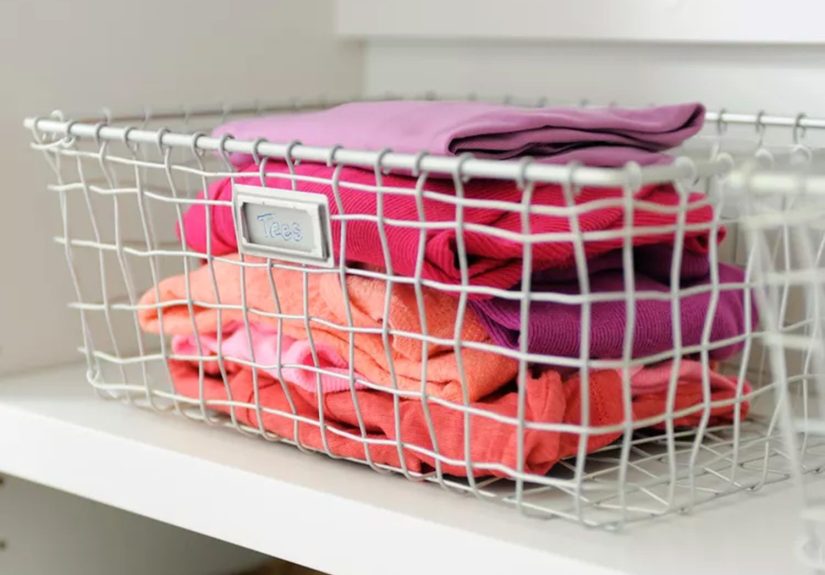
Bins, baskets, and shelf dividers
Open shelves are greatuntil they turn into fabric landslides. Use bins and baskets to group similar items:
- Labeled baskets: “Workout,” “Sleepwear,” “Swim,” “Winter Accessories.”
- Shelf dividers: Keep stacks of sweaters or jeans from tipping over.
- Lidded bins: Ideal for rarely used or off-season items that can live on high shelves.
Clear or mesh bins help you see what’s inside; opaque baskets look cleaner but may need labels to stay
functional.
Use drawer units and fabric cubbies
If your closet has dead space at the bottom, tuck in a small dresser, drawer unit, or cube organizer:
- Drawer units: Great for underwear, socks, tees, and lounge clothes.
- Fabric hanging cubbies: Attach to the rod and create vertical “shelves” for sweaters or jeans.
- Cubes: Perfect for shoes, baskets, or folded items in small categories.
Shoe storage that actually fits your space
Shoes are notorious space hogs. In a small closet, you have to be intentional:
- Slim shoe racks: Fit on the floor under hanging clothes.
- Over-the-door organizers: Ideal if you lack floor space.
- Clear shoe boxes: Stackable and dust-proof, especially for special-occasion shoes.
Keep the most-worn pairs easiest to grab; store fancy or seasonal shoes higher up or elsewhere in your home.
Design Your Closet Around Your Lifestyle
A closet that functions well is not just “organized”it’s organized for you. Your work schedule,
hobbies, and climate should shape how you use the space.
Consider a mini capsule wardrobe
You don’t have to commit to an extreme minimalist lifestyle, but borrowing ideas from capsule wardrobes can
dramatically improve a small closet’s functionality. Focus on:
- Versatile pieces: Items that mix and match easily.
- Tight color palette: Neutrals plus a few accent colors make getting dressed faster.
- Seasonal edit: Only current-season clothing lives in your main closet.
The more each item works with others, the fewer total pieces you needand the more breathing room your
closet gains.
Organize by zone, not just by color
Color-coding looks gorgeous in photos, but it’s not always the most functional method in a small space.
Instead, try organizing by:
- Category: All jeans together, all dresses together, all button-downs together.
- Use: Workwear, lounge clothes, workout gear, “going out” outfits.
- Frequency: Everyday items within easiest reach, special-occasion items higher or lower.
Once zones are clear, you can still color-code within each category if you love the visual satisfaction.
Rotate seasonally and use overflow storage wisely
In a truly small closet, trying to store all four seasons at once is a recipe for frustration. Use under-bed
boxes, high shelves, or another secondary space to rotate:
- Store heavy sweaters and boots when it’s hot out.
- Pack up shorts and sandals when winter rolls in.
- Use vacuum bags sparingly for bulky but sturdy fabrics like coats or comforters.
Seasonal rotation keeps your closet focused on what you actually wear right now, which makes it feel bigger
and more functional.
Maintenance Habits That Keep Your Small Closet Functional
Even the best-designed closet will slip back into chaos without a few simple habits. The goal isn’t
perfection; it’s creating a space that’s easy to reset in a few minutes.
- Adopt a “10-hanger reset” rule: When you notice things slipping, tidy just 10 hangers or one shelf.
- Do a quick edit each season: Pull anything stretched out, damaged, or unworn.
- Return items to their homes: Baskets, hooks, and dividers only work if you actually use them.
- Keep the floor clear: A visible floor instantly makes the closet feel bigger and more organized.
Think of your closet as a living system, not a one-time project. When it’s set up to match your real life,
maintenance becomes much easier and faster.
Real-Life Small Closet Makeover Experiences
It’s one thing to talk about “small closet storage ideas” in theory. It’s another to face the reality of a
narrow, dim closet that’s been overstuffed for years. Here are a few real-world style scenarios that show
how these ideas play outand the lessons that come with them.
Case 1: The Studio Apartment “Everything Closet”
Imagine a small studio apartment with a single, shallow closet doing the work of three different spaces:
entry closet, bedroom closet, and linen closet. Coats, jeans, towels, extra pillows, and random shopping
bags all squeeze together on one sagging rod and a single shelf.
The makeover started with a ruthless edit. Out went the “just in case” coats, duplicate black jeans, and
spare bedding never used. Then the layout changed:
- A double rod system created separate zones for everyday clothes and pants.
- A slim shoe rack slid under the hanging clothes.
- Labeled bins on the top shelf corralled extra linens and seasonal items.
- Over-the-door hooks handled bags and scarves instead of cramming them on hangers.
The biggest surprise wasn’t the extra space; it was how much faster getting dressed became. Instead of
digging through piles, everything had a dedicated spot, and the closet actually closed easilyno shoulder
slamming required.
Case 2: Two People, One Tiny Primary Closet
In an older house, the primary bedroom closet was barely wider than the bed. Two adults were sharing one
small rod and no built-in drawers. Clothes were crammed, and no one could ever find their shoes.
Step one was dividing the space fairly. Each person got their own set of slim hangers in a distinct color
so clothes didn’t get mixed up. A vertical cube organizer on one side became “his” shelf space; a small,
three-drawer unit under hanging clothes became “hers” for tees and pajamas.
Shoes, previously scattered across the floor, moved onto two narrow racks stacked under the shortest hanging
section of the closet. Off-season coats headed to a hallway closet to free up the main one. The final touch
was a valet hook on the side wall, giving both people a place to hang tomorrow’s outfit without cluttering
chairs.
The result wasn’t a Pinterest-perfect walk-inbut it was a calm, workable system that respected both people’s
routines. Mornings went from, “Where is my other shoe?” to, “Wow, that was easy.”
Case 3: The Overwhelmed “New Parent” Closet
A new parent had a closet that had once made sense: workwear, weekend outfits, and a few dressy pieces. Then
life changed. Suddenly the closet also held maternity clothes, nursing tops, clothes that didn’t fit yet, and
random baby gear stuffed in wherever there was space.
Rather than forcing everything into the same tiny closet, the solution was to get honest about what was
actually needed day-to-day. The current size and most-used nursing-friendly pieces stayed in the closet.
Pre-baby sizes and “maybe someday” items went into labeled under-bed bins. A small hanging organizer
claimed one side of the closet for quickly accessible “grab and go” outfits: a row of comfy leggings, soft
tees, and one or two nicer “Zoom presentable” tops.
A hook mounted just outside the closet became the landing spot for baby carriers and diaper bags instead of
stuffing them inside. This small change created less friction when leaving the house and kept the closet
from becoming a black hole of baby gear.
Takeaways from real closets
Across all these scenarios, a few themes show up again and again:
- Editing beats organizing. When less lives in the closet, every system works better.
- Vertical space is gold. Doubling the rods, adding shelves, and using door backs add meaningful capacity.
- Zones keep things sane. Clear areas for work, casual, and occasion wear make decisions faster.
- Habits matter most. A quick seasonal review and a 5-minute weekly tidy keep chaos from coming back.
Maximizing functionality in a small closet isn’t about owning every organizing gadget on the internet. It’s
about understanding how you live, editing your stuff to match that reality, and using thoughtful storage
solutions to make everyday life smoother. When your closet supports your routines instead of fighting them,
even the tiniest space can feel surprisingly generous.