Table of Contents >> Show >> Hide
- What Happened: The Quick, Reliable Timeline
- How the Internet Reacted: 30 “Pics” Worth of Meme Energy
- Important Context: What We Know (and What We Don’t)
- Why Jokes Show Up First: The Internet’s Coping Mechanism
- How Cable News and Commentary Fueled the Virality
- A Modern Twist: Old Images, New Claims
- What This Says About Holiday Culture in 2026
- Conclusion: A Very 2020s Holiday Headline
- 500-Word Experiences Add-On: What a Viral Holiday Moment Feels Like Online
There are two kinds of holiday traditions in America: the ones involving cookies, carols, and awkward family photos…
and the ones involving a news cycle so chaotic it feels like a group chat got promoted to “national headline.”
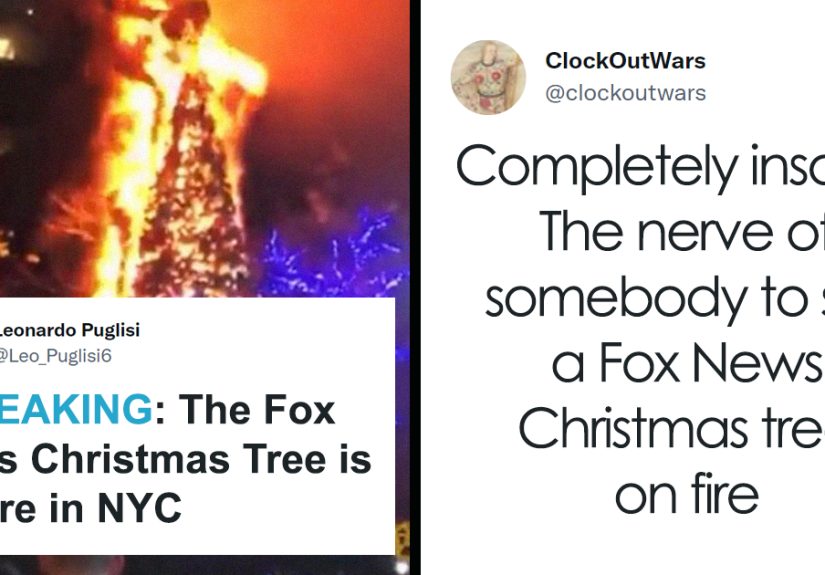
In early December 2021, a giant Christmas tree outside Fox News’ New York City headquarters went up in flames.
No one was hurt, the suspected arsonist was arrested, and within hours the internet did what it always does:
processed a serious, surreal story with jokes, memes, hot takes, and the kind of commentary that arrives
faster than your package marked “out for delivery.”
This article breaks down what happened, why it exploded online, and what the internet’s “reaction machine” reveals
about modern cultureespecially when a very public holiday display becomes a very viral moment.
And yes: we’ll include “30 pics,” in spiritthink of them as 30 snapshot captions of the kinds of posts people shared,
without reposting anyone’s copyrighted images.
What Happened: The Quick, Reliable Timeline
The incident occurred shortly after midnight in Midtown Manhattan at Fox Square, near the intersection of Sixth Avenue
and West 48th Street. Reports at the time described a 50-foot “All-American” themed treered, white, and bluecovered
in thousands of ornaments and lights. Security noticed a man climbing the structure; police arrived, and a suspect was
taken into custody nearby. Firefighters extinguished the flames, and authorities reported no injuries.
Why a Tree Fire Became a National Story
A big public Christmas tree is already a symbol: it’s nostalgia with extension cords. Put it in front of a major media
companyand one that regularly covers cultural conflictand the symbolism becomes unavoidable. That’s why this story
wasn’t just “a fire.” It became an instant Rorschach test: people projected politics, media criticism, holiday culture,
and city-safety debates onto one scorched display.
How the Internet Reacted: 30 “Pics” Worth of Meme Energy
Instead of reposting screenshots or copyrighted images, the list below summarizes the most common “reaction formats”
people shared onlinelike a museum guide, except the exhibits are sarcasm and the gift shop sells hot takes.
- The “War on Christmas” Uno Reverse Card: Posts joking that the “war” had gotten extremely literal.
- The “Plot Twist” Headline Edit: People writing parody headlines like it was a dramatic season finale.
- The “This Could’ve Been an Email” Reaction: Memes about how everything becomes breaking news now.
- The “Not the Tree!” Crying GIF Energy: Classic exaggerated griefbecause the internet loves theater.
- The “When Your Group Project Catches Fire” Comparison: Relatable chaos translated into holiday décor.
- The “Too Much Hot Take, Not Enough Hot Cocoa” Comment: People roasting the outrage-to-egg-nog ratio.
- The “City Life” Shrug: Posts using gallows-ish humor about weird things happening in busy places.
- The “Arson, But Make It Branding” Joke: Snark about how quickly logos and narratives attach to events.
- The “Christmas Tree Lighting Speedrun” Bit: People predicting the replacement tree timeline like sports odds.
- The “This Is Why We Can’t Have Nice Things” Classic: The oldest meme in the bookstill undefeated.
- The “Local News Voice” Parody: Overly dramatic captions: “It was a quiet night… until it wasn’t.”
- The “Holiday Villain Origin Story” Format: Jokes framing it like a comic-book backstory.
- The “Corporate Email Draft” Meme: Fake internal memos: “Team, please stop setting the tree on fire.”
- The “Meanwhile, Somewhere Else…” Pivot: People using the story as a springboard to other grievances.
- The “If This Were a Movie…” Posts: Casting suggestions, dramatic narration, imaginary soundtracks.
- The “Red, White, and Blue… and Charcoal” One-Liner: Dark humor that stays on the pun side of the line.
- The “Holiday Spirit, But Make It Smoke” Caption: Punny reactions that spread because they’re easy to share.
- The “Think Pieces Arriving in 3…2…1” Callout: People mocking how fast commentary becomes “analysis.”
- The “This Is Going to Be on Every Panel Tonight” Prediction: Spoiler alert: it was.
- The “Breaking: Internet Discovers Fire Is Hot” Snark: Making fun of obvious observations framed as revelations.
- The “Meme Template Renaissance” Moment: Old formats resurfacingbecause nostalgia loves company.
- The “NYC Christmas Tree Cinematic Universe” Joke: References to other famous New York holiday displays.
- The “Serious Face, Silly Caption” Combo: A sober screenshot paired with absurd textclassic contrast humor.
- The “Everyone’s a Detective” Thread: People speculating wildly, then someone shows actual reporting.
- The “Please Don’t Guess Motives” Reality Check: Users reminding others that facts come first.
- The “Bail Reform Debate Appears” Turn: Policy arguments showing up almost immediately.
- The “Media Critique” Reaction: People debating coverage choices more than the event itself.
- The “Holiday Cynicism vs Holiday Hope” Split Screen: Posts contrasting jokes with calls to calm down.
- The “Replace It Bigger” Dare: Tongue-in-cheek challenges: rebuild, relight, and move on.
- The “Remember This Next Time You Share an Old Photo” Reminder: Meta-posts about misinformation and context.
Important Context: What We Know (and What We Don’t)
Viral stories often get “filled in” by speculationespecially when they feel symbolic. But early reporting emphasized
a few grounded points: the fire happened outside the News Corp building in Midtown Manhattan; a suspect was arrested;
no one was injured; and authorities had not publicly confirmed a motive at the time. The restwhy it happened, what it
“meant,” who it was “for”became the internet’s favorite hobby: confident guessing.
How Officials and Media Reports Described the Suspect and Charges
Multiple outlets reported the suspect as 49-year-old Craig Tamanaha, with charges including arson and additional offenses
related to trespassing, disorderly conduct, and property damage. Some coverage also described him as homeless. It’s worth
saying plainly: a person’s housing status doesn’t explain an event by itself, and it shouldn’t become an excuse to turn a
criminal incident into a stereotype.
Why Jokes Show Up First: The Internet’s Coping Mechanism
When something shocking happens, humor often arrives before reflection. Not because people don’t carebut because comedy
is the quickest language online. A joke is fast, shareable, and socially safe: it says, “I saw this too,” without requiring
a dissertation in the replies.
In this case, humor also had a target-rich environment: a Christmas tree is wholesome, a fire is dramatic, and the location
(outside a polarizing cable network) is instantly “about something” to millions of people. The result was a meme storm that
ranged from silly puns to pointed media criticism.
Where Humor Crosses the Line
There’s a difference between joking about the absurdity of a headline and celebrating harm. The best internet reactions
stayed on the side of satiremocking narratives, pointing out hypocrisy, or using wordplaywithout encouraging copycats
or treating dangerous behavior as entertainment.
How Cable News and Commentary Fueled the Virality
Another reason the story spread: it was covered intensely, including by Fox itself. Media critics noted that Fox treated
the incident as a major story for an extended stretch, often framing it as evidence of broader cultural or political decay.
When a network becomes both the subject and the narrator of a story, attention multipliessupporters and critics watch for
very different reasons, and both sides share clips.
The Coverage Feedback Loop
Here’s the loop: an incident happens → it gets framed as symbolic → the framing becomes controversial → the controversy
becomes the story → the story becomes meme fuel → the memes become more coverage → and suddenly you’re arguing with a
stranger about a Christmas tree at 1:00 a.m. while your hot chocolate gets cold out of spite.
A Modern Twist: Old Images, New Claims
One of the most useful lessons from this incident arrived later: the photos and videos from 2021 didn’t stay in 2021.
In early 2024, fact-check reporting noted that images of the Fox News Christmas tree fire were recirculated online with
false claims tying them to unrelated events. That’s a classic misinformation pattern: a dramatic real photo, a new caption,
and a totally different story.
How to Avoid Getting Fooled by a Viral “Breaking” Post
- Check the date: Viral images often get reposted years later without context.
- Look for multiple credible reports: If only one account is posting it, be skeptical.
- Separate “what happened” from “what it means”: Facts first, interpretations second.
- Be careful with assumptions about motive: Motive is often unknown early on.
What This Says About Holiday Culture in 2026
Yes, the fire happened in 2021. But the reason it still gets referencedand still goes viral when resurfacedis that it
sits at the intersection of three permanent internet obsessions:
- Holiday symbolism: Christmas décor is never just décor online; it’s identity, tradition, and nostalgia.
- Media-as-culture-war: People react to the outlet as much as the event.
- Meme-speed discourse: The first draft of history is now written in captions.
The bigger takeaway isn’t “people made jokes.” The takeaway is how quickly we turn real events into narrative vehicles.
That can be funny, cathartic, and even insightfulbut it also makes it easier for misinformation to hitch a ride.
Conclusion: A Very 2020s Holiday Headline
The Fox Square Christmas tree fire became viral not just because it was dramatic, but because it was instantly interpretable.
People didn’t just see a burning tree; they saw a symbol, a storyline, a punchline, a political argument, and a media critique
all fighting for the same timeline space.
If there’s a hopeful note, it’s this: the immediate reports emphasized that no one was injured, and the display was rebuilt.
The internet, meanwhile, did what it does best and worstconnected, coped, argued, created, and occasionally learned a lesson
about checking dates before sharing an old image as “breaking news.”
500-Word Experiences Add-On: What a Viral Holiday Moment Feels Like Online
If you’ve ever opened your phone in December and felt like the internet was running on peppermint-flavored chaos, you already
understand the vibe. Holiday season is when people are emotionally loaded: nostalgic, stressed, sentimental, lonely, excited,
overscheduled, or all of the above. So when a story drops that’s both shocking and symbol-heavylike a huge Christmas tree
burning outside a famous buildingit hits the timeline like a snowball made of fireworks.
The first “experience” most people have isn’t the event itself; it’s the notification. A friend texts, “Did you see this?”
You click, expecting something minor, and instead you’re watching a clip that looks like a scene from a movie. Within minutes,
the comments are split into three neighborhoods: the jokers, the outraged, and the fact-checkers. The jokers arrive first, not
because they’re heartless, but because humor is the fastest way to say, “This is unreal.” The outraged arrive second, ready to
attach meaning, motive, and blame. The fact-checkers arrive third, usually exhausted already, gently begging everyone to read an
article from an actual newsroom before launching into a 40-tweet theory about civilization collapsing.
Then comes the strangest part: the “formatting” of the story. A real-world incident gets flattened into a meme template. People
don’t just share what happened; they share how they want others to react. A pun says, “Don’t panic.” A furious quote-tweet says,
“This is the final straw.” A calm thread with sources says, “Let’s not invent a motive before breakfast.” You start noticing how
your own mood changes depending on what you see first. If your first post is a joke, you feel distance. If your first post is a
scary headline, you feel dread. If your first post is a reliable timeline, you feel grounded. The content you consume doesn’t
just inform youit sets your emotional thermostat.
And because it’s December, people can’t help but drag their personal holiday baggage into it. Someone mentions how public decorations
make them happy after a rough year. Someone else admits they’re tired of everything becoming political. Someone argues about media
coverage choices. Someone posts, “Can we please just have lights and cookies?” and everyone likes it because, for five seconds,
it feels like a truce.
Finally, the story fadesnot because it stopped mattering, but because the internet has the attention span of a squirrel in a
snow globe. Yet it lingers in the culture as a reference point. Months later, someone will resurrect it as a punchline. Years later,
an old photo might resurface with a new, false caption, and you’ll have that tiny flash of recognition: “Wait… I remember this.”
That’s the modern experience in a nutshell: real events become content, content becomes memory, and memory sometimes becomes the
antidote to the next round of misinformation.